

Georgian priest backing protests suspended from ministry






Georgian priest suspended from ministry
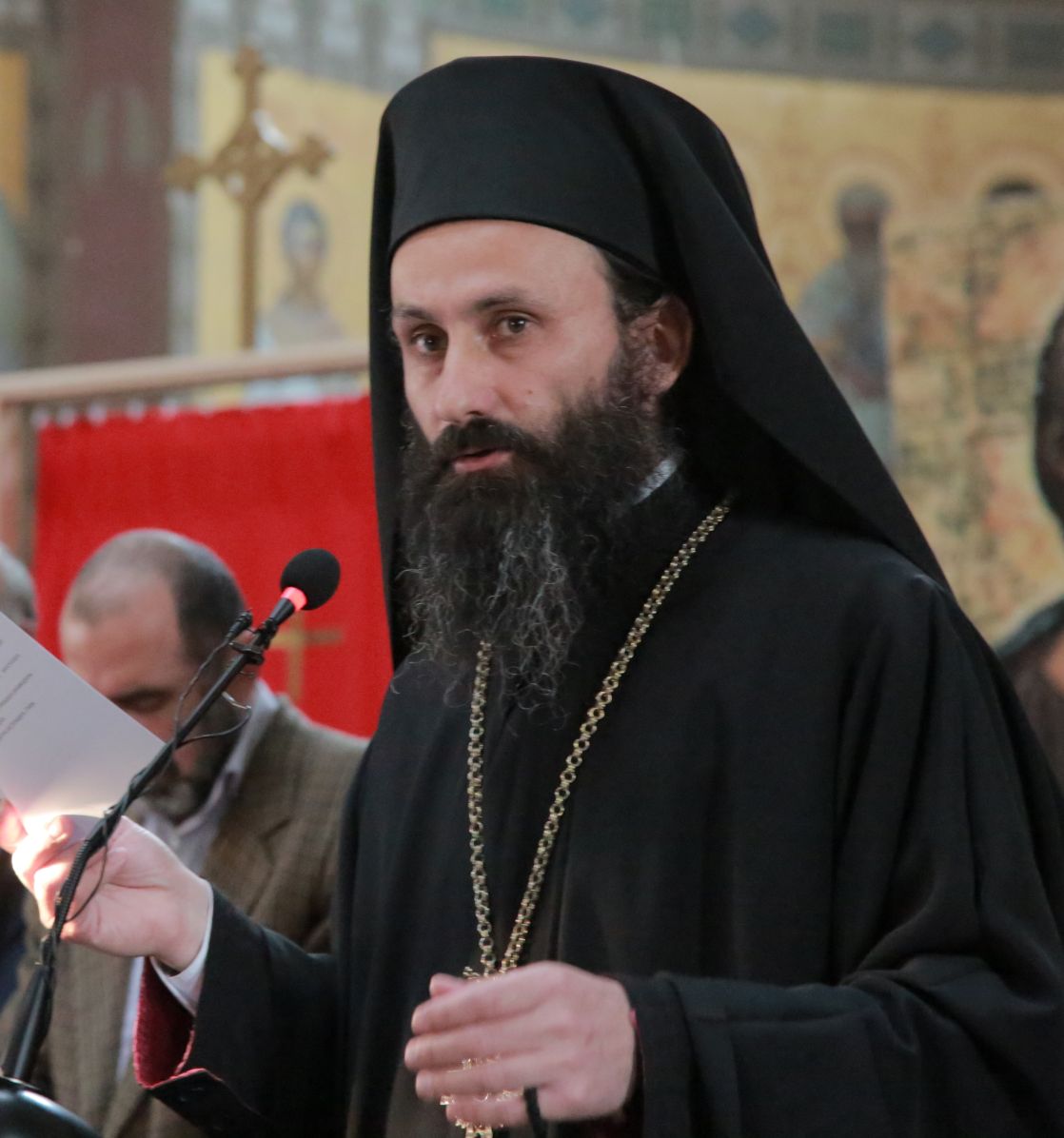
Archimandrite Dorote Kurashvili of the Georgian Orthodox Church, who has spoken out in support of anti-government protests, has been temporarily suspended from ministry. The decision was signed by Catholicos-Patriarch of All Georgia Ilia II.
A statement issued by the Patriarchate says the archimandrite had, “despite warnings, repeatedly violated the norms of church canonical ethics.” The suspension is based on Canon 55 of the Apostolic Canons, which stipulates that a clergyman who insults a bishop is subject to excommunication.
Formally, the case concerns church discipline and canonical order. In practice, however, it represents a striking example of the church being used as a political instrument.
Priest who spoke out against the regime
Archimandrite Dorote Kurashvili was one of the few clergy members to openly and publicly support pro-European, anti-government protests in Georgia.
He stood alongside demonstrators from the very first days of the rallies. When legislation was tightened and public gatherings were restricted, he proposed holding a public prayer outside the parliament building, reasoning that people who came to pray would not be arrested.
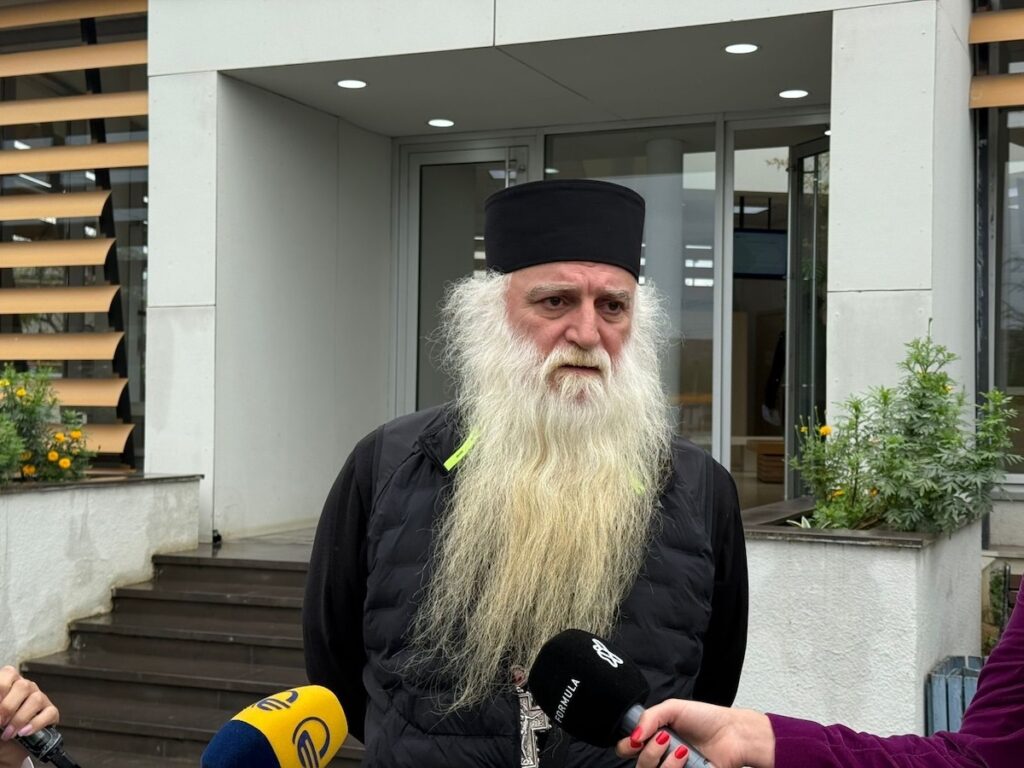
Dorote Kurashvili has made outspoken anti-government statements in the media, openly saying that Georgia is ruled by a pro-Russian and anti-Western government that is “dragging the country toward the abyss.”
He has publicly condemned violence against peaceful demonstrators—something many other clergy members have refrained from doing. Kurashvili has described those detained during the protests as prisoners of conscience, a stance that sharply contrasts with the official rhetoric of both the government and the church.
He also persuaded a group of protesters to end a hunger strike outside the parliament building.
Persecution leading up to the decision
Several weeks before he was suspended from ministry, the archimandrite was demoted. On 29 October, he was reassigned as a priest at the Holy Trinity Cathedral in Tbilisi.
At the time, the diocesan commission said Kurashvili’s actions involved “disciplinary and moral violations.”
At a meeting of the diocesan commission on 16 December, which the archimandrite did not attend, he was issued a “stern warning.”
The Patriarchate continues to insist that the decision regarding Kurashvili is not politically motivated.
However, the sequence of events suggests otherwise.
‘The Church is dying, our country is dying’
After his suspension, Archimandrite Dorote Kurashvili said that “the Church is dying, the country is dying, and priests are staying silent.”
He said the decision would not stop him from speaking out—not as a priest, but as a citizen. At the same time, he did not rule out that it could give the authorities a free hand and even lead to his imprisonment.
Kurashvili also said he intends to appeal to the Ecumenical Patriarchate in Constantinople, asking for help in what he described as saving Orthodoxy in Georgia.
He said he had spent years trying to raise concerns about problems within the Church from the inside and had defended its hierarchical structure. Now, he added, he is forced to voice his position outside the Church. In particular, he criticised what he called a non-canonical institution of the priesthood and called for structural changes in the governance of the Church.
Statements from clergy and theologians
Religious expert Beki Mindiašvili believes that the Patriarchate not only failed to protect Dorote Kurashvili from political pressure but also became an instrument in his persecution. According to Mindiašvili, the punishment of clergy members is intended to intimidate those who are critical of the Church hierarchy.
Mindiašvili argues that Kurashvili’s suspension actually underscores his spiritual correctness and that supporting Archimandrite Dorote is a responsibility not only for believers but for all patriotic citizens.
Levan Sutidze, editor-in-chief of Tabula and a journalist covering religious issues, writes that the Patriarchate’s attempts to separate Kurashvili’s suspension from politics appear unconvincing, as the Church seeks to portray itself as neutral while its rhetoric aligns with the government’s position.
Sutidze also notes that Patriarchal decisions are never reviewed by the Holy Synod, leaving clergy who fall out of favour with no option but to appeal to the Ecumenical Patriarchate in Constantinople—a move that could set an important precedent for overcoming selective justice within the Church.
Georgian priest Konstantin Paichadze, who lives in the United States, also believes that Kurashvili’s suspension is linked to his active political engagement and reflects systemic problems within the Church.
According to Paichadze, while church canons provide the right to appeal unfair decisions, in practice there is no independent ecclesiastical court.
Georgian priest suspended from ministry