Georgian parliament speaker: 'What's the point of EU membership if you're stripped of its main benefit?'






Georgian parliament speaker Shalva Papuashvili says the country’s EU membership should not become an end in itself, and has criticised proposals which, he argues, would weaken the principle of consensus in the bloc’s decision-making process.
Papuashvili said that if such changes were introduced, remaining outside the EU could become more advantageous for some smaller states, as they would retain greater freedom to make independent decisions.
“The question will become increasingly relevant: what’s the point of membership if you’re stripped of its main advantage and leverage from the very beginning?” Papuashvili wrote on social media.

He said there was a growing perception that Europe’s larger states were seeking to reshape the EU’s system of governance, warning that such changes would threaten both the continent’s political balance and the bloc’s enlargement process, as well as the principles on which the European Union was founded.
Papuashvili was commenting on remarks by Germany’s foreign minister, who said several countries had joined Berlin’s initiative to abolish unanimity in EU decision-making.
According to Papuashvili, if such a reform were implemented, the European Union could evolve from a union of equal member states into one dominated largely by its biggest countries.
“EU membership is not an end in itself. That is true neither for current member states nor for candidate countries. Brexit was the clearest proof of that,” the parliament speaker wrote.

According to Papuashvili, the main purpose of joining the European Union is to expand a country’s opportunities, better protect its national interests and increase its influence over international decision-making. He argued that the principle of consensus is one of the key guarantees of that influence for smaller states, as it allows them to block decisions they consider harmful and defend their national interests.
“If the principle of consensus is abolished and decision-making comes to depend entirely on the will of larger states or a stable majority, smaller countries will lose this fundamental lever,” he wrote.
In his view, EU membership would then cease to represent the voluntary delegation of part of a country’s sovereignty in pursuit of shared economic and political goals, and could instead become a process that significantly reduces the influence of smaller states.
Papuashvili argued that a country which can no longer prevent decisions it considers harmful gradually loses both its political freedom and its ability to make sovereign decisions.
He said such a model could benefit larger states, whose economic and political weight already gives them considerable influence, but would represent a “catastrophic change” for smaller countries.
“That is why the question will become increasingly relevant: what’s the point of membership if you’re stripped of its main advantage and leverage from the very beginning?”
Papuashvili argued that the EU’s value lies precisely in allowing member states to defend their interests, influence decisions and block measures they consider undesirable.
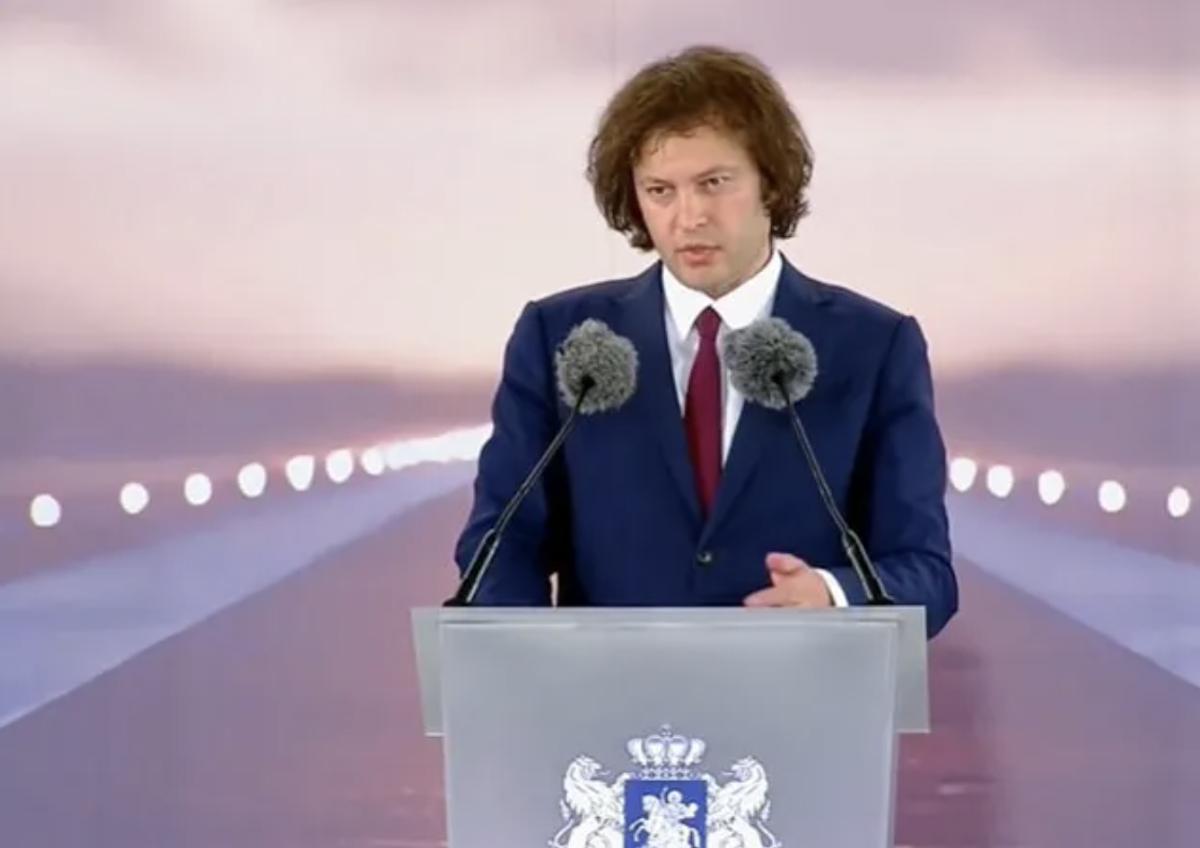
He said the debate over changing the unanimity rule could also result in a slowdown of the EU’s future enlargement.
“Candidate countries are being offered not equal membership in the existing union, but a pre-designed system in which they will assume all the obligations of membership while their rights and influence are curtailed.”
According to Papuashvili, the key question for Georgia should not only be when it joins the European Union, but also what kind of European Union it joins and what rights new members will have.
“Membership that deprives a country of its sovereign rights and offers no mechanisms to defend them is not integration – it is the abolition of sovereignty.”
Papuashvili concluded his statement with an apparent reference to Greek mythology: “It seems that even Jupiter’s abduction of Europa is forgiven.”
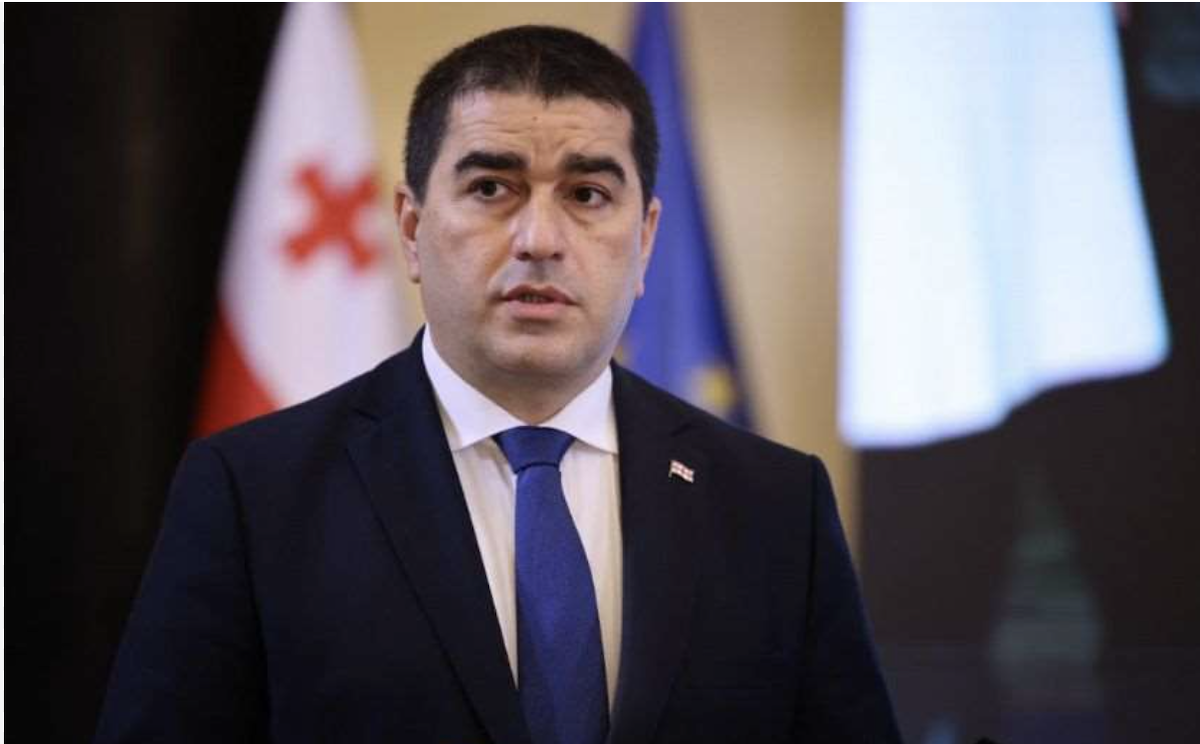
Papuashvili questions value of EU membership