Georgia in 'Middle Corridor': Anaklia port, undersea cable and new routes






Georgia in Middle Corridor
A new study funded by the European Commission once again describes Georgia as one of the key transit links between Asia and Europe, while also highlighting growing competition and political risks shaping the country’s position in the Middle Corridor.
The study pays particular attention to the deep-sea port of Anaklia, the project to lay an undersea energy cable in the Black Sea, and alternative transport routes being developed across the region.
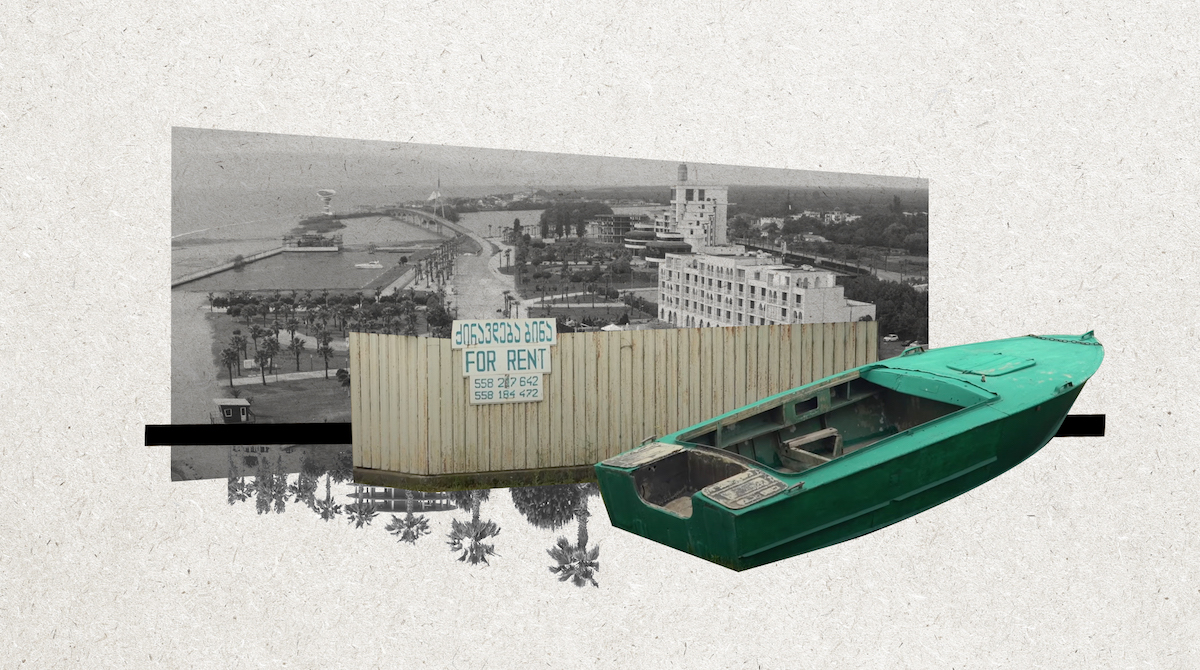
Amid strained political relations between Georgia and the EU and the emergence of new competing corridors in the region, these infrastructure projects are seen not only as economic opportunities but also as factors of geopolitical importance, the study says.
The study, published by the European Commission’s Directorate-General for Enlargement and Eastern Neighbourhood (DG ENEST), assesses transport and energy links between the South Caucasus and Central Asia. It notes that the research may not reflect the EU’s official position, but examines in detail projects linked to growing freight flows between Asia and Europe, and therefore important for the bloc.
According to the study, Georgia remains one of the key countries in the Trans-Caspian Transport Corridor (TCTC), seen as an alternative route from China to Europe.
“If we consider the TCTC [the ‘Middle Corridor’], Kazakhstan, Azerbaijan, Georgia and Turkey are key players on the route from China to Europe. However, countries such as Armenia, Uzbekistan, Kyrgyzstan, Moldova and Ukraine also play an important role,” the study says.
Anaklia port: strategic but “political” project
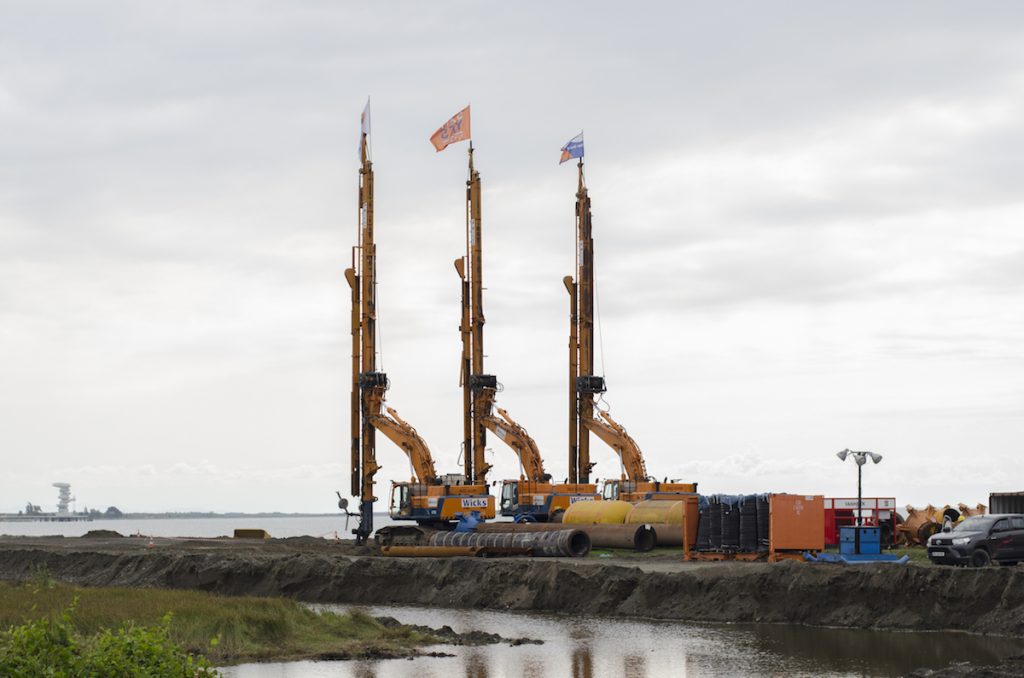
The study pays particular attention to the deep-sea port of Anaklia, seen as one of the key infrastructure projects in the context of expanding the Trans-European Transport Network (TEN-T). The document states:
“The port project is highly political in nature and is currently led by China Communications Construction Company (CCCC). However, if implemented, Anaklia could significantly expand Georgia’s maritime capacity and its role in the Middle Corridor.”
The Anaklia port project has remained a central element of Georgia’s transport policy for nearly a decade. In 2016, the Georgian government selected the Anaklia Development Consortium to implement the project, but later terminated the agreement, citing the consortium’s failure to meet its obligations. The consortium, however, said the decision was politically motivated. The state later won two arbitration disputes with the consortium, but the project stalled.
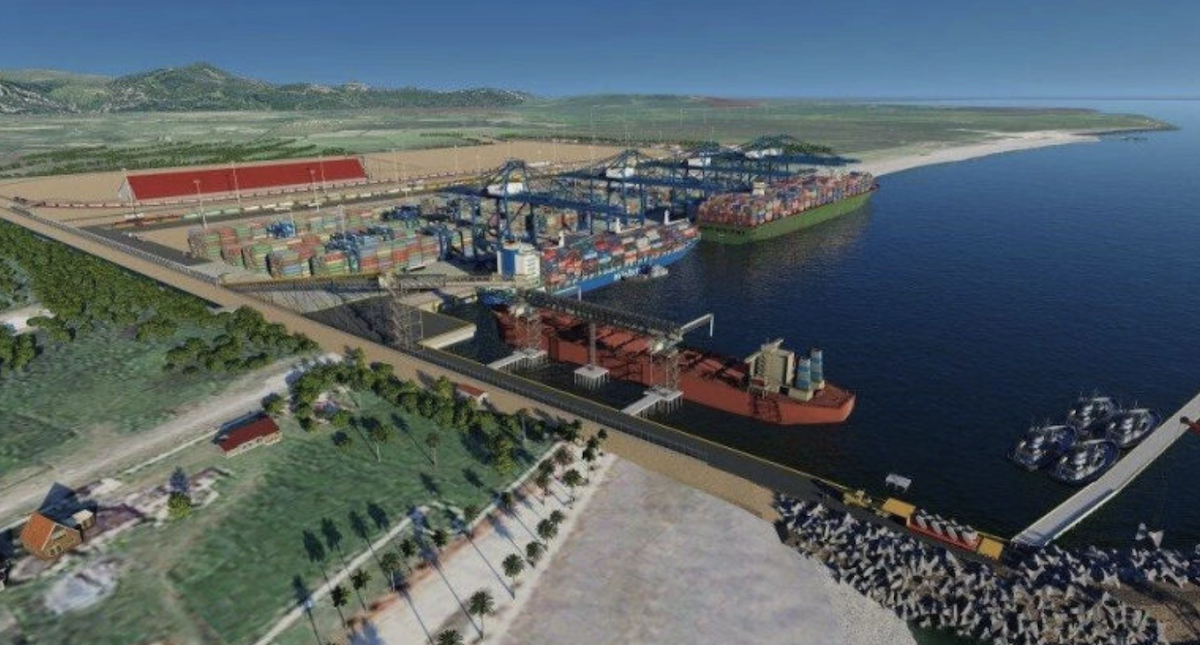
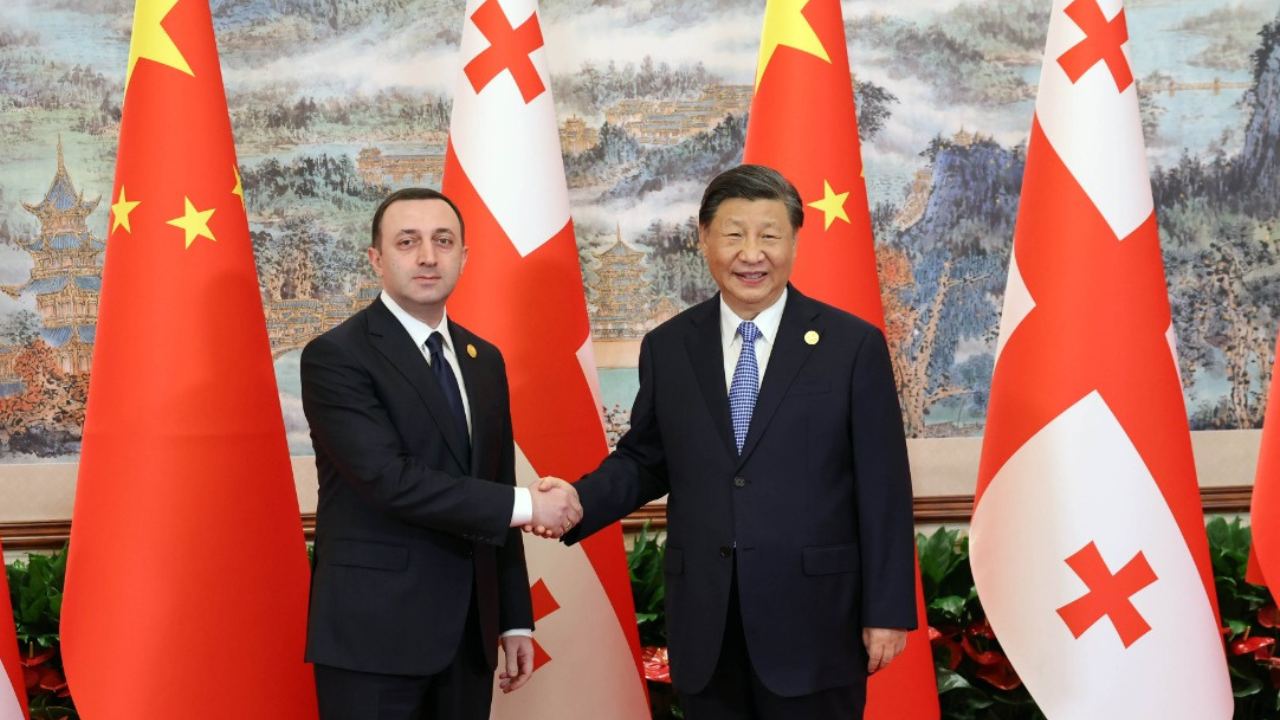
In recent years, the government has tried to move the project forward in a new configuration. It announced that a Chinese-Singaporean consortium, including China Communications Construction Company Limited (CCCC) and China Harbour Investment, would receive a 49% stake in the port. It later emerged that CCCC was under US sanctions.
Georgia’s Deputy Economy Minister Mariam Kvrivishvili says negotiations are still under way.
“We have reasonable grounds to believe that the negotiation process should be completed soon and that our country’s interests will be fully taken into account,” she said at the end of 2025.
According to government plans:
- Construction is due to enter an active phase in 2026;
- The port is expected to receive its first vessel in 2029;
- By 2036, its capacity should exceed one million containers.
However, experts are sceptical about these plans, noting that delays to the port’s construction are significantly weakening Georgia’s position amid growing regional competition.
Power connections and the undersea cable
The European Commission study links Georgia’s transit role to energy projects. It highlights plans to build an undersea power cable between Georgia and Romania that would connect the South Caucasus to the European energy system.
“An important strategic step towards integrating energy markets will be the planned undersea power connection between Georgia and Romania.”
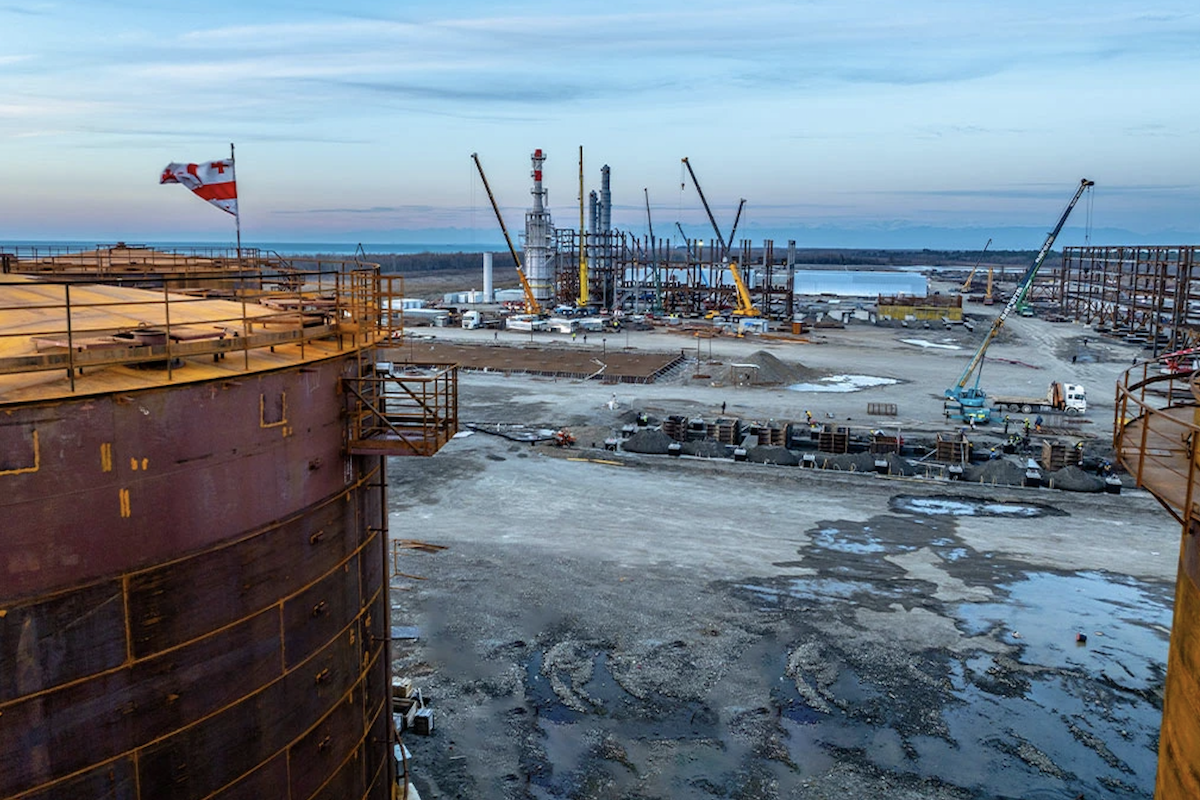
According to the study, upgrading the Georgian ports of Batumi and Poti, along with the development of Anaklia, is necessary to transport the heavy equipment required for renewable energy projects and the construction of the undersea cable.
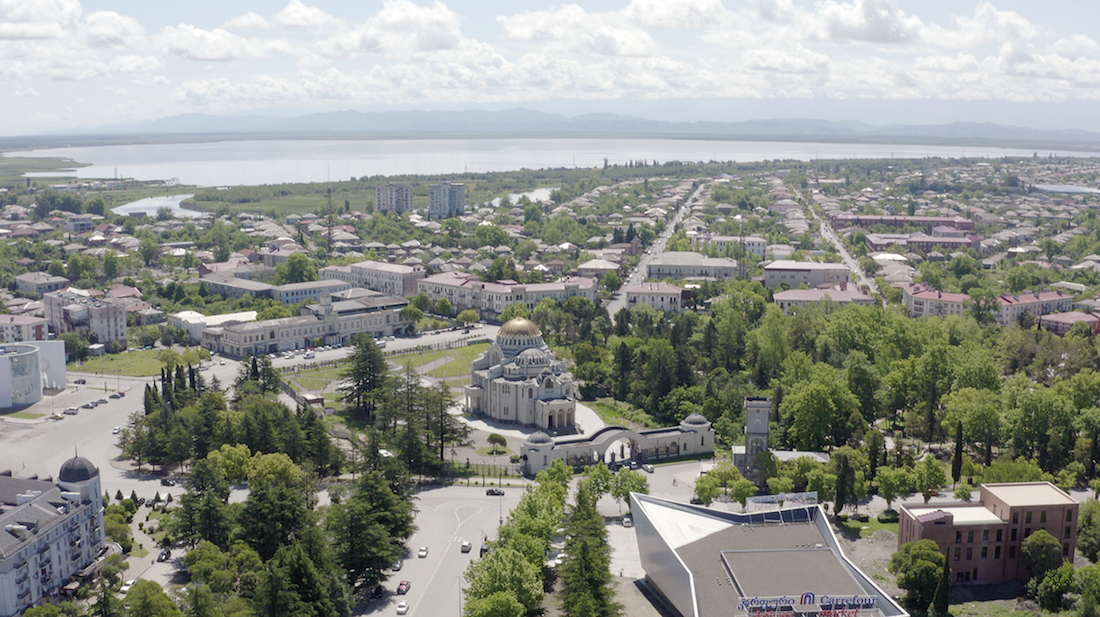
The study’s authors also note that large-scale renewable energy projects are under way in Romania, Bulgaria, Turkey, Azerbaijan, Georgia and Uzbekistan, but in the short term, diversification of gas supplies remains the foundation of energy security.
Domestic economic debate: port roles and strategy
In Georgia, there is an ongoing debate over how to distribute functions among the country’s ports. Levan Sulaberidze, head of the committee of the Kazakhstan–Georgia Economic Union, says the state needs a clear strategy on the issue.
“Waiting for Anaklia to be built and then expecting some effect, in my view, is wrong… Much more attention should be paid to Poti, because Poti already has the necessary capacity,” he said.

Mr Sulaberidze also spoke about Georgia’s potential as a regional logistics hub.
“The government should clearly declare, wherever possible, that we must become a trading platform for Asian exports, for the supply of key minerals… Large warehouses should be built here, along with port infrastructure capable of handling major vessels,” he said.
Economic losses and regional competition
Paata Tsagareishvili, director of the Transport Corridor Research Centre, described the decade-long delay in the Anaklia project as “the biggest economic loss” and said that, if the port is completed, Georgia’s GDP could potentially increase by about 1%.
Mr Tsagareishvili estimates that about two million tonnes of cargo — or 15–17% of existing transit — could shift to alternative routes.
Alternative routes and the “Trump road”
The European Commission study also discusses new transport options in the South Caucasus. Against the backdrop of a possible peace deal between Azerbaijan and Armenia, a transport link through Syunik is being considered as an alternative segment of the Middle Corridor.
“The route through Syunik [the ‘Trump road’], positioned as an alternative to the Georgian section of the TCTC, could significantly improve regional connectivity.”
The project is linked to the TRIPP initiative announced by US President Donald Trump, which combines transport and peace processes in the South Caucasus. At the same time, Georgia was not included in the recent South Caucasus visit by the US vice-president, pointing to shifting regional political dynamics.
Western concerns over China’s role
Potential involvement by Chinese companies in the Anaklia project has raised concerns in the West. In 2025, the US Helsinki Commission said that if the port came under Chinese control, it would mean handing a strategic asset to a country that “does not share democratic values”.
In the same context, the US Congress is discussing the MEGOBARI Act, a bill aimed at countering the influence of China, Iran and Russia in Georgia.
An uncertain balance
The European Commission study suggests that Georgia’s geographic position still offers significant transit opportunities. However, infrastructure delays, regional competition and geopolitical tensions are turning those theoretical advantages into real challenges.
Former Georgian foreign minister Tedo Japaridze wrote:
“In today’s geopolitical environment, Anaklia is a strategic platform — a lever for trade, connectivity and sustainable development. It is a project that will expand Europe’s access to Asia… and give the West a practical choice instead of rhetoric.”
Experts broadly agree that Georgia’s position in the Middle Corridor will ultimately depend on whether the country can implement strategic projects on time and maintain its place in regional competition.
Georgia in Middle Corridor