From self-defence to political statements: how former Georgian PM Garibashvili's 'prison' letters have evolved






Analysis of former Georgian PM’s “prison” letters
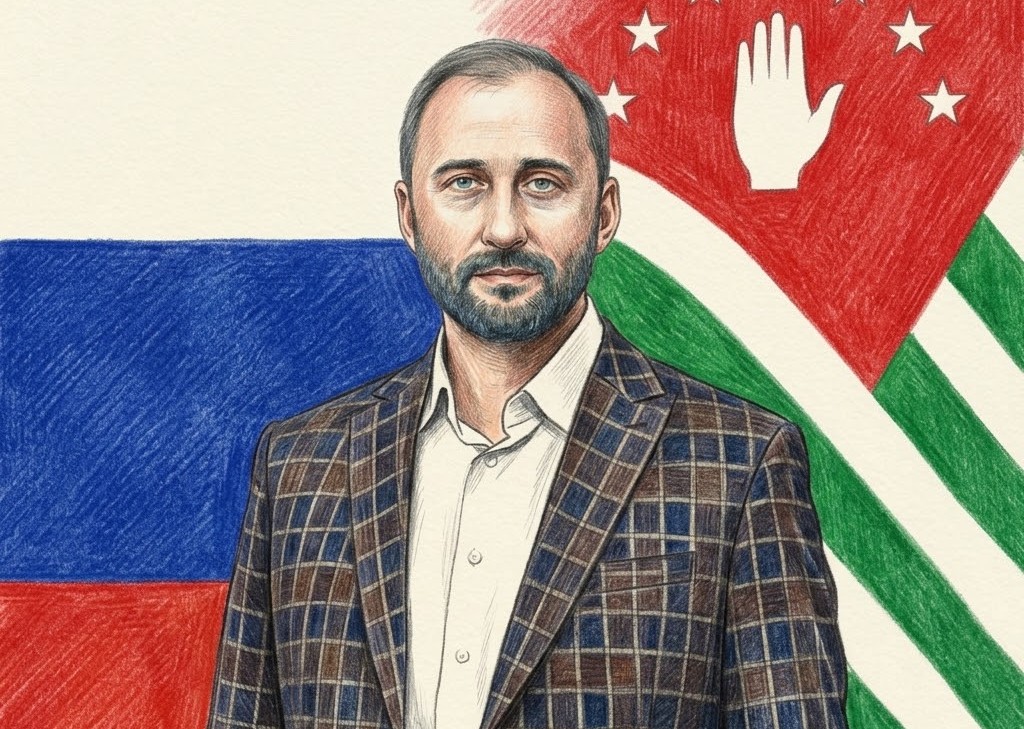
Former Georgian prime minister Irakli Garibashvili has published his eighth letter from prison, which differs significantly from his previous seven. In the letter, Garibashvili looks back on his political career and presents himself to the public as a successful prime minister. The text effectively serves both as a political report and a statement of leadership ambitions.
In the letter, the former prime minister seeks to show that in 2021 he led the government out of a deep political and economic crisis and improved the country’s situation through his work.
At the end of the letter, he asks the public whether the situation has improved or deteriorated since he resigned. Although he does not directly name current Prime Minister Irakli Kobakhidze, the question clearly challenges his administration.
“Almost three years have passed since then [my resignation], and I want to ask the people: has the situation in the country improved or deteriorated, both in domestic and foreign policy?”
About former PM Giorgi Gakharia
Garibashvili begins his account with February 2021, when he returned as prime minister for a second time after Giorgi Gakharia resigned. He says Georgia faced several serious challenges at once: a political crisis, the COVID-19 pandemic, a shortage of vaccines, an economic downturn, a large budget deficit, rising public debt and a weakening lari.
In his view, Gakharia abandoned the country and the ruling team under these circumstances. Garibashvili’s position on Gakharia echoes the Georgian Dream party’s narrative:
“Gakharia left the country and the team in the middle of an acute crisis, committing an act of unexpected betrayal by resigning. The government stood on the brink of collapse, the ruling party had lost morale, the team was divided, and the party’s approval rating had fallen to 35–37%.”
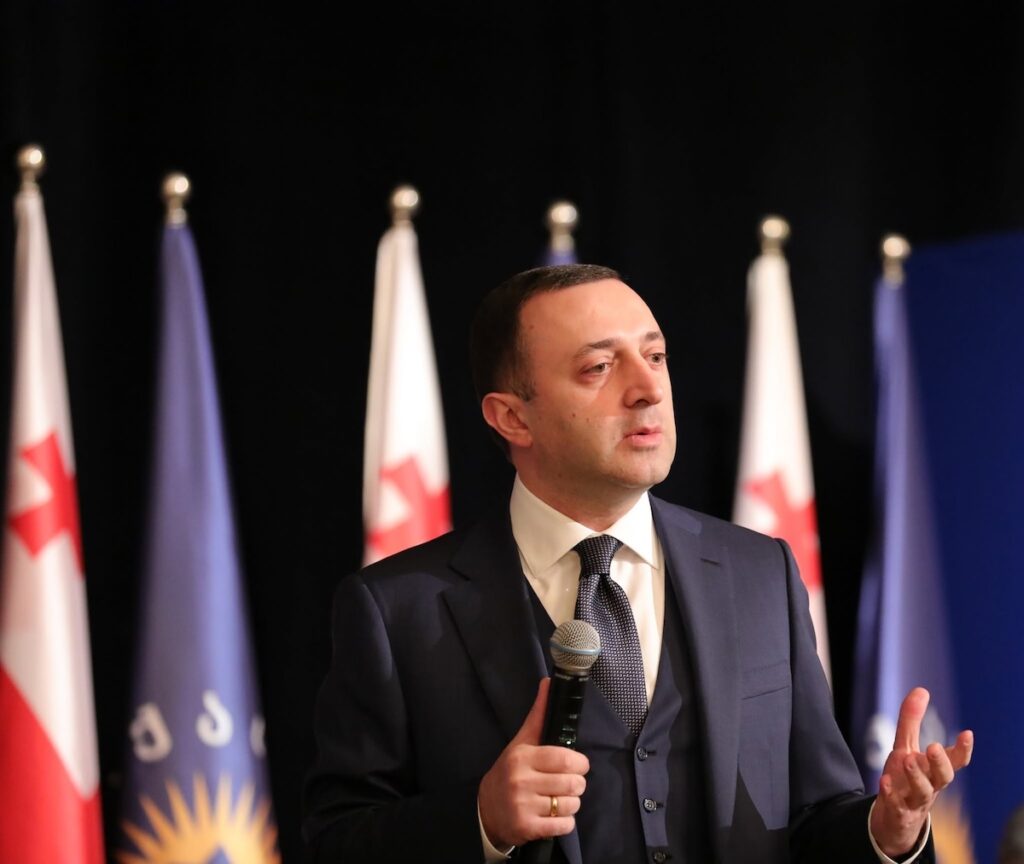
Garibashvili portrays his return as, essentially, a rescue operation for the government. He says that after taking office as prime minister, he strengthened the team, stabilised the situation, reopened the country and the economy, secured vaccine supplies and lifted restrictions introduced during the pandemic.
The former prime minister stresses that the government abandoned what he calls a “Covid dictatorship” and gave people complete freedom to choose whether to get vaccinated.
“In the shortest possible time, we restored balance, strengthened the team and stabilised the situation. Together with the team, we took bold, decisive, effective and — at the time — risky steps.”
In his view, these measures secured Georgian Dream’s victory in the 2021 local elections. Garibashvili credits himself not only with helping the party clear the 43 per cent threshold and win 47 per cent of the vote, but also with preventing a potential revolutionary scenario after Mikheil Saakashvili returned to Georgia.
“We prevented destabilisation and an attempted revolution involving Saakashvili, put all destructive forces in their place and brought the political crisis to an end.”
Showcasing economic results
A significant part of the letter focuses on economic indicators. Garibashvili claims that Georgia’s economy grew by 30 billion lari (about $11,516,310,000) during his three years as prime minister. He says the economy recorded double-digit growth in 2021 and 2022, putting Georgia first among EU member and candidate countries in terms of growth.
Garibashvili lists the following among his government’s achievements:
- cutting the budget deficit from 9 per cent to 2.8 per cent;
- reducing public debt from 60 per cent to 38 per cent of GDP;
- stabilising the lari exchange rate at between 2.6 and 2.7;
- bringing inflation below the target level;
- reducing unemployment and poverty to historic lows;
- creating tens of thousands of new jobs;
- raising pensions and salaries for public-sector workers.
The former prime minister attributes lower medicine prices to the opening of the Turkish pharmaceutical market and the introduction of a reference pricing system for medicines.
EU candidate status and the issue of being “dragged into war” with Russia
Garibashvili also devotes considerable attention to foreign policy. Here again, he echoes Georgian Dream’s rhetoric. He says Georgia faced intense pressure after the war between Russia and Ukraine began, but his government managed to protect the country from the threat of war and destabilisation.
“From the very first days of the war between Russia and Ukraine, despite enormous pressure, we firmly and uncompromisingly defended our country’s national interests, preventing destabilisation and the real threat of war.”
Garibashvili thus repeats one of Georgian Dream’s key political arguments: after Russia launched its full-scale invasion of Ukraine, Georgia faced the risk of being dragged into the conflict.
The former prime minister lists his foreign visits and diplomatic initiatives in the letter. These include applying for EU membership, developing strategic relations with China, signing free trade agreements with several countries, mediating between Azerbaijan and Armenia, and hosting a meeting of the three countries’ prime ministers in Tbilisi.
Garibashvili considers Georgia’s achievement of EU candidate status in December 2023 his main foreign policy accomplishment.
“Without bowing to anyone — either inside the country or abroad — and solely through our uncompromising defence of our country’s national interests and the joint efforts of our team, we secured EU candidate status in December 2023.”
The letter says these results came without political subordination to external forces.
Approval ratings and resignation
Garibashvili claims he left office with high levels of public support. According to him, in January 2024, approval of the government’s performance and support for Georgian Dream both reached 60 per cent.
“Thanks to the results we achieved — and, most importantly, thanks to democratic methods — we politically neutralised the entire radical opposition, leaving no one with any grounds for criticism or complaint.”
Garibashvili presents not only his government’s record but also the neutralisation of the opposition as a political achievement. He effectively equates this “democratic success” with the ruling party’s dominance and the opposition’s removal from the political arena.
The letter does not explain why Garibashvili resigned as prime minister at a time when, according to his own account, the government enjoyed high approval, the economy was growing and the opposition had suffered political defeat.
From self-defence to political statements: analysis of former Georgian PM’s “prison” letters
Garibashvili’s eight letters form a coherent political narrative. At first, he sought to protect himself and his family. He later accused the authorities of orchestrating political persecution. He subsequently began raising questions about the government’s actions and several other issues. In his eighth letter, he defends his political legacy and criticises the current government. Political analysts say the latest letter points to political ambitions on Garibashvili’s part.
The first stage — Ivanishvili loyalty and self-preservation
In his first letters, Garibashvili described the pressure against him as the main source of the conflict. He said he did not plan to return to politics, but the authorities demanded that he admit guilt to new corruption charges, fearing a “one per cent risk” that he might return to politics.
He firmly reaffirmed his loyalty to Bidzina Ivanishvili, while holding him personally responsible if anything threatened his family.
“I am not fighting or battling anyone — I am only defending myself and my family!”
Garibashvili took a defensive position, seeking to show that he had not chosen this confrontation and that the authorities had forced him to defend himself.
The second stage — accusing specific individuals
In his subsequent letters, it became clearer who exactly Garibashvili was targeting with his criticism. His focus shifted from Ivanishvili to Prime Minister Kobakhidze and former regional development minister and former State Security Service chief Mamuka Mdinaradze. Garibashvili accused both of them of organising the pressure against him.
By presenting the situation this way, the former prime minister clearly left the door open to reconciliation with Ivanishvili. He continued to describe Ivanishvili as someone for whom he had “enormous love, respect, boundless gratitude and absolute loyalty”, while placing the blame for what was happening on people around him.
The third stage — systemic accusations
In his fifth and sixth letters, Garibashvili broadened the scope of the conflict. He publicly questioned the circumstances surrounding the death of human rights defender Lazare Jorbenadze and linked the incident to other suicides that occurred while Kobakhidze and Mdinaradze held power.
The convicted former prime minister later accused the government as a whole of conducting systematic propaganda, using investigations for political purposes, and trying to link Garibashvili to the United National Movement or foreign agents.
Garibashvili moved beyond his own criminal case, criticising the government’s methods and presenting himself as a victim of political persecution.
The fourth stage — creating an alternative to the current government
In his seventh letter, Garibashvili claimed that the authorities had arrested him to destroy his political future. He accused the government of creating an atmosphere of endless chaos, crisis and impoverishment.
The most significant point came when he compared Georgian Dream with Mikheil Saakashvili’s administration:
“You are already following in Saakashvili’s footsteps and bringing back the methods of governance used by the National Movement…”
For years, Georgian Dream has built its political identity around contrasting itself with Saakashvili’s rule. Garibashvili’s accusation that the current government uses the same methods therefore directly challenges the ruling team’s legitimacy.
Analysts say the eighth letter takes a more political tone than his previous statements in his own defence.
Garibashvili has not officially announced a return to politics. However, the logic of his letters points towards a political comeback.
Analysis of former Georgian PM’s “prison” letters