Former Georgian interior ministry officer confirms use of toxic chemical against protesters in Tbilisi






Georgia accused of chemical attack
A key figure in the investigation, former head of the Arms Department of Georgia’s Ministry of Internal Affairs Special Operations Unit Lasha Shergelashvili, has commented on BBC’s probe into the possible use of the toxic substance “mustard gas” against protesters in Tbilisi.
“This substance was tested in 2009 or earlier, but it proved too toxic and was sealed,” Shergelashvili told the opposition TV channel Formula.
On December 1, the British outlet BBC published an investigation claiming that the Georgian government may have used the World War I-era chemical “mustard gas” to suppress anti-government protests in late 2024. The report suggests the substance could have been added to water cannons used to disperse demonstrations.
Earlier, the State Security Service said it had completed an investigation into the BBC report and strongly denied the claim that “mustard gas” was used. At a briefing on December 6, officials stated that “a chemical substance was added to the water cannons, but it is not ‘mustard gas’ – it is ‘chlorobenzalmalononitrile,’ which is not banned.”
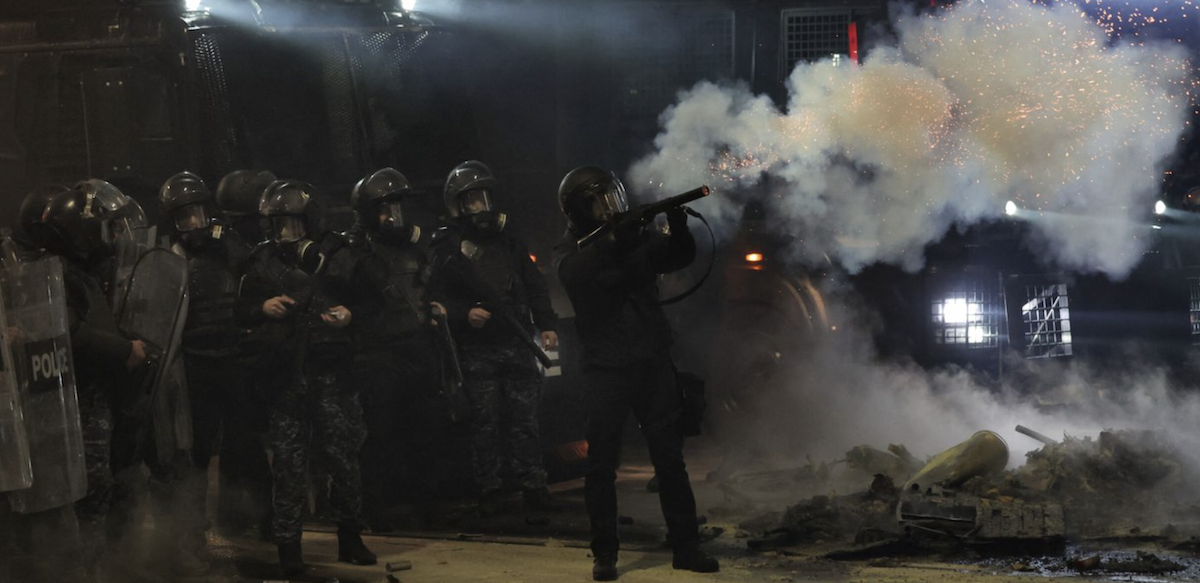
Shargelashvili said the tests were conducted at the Yalgudja training ground. He explained that they routinely examined any substances to see what reaction they might provoke. Many people were present during the testing; he was not alone. Very few knew the composition of the compounds. He did, he said, because he was responsible for them and kept the records. His superiors, who oversaw the process, including senior officials, were also aware.
According to him, when they discovered during the tests that the substance was far stronger than any pepper gas they had previously evaluated, they reported the reactions they observed. A person would experience prolonged poisoning symptoms, followed by vomiting and other effects. During the tests, they concluded that using the substance would be undesirable. Officials, he added, immediately said that if that was the case, it should not be used. As a result, everything was classified.
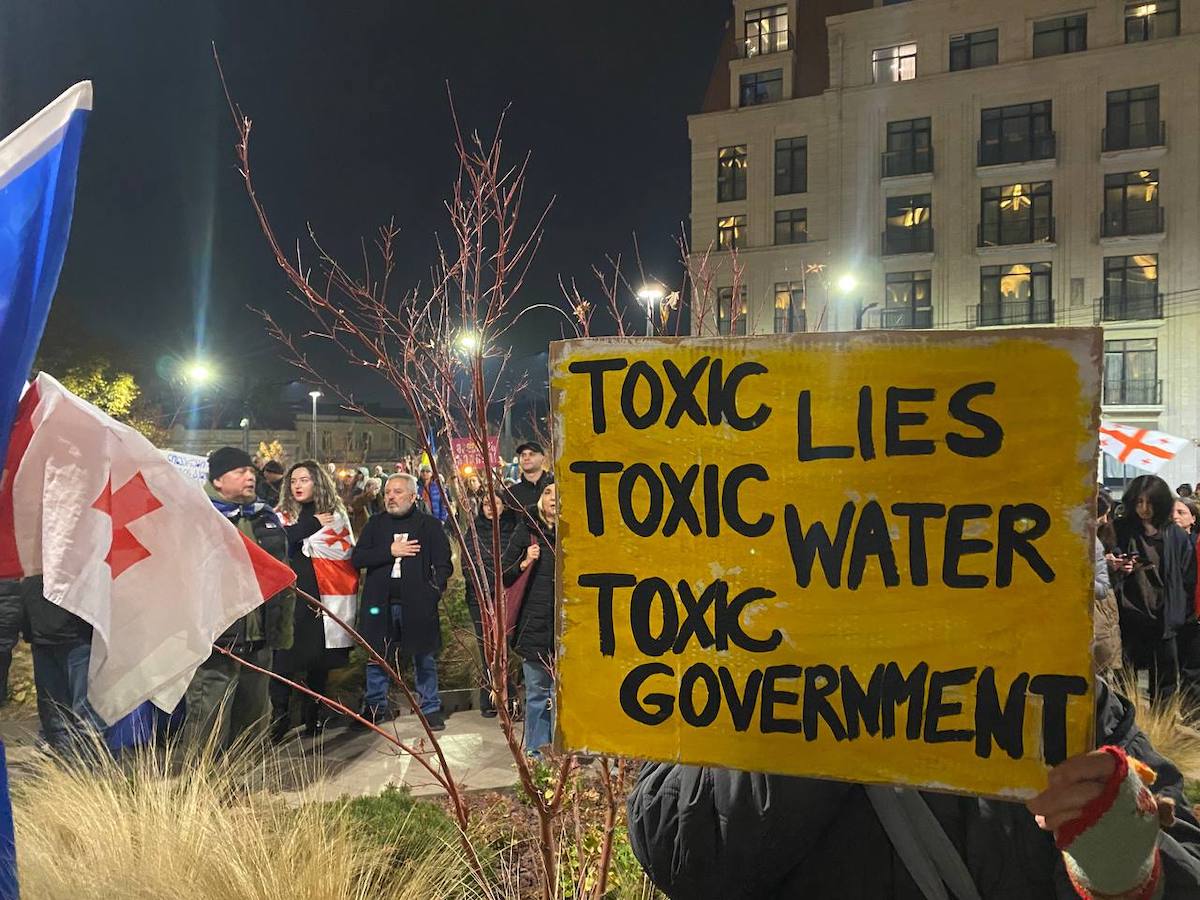
Asked by journalist Giorgi Targamadze why he believes this particular substance was used against protesters outside the Central Election Commission on 8 November 2020, after the parliamentary elections, Shargelashvili replied: “I know for certain that it was used.”
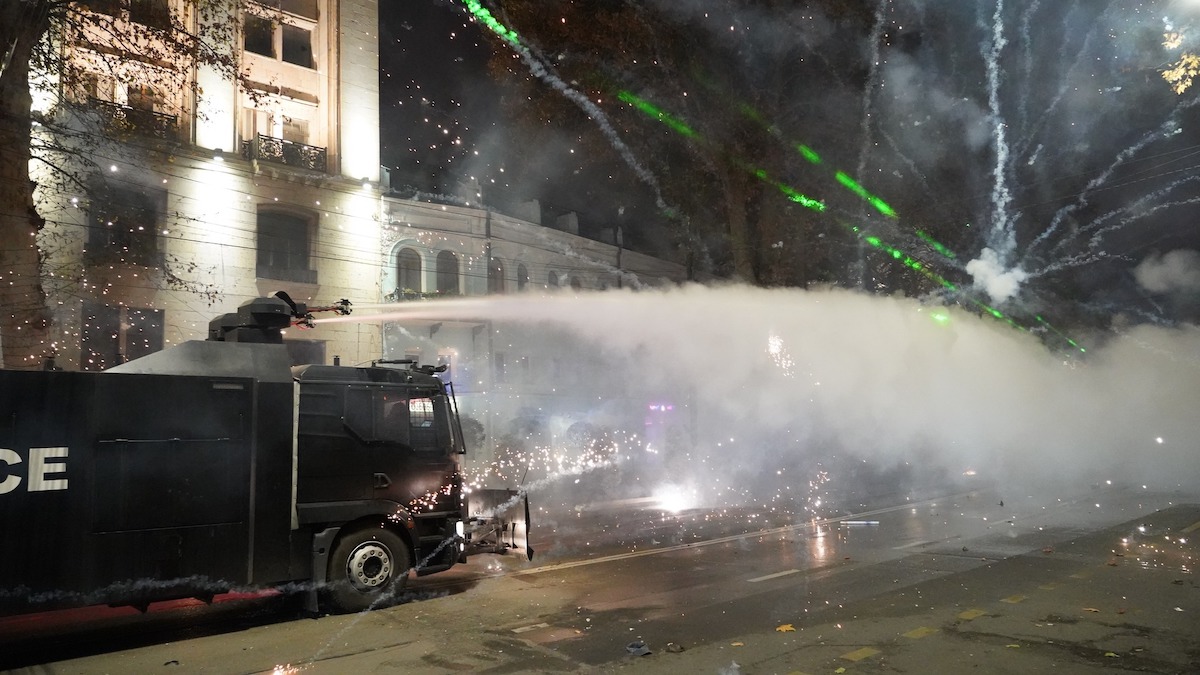
According to Shargelashvili, the government is lying and has concealed a great deal.
“I am not a chemist and I do not know the substance’s composition. I only know how it worked in practice, how it was used, and what I saw with my own eyes. What I can say is that when the mixture was being prepared, two people were always involved in the process.
I watched from a distance, as I could not get closer. They were wearing protective suits, gas masks and gloves, and that is how they mixed the chemical powder with the liquid. I cannot tell you, and I cannot answer whether the State Security Service’s statement is accurate, but I can say that they are lying. They have concealed a lot,” Lasha Shargelashvili added.
The former senior Interior Ministry official said he is not the only source in the BBC investigation.
He claims he was shown the names, positions, phone numbers and home addresses of everyone involved in the process.
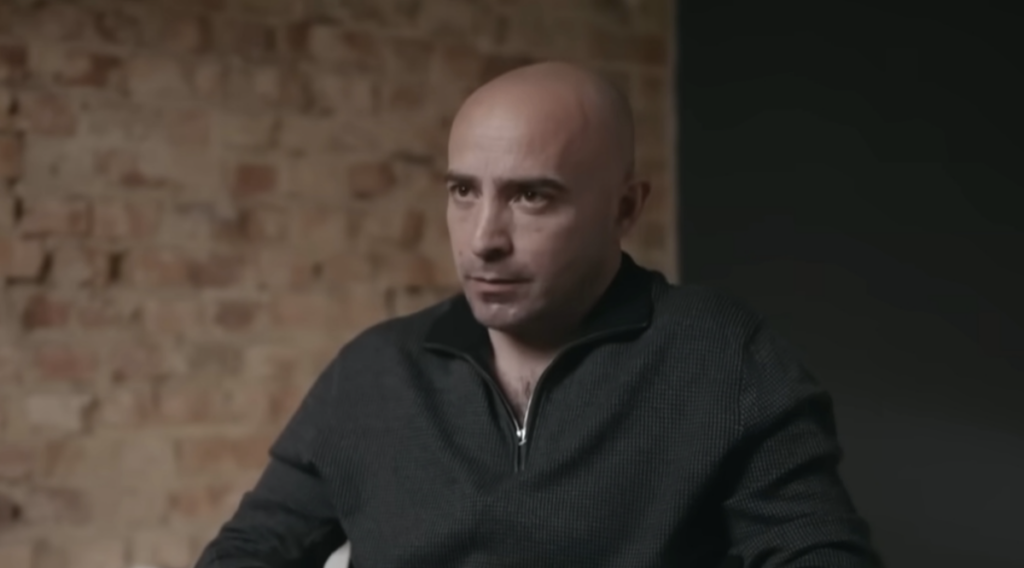
“When I was working with the BBC on this case, I sensed that they did not accept the narrative or certain interpretations of it. They did not want to cooperate with such people, and they repeatedly told me that we carried a great responsibility. Many individuals could be implicated in this investigation, so we had to have strong and unshakeable evidence before making anything public.
It was a long process — if I’m not mistaken, it lasted around six or seven months. I was looking for this evidence and, incidentally, as soon as they realised that my name was mentioned and that I was involved, they summoned senior Interior Ministry officials and began questioning me.
They confirmed that, unfortunately, I was the person who had access to these chemical substances. I was the one who could, supposedly, obtain proof of their existence… That is why they could no longer conceal the process that has now become public. For that reason, I cannot tell you what evidence the BBC currently holds.
I am not the only source… <…> They showed me the names, surnames, positions, phone numbers and home addresses of all those involved in the process. I don’t mean the special operation itself — I mean the water cannons… The list contained the names of drivers, operators, department heads and so on. They had absolutely everything, and they asked me to confirm that it was genuine. We had certain agreements about this…
Later they came back to me again, this time with lawyers. In a private conversation, when everything had already been approved and the film was nearly finished, they told me it would be released very soon. The lawyer told me that they knew what kind of terrifying liquid had been used [against demonstrators], and that if they had not known and it had been an experiment, then that would be an even more serious crime against humanity than if it had been done deliberately… I was told: ‘Don’t be surprised if you are called as a witness at The Hague,’” said the former head of the weapons division at the Interior Ministry’s Special Operations Department.
BBC investigation
On 1 December 2025, the British outlet BBC published an investigation claiming that the Georgian government may have used a chemical substance dating back to World War I to suppress anti-government protests in late 2024.
The article says that British journalists spoke with chemical weapons experts, sources within Georgia’s police special forces, and doctors, finding that a substance called bromobenzyl cyanide, or “camite,” may have been used in water cannons.
Information from these sources indicates that the substance was deployed to disperse pro-European demonstrations in Georgia.
BBC reports that the substance was first used by France against Germany during World War I. There is little documentary evidence of its subsequent use, and it is believed to have been withdrawn from circulation in the 1930s due to concerns about the long-term effects of exposure. It was replaced by CS gas, commonly known as “tear gas.”
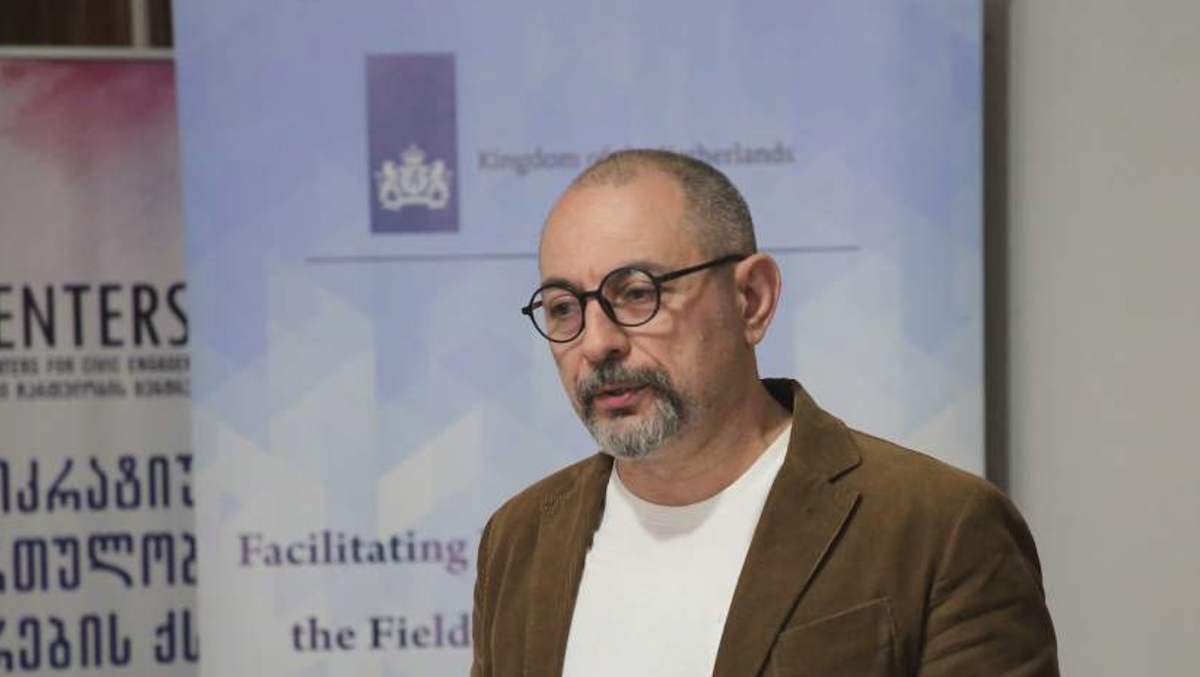
The State Security Service of Georgia, however, claims that the chemical powder used against protesters in the water cannon was chlorobenzylidene malononitrile, which, they say, was acquired by the Interior Ministry in 2007.
At a briefing, the first deputy head of the State Security Service, Lasha Magradze, stated that the Interior Ministry never purchased “camite,” as mentioned in the BBC report. Magradze asserted that the substances used by the Interior Ministry are not classified as banned.
The security service said that the investigation into the BBC report is proceeding along two lines, and investigative actions on one line, concerning the possible use of “camite,” have already been completed.
According to Magradze, the investigation into a possible crime under Article 319 of the Georgian Criminal Code, related to assisting a foreign organization in hostile activities, is ongoing.
Georgia accused of chemical attack