EU Enlargement Council urges Georgia’s authorities to end repression, carry out reforms






EU Enlargement Council on Georgia
The Presidency of the Council of the European Union has published the conclusions of the EU Enlargement Council, including a section on Georgia. It says that the actions of the Georgian authorities “do not meet the EU’s expectations of a candidate country”.
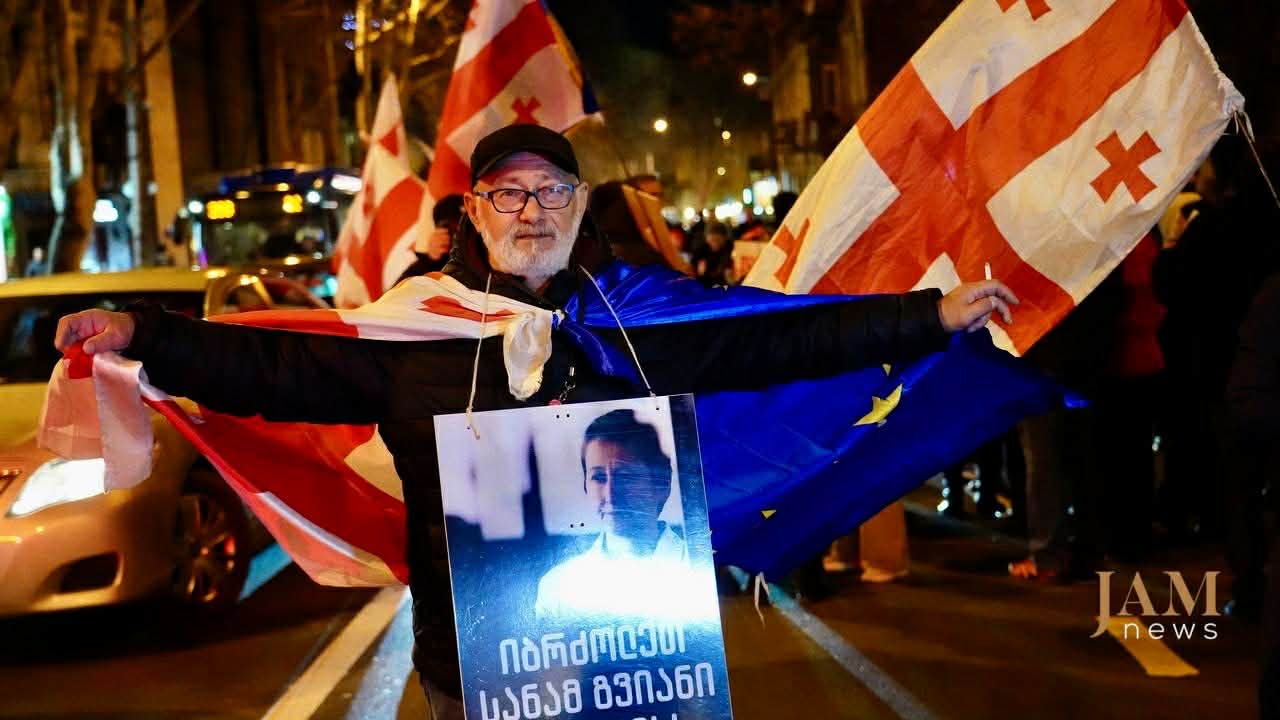
The EU Enlargement Council urges the Georgian authorities to release all politicians, journalists and activists who have been unfairly detained, repeal repressive laws and stop using aggressive rhetoric towards the European Union.
The document was not adopted after Hungary blocked consensus.

What the EU Council’s conclusions say about Georgia:
- The Council reaffirms the European Union’s support for the European aspirations of the overwhelming majority of Georgia’s population.
- The actions taken by the Georgian authorities do not meet the European Union’s expectations of a candidate country. The Council notes a serious overall regression in democracy, human rights and the rule of law. This includes the adoption of repressive legislation undermining fundamental rights and freedoms, the use of the judiciary as a political tool, the persecution of opposition leaders, unjustified detentions of protesters and journalists, and the shrinking of civic space.
- The Council condemns the spread of disinformation and anti-European narratives by the Georgian authorities and calls for this practice to end.
- The Council regrets Georgia’s backsliding on the implementation of the nine steps that were conditions for granting candidate status. As a result, Georgia’s EU accession process has effectively stalled until the authorities demonstrate a firm commitment to changing course and returning to the path of European integration.
- The Council calls on the Georgian authorities to release all politicians, journalists and activists who have been unjustifiably detained, repeal repressive legislation, adopt democratic, inclusive and sustainable reforms in line with the core principles of European integration, and stop using aggressive rhetoric towards the European Union, EU ambassadors and the Head of the EU Delegation. The Council sees these measures as initial steps to resume engagement on the EU path.
- The Council reaffirms the European Union’s support for Georgia’s sovereignty, independence and territorial integrity within its internationally recognised borders. It stresses the EU’s continued strong commitment to the peaceful resolution of conflicts and to its policy of non-recognition and engagement, including through the work of the EU Monitoring Mission in Georgia.
- The Council regrets Georgia’s failure to implement the recommendations of the seventh report under the visa suspension mechanism. It urges the Georgian authorities to fulfil these recommendations and promptly bring the situation into line with the criteria for visa liberalisation.
- The Council continues to expect Georgia to step up efforts to fully align with the EU’s Common Foreign and Security Policy, including by joining EU restrictive measures against Russia and Belarus. It considers this a priority in the context of Russia’s war of aggression against Ukraine. The Council also urges the Georgian authorities to refrain from actions and statements that contradict EU foreign policy positions and to continue cooperation to prevent the circumvention of EU sanctions.
EU Enlargement Council on Georgia