Azerbaijan joins anti-organ trafficking convention: what it means and what to expect






Azerbaijan: convention against organ trafficking
The Milli Majlis has put on its agenda the ratification of the Council of Europe Convention against Trafficking in Human Organs (CETS 216).
President Ilham Aliyev signed the document on 30 October 2023, declaring Azerbaijan’s intention to join the convention. The ratification process is now set to begin in parliament.
In this article, we look at the essence of the convention, the changes it is expected to bring, and how prepared Azerbaijan is to join the agreement.

What does the convention provide for?
The convention requires participating states to strengthen legal and institutional measures to combat organ trafficking.
Its preamble sets out the goals of preventing organ trafficking, protecting victims’ rights, and strengthening national, regional, and international cooperation.
According to the parliament’s research service, the convention, signed on 25 March 2015 and entering into force on 1 March 2018, is the only international agreement entirely devoted to combating organ trafficking. As of January 2025, it had been ratified by only 15 countries, limiting its scope of application.
The convention requires the criminalisation of the removal of human organs without proper consent or in exchange for financial gain. The removal of an organ without the consent of a living or deceased donor, as well as providing material benefits to a donor or a third party, is to be treated as a criminal offence.
It also classifies as crimes the use of illegally removed organs, their implantation, and the actions of intermediaries, including organising, transporting, storing, or otherwise facilitating such activities.
According to research by the International Committee of the Red Cross, the convention establishes criminal liability for all participants in organ trafficking networks, except for donors and recipients. This includes intermediaries, medical professionals, logistics companies, and others, extending responsibility to everyone involved in such transactions.
The convention’s jurisdiction is limited to the territory of participating states and their citizens. The Red Cross study notes that it does not apply to crimes committed in countries that are not parties to the agreement, creating gaps that allow organ traffickers to avoid responsibility.
The agreement also provides for the creation of a monitoring committee in each participating country and encourages international cooperation. Article 23 of the convention provides for information sharing and cooperation in investigations between participating states.

Azerbaijan’s legislation and current practice
The 2012 law “On the Donation and Transplantation of Human Organs and Tissues” regulates procedures for the removal, storage, and transplantation of organs.
A presidential decree issued on 8 December 2020 provided for the creation of a Coordination Centre for Organ Donation and Transplantation under the Ministry of Health to implement the law.
The centre is responsible for building a unified state database of donors and recipients, as well as maintaining the waiting list.
The donation system operates on the principle of voluntariness. Anyone wishing to become a donor must obtain a donor card and formally confirm their consent.
Current situation
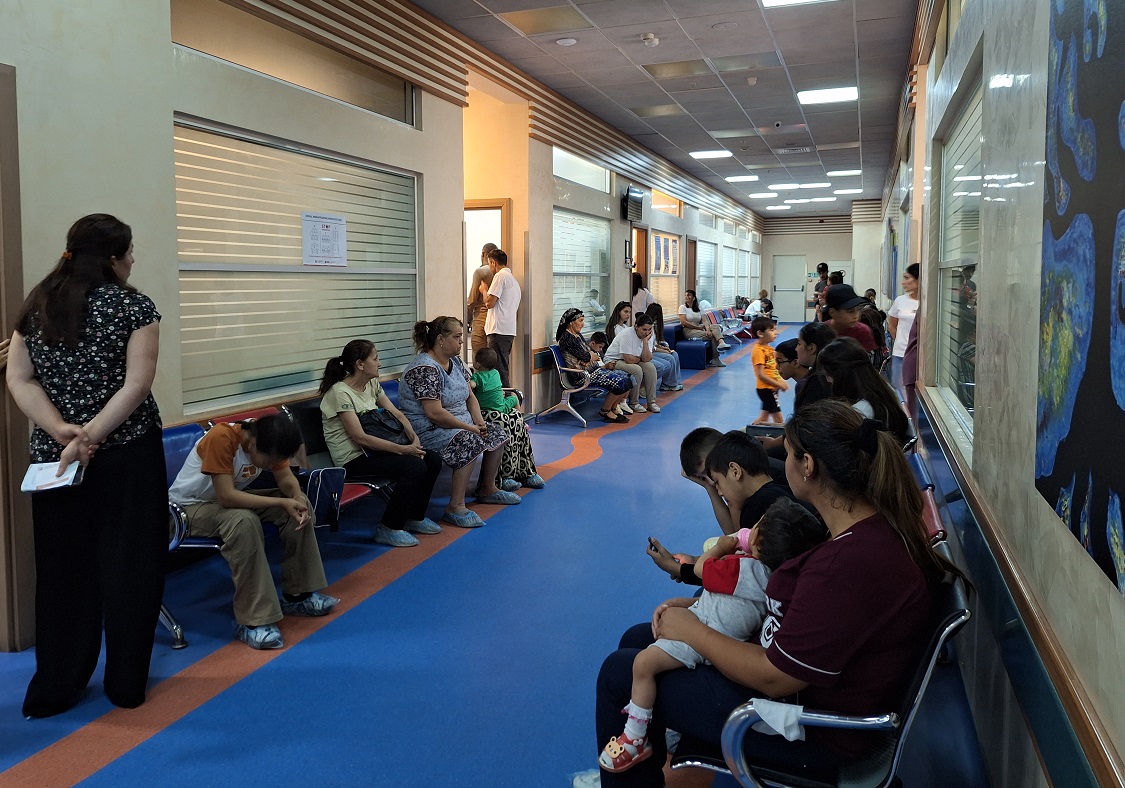
In February 2025, Azerbaijan carried out its first transplant using organs from a donor diagnosed with brain death. The Ministry of Health described it as the first post-mortem transplant in the Caucasus region.
Between 2023 and 2025, only about 100 people applied to become post-mortem donors. The figure suggests there has been no significant growth over the two-year period.
In 2024, more than 600 patients sought organ transplants, while the waiting list was six times larger than the number of available donors.
Under the law, living donors may donate only one kidney, part of a lung, part of the liver, and certain other organ parts. In cases of post-mortem donation, transplants may include the heart, lungs, kidneys, liver, gastrointestinal organs, and even limbs.
Organs may be removed only after an official diagnosis of brain death, and in some cases the family’s consent is also required.
Legal framework and enforcement
The key provision establishing liability for the illegal removal of organs is Article 137 of the Criminal Code. It classifies the illegal buying and selling of organs and tissues, or their forced removal, as a criminal offence. However, the prescribed punishment is relatively mild: a fine or imprisonment for between three and five years.
In 2023, the Council of Europe’s Group of Experts on Action against Trafficking in Human Beings (GRETA) said such sanctions lacked a deterrent effect, that victims were not being recognised as victims of human trafficking, and that the level of training among judges and prosecutors on the issue remained insufficient. It recommended that Azerbaijan strengthen its penalties.
In addition, in 2017, as part of an international criminal case involving human trafficking for the purpose of organ removal, charges were brought against an Iranian doctor. However, after Iran refused to extradite him, the investigation was suspended. Other suspects are believed to be in Pakistan and Georgia.
The case illustrates how the lack of international cooperation can significantly complicate investigations into such crimes.

What would ratifying the convention mean for Azerbaijan?
If Azerbaijan ratifies the convention, it is expected to bring several significant changes.
- Tougher criminal legislation and closing legal gaps. The convention bans providing material compensation to donors or recipients and classifies the secret removal, transport, and sale of organs as criminal offences. National legislation would have to be brought into line with these requirements, including stronger sanctions and the formal recognition of victims.
- Protection of victims. The agreement requires urgent medical and psychological assistance for victims, the restoration of their rights, and protection from prosecution. This could address the current practice in which victims of illegal organ removal are not recognised as victims of human trafficking.
- Expanded international cooperation. The document provides mechanisms for mutual legal assistance, extradition, and the creation of joint investigative teams. This could help prevent situations like the 2017 case, when suspects remained outside the country.
- Public awareness and trust. Joining the convention could help increase transparency and ethical standards in the organ transplant system. This, in turn, may boost public trust and increase the number of donors.
- Building a model legal framework. The Council of Europe convention is regarded as an authoritative international instrument. By joining it, Azerbaijan could position itself to take part in broader initiatives to address the shortage of donors, including cross-border organ exchange programmes.

Assessment
Although some positive steps have been taken in Azerbaijan’s organ donation system in recent years, significant work remains to bring it fully into line with the convention’s requirements.
Changes to the Criminal Code will be needed, including tougher sanctions, stronger victim protection, improved training for medical and law enforcement personnel, and expanded international cooperation.
The low level of donor activity also calls for systematic public awareness efforts, greater public trust, and further development of medical infrastructure.
Azerbaijan: convention against organ trafficking