Armenia under pressure from hybrid attacks: who is spreading disinformation and why






Hybrid attacks on Armenia ahead of elections
Ahead of Armenia’s parliamentary elections scheduled for June 2026, the country has faced what officials describe as a large-scale hybrid attack. A coordinated disinformation campaign has targeted Armenia for an extended period. The situation has become so serious that the authorities have asked European partners for assistance. The European Union has already decided to allocate €15m to strengthen Armenia’s resilience, including efforts to counter disinformation.
Armenia’s Foreign Intelligence Service of Armenia disclosed some details of the hybrid attacks in its annual report.
The Foreign Intelligence Service of Armenia did not name the countries interested in spreading disinformation in Armenia. However, it said that, to influence society during the pre-election period and affect voters’ choices,
- false, distorted and out-of-context information is circulated,
- narratives that run counter to Armenia’s interests are injected into the information space.
The Foreign Intelligence Service warned that attackers use a combination of overt propaganda and covert information operations.
“Visible propaganda against Armenia is mainly carried out by foreign state or government bodies, including intelligence services or resources linked to them. Covert operations, which often fuel and amplify visible propaganda, rely on websites and user accounts that show no obvious traces of any foreign state actor. These tools spread messages designed to create a stronger, more shocking effect.
In 2025, we recorded the use of tactics involving the spread of false information, disinformation or distorted content by various actors through fake accounts, advertising and bot networks. The ability to generate false text and audiovisual materials using artificial intelligence continued to grow. […] The trend of placing false information on foreign information platforms and then ‘legitimising’ it and spreading it through official and unofficial resources of regional actors, which we recorded in 2025, is likely to continue in 2026.”
Local media experts also monitor the situation. They say Russian bot networks and Azerbaijani propaganda outlets spread most of the fake content.
Armenia has also come under direct attack from the pro-Kremlin bot network “Matryoshka”. The same network has recently targeted European leaders by exploiting the story surrounding Nicolás Maduro. The network previously focused on Ukraine and Moldova. It has now circulated AI-generated videos accusing Armenian Prime Minister Nikol Pashinyan of building “gas chambers” and falsely claiming that the singer Cher called for his abduction.
Disinformation campaigns have not focused solely on the prime minister. One fake publication targeted Armenian parliamentary speaker Alen Simonyan. It claimed that he had built a paedophile empire for senior officials. The same publication alleged that Pashinyan, his close associates and security chiefs were involved. It also claimed that since 2020 the Armenian authorities had pressured UNICEF to understate statistics on crimes against children.
The latest disinformation claim appeared on the platform VT Foreign Policy. It accused Armenia’s prime minister of appointing judges from his inner circle in order to “cleanse” the country’s political field ahead of elections. Armenia’s Ministry of Justice of Armenia has already denied the claim. The ministry said the prime minister “has no authority, influence or involvement at any stage of the selection or appointment of judges”.
At the same time, Azerbaijani websites have published fabricated letters supposedly from the European Commission and fake videos accusing Armenian intelligence services. Pro-Russian media outlets and Telegram channels inside Armenia have amplified these materials.
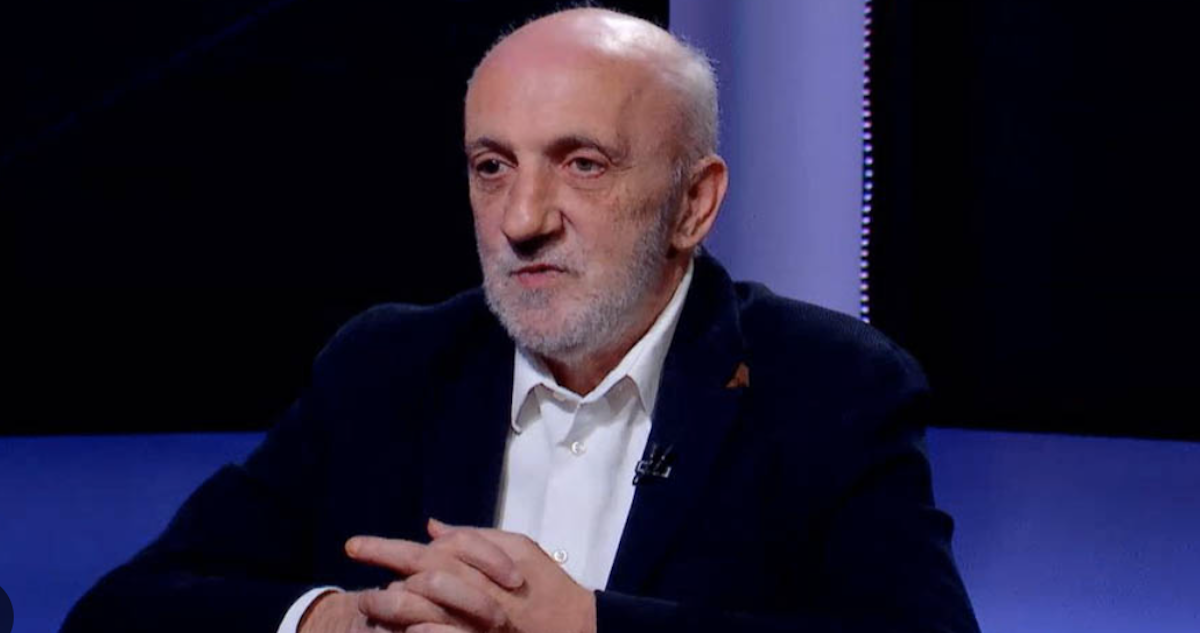
Political analyst Boris Navasardyan spoke about the campaign targeting Armenia, the differences between Russia’s and Azerbaijan’s goals, the potential risks and ways to counter disinformation.
- ‘Military escalation unlikely, but risks remain’ — Armenian Foreign Intelligence Service report
- Russian citizens accused of spying in Armenia: what we know about one case
- ‘We decided to leave someone else’s pocket and become independent state’ – Pashinyan
Comment by political analyst Boris Navasardyan
Goal of Russian fake attacks
Political analyst Boris Navasardyan said:
“Our society remains fairly trusting of information spread through various digital platforms. It is obvious that Russia does not build such campaigns blindly. They always carry out an analysis of public reactions to specific information leaks beforehand. As a result, the methods they use prove highly effective.
If disinformation targets Nikol Pashinyan or the government, it is directly linked to the upcoming parliamentary elections. Even if the goal is not a change of power, the task is to delegitimise the electoral process. In other words, the aim is to provoke violations that the authorities may not be prepared for and to discredit the election results.
In addition, fake attacks seek to fragment the electorate as much as possible. The goal is to ensure that no political force gains a stable majority and that any government has to rely on fragile coalitions. Such an outcome can reduce the country’s governability and weaken its ability to take key decisions on security and development.
Coalition governments are, of course, a product of democracy. But when a country is in a difficult situation, they remain unstable and struggle to resolve critical issues quickly because of conflicting positions and interests among coalition members.”
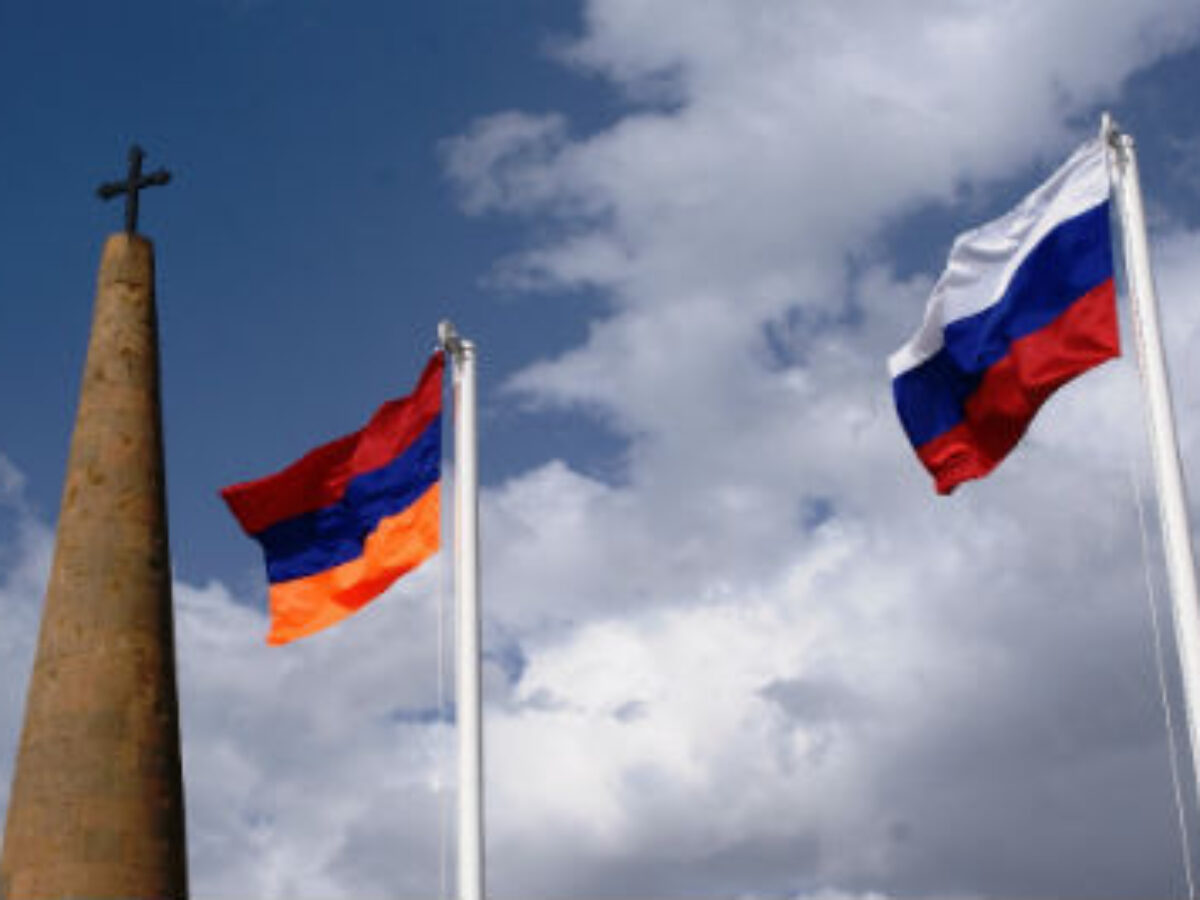
Baku wants to weaken Armenia
“The political goals of those spreading disinformation in Russia and Azerbaijan do not fully совпадают. The same disinformation can serve different purposes.
In Azerbaijan’s case, the focus lies on discrediting Armenia and its government. This represents an attempt to undermine Armenia’s international standing and image. It also aims to reduce support from the international community. The current authorities in Armenia may suit the Azerbaijani leadership. However, serious concern persists over ongoing efforts by the United States and the European Union to support and strengthen Yerevan’s position.
This does not align with Azerbaijan’s interests. Baku continues to capitalise on the results of its military victory and its economic and military advantages. It uses them to secure outcomes it seeks in bilateral relations. Discrediting Armenia and its leadership serves these objectives.”
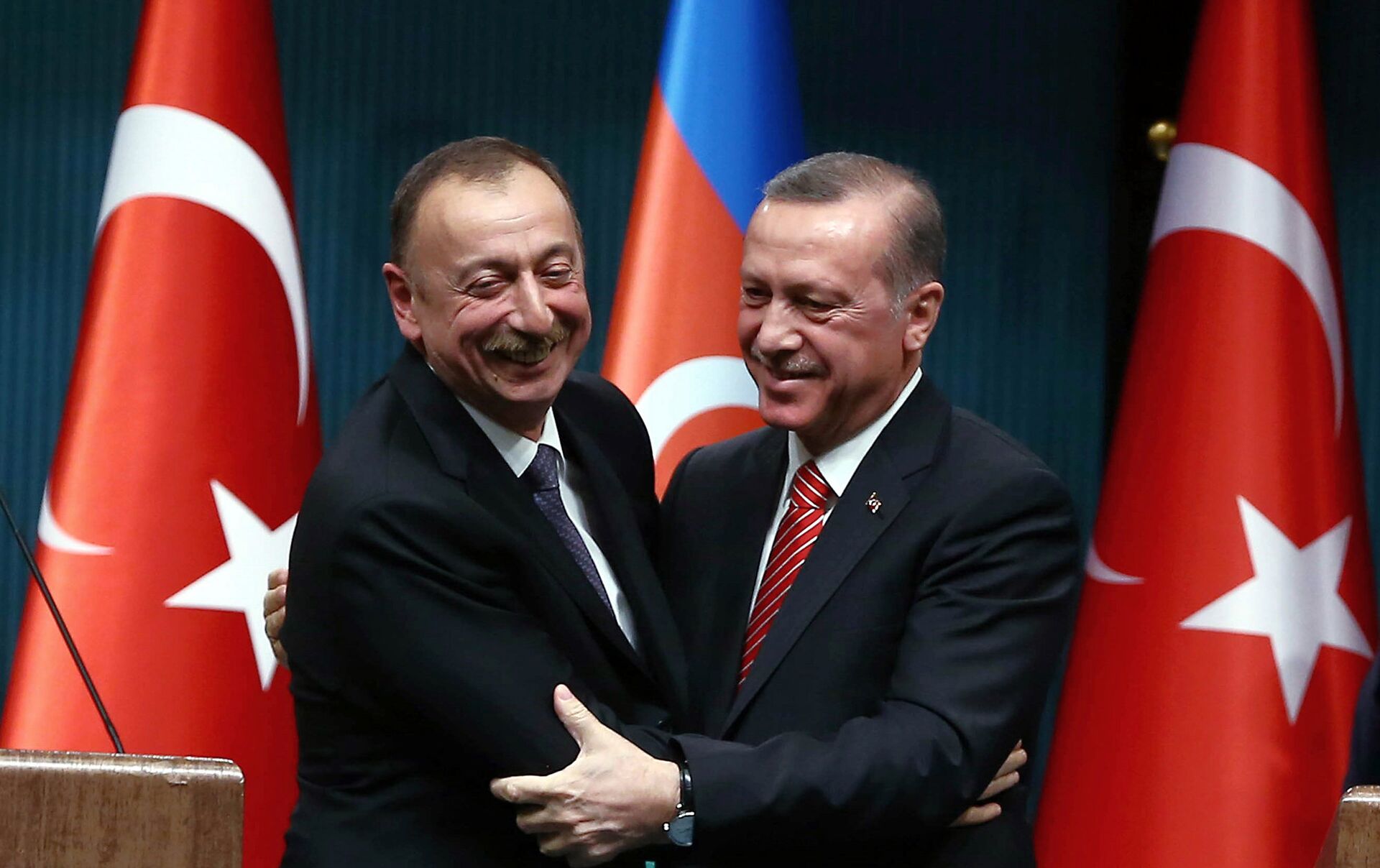
Will Baku remain constructive until June?
“At the same time, we see actions by Baku that strengthen Nikol Pashinyan’s position in domestic political competition. These include the return of four convicted Armenians and Baku’s stance on unblocking communications. We also see a softer position than one or two years ago on border delimitation.
“However, in the latter case, we still need to wait for decisions on the most difficult issues. These include the question of enclaves and the territories where Azerbaijan advanced deep into Armenia’s sovereign territory in September 2022. It is precisely there that we will see how ready Azerbaijan is to take Armenia’s interests and rights into account.
“This softer policy by Azerbaijan will certainly continue until the elections. What happens afterwards is difficult to predict.
“Two scenarios are possible. First, if the issue of keeping Pashinyan in power is resolved, Azerbaijan’s position may become tougher. Second, by that time certain processes may already be under way. In that case, Azerbaijan may continue the same line in order to ensure they move forward as quickly and effectively as possible.
“The faster communications are unblocked, the greater the benefits Azerbaijan will gain as a country claiming a leading transit role in cargo transportation between East and West. For that reason, both scenarios remain possible.
“Whether Azerbaijan returns to a tougher stance or continues a softer line to accelerate the process will depend on concrete calculations at that moment. Azerbaijan assesses the situation and identifies the most advantageous options in each case.”

Countering fakes with quality information
“Large countries with extensive digital capabilities can effectively block channels that spread fake content in order to protect their information space. China offers the clearest example.
“This approach does not work for small countries. They lack sufficient cyber-defence resources, and there are many ways to circumvent blocking measures.
“That is why verifying and debunking false information works more effectively. It is important to remain as open as possible and to distribute diverse information that meets public demand. In competition between fakes and quality information, the latter wins.
“How effectively different countries manage this remains an open question. Armenia has created StratCom (Strategic Communications), a structure that exists in many Western countries. It is meant to develop state information policy while taking all risks and threats into account.
“The level of Armenia’s resilience will depend on the professionalism and effectiveness of this body. It is still too early to judge its performance, as it has only just begun its work.”
Hybrid attacks on Armenia ahead of elections