

Armenia is building AI factory with Nvidia chips: what has been implemented for Azerbaijan under Washington agreement?






What did the Washington agreement give Azerbaijan?
The US made Armenia’s access to advanced Nvidia processors one of the economic incentives offered during the peace talks. The project is already under way in Yerevan. Azerbaijan, meanwhile, received a strategic partnership document from Washington, the suspension of Section 907 and a number of pledges of cooperation. However, the road to Nakhchivan has yet to open.
Armenia will not manufacture Nvidia chips. But with a US export licence, the country is using them to build one of the region’s largest computing centres for artificial intelligence.
According to The Wall Street Journal, Washington used access to advanced Nvidia processors as one of the incentives intended to speed up a preliminary peace agreement between Armenia and Azerbaijan.
The Armenian government describes the project not as a reason for reaching the agreement, but as a “peace dividend” for the country. However, the launch of the Firebird project raises another question:
What concrete dividends has Azerbaijan received since the Washington agreement of 8 August 2025?
Armenia is already benefiting
The WSJ reports that US officials believed Nikol Pashinyan needed tangible economic gains from the peace process to offset the domestic political costs of an agreement with Azerbaijan.
As part of this effort, a US export licence for advanced Nvidia processors for the Firebird project in Armenia was included in the negotiations. The project was initially licensed to receive around 6,000 processors. Following the Washington agreement, the US authorised the export of another 41,000 Nvidia GB300 processors.
In August 2026, the first phase of the centre was launched near Hrazdan. According to the Armenian government, $500 million was invested in the first phase, more than 6,000 Nvidia Blackwell processors were installed and computing infrastructure with a capacity of 18 megawatts was built.
The investment is expected to exceed $4 billion in the next phases. By the end of 2027, the number of processors is expected to rise to more than 100,000, while infrastructure capacity is planned to exceed 400 megawatts.
The US did not provide Armenia with the chips free of charge. Investors are financing their purchase and the development of the infrastructure. The main advantage Washington provided was the export licence. Because access to the most powerful AI processors is subject to US national security controls, securing such a licence provides an economic advantage while also signalling political trust.

What did the US promise Azerbaijan?
On 8 August, Azerbaijan signed a memorandum with the US to establish a working group to prepare a Charter on Strategic Partnership.
The document outlined three areas of cooperation: regional connectivity, including energy, trade and transit; investment, including in artificial intelligence and digital infrastructure; and security cooperation, including defence supplies and counterterrorism.
However, the memorandum contained no legally binding commitments or funding guarantees. The two sides were expected to prepare a broader Charter on Strategic Partnership within six months.
The document was signed in February 2026 during US Vice-President JD Vance’s visit to Baku. The charter refers to the creation of AI data centres in Azerbaijan, defence supplies, energy projects, cybersecurity, demining and investment opportunities along the Middle Corridor.
Unlike the Armenian project, however, it does not name specific companies, investment amounts, the quantity of equipment or launch dates for the projects. Although the document says the two sides should agree on a list of projects and roadmaps for their implementation within three months, the full list has not been made public.
In June, the creation of a data centre in Azerbaijan was also discussed only as “potential cooperation” during a meeting between Azerbaijani Minister of Digital Development and Transport Rashad Nabiyev and a US delegation. The ministry’s statement did not name a specific investor, budget or construction schedule.
Section 907 suspended, but not repealed
One of the most concrete outcomes for Azerbaijan from the Washington meeting was the latest suspension of Section 907, which restricts direct US assistance to the country.
A decision by Donald Trump on 8 August 2025 temporarily removed restrictions on US security cooperation with Azerbaijan and the provision of US government assistance.
However, this does not mean that Section 907 has been repealed. It remains part of US law, while the president can only suspend its application. Ilham Aliyev has also said he expects Congress to repeal the provision completely.
During his visit to Baku, Vance also said the US would provide Azerbaijan with new boats to help protect its territorial waters. However, the statement did not specify their number, models, cost or delivery dates. There is also no publicly available evidence that the boats have so far been delivered to Azerbaijan.
Minsk Process closed: the main political gain for Baku
The most significant political outcome for Azerbaijan was the closure of the OSCE Minsk Process and related structures. This had long been one of Baku’s key demands.
The foreign ministers of Armenia and Azerbaijan signed a joint appeal on the issue in Washington. On 1 September 2025, the OSCE decided to close the Minsk Process, and the administrative procedures were completed on 30 November that year.
The previous international mediation mechanism for the Karabakh conflict was therefore formally abolished. The move has no direct economic impact, but it is important in terms of international recognition of the political reality that emerged after the war and was consolidated by Baku.
The road to Nakhchivan remains closed
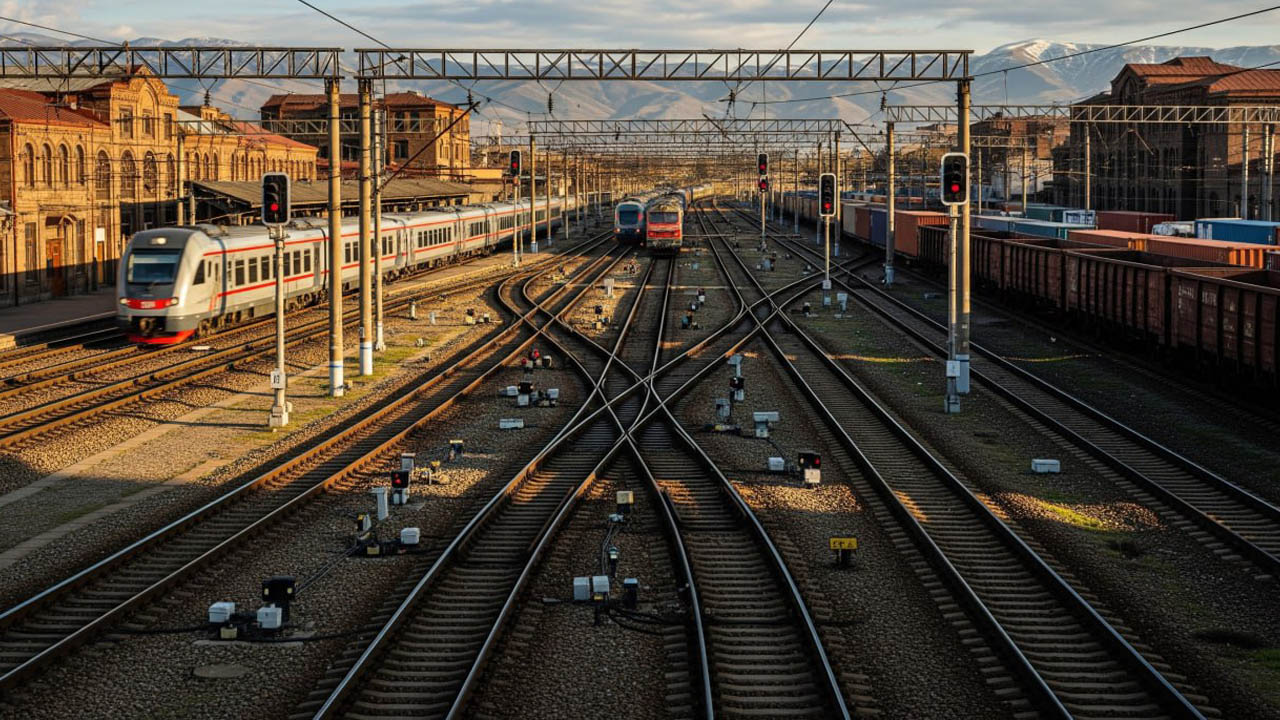
One of the most widely discussed elements of the Washington agreement for Azerbaijan is the TRIPP project, which is intended to establish a connection between the country’s main territory and Nakhchivan.
However, the 8 August Joint Declaration does not give Azerbaijan an established right to transit. It only sets out the goal of creating “unimpeded connectivity” and says Armenia will work with the US to develop the framework for implementing the TRIPP project.
In January 2026, the Armenian government said that routes still had to be determined, a TRIPP company established, land-use issues resolved and construction permits issued. On 31 August, Aliyev and Pashinyan also discussed the “next practical steps” towards implementing the project.
Azerbaijan still has no operational road or rail link to Nakhchivan through Armenian territory. The route has not opened, transport operations have not begun, and the tariff and customs arrangements have yet to be tested in practice.

Two different “peace dividends”
It would be wrong to say that Azerbaijan received nothing from Washington. The application of Section 907 has been suspended, the Minsk Process has been closed, a strategic partnership with the US has been established, and new channels for defence and technology cooperation have been opened.
However, most of these outcomes are political in nature or remain commitments to future cooperation. Armenia’s benefit has already taken concrete and measurable form: an export licence has been granted, thousands of Nvidia processors have been installed and the first phase of a $500 million project has been launched.
Baku says it did not need economic incentives to reach an agreement with Washington. Hikmet Hajiyev, an aide to the Azerbaijani president, told the WSJ:
“We won the war and also wanted to achieve peace.”
This position may explain why the US offered a more concrete economic incentive to Yerevan. But the outcome remains the same: the Armenian part of the Washington package has already taken tangible form in a data centre, while a significant share of the commitments concerning Azerbaijan remains a promise for the future.
What did the Washington agreement give Azerbaijan?