Armenia-Azerbaijan talks: documents on Karabakh settlement released






Publication of documents on the Karabakh conflict
The Armenian government has released documents discussed during the decades-long negotiation process aimed at settling the Nagorno-Karabakh conflict. The government’s website provides access to proposals submitted over the years by the OSCE Minsk Group, which facilitated peace talks under the co-chairmanship of the United States, France, and Russia. Among the published documents are a Russian package of proposals, the Kazan document, the Madrid Principles, the Russian proposal package, the Kazan document, and the famous UN Security Council resolution.
The declassified documents also include a letter from former Armenian president Serzh Sargsyan to Russian president Vladimir Putin, written on 5 August, several months after the April 2016 war.
The government’s website describes the released documents as “key” and “offering insight” into the content of the negotiation process prior to the 44-day war in 2020.
Armenian experts familiar with the conflict’s history and the proposed settlement measures have pointed out that most of these documents were already published many years ago. For this reason, they do not consider it accurate to say they have only now been “declassified.”
Some analysts argue that it is impossible to form a “reliable picture of the negotiation process” based on the documents provided, as the collection is incomplete.
“If the goal is to create a full picture of the proposals, then all documents should have been published, not just a selection. If the goal is simply to show that the ‘former authorities’ were to blame, then this will have only a short-term effect,” said Karabakh conflict expert and journalist Tatul Hakobyan.
JAMnews offers readers both the Armenian government’s position and the commentary of local analysts.
All the published documents can be read here.
- Armenian society kept in dark over Karabakh war defeat: opposition and experts react
- US embassy staff ‘where possible’ attend trials of Armenians in Baku
- Pashinyan’s post on war anniversary sparks outrage
Government: ‘Negotiations were never conducted on Nagorno-Karabakh’s independence or its reunification with Armenia’
The Armenian government website has published an article titled “What Does the Nagorno-Karabakh Negotiation Package Reveal?” The author is not specified, but the conclusions reflect statements repeatedly made by Prime Minister Nikol Pashinyan.
- “During and after the First Nagorno-Karabakh War, negotiations to resolve the conflict were never conducted on Nagorno-Karabakh’s independence or its reunification with Armenia.
- The main focus of the talks was the return of all seven districts surrounding Nagorno-Karabakh to Azerbaijan, either as a package or in stages.
- The status of Nagorno-Karabakh itself was to be addressed only within the framework of Azerbaijan’s territorial integrity and sovereignty.
- In the perception of the international community, the right to self-determination for Nagorno-Karabakh meant ‘self-governance’ within Azerbaijan.
- An interim status would have dismantled the de facto status and administration established in the 1990s and created a new Armenian-Azerbaijani governance structure.
- Discussion of the idea of a future referendum was intended to delegitimise the independence referendum held in Nagorno-Karabakh on 10 December 1991.
- As a result of this negotiation process, the content of the Nagorno-Karabakh conflict was returned to the zero point that existed in 1991,” the article states.
It also emphasises that the letter from former Armenian president Serzh Sargsyan to Vladimir Putin demonstrates that, according to Sargsyan:
- the likelihood of renewed military or combat action was high,
- the balance of weapons between Armenia and Azerbaijan had been disrupted.
The article comments on claims that circulated widely after the 2018 revolution, when Pashinyan and his team came to power:
“Sargsyan’s entire team immediately began making vague accusations that Nikol Pashinyan had come to ‘hand over territories.’ The publication of the documents and Sargsyan’s letter to Vladimir Putin provides an answer to this question. Sargsyan knew that war was inevitable and its outcome was more than predictable. These statements were intended for him to later use in his political comeback.”
Analysts’ commentaries
‘Armenia had to make major concessions, receiving only vague promises in return‘
According to political analyst Lilit Dallakyan, the most important aspect of the published documents is the timing and framework for Nagorno-Karabakh Armenians’ right to self-determination:
“Effectively, the 2016 and 2019 proposals lack a provision present in all earlier proposals. It specified who could participate in the referendum. The eligible population was defined as those residing in Nagorno-Karabakh in 1988. In addition, Azerbaijan would have periodically postponed the referendum. The issue would have remained unresolved, which was advantageous for Russia. It is unsurprising that Lavrov’s proposals formed the basis.
As a result, Armenia had to make major concessions. It received only vague hopes of a future referendum or a delayed war. In fact, Sargsyan, along with the leadership of Artsakh, already rejected the proposals in 2016 that he had advised Pashinyan to accept,” she wrote on her Facebook page.
‘Serzh Sargsyan was ready to concede everything to Putin‘
Political analyst Robert Ghevondyan was most struck by the letter from Armenia’s third president, Serzh Sargsyan, addressed to Putin. He describes that letter as a “plea.”
In the autumn of 2016, Serzh Sargsyan fully realized the catastrophic state to which he had brought Armenia and the Armenian army. He understood this clearly. Sargsyan also recognized that the managerial incompetence of both himself and his team meant they had no way out of the situation. The only option left was to beg the ‘regional ruler’ to temper Aliyev’s ambitions. In return, one could concede everything to Putin — from dignity (which, after this letter, can be considered zero) to the state’s energy, economic, and military systems,” the analyst wrote.
‘Has the Key West proposal not been preserved in the foreign ministry?‘
Expert on the Karabakh conflict Tatul Hakobyan claims that the government did not release all the documents.
Akopyan raises the question of why the government did not publish the Key West proposal, which was officially presented to the parties:
“Instead, they published a version of the territorial exchange [Megri for Nagorno-Karabakh], which never became an official document.”
The analyst insists that the Key West proposal did exist. He adds that he and British expert Thomas de Waal reviewed the English version of the document at the Armenian Foreign Ministry in 2005.
“Why didn’t the government publish Key West? Is it possible that this document was not preserved in the Armenian Foreign Ministry? I don’t rule it out. And is it possible that the government has this proposal but chose not to publish it? That is also possible.”
At the time this report went online, Prime Minister Nikol Pashinyan addressed the issue. He said the government did not have the Key West package in its possession.
‘Negotiation legacy was rejected’
Political analyst Suren Surenyants described the package of published documents as “half-baked and incomplete.” He said key elements of the negotiation process were missing. He highlighted several missing elements. These included the 1994 trilateral ceasefire document and the 1995 statement by the OSCE’s then-chair. The list also covered the Key West proposal and the Prague process protocols.
“Although the 2019 settlement draft has been published, the official response from the Armenian side is missing. This is the main document reflecting Armenia’s position and negotiation intentions,” Surenyants said.
In his view, this gap prevents a proper assessment of the political value of the presented documents.
Even so, he argued that the incomplete publication shows that during Pashinyan’s tenure:
- “the negotiation legacy was rejected,
- mediation proposals were failed or ignored,
- attempts were made to nullify the negotiation process,
- the agency of Artsakh was effectively pushed out of the negotiation field.”
“All these steps undermined mechanisms of international restraint and created the conditions for a large-scale war,” the analyst said.
Surenyants concluded that the conditions for the 2020 Karabakh war emerged not from the logic of the negotiation process. They grew out of its consistent disruption and an adventurous policy that lacked any sense of state responsibility.
“The political responsibility for the war and its consequences lies entirely with Nikol Pashinyan and the current government,” he added.
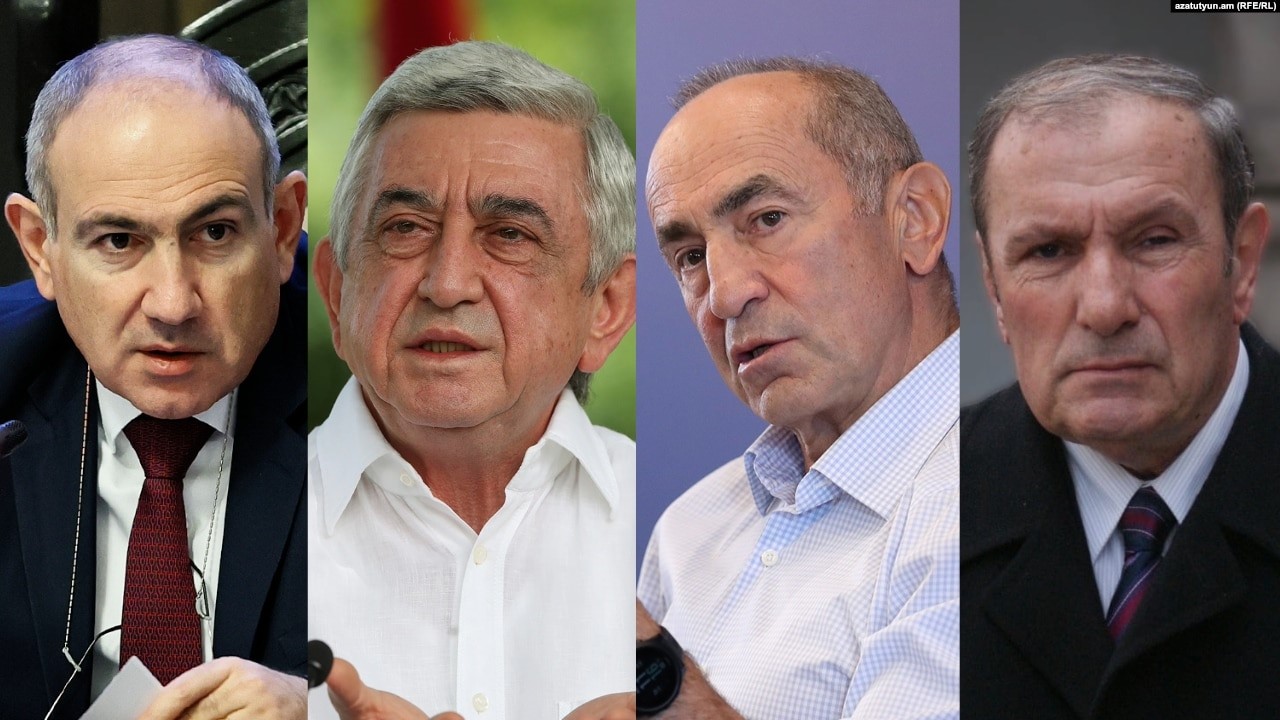
Publication of documents on the Karabakh conflict