Russian deputy foreign minister announces new restrictions on Georgian companies


Meeting between Russian and Georgian diplomats
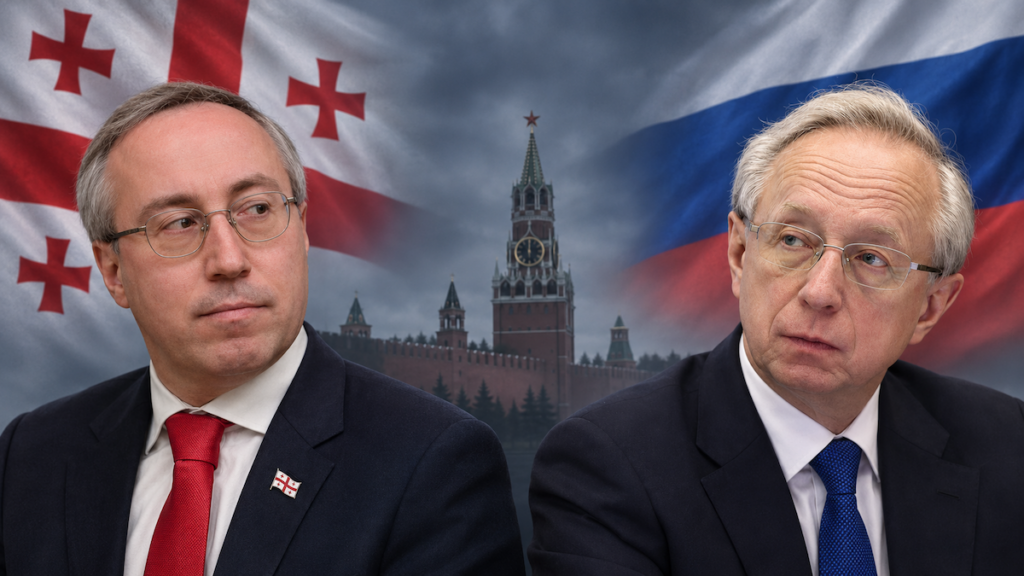
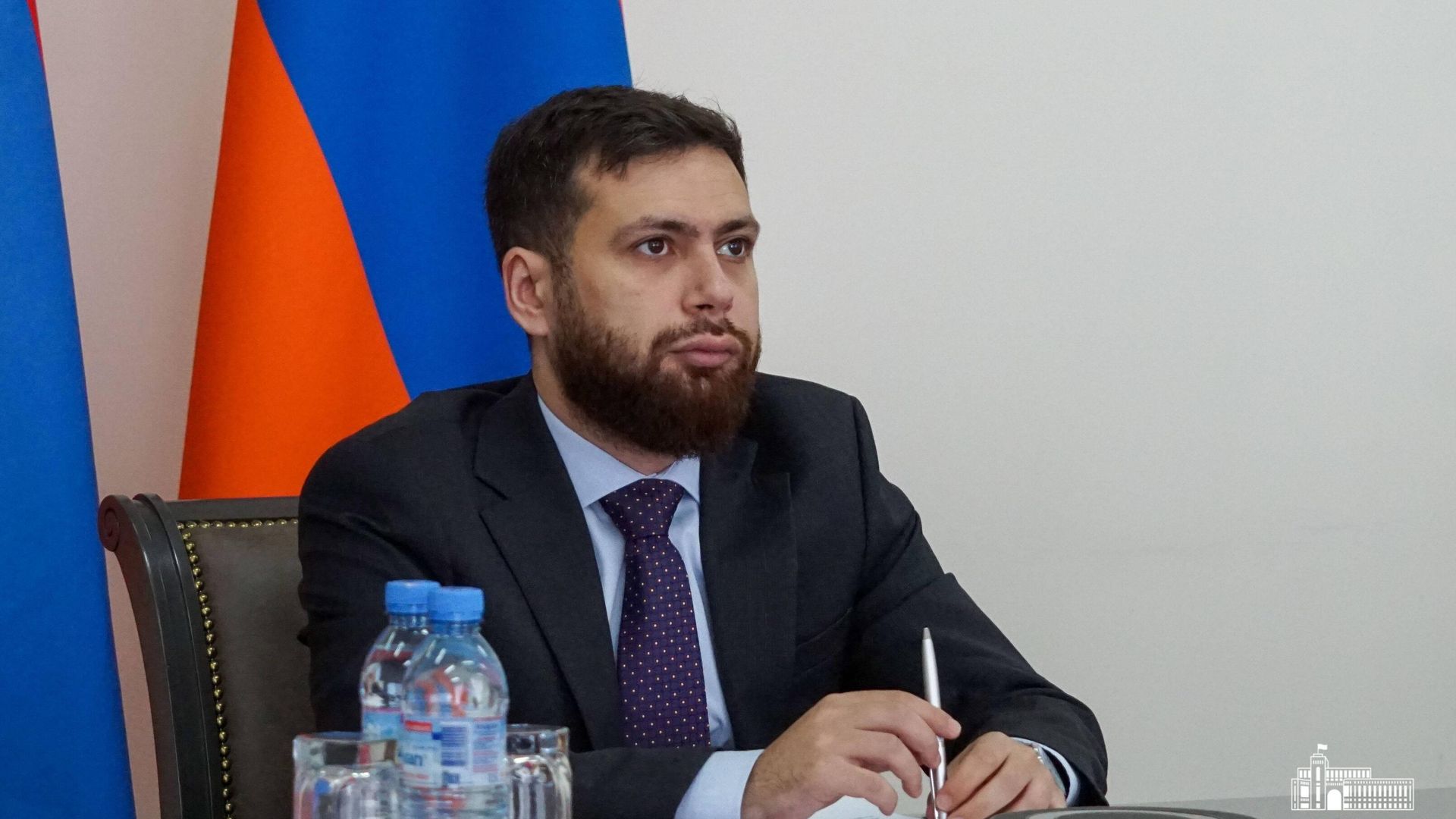
The first meeting as part of the resumed dialogue between Georgia and Russia did not result in the lifting of restrictions on Georgian beverage exports. Giorgi Zurabashvili, the Georgian prime minister’s special representative for relations with Russia, said that, on the contrary, Russian Deputy Foreign Minister Mikhail Galuzin had announced plans to impose sanctions on two more Georgian wine producers during their meeting in Minsk on 19 November.
Prime Minister Irakli Kobakhidze also confirmed the information, suggesting that a “deep state” might be behind Russia’s decision and could have bribed mid-level Russian officials.
What did Galuzin tell Zurabashvili?
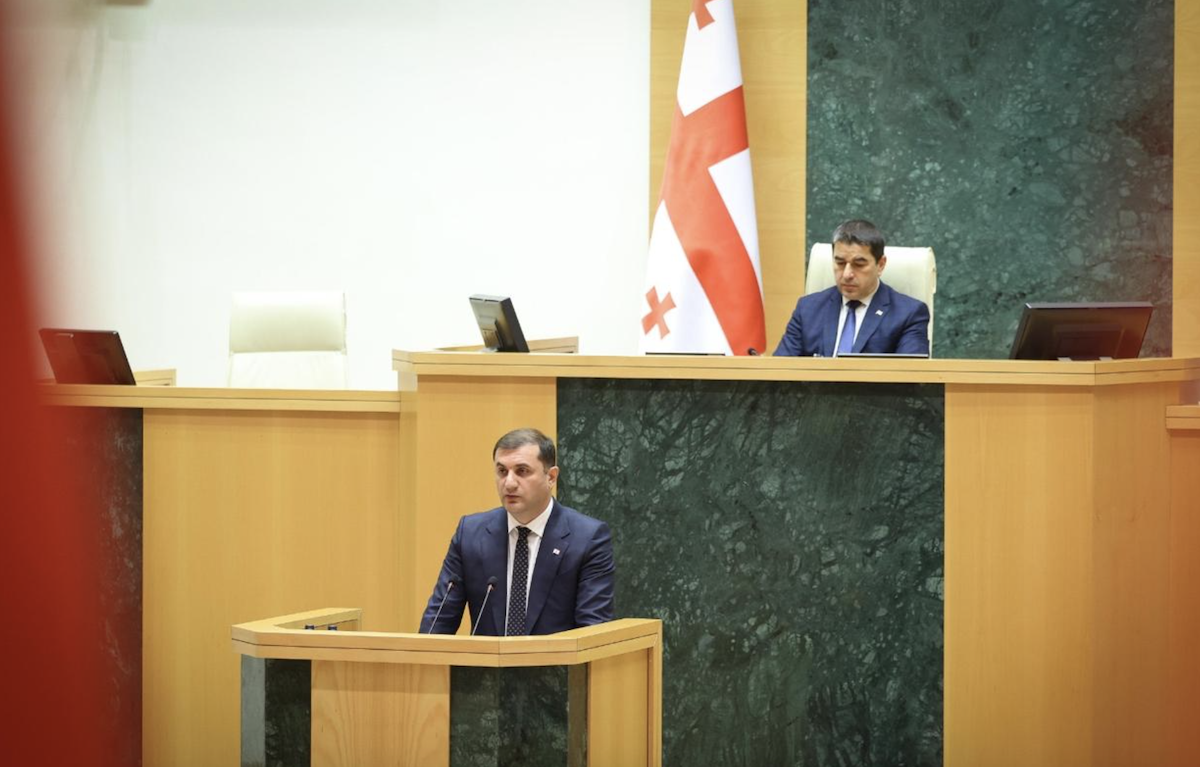
Zurabashvili is Georgia’s first deputy foreign minister. Since October, he has also served as the prime minister’s special representative for relations with Russia. On 19 November, he met the Russian deputy foreign minister in Minsk. It was his first meeting in this capacity.
Zurabashvili first disclosed details of the meeting on 25 November on pro-government Imedi TV. According to him, the Georgian side’s main objective was to restore Georgian wine producers’ access to the Russian market.
● Moscow and Tbilisi prepare to resume dialogue
● Russia signals new opportunities for closer ties with Georgia
● ‘Moscow is ready to restore diplomatic relations with Georgia’ — Russian Foreign Ministry
● Kremlin message to Tbilisi: diplomatic ties with Russia would bring greater economic benefits
In October, Russia restricted imports of products from seven Georgian producers. Four of them are wine producers: Teliani Valley, Tbilvino, Vineni and Askaneli Brothers. The list also included beer produced by Georgian Beer Company, as well as Coca-Cola beverages and Nabeghlavi mineral water bottled in Georgia.
According to Zurabashvili, Galuzin cited three reasons for imposing the restrictions: product quality, allegations that the companies were funding the war in Ukraine, and “anti-Russian rhetoric”. Zurabashvili rejected all three accusations. His hopes that the restrictions would be lifted immediately did not materialise, with new announcements following instead.
“Naturally, I was surprised and stunned by this news, since nothing of the sort is happening,” Zurabashvili said, adding that Galuzin had not provided a single fact to substantiate his claims. “Therefore, these are political assertions that have absolutely no basis.”
According to Zurabashvili, the Georgian side raised a number of technical issues, while the Russian side put forward around 10 proposals, predominantly of a humanitarian nature. As an example, he cited an initiative to establish a partnership between a university in Russia’s Don region and a Georgian state university. In Zurabashvili’s view, these proposals were aimed against the Georgian Dream government and sought to strengthen the opposition’s position. He did not mention any other topics.
Who warned Zurabashvili?
Mamuka Pipia, international secretary of the pro-Russian Solidarity for Peace party, claimed that Zurabashvili had been warned while still in Tbilisi that the Russian ban would be extended to two more companies. According to Pipia, the companies in question are Winiveria and Chateau Mukhrani. This information has not been corroborated by other sources.
Kobakhidze confirmed that Yury Balashov, head of the Russian-Georgian Business Council, had visited Tbilisi ahead of the meeting in Minsk. According to the prime minister, Balashov had promised that all companies would be removed from the list by the end of the year but subsequently changed his position. Kobakhidze noted that Galuzin had expressed the same position.
‘Deep state’ – now in Moscow too
Kobakhidze described Galuzin’s arguments as absurd, noting that Tbilisi had expected all existing restrictions to be lifted. He compared Russia’s actions to the behaviour of the European bureaucracy, which, he claimed, had been “bought” by a “deep state” and was acting against the interests of its own countries.
The prime minister did not name any specific individuals. He expressed hope that the issue would be discussed at the highest level of the Russian leadership and added that the dialogue should continue.
In Moscow, Tbilisi – or nowhere at all
Six days after the meeting, on 25 November, Russian Foreign Minister Sergei Lavrov welcomed remarks made by Georgian Foreign Minister Maka Bochorishvili.
Bochorishvili had called for overcoming the fear of engaging in dialogue with Russia. Meanwhile, according to Russian state news agency TASS, Belarusian Foreign Minister Maxim Ryzhenkov said the sides had made significant progress in building mutual trust and that the talks could be moved to their respective capitals.
Bochorishvili denied this, saying that no proposals had been made or decisions taken regarding meetings in Moscow or Tbilisi. She noted that Belarus was not a party to the negotiations and had no information about their outcome.
The following day, Kobakhidze suggested that meetings could be held alternately in Moscow and Tbilisi. The prime minister insisted that neither this nor the presence of national flags posed a threat to Georgia’s policy of non-recognition of the occupied territories.
Parliament Speaker Shalva Papuashvili said the prime minister would decide when and where the meetings would take place. He added that seeing the Georgian flag in Russia would be a source of pride. Papuashvili also stressed that the issue of occupation must be part of the negotiations.
“Do you really think the special representative would attend a meeting, talk about wine and herbs, and not even touch upon the main problem in relations with Russia?” he asked.
In his interview with Imedi TV, Zurabashvili also noted that dialogue was necessary to discuss issues of sovereignty and de-occupation. The informal dialogue format between Georgia and Russia was established in 2012 and initially focused exclusively on trade, economic and humanitarian issues. It is known as the Zurab Abashidze-Grigory Karasin format. Before Zurabashvili’s appointment, the post of special representative for relations with Russia had been vacant since December 2025.
‘Communication failure’: Reactions
Former Foreign Minister Irakli Menagarishvili told Radio Liberty that although dialogue with Russia was necessary, he saw no grounds for optimism. He urged caution.
Berdia Sichinava, one of the leaders of the Gakharia for Georgia party, described the meeting as a “disaster”. According to him, Minsk cannot be regarded as a neutral venue. He questioned Zurabashvili’s competence and highlighted Galuzin’s diplomatic experience, including his tenure as ambassador to Japan.
Nika Gvaramia, leader of the Coalition for Change, told TV Pirveli that a Georgian official’s visit to Belarus contradicted the government’s own rhetoric about pursuing peace. “This is not about striving for peace but, on the contrary, about indirectly participating on Russia’s side,” he said. Gvaramia called on the government to inform the public about what had been discussed in Minsk.
Khatia Dekanoidze, one of the leaders of the Unity – National Movement party, argued that moving the negotiations to Moscow would constitute a diplomatic disaster.
“It is important to understand that all this is happening behind closed doors,” she said. Dekanoidze suggested that Zurabashvili had agreed to a visit by Galuzin to Tbilisi, although this information has not been confirmed.
Grigol Gegelia, a leader of the Lelo – Strong Georgia party, believes that the government is preparing a “new stage of capitulation”. According to him, Georgian Dream has increased the country’s economic dependence on Russia, effectively giving Moscow leverage to blackmail Georgia.
Imprisoned former President Mikheil Saakashvili wrote: “We have been left completely defenceless and vulnerable in the face of an enraged Russia – entirely deprived of support from America or Europe.”
Salome Zurabishvili’s meeting with EU ambassador
On 26 November, the European Parliament adopted a strongly critical resolution on Georgia.
According to TV Pirveli, 441 MEPs voted in favour of the document. The resolution calls for the immediate release of Paata Burchuladze, Irakli Nadiradze and Paata Manjgaladze. It also calls for sanctions against Bidzina Ivanishvili, Irakli Kobakhidze, Shalva Papuashvili, Kakha Kaladze and other officials.
On the same day, Salome Zurabishvili met EU Ambassador Pawel Herczynski. According to the Foreign Ministry, she described the resolution as an attempt to spread “false narratives” about the country. Zurabishvili also asked EU representatives to clarify whom exactly they considered to be arbitrarily detained.
Commenting on the meeting, Irakli Kobakhidze said: “In this case, the European Parliament has reached the point of absurdity.” Shalva Papuashvili, in turn, described the European Parliament as a “reincarnation” of the Soviet-era Congress of People’s Deputies.