Why has Abkhazia been unable to resolve its waste crisis for 20 years?


Waste crisis in Abkhazia
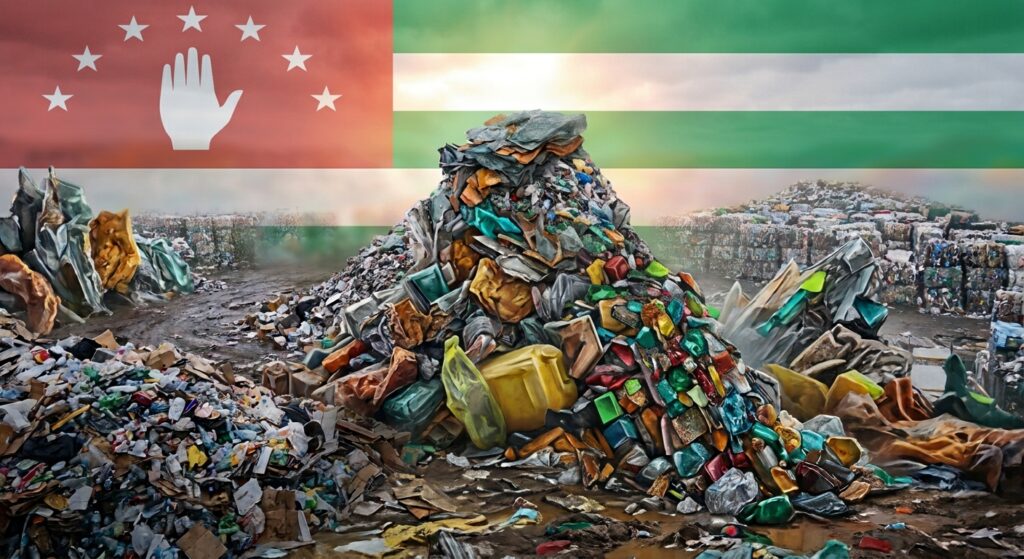
The history of the waste crisis in Abkhazia resembles an endless, absurdist tragicomedy: the problem is clear, experts have worked out technical solutions, yet for years the authorities have directed their efforts towards the wrong measures and on an insufficient scale.
Presidents and mayors come and go, expert commissions are convened, but each time another fire breaks out at an illegal rubbish dump or residents take to the streets to protest against the unbearable stench, the authorities are forced to revisit the issue. And each time, it emerges that the problem has only grown worse.

Timeline of waste protests
Public debate over Abkhazia’s waste problem intensified following a protest in the village of Alakhadzy, near the resort town of Pitsunda, when it became clear that the authorities’ assurances that they had the situation “under control” were far from reality.
On 27 October, residents of Alakhadzy blocked access to a rubbish dump. They were driven to take action by persistent smoke from burning waste, an unbearable stench and the risk of a major fire. Nearly 1,000 people signed a petition calling for the dump to be closed.
The head of the district administration, Yury Khagush, arrived at the scene, along with members of the district assembly, local officials, police officers and even representatives of the State Security Service. The protesters dispersed after being promised that the issue would be resolved.
This was far from the first such incident. The history of “waste protests” in Abkhazia dates back to July 2007, when residents of the Mayak neighbourhood in Sukhum first blocked rubbish trucks from entering a municipal landfill located within the city limits.
In the years that followed, the landfill continued to catch fire repeatedly, engulfing Sukhum in toxic smoke. In August 2011, city authorities promised to bring the site up to an “acceptable standard” by November that year.
However, nothing had changed by November, and in December, then-President Alexander Ankvab openly acknowledged that the republic was facing a waste crisis.
“We need to find the courage either to reach agreements with investors or to make savings elsewhere and build at least two large waste-processing plants ourselves,” Ankvab said at the time.
Two years later, he described purchasing Italian equipment as the most cost-effective option. However, the plans never materialised.

From one landfill to another
In 2018, the landfill in the Mayak neighbourhood was finally closed. However, the problem did not disappear – it was simply relocated. Waste from the capital began to be transported daily to a landfill in the village of Shashakuara, in Gali district, 72km away, resulting in significant costs and wear and tear on vehicles.
“The Sukhum landfill contains hundreds of thousands of cubic metres of waste. But most of that volume is air. Only 15% consists of solid and liquid waste, while 85% is air. So these trucks keep driving back and forth, transporting air and burning fuel,” Russian hydraulic engineer Alexander Tsekhovoy explained to specialists in Sukhum in 2019.
According to his calculations, rather than endlessly transporting waste between landfills, each district should establish special compaction stations capable of compressing waste four- to fivefold. This would reduce the number of trips to the central landfill to just four truckloads a day.
However, instead of introducing these technologies, the authorities have continued simply transporting waste from one district to another.

Costly and pointless landfill in Katsikyt
A new waste management complex in the village of Katsikyt, in Gulripshi district, was supposed to provide a breakthrough solution to the waste problem.
The 5.5-hectare site was equipped with a waste disposal pit featuring a multilayer insulating base, treatment facilities and a conveyor belt for sorting waste. Construction proved extremely challenging, both technically and financially, with the project costing more than 150m roubles [$1.81m].
However, by the time the facility was nearly complete, it turned out that nobody wanted it.
Sukhum refused to use the complex, while the authorities in Gulripshi district were also reluctant to take responsibility for it. Security personnel were soon withdrawn from the site, which has since been effectively abandoned and remains unused.
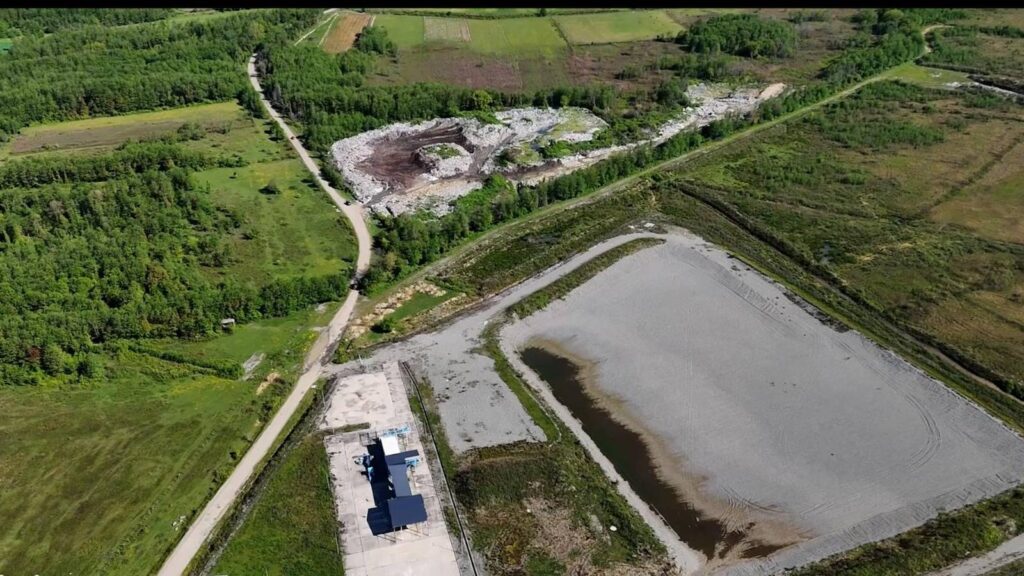
The landfill in the village of Katsikyt was intended to be a financially sustainable facility. During its construction, Timur Agrba, then head of the Capital Construction Department and now mayor of Sukhum, said the facility could become self-financing by sorting, compacting and selling recyclable materials, including plastic, paper and metal.
According to Agrba, if properly managed, the facility could not only cover its operating costs but also generate revenue for further development.
However, in practice, the main obstacle is the tariff for household waste disposal.
“The current tariff policy does not reflect the realities or the costs incurred by our companies. International practice shows that waste collection and transportation should be funded through payments made by the residents who generate that waste,” Beslan Eshba, then head of the Sukhum city administration, explained back in 2014.
He promised that city authorities would seek to introduce relevant amendments to a new housing code. However, 12 years later, the new code has still not been adopted.
The current waste collection fee in Abkhazia is 27 roubles [$0.33] per person per month, a relatively modest amount. Yet most urban residents do not even pay this, as there is no clearly established system for collecting utility payments.

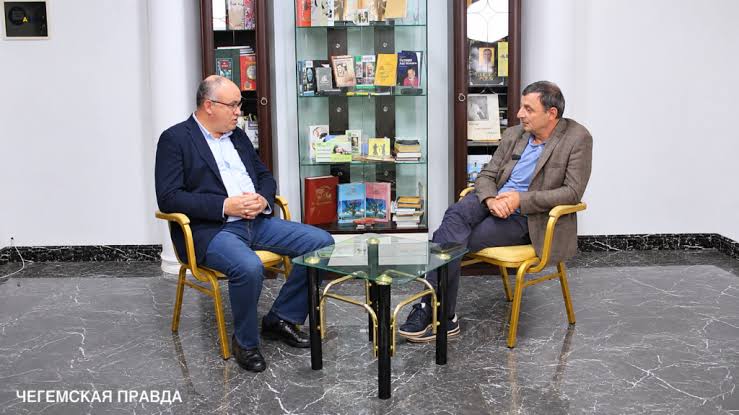
To obtain an objective assessment of the situation, Abkhazia’s Public Chamber held a series of meetings with Russian specialists, local environmental experts and representatives of district administrations.
As a result, an expert report was drawn up, providing a comprehensive assessment of the entire household waste management system. The report has already been submitted to the president, parliament, executive authorities and the Institute of Ecology.
For now, however, it represents little more than another faint glimmer of hope on the horizon. No tangible progress has been made towards resolving the problem.
The terminology, place names and views expressed in this article are those of the author and do not necessarily reflect the editorial position of this website.
Проблема мусора в Абхази