Georgian PM Kobakhidze on 'Global War Party': 'It is neither EU nor US, but can influence them'


Georgian PM on the “Global War Party”
Georgian Prime Minister Irakli Kobakhidze has once again spoken about the so-called “Global War Party”, claiming that real individuals stand behind the term, but that naming them publicly would be “dangerous”.
Kobakhidze is in Dublin attending the ninth European Political Community (EPC) summit. On 12 November, he will attend the plenary session opening the summit and take part in a roundtable discussion on security and defence in democratic Europe.
The European Political Community was established on the initiative of French President Emmanuel Macron as a forum for political dialogue and cooperation among European countries. Georgia has traditionally taken part in these summits, despite political contacts between the European Union and the Georgian government having dwindled in recent months.
According to Kobakhidze, the “Global War Party” is neither the European Union nor the United States, although the forces behind it can influence official institutions within both.
“We have never specified exactly who we mean by the ‘Global War Party’, but there are real individuals behind this term. We make it clear that the ‘Global War Party’ is not the same as the European Union or the United States, although these people do use official channels to exert influence on Georgia,” Kobakhidze said.
The prime minister also spoke about a meeting attended by himself and his predecessor, Irakli Garibashvili. According to Kobakhidze, someone at the meeting urged Georgia to open a “second front”. He did not identify the individual or the official organisation they allegedly represented.
Kobakhidze said the Georgian government was firmly convinced that the individual belonged to the “Global War Party”. However, he stressed that neither the European Union nor the previous US administration was behind the incident.
He also referred to the term “deep state”, used by the current US administration, explaining that the Georgian government had a similar set of forces in mind, although it did not necessarily attach exactly the same meaning to the term.
The prime minister said the government was withholding the names of those involved in the interests of the country, as publicly discussing the matter would be “dangerous”. He also claimed that these forces used official channels to influence the policies of other countries, including Georgia.
During the interview, Kobakhidze also addressed the 2008 Russian-Georgian war, saying it could have been avoided. Drawing parallels with Ukraine, he argued that both the first and second wars in Ukraine could also have been prevented.
“Of course, Russia started these wars, just as it started the war in Georgia, which was provoked by foreign agents holding official positions in the Georgian government. At the same time, I am convinced that all three wars – the 2008 Russian-Georgian war and both wars in Ukraine – could have been avoided. Unfortunately, certain influential figures did not want these wars to be prevented,” he said.

Kobakhidze was asked why Georgia was seeking EU membership if, as the government claims, some representatives of European institutions had tried to drag the country into a war or interfered in its democratic elections.
In response, the prime minister said that the value of the European Union for Georgia lay in the EU itself, rather than in the particular politicians or bureaucrats who happened to represent its institutions at any given time.
The prime minister also discussed the geopolitical and economic importance of Georgia and the South Caucasus. He noted that the war in Ukraine and the ongoing conflict in the Middle East had made transport and economic routes connecting Europe with the East particularly important.
According to Kobakhidze, the outbreak of the war in Ukraine had cut the European Union off from the Russian market, which had previously played a significant role in the European economy. The EU had also lost access to relatively cheaper natural resources.
He added that the ongoing conflict in the Middle East was creating further obstacles to maintaining links with the East. “Under the current circumstances, Georgia and the South Caucasus remain the only route connecting Europe with the East. Maintaining close cooperation and strong ties is therefore crucial, not only for Georgia but also for Europe itself,” Kobakhidze said.
How the term “Global War Party” emerged and why Georgian Dream turned it into a political message
The concept of the so-called “Global War Party” entered Georgian Dream’s political rhetoric in 2022, following Russia’s full-scale invasion of Ukraine. Initially, representatives of the ruling party used the term “War Party” to refer to the opposition United National Movement. However, they later broadened its meaning, claiming that influential informal political groups in the West stood behind it.
According to Georgian Dream, these forces aim to drag Georgia into a war with Russia, effectively opening a “second front” alongside the conflict in Ukraine. Government representatives have linked this claim to statements by Ukrainian politicians, calls for Georgia to join sanctions against Russia, and political pressure on Tbilisi from Western countries.
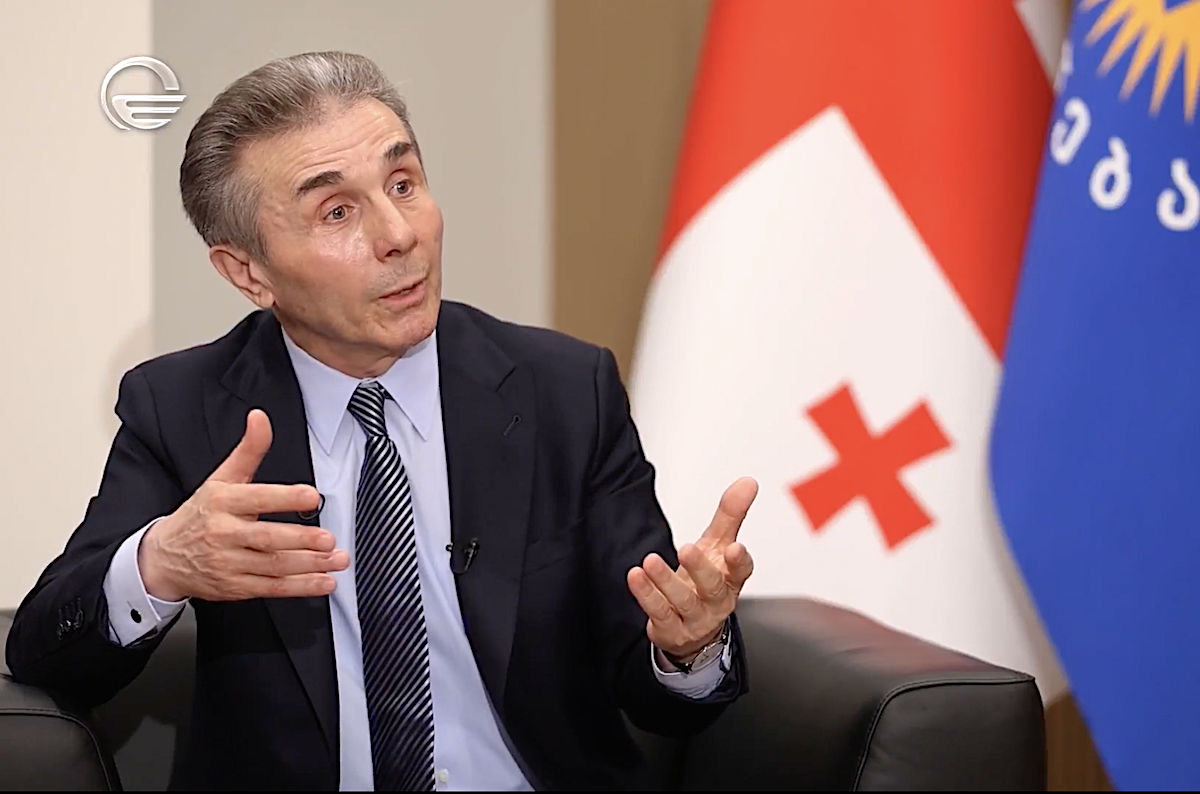
The term “Global War Party” gained particular prominence in April 2024, when Bidzina Ivanishvili, honorary chairman of Georgian Dream, told a rally in Tbilisi that an international force was seeking to change Georgia’s government and drag the country into a war. Ivanishvili later explained that he had coined the term himself to distinguish between the “War Party” operating inside Georgia, which he used to describe the opposition, and the international forces allegedly backing it.
Although the authorities do not equate the “Global War Party” with the European Union or the United States, they have at various times referred to representatives of Western political institutions, MEPs, US politicians and international organisations in this context. Nevertheless, Georgian Dream has yet to name a single individual or organisation or present evidence to substantiate the existence of such a coordinated group.
The “Global War Party” narrative has become one of the central elements of Georgian Dream’s political rhetoric. Ahead of the 2024 parliamentary elections, the ruling party built its campaign around a choice between war and peace. It frequently portrayed the opposition and government critics as agents working in the interests of international forces seeking war.
Georgian PM on the “Global War Party”