The word ‘hijab’ went unmentioned in Shusha: did Erdogan’s visit end rift between Baku and Ankara?


Aliyev and Erdoğan meet in Shusha
Turkish President Recep Tayyip Erdoğan met Azerbaijani President Ilham Aliyev in Shusha on 8 November, Azerbaijan’s Victory Day. It was the first face-to-face meeting between the two leaders since disagreements over the wearing of hijabs in schools strained relations between the two countries.
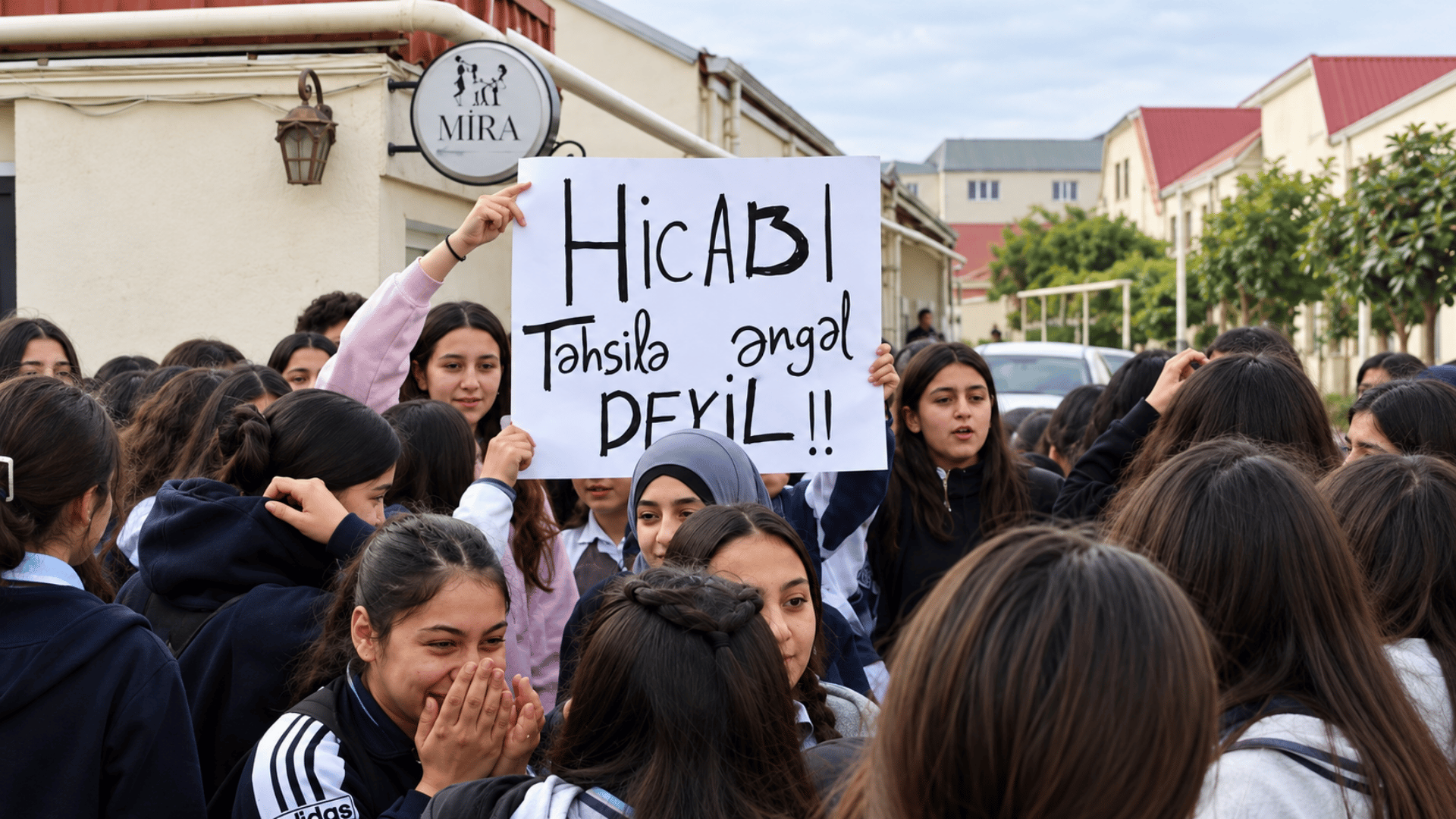
The dispute erupted in September after the Azerbaijani authorities changed the school uniform requirements. A ban on additional items of clothing that do not comply with the principles of ‘secular education’ effectively meant that girls wearing hijabs could no longer attend classes.
Aliyev summed up the main outcome of the visit as follows:
“The unity of Turkey and Azerbaijan is eternal and unbreakable.”
However, neither side addressed the dispute in their official statements. The word ‘school’ came up only once in the two presidents’ speeches: Erdoğan mentioned the start of construction on a 40-classroom school in Aghdam and said he planned to open it together with Aliyev next year.
We previously reported on the concessions Ankara made ahead of the visit and what Baku wanted to achieve.
Did the meeting in Shusha put an end to the disagreements, or did it merely take them out of the public eye?
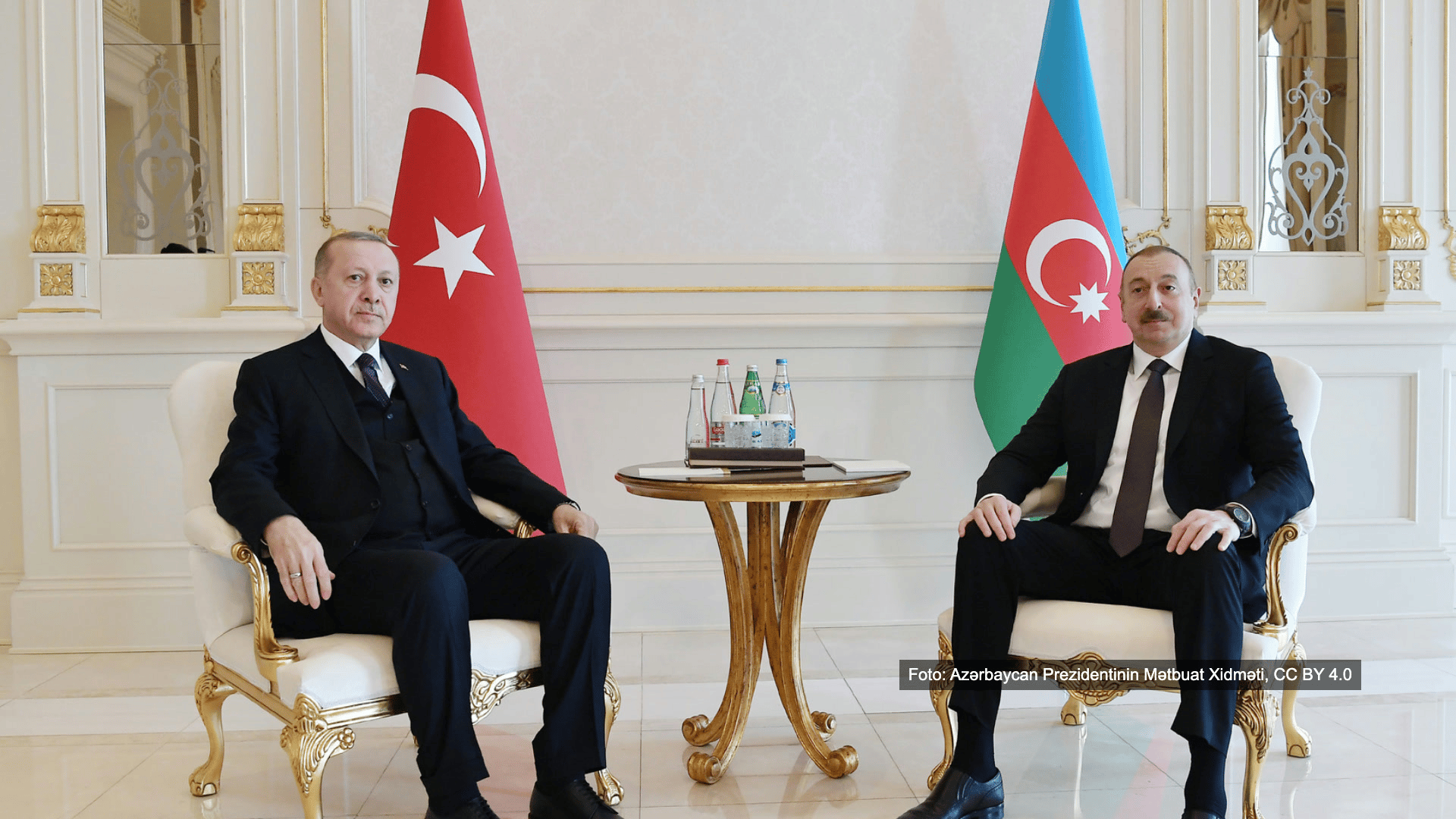
What did they discuss in Shusha?
Both presidents delivered the same message: some forces want to damage relations between the two countries, but they will not succeed.
Aliyev said:
“Our unity and brotherhood are unbreakable. Those who want to undermine them will never achieve their goal.”
He added that the two leaders would “allow no one” to interfere in their relations or undermine their unity “for their own interests”.
Erdoğan made a similar point:
“…those who seek to weaken our brotherhood will not achieve their goals today or tomorrow, just as they failed to do so yesterday.”
Neither president specified whom they meant. Political analyst Asif Narimanli writes on the TodayPress website that the reference to “personal interests” could hint at the involvement of certain individuals or groups in the recent escalation. Under this interpretation, the problem lies not in disagreements between the two states, but in the actions of those trying to set them against each other.
Aliyev said the meeting covered political and economic ties, investment, energy, transport routes and the Zangezur corridor. The presidents announced no new agreements.
Aliyev also recalled that Armenia and Azerbaijan had initialled a peace agreement more than a year ago, but had yet to put their “final signatures” to it. Erdoğan, in turn, voiced support for efforts to establish peace in the region but did not mention Turkey’s relations with Armenia. Ankara links the normalisation of ties with Yerevan to the Armenia-Azerbaijan peace process. The delay in signing the agreement therefore also affects Turkey’s plans.
What did they leave unsaid?
The presidents’ statements made no mention of Azerbaijan’s school uniform rules. They also avoided other developments linked to the recent tensions: the dismissal of Erdoğan’s chief adviser Oktay Saral, Azerbaijan’s entry ban on 31 Turkish citizens, and Aliyev’s decision not to attend the summit in Ankara on 30 October. Neither side mentioned Israel.
Erdoğan referred to the Organisation of Turkic States, but only to thank Azerbaijan for its chairmanship and announce Turkey’s intention to strengthen the organisation during its own term as chair.
Analysts also differ in their assessments of the meeting. Narimanli believes the Shusha meeting showed that “even when disagreements arise between brothers, no issue is insurmountable”.
Journalist Yusuf Kanli, by contrast, argues that the meeting eased public tensions but did not resolve the political differences. He says observers should watch for further decisions on school uniform rules, transport routes, and differences in the two countries’ policies towards Israel and Armenia.
What did each side gain?
For Baku, the most visible outcome was Erdoğan’s visit to Karabakh on Victory Day. Nothing so far suggests that Azerbaijan made concessions on the main issue in the dispute. Ankara, on the contrary, removed the Turkish president’s chief adviser from his post, while Erdoğan avoided discussing the Azerbaijani authorities’ domestic decisions in Shusha.
In Shusha, Erdoğan once again described the relationship between the two countries with the slogan “One nation, two states”. However, at the height of the dispute, Baku emphasised the second part of that formula. An Azerbaijani source told Middle East Eye that:
“We are two states, and no one should forget that.”
Aydin Mirzazade, an MP from the ruling New Azerbaijan Party, also stressed that Azerbaijan was not a province of any other country. Around the same time, Devlet Bahçeli, an ally of the Turkish authorities, said that unity in the Turkic world did not mean one state dominating the others.
Elkhan Shahinoglu, head of the Atlas research centre, told AFP that the tensions stemmed from Baku’s desire for an equal partnership and its reluctance to play the role of a “junior brother” in the alliance.
The presidents’ remarks about the Karabakh war also attracted attention. Erdoğan said the Azerbaijani people had liberated Karabakh “under the decisive leadership of my brother Ilham”. Aliyev, in turn, thanked Turkey for its “political and moral” support and recalled that 3,000 Azerbaijani servicemen had died during the war. Narimanli believes these remarks responded to what he called “manipulations” by certain circles in Turkey over the victory in the Karabakh war.
Ankara, meanwhile, wants Aliyev to visit Turkey. That evening, the APA news agency, citing Turkish media, reported that the Azerbaijani president would attend the UN COP31 climate conference in Antalya. The newspaper Haber 7 cited diplomatic sources. The leaders plan to meet on 11–12 November during the summit. However, Baku has yet to officially confirm Aliyev’s attendance.
Ahead of Erdoğan’s visit, Middle East Eye reported that Baku had not made a final decision on the matter. If Aliyev travels to Antalya, that would mark the most tangible outcome of the Shusha meeting.
What happened to the hijab issue?
The leaders did not address the issue at their meeting in Shusha, and it remains unresolved in Azerbaijan itself. The authorities have yet to announce any possible changes to the school uniform requirements.
In October, human rights organisation Amnesty International said:
“Denying girls access to classes because they wear the hijab is discriminatory and violates their right to education.”
On 12 October, Azerbaijan’s Interior Ministry reported that police had detained 37 people. Activists, however, put the number of detainees at more than 200. Authorities imposed administrative detention on several people who protested against the new school uniform requirements. In particular, police arrested Ilkin Guseynov, who launched an initiative to help schoolgirls wearing hijabs, and a court sentenced him to 30 days in detention. Meanwhile, Azerbaijan’s Press Council said in October that some reports had taken the school uniform decision out of context and portrayed it as a “hijab ban”.
The issue also remains unresolved in Turkey. Fatih Erbakan, leader of the New Welfare Party and one of the Turkish citizens barred from entering Azerbaijan, said in October:
“We expect our esteemed president to make the necessary representations to his esteemed counterpart, Aliyev.”
But Erdoğan made no such representations in his statements in Shusha. Azerbaijan has also given no indication that it will lift the entry ban on the 31 Turkish citizens.
What will be the next test?
Gönül Tol, an analyst at the Middle East Institute in Washington, wrote on X:
“The hijab dispute is a symptom of a deeper rift.”
She said tensions between the two countries had been building for some time, amid disagreements over Azerbaijan’s sovereignty, Ankara’s influence in Baku, their differing approaches to Israel and Turkey’s rapprochement with Armenia.
The presidents did not openly address any of these issues in Shusha. The upcoming summit in Antalya will provide the first test of whether the two sides have managed to overcome their differences. Aliyev’s decision on whether to attend will show whether relations between Baku and Ankara have genuinely begun to improve.
Aliyev and Erdoğan meet in Shusha