Georgia must adopt European laws if it wants to join EU – ambassador


Georgia’s EU accession
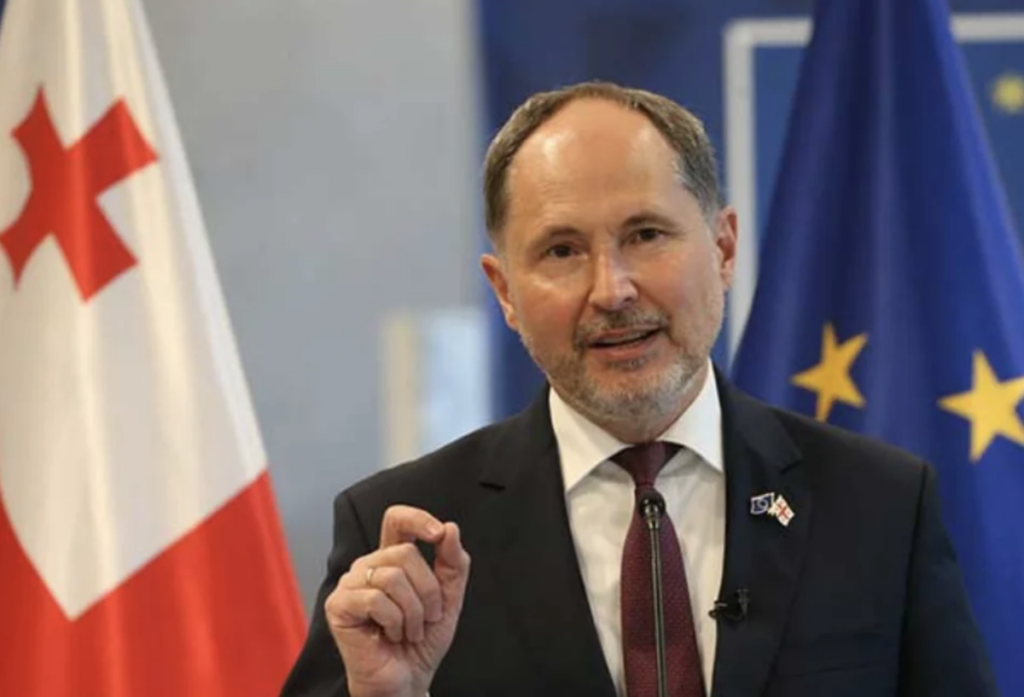
According to EU Ambassador to Georgia Pawel Herczynski, the EU accession process is based not on a candidate country’s own assessment of its progress, but on the European Union’s evaluation. In other words, it is the EU that assesses the progress made by a candidate country, not the other way around.
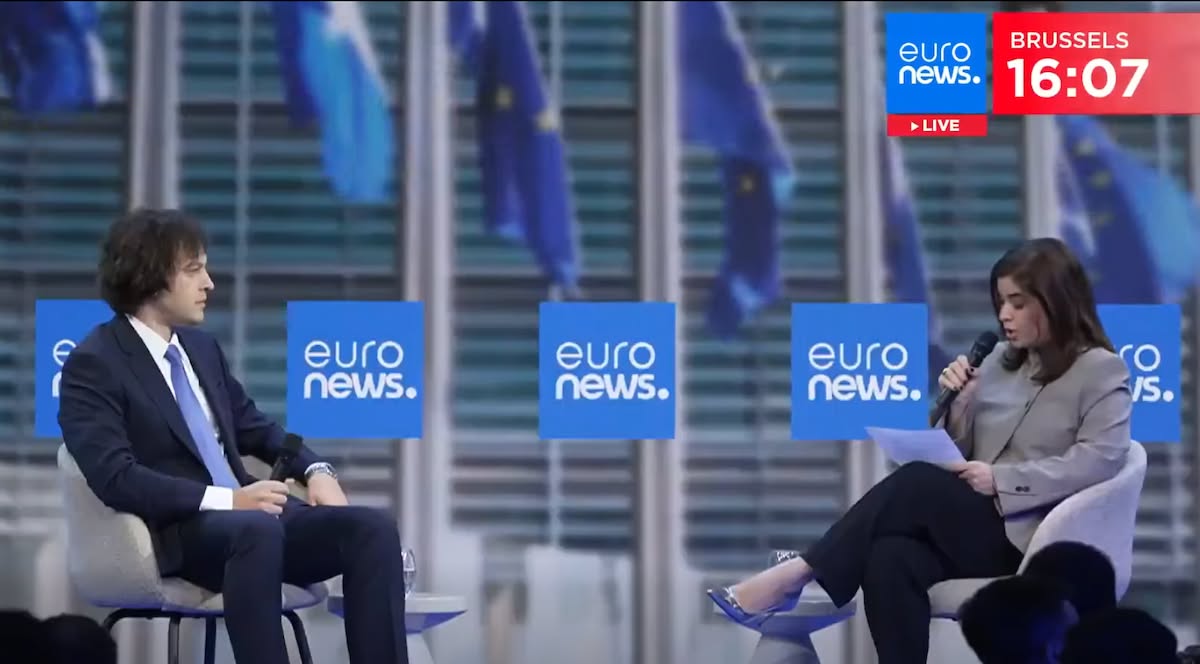
Herczynski made the remarks in response to a statement by Georgian Prime Minister Irakli Kobakhidze, who said at an EU enlargement summit that the Georgian authorities were optimistic about a possible change in the EU’s approach towards Georgia.
“This is a simple truth and the foundation of EU enlargement: the European Commission assesses Georgia, not the other way around. The accession process is based on a voluntary application. By applying for EU membership, a country agrees to be monitored and assessed by the European Commission,” Herczynski said.
According to the ambassador, some candidate countries take EU accession seriously. He named Montenegro, Albania, Ukraine and Moldova as frontrunners in the accession process.
At the same time, Herczynski said, some countries express an interest in joining the EU but are in fact moving away from the European path and reversing the progress they have made.
“This is extremely regrettable, but it is the sovereign decision of each candidate country,” he stressed.
The EU ambassador also said that if Georgia wanted to join the EU, it should adopt European legislation rather than American, Russian, Chinese or other countries’ laws.
Herczynski was particularly critical of the Law on Transparency of Foreign Influence, which he said was incompatible with EU legislation.
According to the ambassador, the EU had warned the Georgian authorities about this as early as 2023. At the time, the ruling party withdrew the repressive law, after which Georgia was granted EU candidate status at the end of the year. However, the authorities soon reintroduced the same legislation in parliament.
“We said loudly and clearly, including myself: ‘Please don’t do this. This law is not compatible with EU legislation.’ And we also said loudly and clearly that there would be consequences. The Georgian government decided to continue down this path. Then came another law, and another law, each one widening the gap between the European Union and Georgia,” Herczynski said.

According to the ambassador, Georgia is free to decide which laws to adopt, but a country seeking to join the European Union must implement EU legislation.
Herczynski also responded to Irakli Kobakhidze’s calls for dialogue, noting that the EU supports dialogue but that Georgia’s ruling party had stripped it of any substance over the past three years.
According to the ambassador, democratic backsliding, pressure on civil society, threats to ban political opposition groups, actions against independent media and a daily campaign to discredit the European Union were preventing the resumption of dialogue.
“The European Union is built on dialogue. Dialogue is part of our DNA. Behind me, you can see the flags of the 27 EU member states. We constantly negotiate and compromise to reach consensus. As the EU, we fully support dialogue. The problem is that over the past three years, the ruling party in Georgia has rendered this dialogue meaningless,” Herczynski said.
He questioned what exactly the EU and the Georgian authorities could discuss when the ruling party was talking about the “deep state” and the “global war party”, as well as drawing parallels between the European Union and the Soviet Union.
“Do you expect serious representatives of EU institutions to start discussing the definition of the ‘deep state’? Do you expect us to engage in dialogue about the ‘global war party’? This smear campaign must stop for dialogue to resume,” he said.
The EU ambassador also addressed the ongoing proceedings in Georgia’s Constitutional Court concerning a request to ban opposition parties. Herczynski said the European Union was following the process with great concern.
According to him, attempts to ban opposition parties threaten the foundations of democracy in Georgia. He also reiterated the European Commission’s position, expressed several days earlier by EU Commissioner Marta Kos.
Herczynski said that if the authorities attempted to ban opposition parties that had passed the electoral threshold in the last parliamentary elections, it would be an unprecedented case in the history of the Council of Europe.
“I do not want to speculate about something that has not yet happened. We are following the proceedings in Georgia’s Constitutional Court with great concern. Attempts to ban the main opposition parties through a lawsuit in the Constitutional Court threaten the foundations of democracy in the country,” he said.
According to the European Commission’s enlargement report of 4 November 2026, Georgia’s EU integration process remains suspended, while the situation in the country has deteriorated further compared with the previous year.
The European Commission assessed that the Georgian authorities had taken no steps during the reporting period to implement the nine steps set out for the country to advance its EU accession process.
The report highlights the weakening of democratic institutions, restrictions on political and civil liberties, problems with judicial independence, attempts to ban opposition parties and a lack of progress in tackling corruption.
The Commission also points to Georgia’s incomplete alignment with sanctions against Russia, an increase in direct flights to Russia and the presence of Georgian companies on EU sanctions lists.
Consequently, due to continued democratic backsliding, the European Commission is no longer issuing new recommendations on accession negotiation chapters, except in areas relating to fundamental reforms.