Opinion: If Georgia’s Constitutional Court bans opposition parties, Russia will use it against Georgia


The banning of opposition parties in Georgia
Davit Usupashvili, chairman of the political council of the Lelo party, said the state itself faced the greatest risk from a ban on opposition parties.
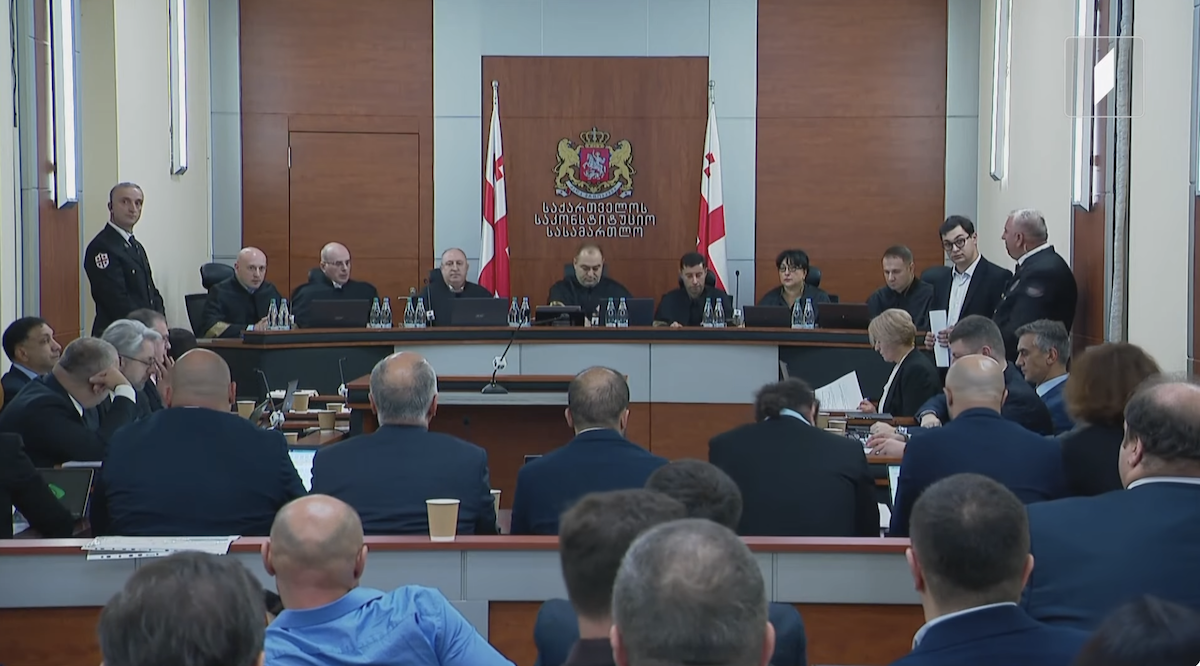
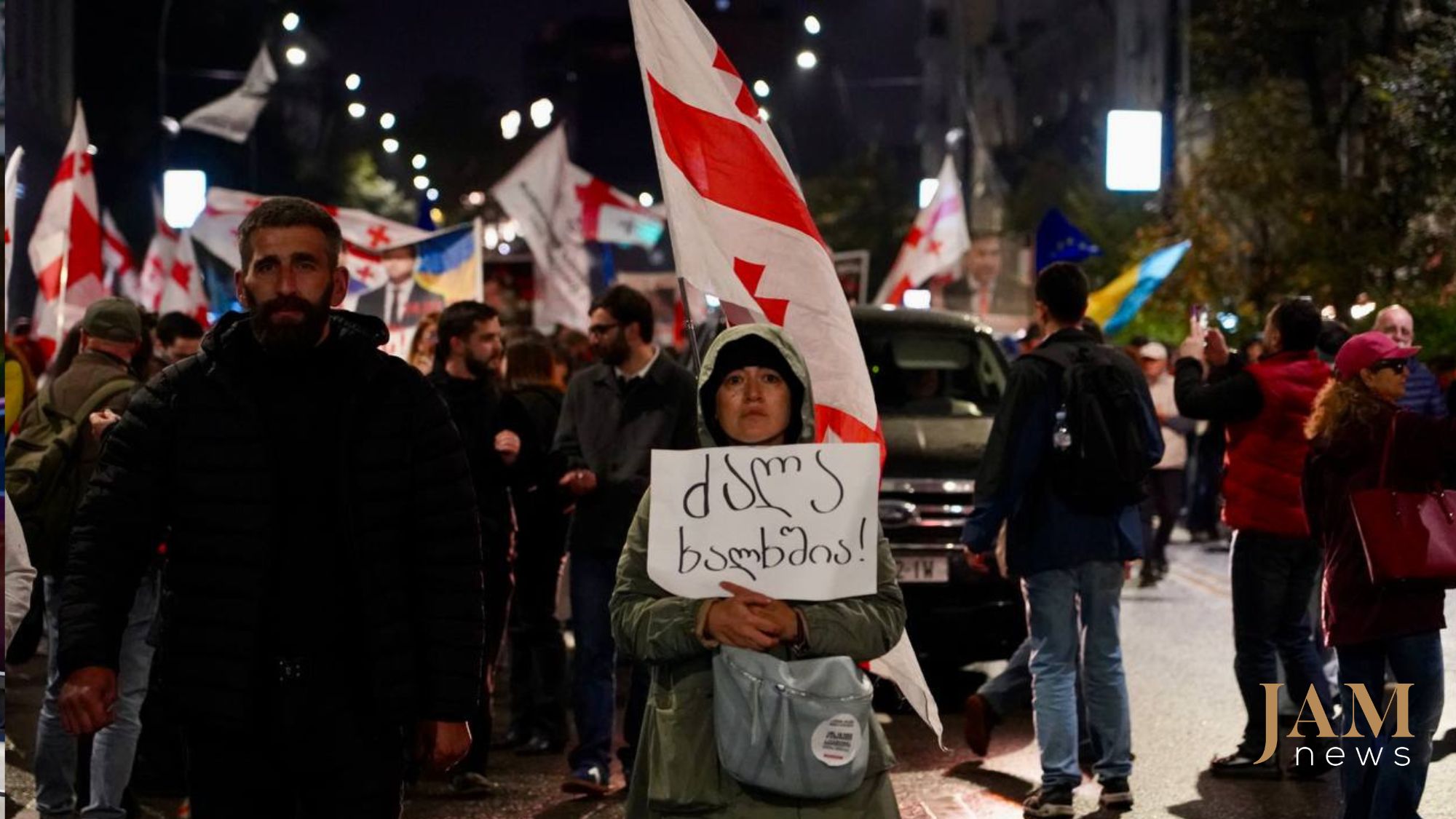
On 21 October 2026, Georgia’s Constitutional Court in Batumi began hearing a petition filed by 88 MPs from the ruling Georgian Dream party. The petition seeks to ban five opposition parties: Unity – National Movement, Coalition for Change, Lelo – Strong Georgia, Gakharia for Georgia and the Federalists. The hearings will continue from 26 to 30 October. The court must deliver its ruling by 24 June 2027.
Usupashvili said that if the Constitutional Court accepted the arguments set out in Georgian Dream’s petition, Russia would use the ruling to bolster its own demands concerning Georgia’s occupied territories.
- “Don’t like it? Too bad”: third day of Constitutional Court hearings on opposition ban in Georgia
- Georgia opposition party ban case: Day two of court proceedings
- Court begins hearing case to ban opposition parties in Georgia: first-day developments
Georgia’s Constitutional Court is considering a constitutional petition filed by 88 MPs in the Georgian parliament, seeking to ban five opposition parties.
Politician Davit Usupashvili discussed the possible consequences of the ruling in detail in an interview with Sopho Zurabiani on Formula TV.
“Irreparable harm to the country”
The petition holds the United National Movement responsible for the August 2008 war, which took place while the party was in power.
Usupashvili said Georgian Dream’s political statements effectively give Russia a narrative similar to the one it uses against Ukraine: that Georgia acted as the provocateur in 2008. He warned that if the Constitutional Court’s ruling endorsed this narrative, “it would cause enormous, irreparable harm to the country”.
Usupashvili believes Russia would then press even harder for the legal recognition of borders and guarantees of “independence” for the occupied regions. In effect, he said, Moscow would tell Georgia: “Your own Constitutional Court has ruled this way.”
Usupashvili noted that until now, firm opposition from the European Union, the United States, Japan and other partners had helped prevent attempts to secure recognition of the occupied territories. But what position would the international community find itself in if the Constitutional Court declared that the occupied territories were victims and Russia had acted only to protect them? After all, as a rule, “the international community sides with the oppressed and seeks to restrain the aggressor, punish it and so on”.
Davit Usupashvili draws attention to the appointment of Giorgi Zurabashvili as special representative for relations with Russia, a move that coincided with the start of the Constitutional Court proceedings.
On the very day the court began hearing the petition, Prime Minister Irakli Kobakhidze appointed Zurabashvili, the first deputy foreign minister, as special representative for Russia. The position had remained vacant since December 2025. Kobakhidze said the appointment did not signal the start of a new phase in relations with Russia.
Usupashvili believes Georgian Dream has given the role a new purpose by appointing Zurabashvili:
“It was a highly symbolic gesture. On the one hand, we hear claims that ‘Western lackeys’ — or their ‘masters’ — are manipulating political parties and citizens who have taken to the streets. On the other hand, the message is: ‘Now we will sort out our relations with you ourselves.’ Clearly, this creates a serious problem.”
He notes that when Zurab Abashidze held the position, Georgia managed its engagement with Russia with Western support. Now, however, the country has effectively been left without allies.
Gathering evidence for future legal disputes
Four of the five parties facing a ban are taking part in the hearings. The fifth, the Federalists, has refused to participate in the proceedings. Over the past three hearings, the judges have rejected every motion submitted by the opposition parties.
Nevertheless, Davit Usupashvili believes the opposition should take part in the proceedings, focusing above all on gathering evidence.
He argues that this is necessary both for disputes on the international stage and for legal proceedings within Georgia, which he believes will inevitably follow.
“What is happening there is essentially preparation for a future lawsuit over Georgian Dream’s unconstitutional actions. In effect, they are preparing a future legal case.”
Usupashvili is convinced that once power changes hands, the evidence gathered during these proceedings will be used to seek a ban on Georgian Dream itself.
“The case will be heard in the same courtroom, but by different judges — perhaps even by some of those currently in office. They have a habit of switching sides whenever power changes hands. And these are the very people who will have to ban a party that resorts to such actions,” Usupashvili said.
“Healthy opposition” and a one-party system
Usupashvili says the demand to ban five opposition parties has no legal basis and amounts to purely political persecution. He calls it “an attempt by Georgian Dream to pave the way for a constitutional coup”.
In his assessment, the ruling party aims to eliminate its opponents, secure a constitutional majority and reshape the Constitution to suit its own interests.
Usupashvili recalls Prime Minister Irakli Kobakhidze’s statement that Georgian Dream would hold a constitutional majority in parliament once the opposition parties were banned.
Responding to the government’s argument that a ban would pave the way for a “healthy opposition”, Usupashvili said: “They want to appoint the opposition themselves.”
He says that over the past 12–14 years, the government has failed to name a single opposition party it considers healthy, apart from its own offshoots.
Usupashvili compares the logic behind the petition to Article 6 of the Soviet Constitution, which established the Communist Party as the sole legitimate political force. He argues that if the court rules that only the ruling party represents the interests of the state, Georgia will return to a constitutionally enshrined one-party system, placing it among the enemies of the free world.
What lies ahead for the opposition parties, and what should they do now?
Usupashvili believes that a ban on political parties would pose a less serious threat to the parties themselves than to the country as a whole.
“A political party is a tool for conducting political activity. Elections took place in 1990 even though not a single political party had been registered. Nevertheless, a way forward was found — we managed to register directly for the elections. There are mechanisms available.”
He says the parties should already be discussing what they will do if a ban comes into force.
“We need to talk about this because the situation will change fundamentally. Under these circumstances, we must not fall into their trap or start playing by their rules. Their ‘game’ is to drive the active part of society — ordinary citizens — into a state of utter despair.”
Usupashvili says political leaders need to reassess and analyse current events and find a way forward.
“We must understand what is really happening — why is all this happening to us? The political front needs renewal. Fifteen to 20 years ago, I was a party chairman. We set up local branches and held meetings. Yes, we faced interference and persecution, but we still managed to achieve something. The situation is different now. However, examples from Hungary and Guatemala show that change is possible even under such circumstances.”
Usupashvili stresses that it is crucial for active citizens — those who believe in their country’s independence, freedom and progress — not to give in to despair.
The banning of opposition parties in Georgia