Azerbaijan's $90bn reserves draw criticism from former opposition leader






Azerbaijan’s foreign currency reserves
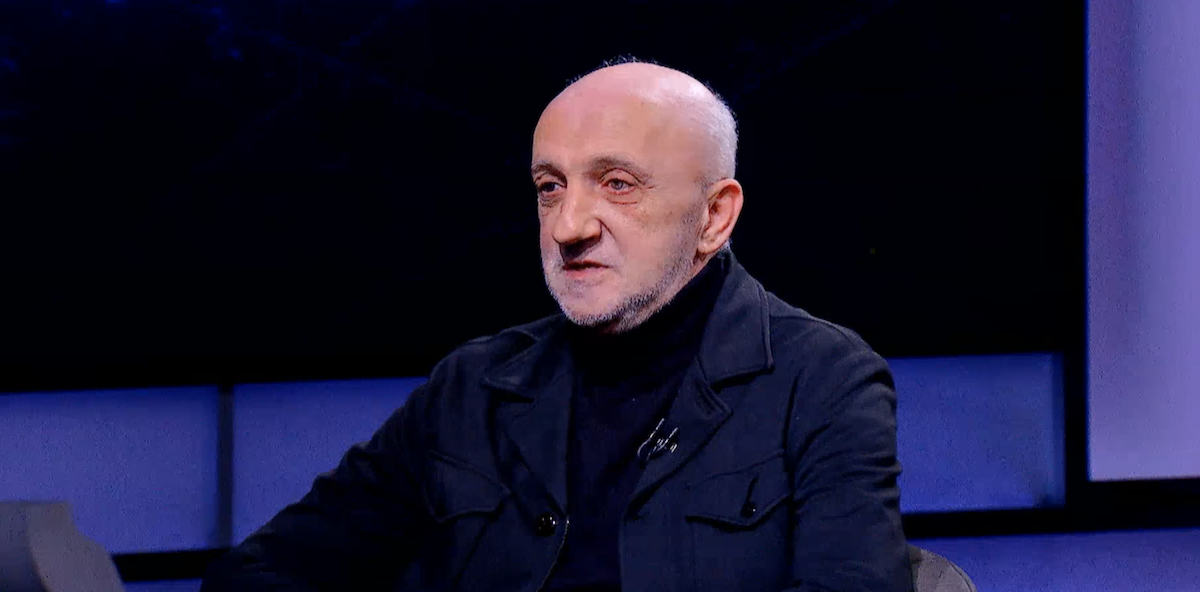
Ilgar Mammadov, former chairman of Azerbaijan’s Republican Alternative (ReAl) party, has criticised the country’s accumulation of $90bn in foreign currency reserves. In a Facebook post, he argued that there was little reason to take pride in such substantial reserves when some elderly citizens were forced to survive on modest social benefits.
Mammadov proposed using part of the reserves to improve living standards while expanding economic freedoms.
“There are no reasonable grounds for a country like Azerbaijan to hold $90bn in foreign currency reserves,” the politician wrote.
What makes up Azerbaijan’s $90bn in foreign currency reserves?
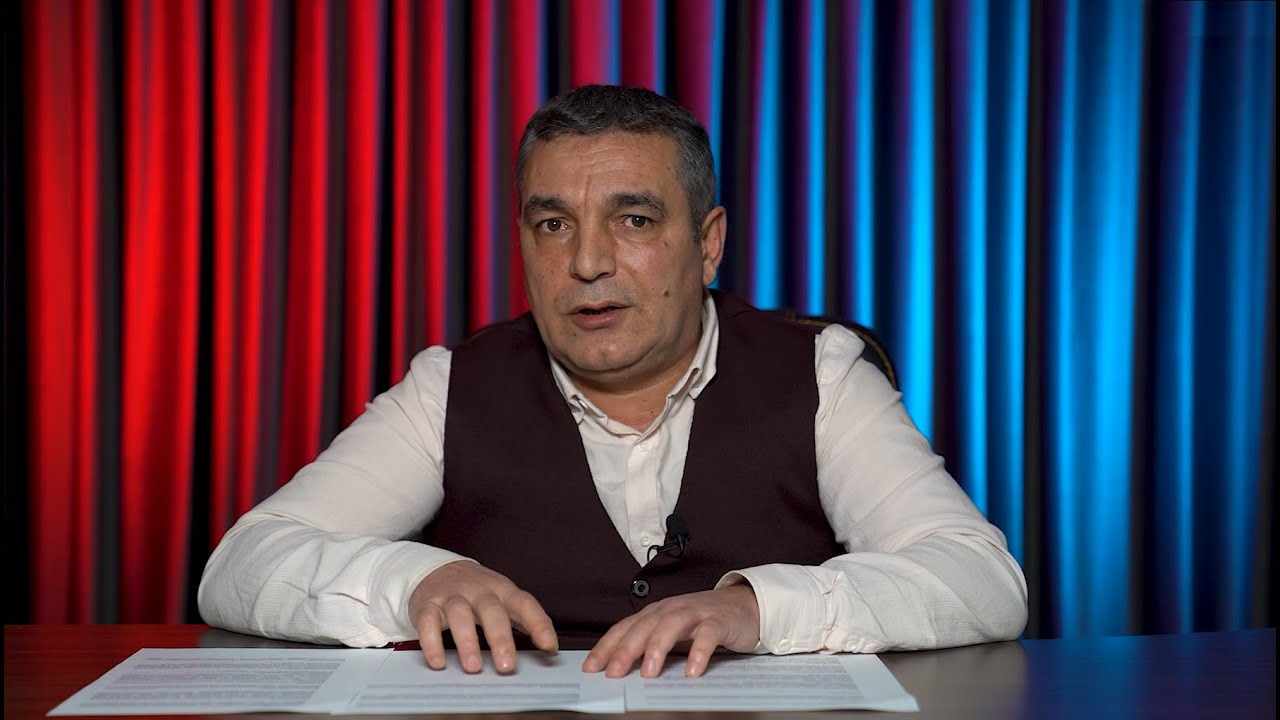
Azerbaijan’s strategic foreign currency reserves comprise the Central Bank’s foreign exchange reserves and the assets of the State Oil Fund (SOFAZ). According to figures published by the State Statistical Committee, their combined value stood at $90.77bn as of 1 September 2026. This represents the total value of funds held in various financial assets.
The two institutions’ reserves serve different purposes. The Central Bank’s reserves are used to maintain stability in the foreign exchange market and mitigate risks associated with external payments.
The State Oil Fund accumulates revenues from oil and gas production, invests them, makes transfers to the state budget and builds up savings for future generations. Its assets are invested in bonds, equities, gold and property.
The authorities regard the substantial reserves as an indicator of the country’s financial resilience. Speaking at the Azerbaijan International Investment Forum in September, President Ilham Aliyev stressed that the reserves were approximately 20 times greater than the country’s external public debt.
According to Aliyev, this demonstrates the strength of Azerbaijan’s financial system and the stability of its national currency.
‘These $90bn have become a symbol of shame and disgrace’
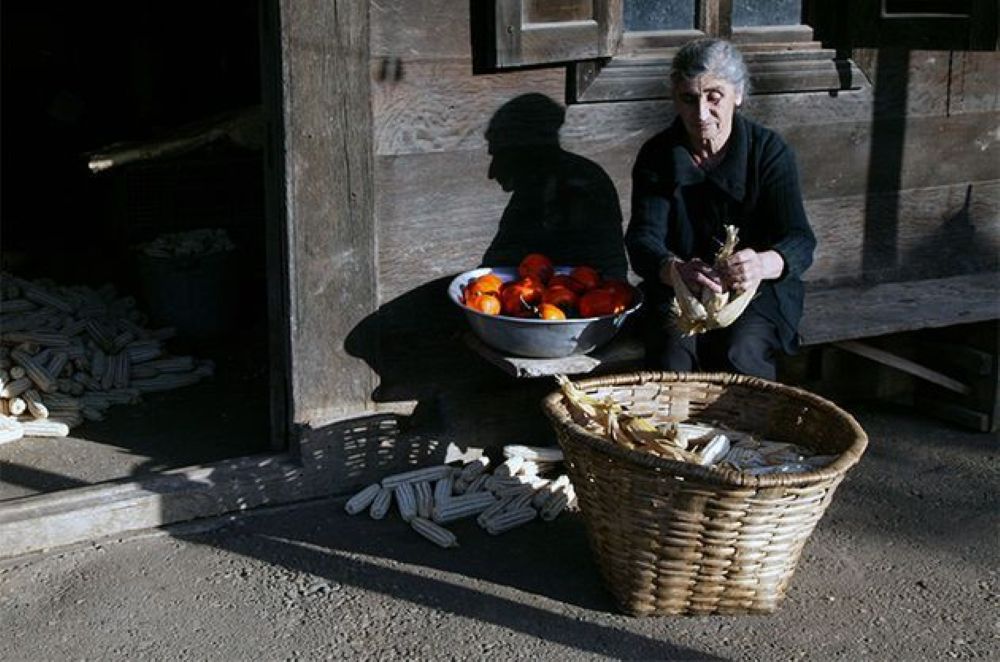
Mammadov also approaches the issue from the perspective of public welfare. He argues that elderly citizens have contributed to the creation of national wealth not only through formal employment but also through domestic and agricultural work.
“Only the government of the New Azerbaijan Party (YAP) can proudly boast of having $90bn in foreign currency reserves in a country where 180,000 elderly citizens receive no retirement pension and are forced to make do with an old-age allowance of $130. This is simply shameful.
“People over the age of 65 have contributed to society throughout their lives through their labour and their role as consumers in the economy, helping to create the conditions for accumulating $90bn in foreign currency reserves.
“Whether it was a housewife who spent years supporting her husband as he worked as a labourer or engineer, or a man who worked in the fields for a pittance, supplying city residents with fresh fruit and vegetables, they all contributed to building up these reserves.
“This is a hardworking generation that the YAP authorities have left with virtually no means of subsistence in old age, while continuing to boast about the country’s foreign currency reserves.”
Mammadov argues that taking pride in growing reserves while this generation faces financial hardship is also morally unacceptable.
“Viewed from this perspective, even the question of economic efficiency becomes secondary. These $90bn have become a symbol of shame and disgrace.”
Assets held abroad and dependence on oil
Mammadov also argues that holding substantial foreign currency reserves abroad carries political risks. He cites Iraq and Libya as examples, pointing to the depletion of their financial resources during wars and the freezing of their assets. He links these events to the interests of external powers and suggests that Azerbaijan could face similar risks.
“By maintaining foreign currency reserves on this scale, Azerbaijan is merely provoking major players in the current world order, who are accustomed to playing by their own rules. It is like putting on our most expensive jacket, stuffing its pockets with bundles of cash and going for a walk at night down the most crime-ridden street in the city.
“There are plenty of historical examples. In 1980, Iraq’s foreign currency reserves stood at $36bn–$40bn. In today’s money, that is just over $90bn. And what happened? A war with Iran was soon orchestrated, partly for the sake of that money, though not exclusively. As a result, all the money was spent on purchasing weapons from abroad, and the reserves were exhausted. Who benefited? The arms dealers.
“In 2011, Libya’s foreign currency reserves had barely reached $150bn when the country was plunged into turmoil. Some of the money was spent on arming the sides in the civil war, while around a third of the assets were frozen in foreign financial institutions (and someone is still profiting from them). The rest has never been traced.
“In today’s world, where the law of the jungle prevails, there is no point in keeping such substantial foreign currency reserves abroad. One day, a provocation could be staged against us too, and the money could be seized,” he wrote.
Mammadov also sees a potential collapse in financial markets as a serious threat. He believes securities are significantly overvalued and that a sharp fall in their prices could result in substantial losses for Azerbaijan.
Another of his arguments concerns the economy’s dependence on oil. Recalling the currency devaluations of 2015, he notes that the country’s foreign currency reserves failed to prevent the sharp depreciation of the manat.
“The reason reserves are rapidly depleted during a crisis and cannot serve as a financial safety net lies in the unhealthy state of our economy and its dependence on oil.”
According to Mammadov, if oil prices remain low for a prolonged period, substantial foreign currency reserves alone cannot guarantee economic security.
What does Mammadov propose?
Mammadov is not calling for Azerbaijan to spend all its foreign currency reserves. He believes some funds should be retained to deal with economic crises and natural disasters, although he does not specify how much should be set aside.
“There is an urgent need to improve people’s living standards, particularly those of the elderly. At the same time, economic freedoms must be expanded without delay so that citizens can realise their creative and entrepreneurial potential and generate new wealth,” the politician wrote.
Mammadov sees the rule of law as a fundamental prerequisite for these reforms. He concluded his post by urging voters to support the Republican Alternative (ReAl) party.