What Azerbaijan needs to do to benefit from Middle Corridor: World Bank recommendations






Benefits for Azerbaijan from the Middle Corridor
Developing the Middle Corridor through 2040 will require more than $55 billion in investment. However, building new railways and ports alone will not guarantee faster cargo deliveries. A World Bank report published on 28 September also stresses the need to simplify border procedures, coordinate rail and maritime transport, and reform state-owned transport companies.
For Azerbaijan, the key question is how much revenue the country can generate from cargo transit across the Caspian Sea and how it can integrate these shipments into the local economy. According to World Bank estimates, developing the corridor could increase the country’s GDP by 0.43 per cent in the long term, or by about $326 million.
In April, we analysed growing demand for the Middle Corridor and constraints on the Caspian route, while in June we examined 10 priority projects proposed to increase cargo volumes. The new report adds separate estimates of Azerbaijan’s investment needs and the potential economic impact. Our June list did not include any projects directly linked to Azerbaijan, while the World Bank report specifically identifies additional investment in the country’s rail and logistics infrastructure.
The new document builds on the World Bank’s 2023 study. It extends the forecast period to 2040 and covers more countries and types of cargo.
Where does the Middle Corridor run?
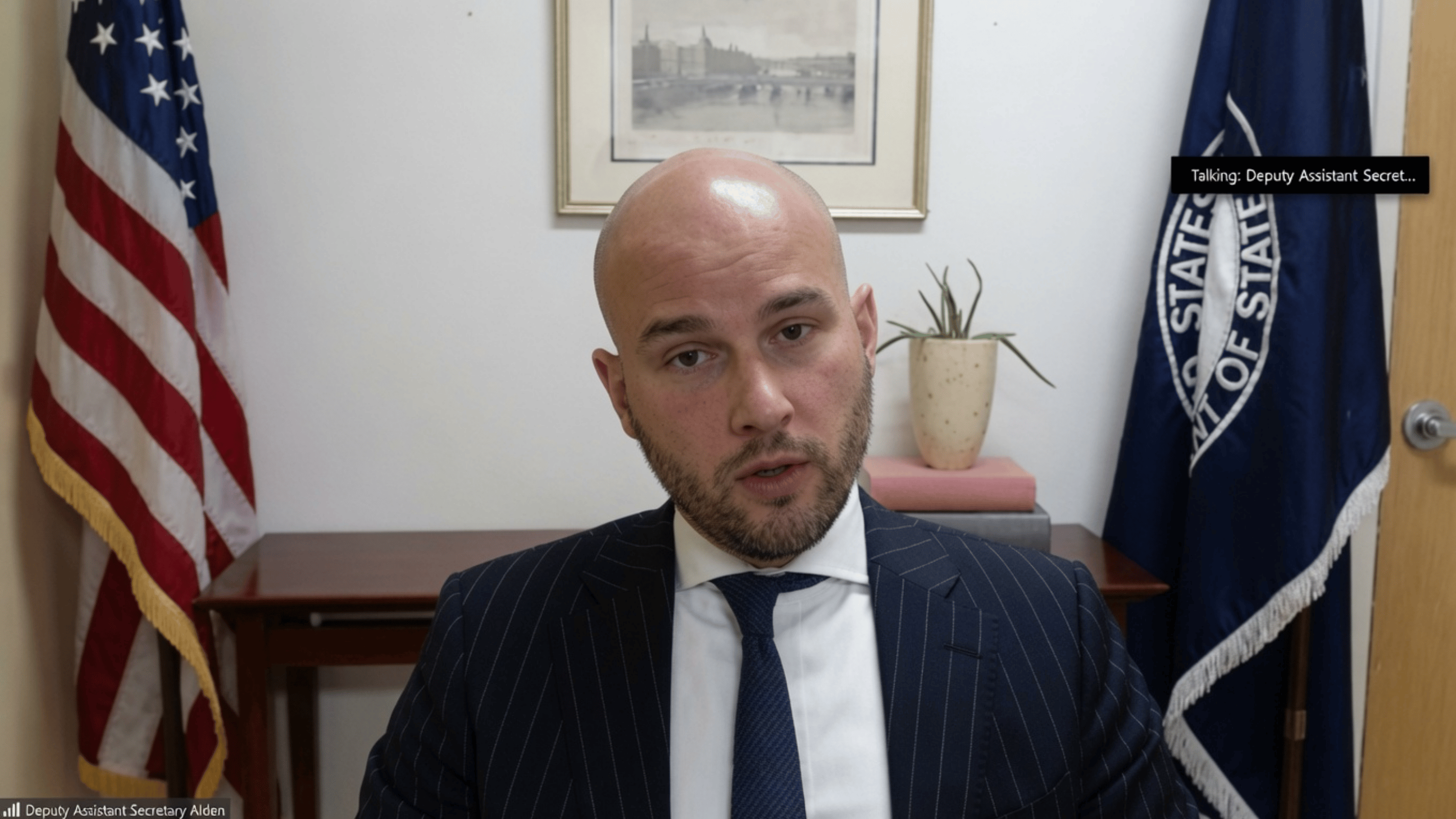
The Middle Corridor is a transport network connecting Asia and Europe through Central Asia, the Caspian Sea, the South Caucasus and Turkey. Different sections of the route carry cargo by rail, sea and road.
One of the main routes runs from China through Kazakhstan to the ports of Aktau and Kuryk. From there, cargo crosses the Caspian Sea to the Port of Baku in Alat. It then travels through Azerbaijan by rail along the Baku-Tbilisi-Kars line to Georgia. From there, it continues to Turkey or reaches Europe via Georgia’s ports and the Black Sea. The route through the port of Turkmenbashi connects Turkmenistan and other Central Asian countries to this transport network.
The report covers Azerbaijan, Armenia, Georgia, Kazakhstan, Kyrgyzstan, Tajikistan, Turkmenistan, Turkey and Uzbekistan. The Middle Corridor currently does not pass directly through Armenia. The World Bank included the country in its calculations on the assumption that relevant transport links could emerge in the 2030s.
What is the $55 billion needed for?
According to the World Bank, more than $25 billion will be needed by 2040 to develop the core physical infrastructure. This includes railways, ports and transport links between them.
Another $30 billion will be needed for additional investments required to operate the corridor and integrate it with local economies. This includes spending on access roads, logistics centres, inland terminals, locomotives and railcars, cargo-handling equipment and digital systems.
This figure does not represent costs that Azerbaijan will have to cover on its own, nor does it refer to a World Bank loan. It is an estimate of the total investment needed along the entire route.
Of the 16 most important infrastructure projects identified by the World Bank, 75 per cent are already under way, while governments have included the remainder in their plans. The report therefore notes that the main task at the next stage may be to improve service quality and the efficiency of transport operations.
What specific projects are planned for Azerbaijan?
The report identifies three areas for additional investment in Azerbaijan, totalling $1.16 billion.
Completing the ongoing modernisation of the Baku-Alat-Boyuk-Kesik railway line will cost an estimated $260 million. Upgrading power supply and signalling systems should improve the efficiency of the corridor’s main section in Azerbaijan.
The report allocates $300 million to developing a network of dry ports. These inland terminals collect, store and transfer cargo between different modes of transport. The list includes the Boyuk-Kesik border crossing, Baku and a southern transport hub that could serve a proposed route to Kars through Azerbaijan and Armenia.
Another $600 million would go towards further expanding the Baku-Alat-Boyuk-Kesik railway line in the 2030s. The latter two projects remain at the preliminary feasibility study stage. The figures therefore do not represent funding under contracts that authorities have already signed. The list also does not cover all of Azerbaijan’s costs related to developing the Middle Corridor.
Alat port capacity and the Caspian Sea’s declining water level
According to the report, the Port of Baku increased its container-handling capacity from 100,000 to 150,000 TEUs in 2025 by improving the efficiency of its existing infrastructure. TEU is a unit of measurement equivalent to a standard 20-foot container. The port handled 107,000 TEUs that year, using about 71 per cent of its container capacity.
At the same time, the port’s overall cargo-handling capacity stood at 55 per cent utilisation. This distinction matters: spare capacity across the port as a whole does not mean that the container and ferry terminals face no congestion.
The World Bank points to another problem: since the port moved to Alat in 2018, authorities have not carried out dredging in the entrance channel or the approach areas leading to the berths. The falling level of the Caspian Sea requires urgent action. Draft restrictions can prevent ships from loading to full capacity and reduce the port’s actual throughput.
What is slowing cargo transport?
According to the World Bank’s analysis, container cargo spends the most time waiting at ports. One reason is poor coordination between train and vessel schedules.
The report proposes creating a single operator to integrate container services run by the railway companies of Azerbaijan, Georgia, Kazakhstan and Turkey with Caspian Sea shipping operated by ASCO and Kazakhstan’s Kazmortransflot. This would allow operators to coordinate shipments along the entire route.
Document processing also takes considerable time. According to an example in the report, a container shipment between Asia and Europe may require 10 entry and exit procedures under customs transit regimes, five railway consignment notes and two maritime cargo documents. The World Bank recommends introducing a single digital T3 document combining transport, transit and trade data. To use it, countries would need to recognise each other’s documents, agree on data-sharing procedures and establish carriers’ responsibilities.
What conditions are needed to achieve the expected benefits?
According to the World Bank, investment and better services could more than triple cargo volumes along the route by 2040 and halve delivery times. Deeper trade and transport reforms could quadruple cargo volumes and cut delivery times by two-thirds compared with 2023.
The report estimates that, in the long term, the combined GDP of the nine countries could grow by 3.3 per cent, while employment could rise by 2.9 per cent. For Azerbaijan, the corresponding figures stand at 0.43 per cent and 0.66 per cent.
The report suggests that turning Azerbaijan’s geographic position into an economic advantage requires more than simply moving cargo through the country. Local businesses need access to the route, along with reliable transport and competitive logistics services. Planning should account for infrastructure costs, operating expenses and expected cargo volumes together. The World Bank also stresses that the report does not assess projects as ready for financing.

Benefits for Azerbaijan from the Middle Corridor