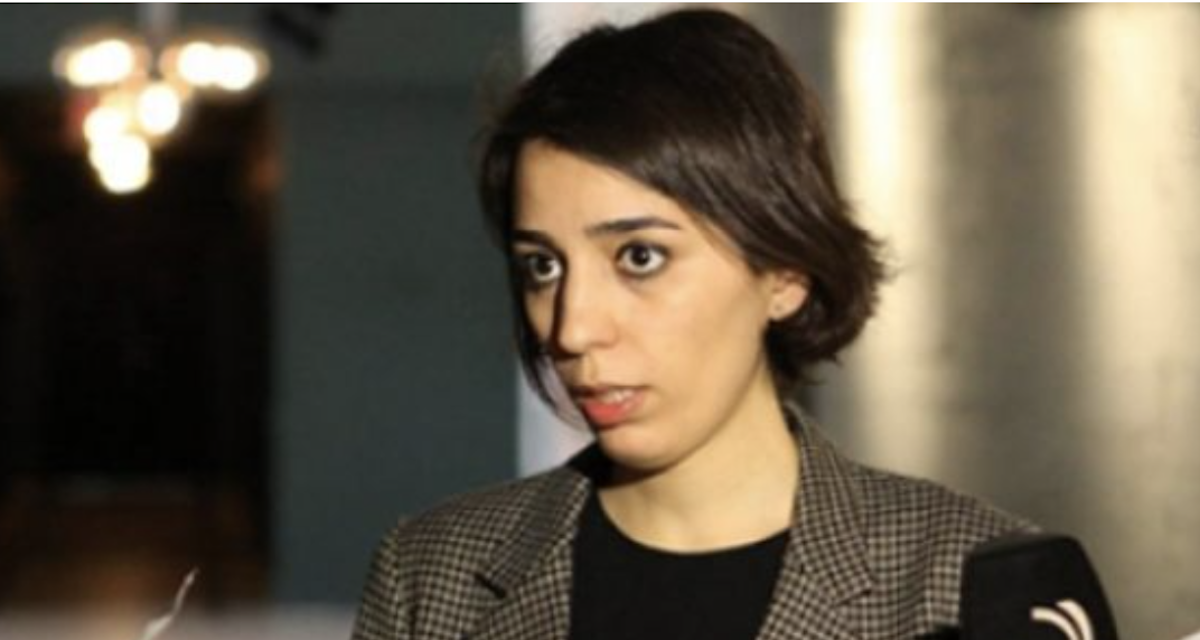
'Helping Baku justify ethnic cleansing': Yerevan views on diplomats’ trip to Karabakh






Views from Yerevan on diplomats’ visit to Nagorno-Karabakh
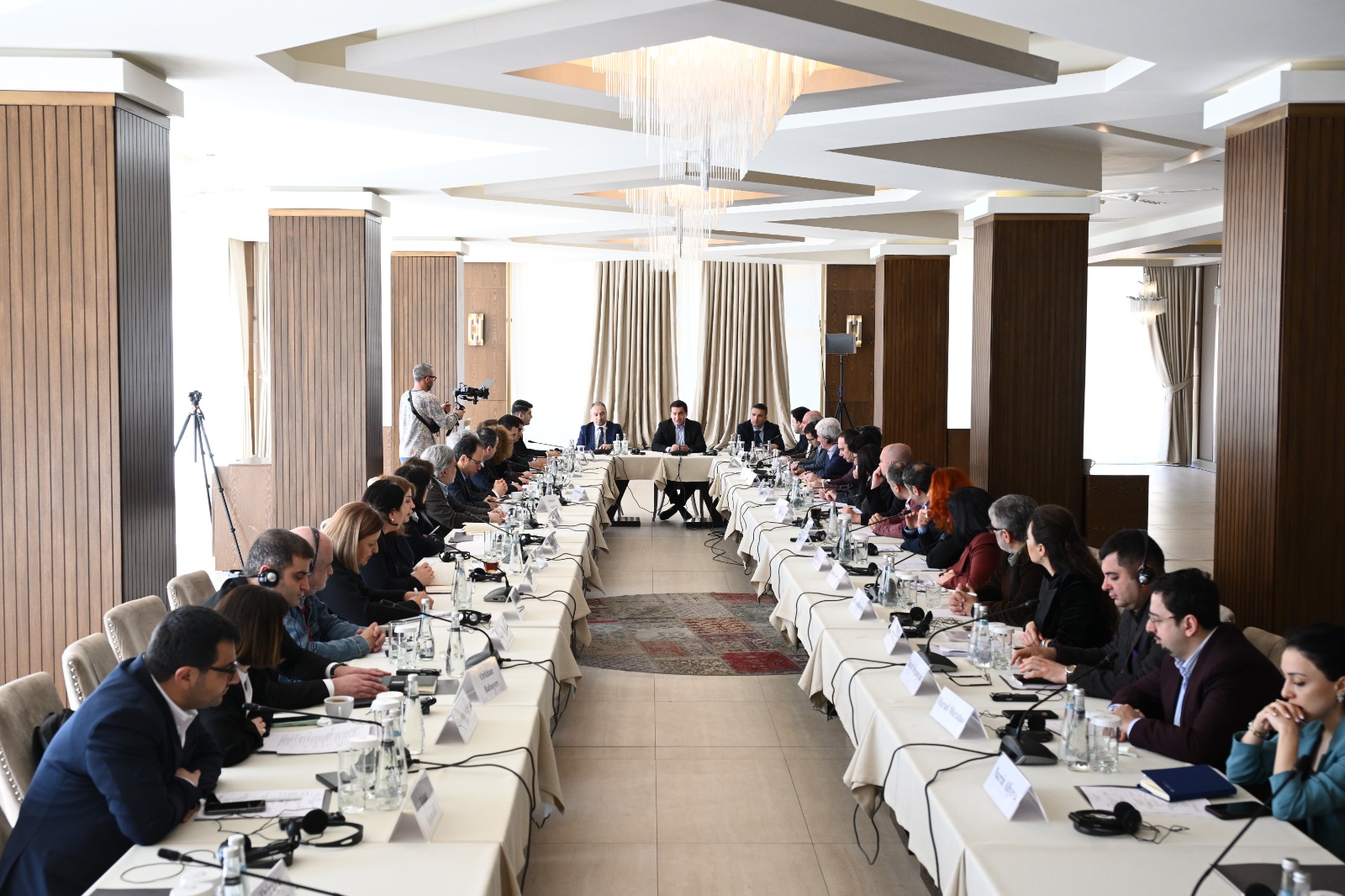
In Armenia, the visit to Nagorno-Karabakh by diplomats accredited to Azerbaijan has caused a strong reaction and remains the subject of intense discussion. According to Azerbaijani media reports, 150 people representing 58 countries and nine international organisations took part in the trip.
They included Magdalena Grono, the European Union’s special representative for the South Caucasus. She is also expected to arrive in Yerevan today.
The diplomats visited the territory that the entire Armenian population left in 2023. They also visited historical and cultural monuments. Hikmet Hajiyev, an aide to Azerbaijan’s president on foreign policy, accompanied them.
He showed the diplomats the Armenian monasteries of Gandzasar and Dadivank. Hajiyev said they form “an integral part of the ancient Albanian Christian heritage”.
“Such statements do not contribute to peace, nor can they be helpful in that context. Moreover, they are groundless,” Armenian parliament speaker Ruben Rubinyan said earlier today.
Video footage of the diplomats’ visit shows Hajiyev displaying “samples of ancient manuscripts” with an ironic smile as he flips through blank pages. The diplomats present responded with laughter.
The footage sparked outrage in Armenia. Local experts also expressed bewilderment. Do officials in Baku really not know that, under standard international practice, people usually keep original ancient books in archives and secure storage facilities, rather than in churches?
They also ask whether it is really unclear that Armenians would not have left ancient manuscripts in monasteries they were abandoning.
Armenian analysts criticised the Azerbaijani authorities for organising an event that “distorted historical facts”. They also criticised the diplomats present for failing to respond appropriately.
Edmon Marukyan, head of the Enlightened Armenia party, even called for “a diplomatic note to be sent to all international structures”.
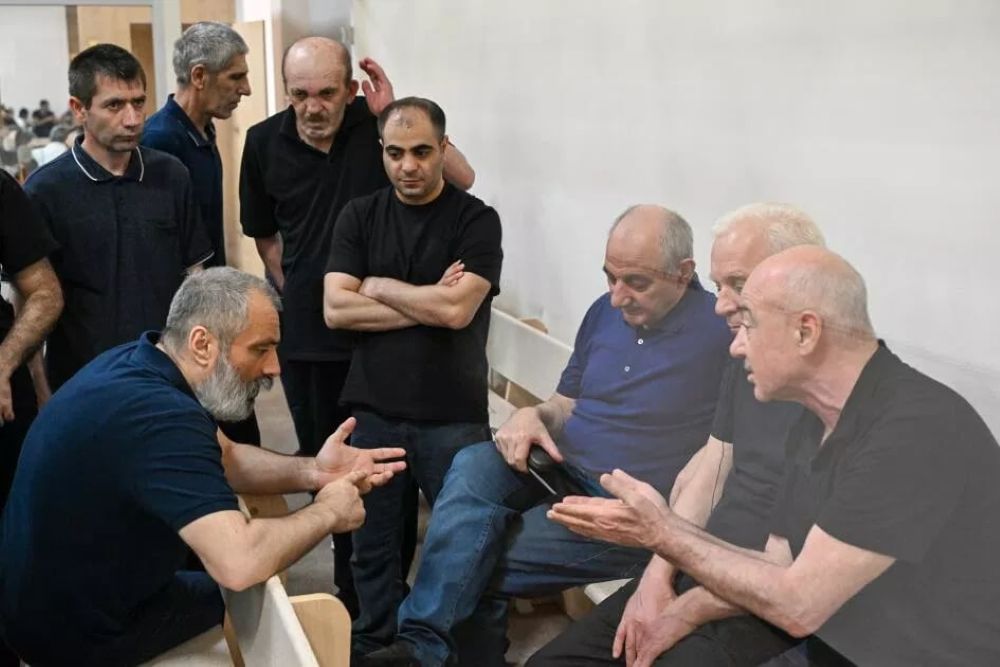
“I consider it unacceptable that diplomats representing various international organisations and states visit Artsakh, where no Armenians remain as a result of ethnic cleansing, while the representatives of its military and political leadership remain held hostage in Azerbaijani prisons.
“Instead of raising these issues, they listen attentively to Hajiyev’s disinformation and laugh at his cheap jokes,” he wrote.
Armenian political scientists say Armenian society’s trust in the European Union has grown significantly in recent years.
At the same time, they stress that such events “cast doubt not only on Europe’s reputation but also on the trust needed to build a lasting peace”. Historian and publicist Karen Harutyunyan made this point in an open letter to Magdalena Grono.
- Armenia-Azerbaijan exports could begin ‘soon’: Pledges, figures and remaining barriers
- ‘Regional stability is main achievement’: assessing Washington peace summit one year on
- Video – Armenians say goodbye to shrines, territories to be transferred to Azerbaijan
Grono’s post on “diverging views” between Yerevan and Baku
Magdalena Grono, the EU’s special representative for the South Caucasus, wrote on X:
“Deep divergences in views and narratives remain — for example, regarding the origins of certain sites. Azerbaijan and Armenia need to resolve these issues to overcome this aspect of past conflicts as part of broader reconciliation efforts.”
Grono did not specify which “sites” she was referring to. Most likely, she meant the Gandzasar and Dadivank monasteries, which Baku describes as monuments of Caucasian Albania.
Historian and publicist Karen Harutyunyan described the EU special representative’s post as “puzzling”. He said the issue was not simply a difference in viewpoints, but a distinction between “scientific research and disinformation spread as part of state propaganda”.
“If you are genuinely interested in the history of Caucasian Albania, you can consult the works of internationally recognised experts rather than Armenian or Azerbaijani authors,” he noted.
Statement by the Bridge of Peace initiative
Armenian participants in the Bridge of Peace initiative, through which representatives of civil society in Armenia and Azerbaijan work to normalise relations between the two countries, expressed concern over the latest developments.
They stressed that, at a stage of “significant progress” in the Armenian-Azerbaijani peace process, when both societies are expected to move towards a new quality and culture of relations, public statements take on critical importance:
“Recent developments deepen mistrust and provide new arguments to those who claim that dialogue is a pointless exercise and efforts to achieve peace are futile.”
According to the five Armenian founding members of the initiative, building peace requires sincere dialogue, careful attention to each other’s concerns and conscious efforts to avoid actions that could reopen old wounds or intensify hostility.
“We call on all actors in the peace process to act with an awareness of the responsibility of the present moment and refrain from rhetoric and actions that could be perceived as destructive,” the statement said.
Comments
Azerbaijan expert Tatevik Hayrapetyan stressed:
“The fact that Azerbaijani officials falsify history and seek to erase the traces of centuries of Armenian presence in Artsakh/Nagorno-Karabakh does not surprise me. I know the state-sponsored anti-Armenian policy too well to be surprised by it each time.
“However, my question is addressed to those very ‘diplomats’ — especially representatives of Western countries who laugh at the falsification of historical facts and help an authoritarian regime justify an aggressive war and ethnic cleansing.
“What message are you sending to the world and to other dictatorships? What are you telling them? That it is acceptable to start a war, carry out the ethnic cleansing of an entire region’s population, and then falsify indisputable facts?
“Is this how you see the world order? You should reflect on why you chose a career in diplomacy in the first place. This is not merely a political issue; it is a problem of civilisational scale. Sooner or later, the consequences of your policies will turn against you.”
Political analyst Tigran Grigoryan noted:
“It has been a long time since I saw anything so shameful and indecent. And the problem lies not only in the visit itself, but also in the way its participants behaved.
“The undisguised rejoicing and ‘dancing’ against the backdrop of destroyed neighbourhoods, churches and cemeteries looked grotesque and shocking. Even from a pragmatic perspective, however, this visit and the behaviour it displayed are examples of catastrophically poor diplomacy.
“First, if the stated goal is to establish peace, exploiting the trauma and feelings of displaced people and rubbing salt into the wounds of society as a whole will hardly help achieve it.
“This applies above all to those diplomats who intend to play the role of mediators.
“Moreover, the visit dealt a serious blow to the reputation of the countries and organisations involved in the eyes of Armenian society. The reaction on social media already makes this clear.”
Historian and publicist Karen Harutyunyan wrote in an open letter titled “Reconciliation cannot be built on deception”: wrote
“The reconciliation process cannot begin by presenting documented historical heritage and its political denial as equally valid views. […] However, the problem extends beyond history.
“You walked through places where their former inhabitants no longer live. Three years ago, around this same time, many Karabakh Armenians had to exhume the remains of their sons, who had been buried only recently, and transport them to Armenia. Many still have no home, no job and no confidence in the future. Nineteen Armenian hostages remain in Baku’s prisons. Their only ‘crime’ is that they are Armenian and fought for their people’s right to self-determination.
“Visiting places that symbolise military victory, remaining silent about the consequences of forced displacement and failing to publicly respond to attempts to rewrite the history of Armenian cultural heritage do not contribute to peace. On the contrary, such actions only deepen the sense of injustice and humiliation.
I am not saying that the EU should not engage with Azerbaijan or work towards peace. However, such engagement must rest on clear moral principles.
“Reconciliation cannot be built on the assumption that displaced people should forget their homes and that their churches should receive a new identity. It rests on truth, respect for the dignity of victims and accountability.
“Armenia is currently weakened and unable to fully guarantee its own security. But the continued humiliation of the Armenian people and disregard for their suffering cannot lead to peace. These actions only compound the injustice and further undermine the prospects for reconciliation. I am confident that Europe can and must choose the right path.”
By the time of publication, Magdalena Grono had arrived in Yerevan and immediately headed to the Matenadaran repository of ancient manuscripts.
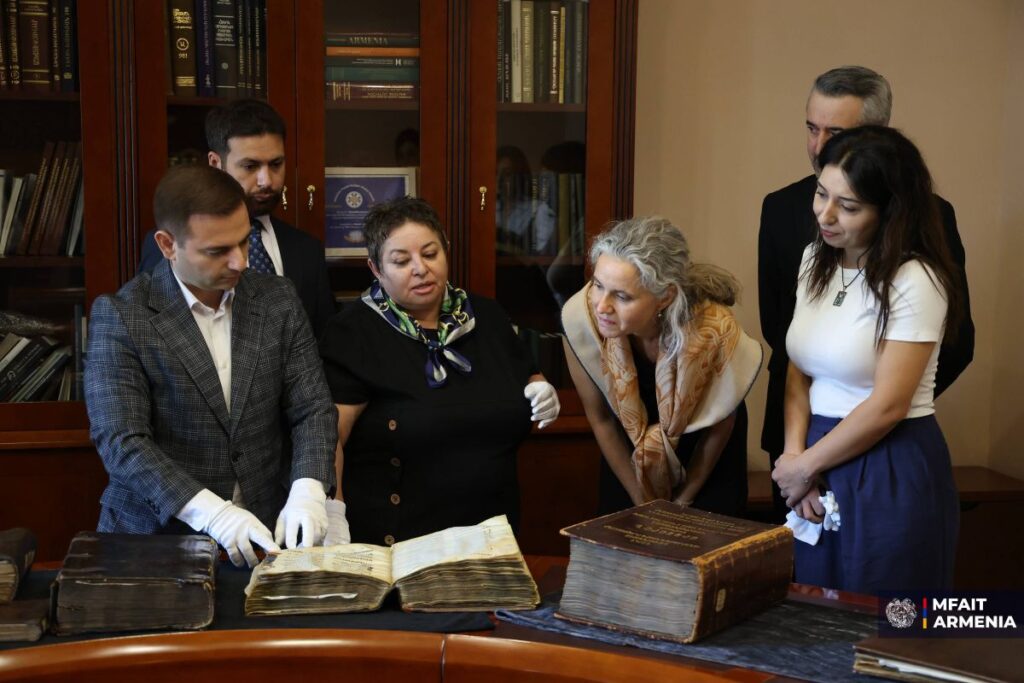
Matenadaran director Ara Khzmalyan also addressed the books with blank pages that Hikmet Hajiyev displayed.
He stated: “There are no blank pages in our manuscripts.”
Khzmalyan explained that the original manuscripts had never been kept at Gandzasar because the monastery lacked the facilities needed to ensure their safety and proper storage.
“Only copies of the manuscripts were displayed at Gandzasar. The original of each one is kept at the Matenadaran. The Matenadaran is ready to show them to any diplomat who has even one per cent doubt about their authenticity,” Ara Khzmalyan stressed.
Views from Yerevan on diplomats’ visit to Nagorno-Karabakh