Lawyers call prison ban on Lasha Bugadze's novel The Observer act of censorship






The Georgian Young Lawyers’ Association (GYLA) says the refusal to allow writer Lasha Bugadze’s novel The Observer into a prison violates freedom of expression and amounts to censorship.
According to GYLA, the arguments put forward by the Special Penitentiary Service to justify the ban run counter to international human rights standards, including case law established by the European Court of Human Rights.
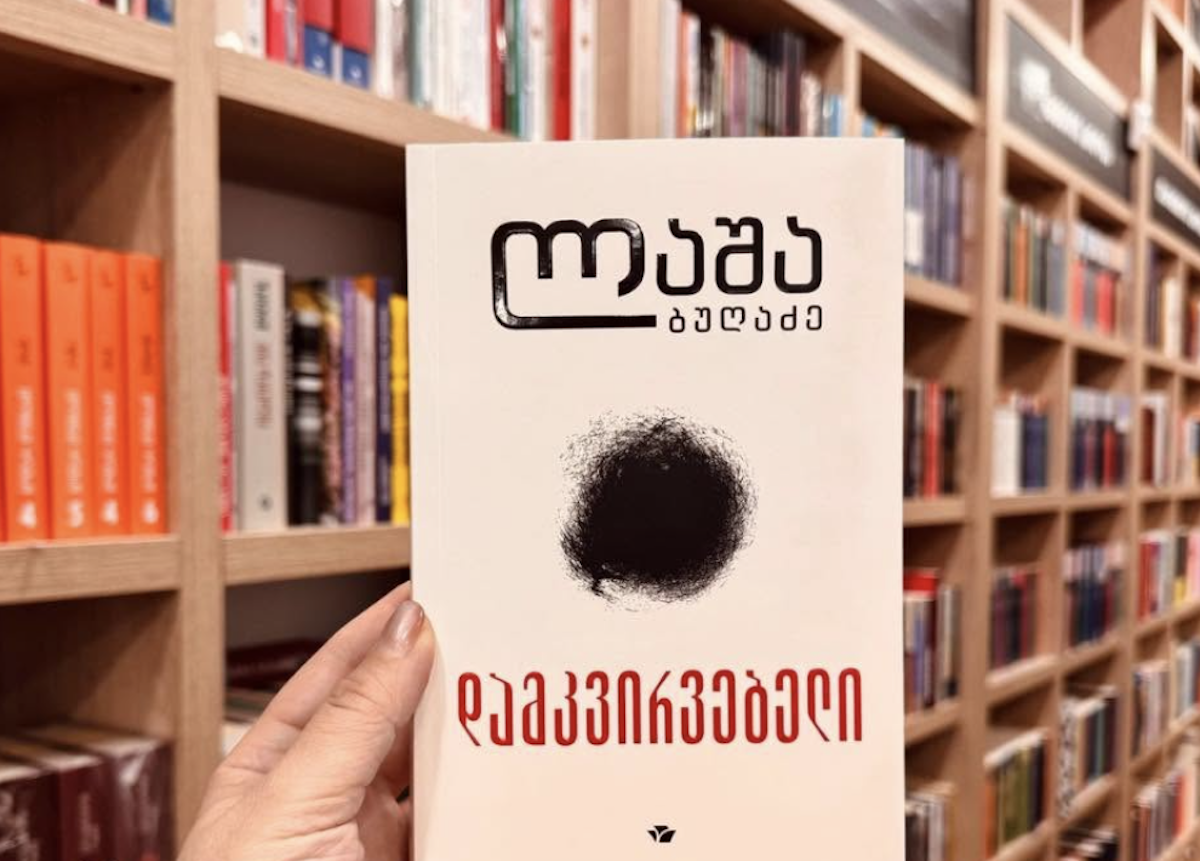
In early August, reports emerged that the Rustavi prison administration had refused to allow Lasha Bugadze’s new novel The Observer to be delivered to Nana Sander, a prisoner convicted of taking part in a 4 October 2025 protest.
The Special Penitentiary Service’s response to a request from lawyer Giorgi Chkheidze, dated 24 August, later circulated in the media and on social networks. The agency explained why it had refused to allow the book into the prison.
The service referred to an annex to Justice Minister’s Order No. 1166 of 21 January 2026. Under the rules, prisoners and detainees may receive parcels containing books, but publications that could pose a threat to their safety or the normal operation of a prison are excluded.
According to the Penitentiary Service, the title The Observer creates uncertainty about the novel’s content and does not allow it to be interpreted unambiguously. The authorities therefore deemed it inappropriate to allow the book into the prison.
GYLA says this justification amounts to an arbitrary restriction of prisoners’ right to receive information.
GYLA argues that freedom to receive information forms part of freedom of expression. It covers not only receiving information itself, but also accessing it in different forms, including through literature. Imprisonment does not in itself mean that a person loses their rights, although certain restrictions may apply because of the conditions of detention.
However, GYLA says such restrictions can only be justified if they serve a lawful, legitimate and necessary purpose.
Under European Court of Human Rights (ECHR) case law, when authorities refuse to deliver publications to prisoners, they must provide sufficient and specific reasons. These may include incitement to or justification of violence, threats to prison security and order, or facilitating communication between members of criminal organisations.
Under ECHR standards, however, the grounds for a ban must be directly linked to the publication’s content. Authorities must identify the relevant passages and demonstrate a connection between the specific text and the threat that the restriction seeks to prevent.
GYLA says the argument that the book has a “vague” title clearly fails to meet these requirements. In the case of fiction, the organisation says, such a factor cannot provide sufficient grounds for a ban.
The Observer is a dystopian novel depicting almost half a century of rule by a despot in Georgia. In March 2026, the book, along with other publications, was targeted in an act of vandalism at a bookshop.
GYLA says the Penitentiary Service’s decision is particularly concerning in this context, as it suggests that the book was censored because of its anti-repressive and political content.
About Lasha Bugadze’s novel The Observer