Opinion: 'Georgia government's anti-European rhetoric enters new phase'






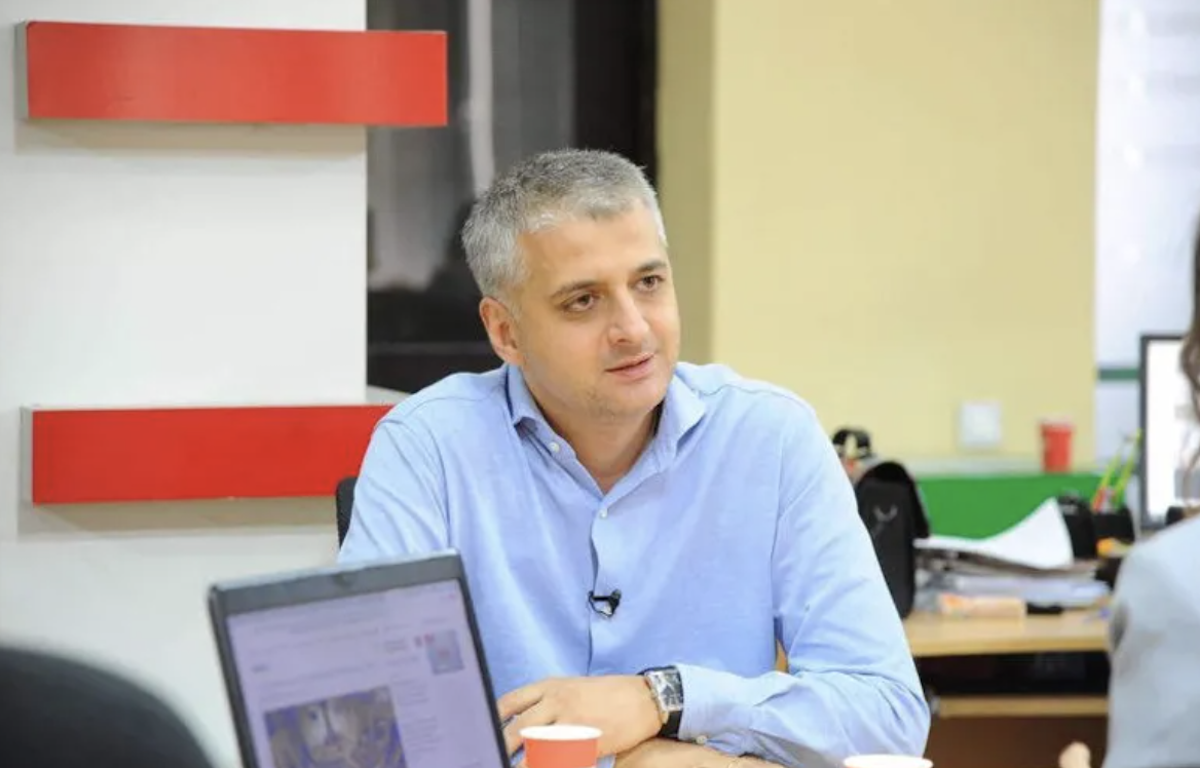
Sociologist Iago Kachkachishvili says the Georgian government’s anti-European messaging has undergone a significant shift. In his view, Parliament Speaker Shalva Papuashvili’s recent suggestion that Georgia could even benefit from remaining outside the European Union indicates that the authorities are no longer merely criticising what they describe as the EU’s current course. Instead, they are beginning to challenge the very idea of Georgia joining the bloc.

Earlier, Parliament Speaker Shalva Papuashvili said that European Union membership should not be an end in itself, while criticising proposals that, he said, would weaken the principle of consensus in the bloc’s decision-making process.
He argued that if such changes were introduced, remaining outside the EU could become more advantageous for some smaller states, as they would have greater freedom to make independent decisions

Iago Kachkachishvili: “Shalva Papuashvili has openly written that it could even be beneficial for Georgia not to join the European Union, ‘because, at the very least, it would retain the freedom to make independent decisions.’
Openly discussing the benefits of staying out of the EU marks a significant shift in the anti-European propaganda of the ruling Georgian Dream party. Until now, it sought to convince the public—primarily its own supporters—that the problem lay with the EU in its current, liberal form. According to its narrative, liberal forces in the bloc would gradually be replaced by conservatives, right-wing parties would come to power across the EU, and they would then throw open the doors to Georgia, allowing it to join the European family ‘with dignity’. This has largely been the core message of Georgian Dream’s propaganda.
Why, until now, was Georgian Dream unable to abandon the goal of EU membership? First, Article 78 of Georgia’s Constitution obliges the authorities to ensure that ‘the constitutional bodies shall take all measures within the scope of their competences to ensure the full integration of Georgia into the European Union and the North Atlantic Treaty Organisation.’ In addition, every public opinion survey showed that even among Georgian Dream supporters, a majority—around 60%—favoured joining the EU.
The role of Hungarian Prime Minister Viktor Orbán should also be taken into account. He was Georgian Dream’s main ally and one of the leading advocates of right-wing forces within the European Union. Nor should we forget that, following Donald Trump’s election as US president, Georgian Dream expected liberal forces around the world to suffer a major setback. The party also anticipated that Russia—seen as the European Union’s principal adversary—would prevail in its war against Ukraine.
What is the situation now?
Georgian Dream appears to have concluded that its narrative about a future right-wing European Union has largely failed. Orbán has suffered setbacks, while the Trump administration has shown little sign of actively promoting the global rise of the radical right. Meanwhile, even commentators loyal to Vladimir Putin have begun acknowledging Russia’s inability to win the war. At the same time, the latest EU-funded survey, conducted in 2026, found that 71% of Georgians support joining the European Union, 17% are neutral, and 10% oppose membership. Clearly, the government’s aggressive anti-Western messaging has had some effect, with support falling from around 80–85%—most likely due to declining enthusiasm among Georgian Dream supporters.
Although EU membership is still backed by a clear majority of the population (71%), Georgian Dream now appears to be going all in. Until recently, the authorities argued that Georgia’s path towards Europe had merely been temporarily delayed. Now, however, they are attempting to fundamentally redefine the value of the European choice itself. Their apparent goal is to reduce support for EU membership, at least among their own supporters. At the same time, they seek to eliminate the opposition as a political force, secure a constitutional majority in the 2028 elections, and amend Article 78 of the Constitution, which commits the country to European integration. The authorities’ daily suppression of public protest serves the same objective. All of this is taking place under increasingly authoritarian domestic rule, without any guaranteed backing from right-wing allies abroad.
The coming months will show whether this new phase of anti-Western politics delivers the results Georgian Dream hopes for. For those resisting the government’s course, however, the guiding principle remains unchanged: protest at home, sanctions from abroad.
Georgian government’s anti-European rhetoric