Georgia's Asian pivot: What does Tbilisi seek in Central Asia?






Georgia’s Asian pivot
Since the start of summer 2026, Georgian Prime Minister Irakli Kobakhidze has met the leaders of all five Central Asian states.
Tbilisi has signed strategic partnership agreements with Kazakhstan and Uzbekistan. The Georgian prime minister has also made his first official visits to Kyrgyzstan and Tajikistan. In July, Turkmen President Serdar Berdimuhamedov paid his first official visit to Tbilisi.
The Georgian government says the renewed engagement is aimed at strengthening the country’s role as a regional transit hub. For the Central Asian states, new trade routes are becoming increasingly important alongside those through Russia and China.
Georgia is offering them access from the Caspian Sea to the Black Sea and onwards to Europe.
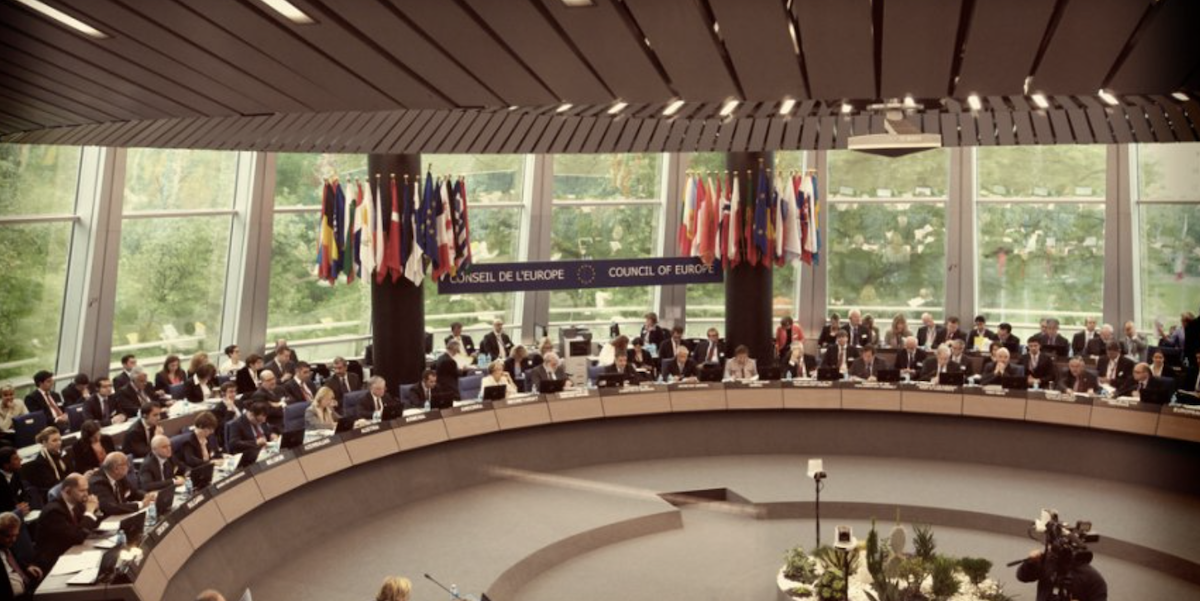
The growing ties with Central Asia come against the backdrop of an almost complete freeze in relations between Tbilisi and the West. The European Union has significantly scaled back political contacts with the Georgian government and suspended part of its direct assistance.
According to official EU statements, the measures are a response to what Brussels describes as democratic backsliding in Georgia.
Georgia’s EU accession process has effectively been put on hold until the government changes its political course. The EU’s 2026 report states that no political dialogue took place between the EU and Georgia during the reporting period.
Against this backdrop, the Georgian government describes its foreign policy as multi-vector.
Central Asia has become one of the main pillars of that policy. The key question, however, is what lies behind this shift: an effort to expand Georgia’s economic opportunities, or a political response to deteriorating relations with the West?
Economic data present a mixed picture. Exports to Central Asia have increased, but most of the growth is not driven by goods produced in Georgia. Re-exported vehicles account for the bulk of exports to Kazakhstan, Kyrgyzstan and Tajikistan.
Moreover, Central Asia’s interest in Georgia is largely based on access to Western markets. If Tbilisi moves away from the European political and economic space, its value as a transit hub could also diminish.
Kyrgyzstan: Exports driven almost entirely by vehicle re-exports
Georgian Prime Minister Irakli Kobakhidze visited Kyrgyzstan on 11 June 2026. According to the Georgian government, it was the first official meeting between the two countries at the highest level.
Kobakhidze held talks with President Sadyr Japarov. Bishkek also hosted the second meeting of the Georgian-Kyrgyz Intergovernmental Commission on Economic Cooperation.
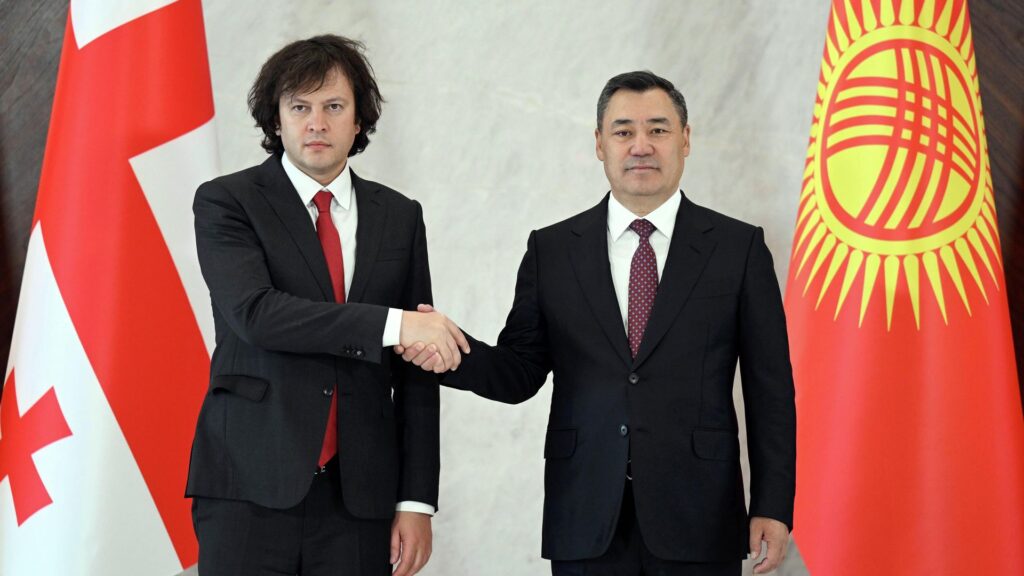
The two sides signed a series of agreements covering aviation, veterinary services, education, sport, legal cooperation and the management of state property. They also signed an agreement on the advance exchange of customs information.
Trade was the main economic focus of the talks. However, Georgia’s exports to the region remain heavily dependent on re-exports.
According to Georgia’s statistics office, Geostat, the country exported goods worth $355.2m to Kyrgyzstan between January and May 2026, while imports amounted to just $1.2m. In 2025, exports reached almost $1.5bn.
Data for the first four months of 2026 show that passenger cars accounted for 95.5% of exports. Other goods made up only a small share and included alcoholic drinks, soft drinks, lorries and medicines.
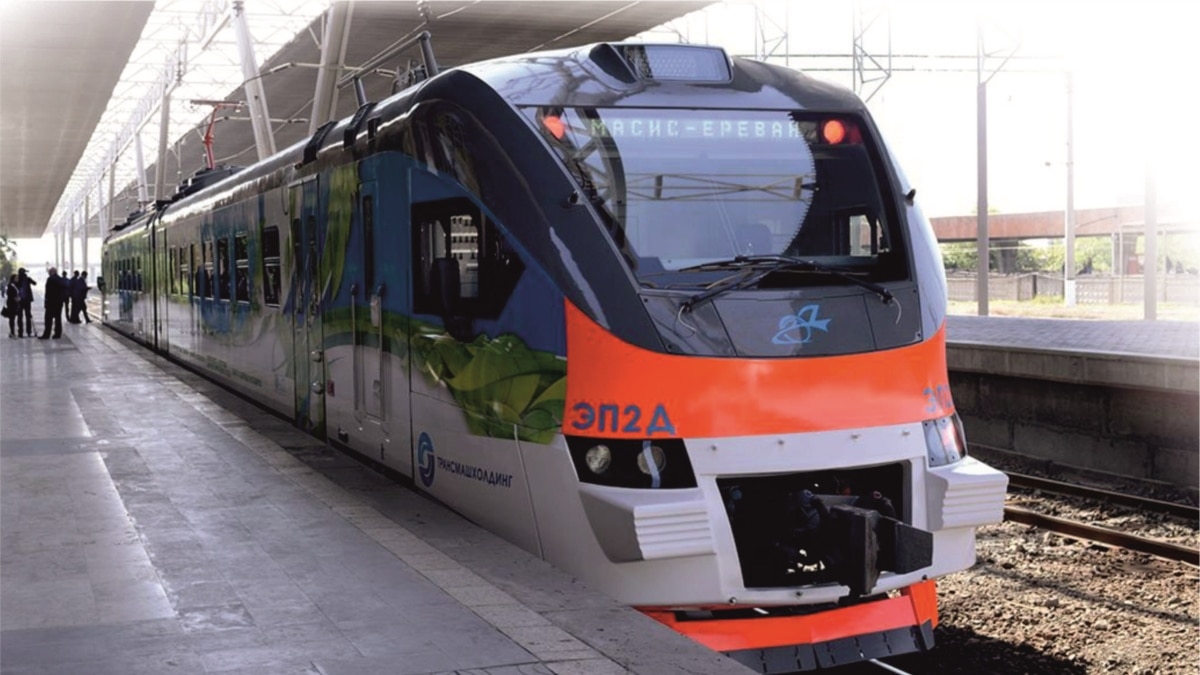
In practice, however, Kyrgyzstan is only nominally one of Georgia’s largest export markets. Georgia does not manufacture the cars it exports. Instead, it acts as an intermediary, purchasing, servicing and re-exporting the vehicles.
Direct investment from Kyrgyzstan also remains limited. It totalled $374,000 in 2025, down from $656,000 in 2024.
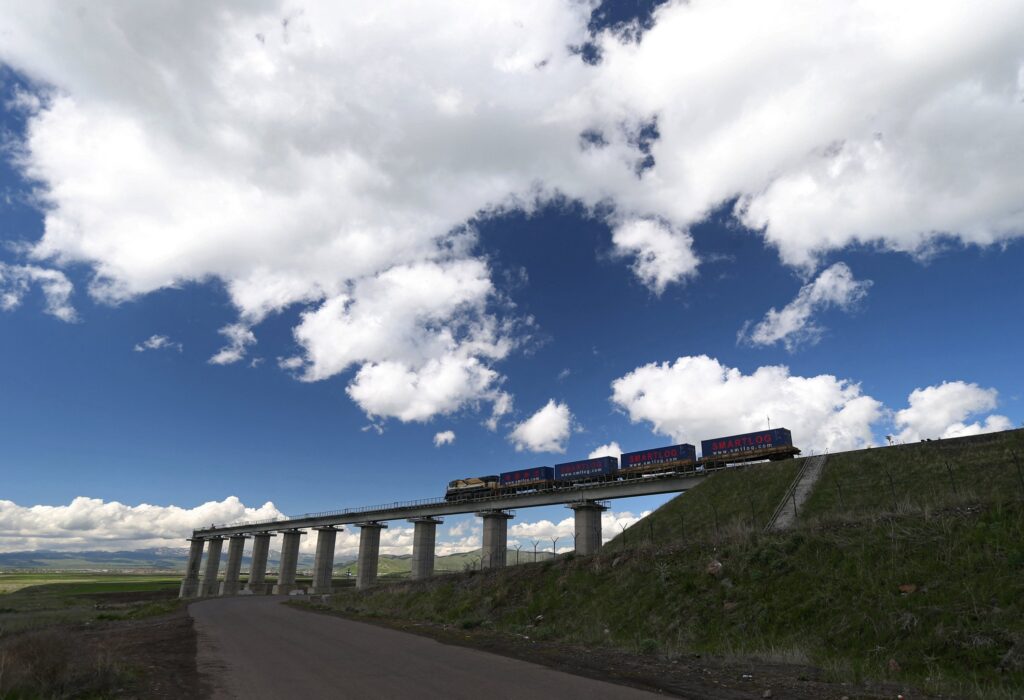
The most significant long-term project is the China-Kyrgyzstan-Uzbekistan railway, which will connect the Chinese city of Kashgar with Andijan in Uzbekistan via Kyrgyzstan.
Tbilisi expects the railway to bring additional freight to the Middle Corridor. The cargo would then travel through other Central Asian states, across the Caspian Sea, and onwards via Azerbaijan and Georgia.
According to Mariam Kvrivishvili, a significant increase in cargo volumes is expected from around 2031. However, different completion dates have been cited for the railway project, while the onward route across the Caspian Sea has yet to be finalised.
Georgia and Kyrgyzstan are also considering launching direct flights. In 2025, Georgia received 21,542 visitors from Kyrgyzstan. The figure remained virtually unchanged in the first quarter of 2026.
Tajikistan: Relations beginning to take institutional shape
Kobakhidze visited Tajikistan on 19-20 June in what was the first official visit by a senior Georgian official.
The prime minister held talks with President Emomali Rahmon and Prime Minister Kokhir Rasulzoda. During the visit, the two sides signed 11 agreements. Previously, only three bilateral agreements had been in force.
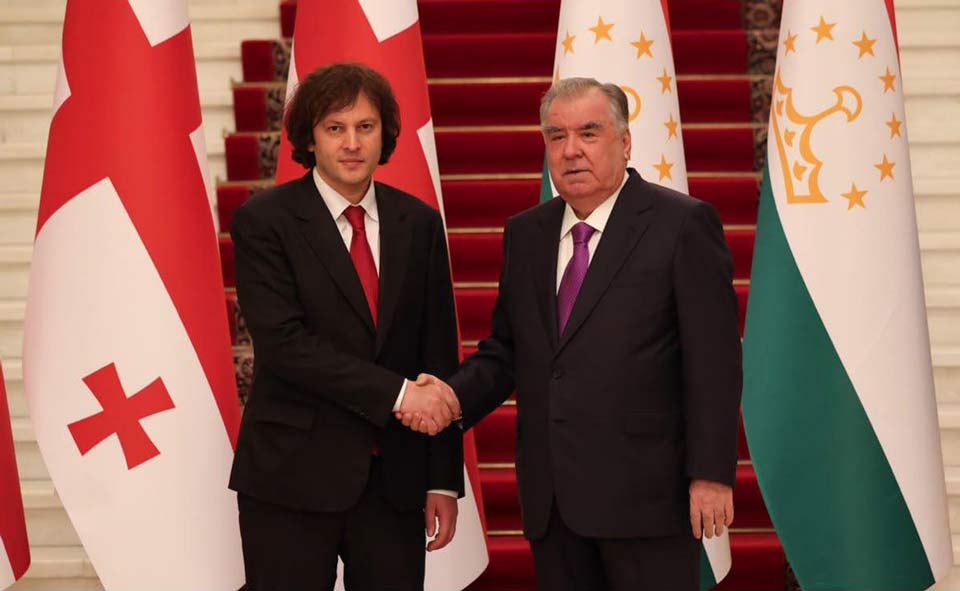
Tbilisi and Dushanbe established an intergovernmental commission on economic cooperation. Agreements were also signed in the fields of air transport, tourism and agriculture.
The two sides identified a broad range of potential areas for cooperation, including trade, investment, transport, energy and mining. Pharmaceuticals, artificial intelligence and digitalisation were also mentioned.
However, no specific projects in these sectors have yet been announced.
Trade with Tajikistan has also been boosted by vehicle re-exports. In 2025, Georgian exports totalled $179.6m, while imports did not reach even $1m. Between January and May 2026, exports fell to $47m.
In 2025, Georgia exported 7,592 passenger cars to Tajikistan worth $162.3m. They accounted for about 90% of total exports.
Other exports included medicines, soft drinks, mineral water and heavy machinery, but their combined share remained small compared with cars.
Direct investment from Tajikistan in Georgia is virtually non-existent. Tourist flows are also limited. In 2025, Georgia recorded 4,704 visits from Tajikistan, fewer than in 2024.

The two sides also plan to launch direct flights between Tbilisi and Dushanbe. However, no date has yet been announced for the start of services.
Tajikistan is a landlocked country with no direct access to the Middle Corridor. Its cargo must pass through other Central Asian states before reaching the Caspian Sea. As a result, linking Tajikistan to Georgia’s transit route requires coordination among several countries.
Kazakhstan: Georgia’s most viable economic and energy partner
Irakli Kobakhidze visited Kazakhstan on 29 June, where he met President Kassym-Jomart Tokayev and Prime Minister Olzhas Bektenov.
The main political outcome of the visit was a joint statement on strategic partnership. Tokayev also awarded Kobakhidze the first-class Order of Friendship.
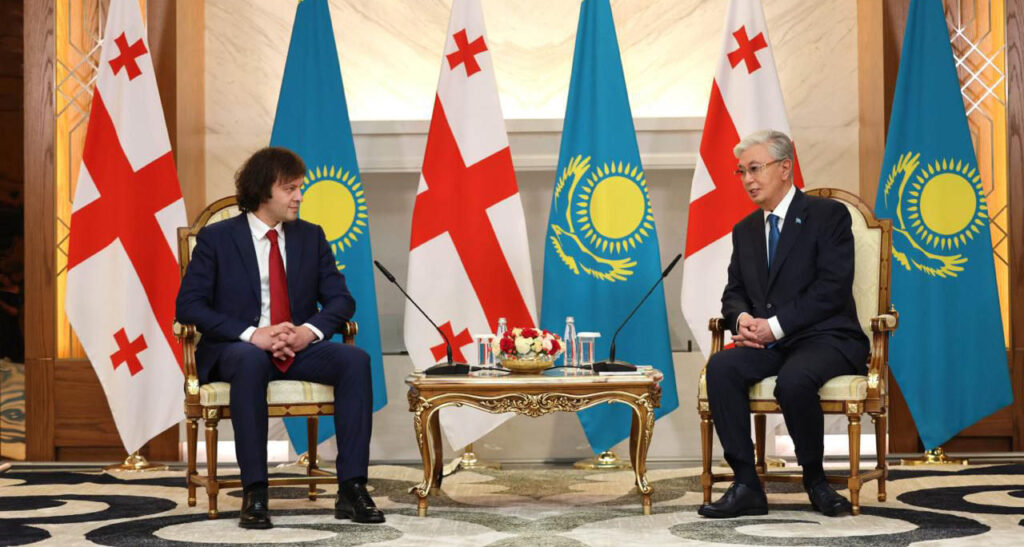
The economic talks covered the Middle Corridor, energy, the port of Anaklia and tourism.
Of the five Central Asian states, Kazakhstan has the most extensive economic ties with Georgia. However, passenger cars also dominate Georgian exports to the country.
In 2025, Georgian exports to Kazakhstan reached $910m. Between January and May 2026, they fell to $218.2m, while imports over the same period amounted to $34.5m.
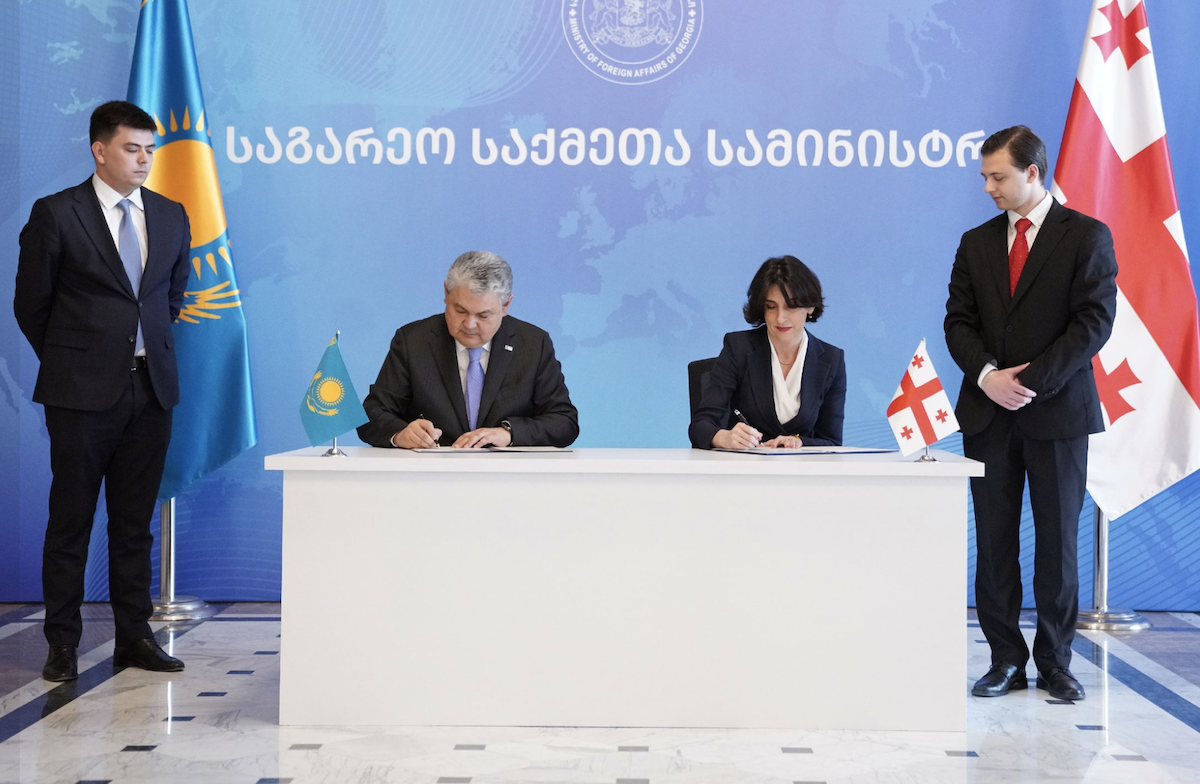
The main reason for the decline was a drop in vehicle re-exports. In the first five months of 2026, car exports amounted to $163.8m.
Georgia also exports mineral water, soft drinks, poultry meat and frozen fish to Kazakhstan. In return, it imports oil, petroleum products, wheat, cotton and metal ores.
Oil transit is another important area of cooperation. According to Tokayev, Kazakhstan plans to increase oil shipments through the Baku-Tbilisi-Ceyhan pipeline.
Transporting Kazakh oil through the pipeline reduces the country’s dependence on Russian routes, while generating additional transit revenue for Georgia.
According to a BP report, 49m barrels of oil were transported through the pipeline in the first quarter of 2026, equivalent to about six million tonnes.
The port of Anaklia is also important for Kazakhstan. According to Georgia’s Economy Ministry, the port project was one of the main topics discussed during the meetings in Astana.
Kazakhstan is Central Asia’s wealthiest country in terms of natural resources. It has reserves of oil, uranium, copper, tungsten and other important minerals. Western interest in the country is therefore linked not only to transport routes.
In November 2025, Kazakhstan signed a $1.1bn agreement with a US company to develop a tungsten deposit. The deal illustrates the scale of Western economic interest in Central Asia.
Uzbekistan: Strategic partnership and interest in Georgian ports
Uzbek President Shavkat Mirziyoyev visited Georgia in July 2026. He and Irakli Kobakhidze signed a declaration on strategic partnership.
The two sides also signed agreements covering the economy, finance, customs, education and healthcare. The documents also addressed agriculture, culture and information technology.
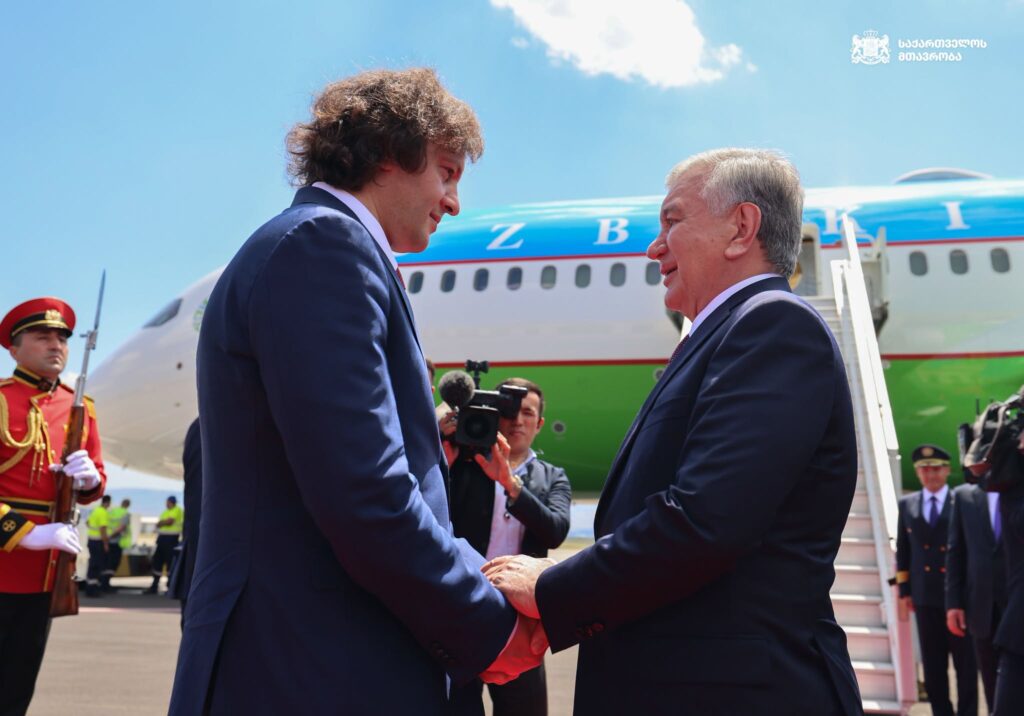
Following the visit, Uzbekistan’s investment and transport ministers toured the ports of Anaklia and Poti. They also visited the Poti Free Industrial Zone.
Uzbekistan views Georgia as an important partner and transit hub in the South Caucasus. Its main interest lies in trade routes and access to Black Sea ports.
In 2025, Georgian exports to Uzbekistan totalled $220.2m, while imports reached $89.4m. Between January and May 2026, exports amounted to $64.3m and imports to $25.9m.
Investment remains far more limited. Uzbek direct investment in Georgia totalled just $220,000 in 2025. In the first quarter of 2026, it stood at $276,000.
Over the past six years, Georgia has received about $19m in investment from Uzbekistan. Uzbek businesspeople have mainly shown interest in trade, property and the hotel sector.
The China-Kyrgyzstan-Uzbekistan railway is also important for Uzbekistan. The project will provide the country with a direct rail link to China. The route could also be extended towards the Caspian Sea and Georgia.
The visits to Georgian ports were a practical sign of this interest. However, no specific Uzbek investments in the ports of Anaklia or Poti have yet been announced.
Turkmenistan: Gas, oil and access to Black Sea
Turkmen President Serdar Berdimuhamedov arrived in Georgia on 17 July, where he held talks with President Mikheil Kavelashvili and Prime Minister Irakli Kobakhidze.
The main topics of the talks were the Middle Corridor, TRACECA, port infrastructure and energy cooperation. The two sides also signed agreements covering education, industry and healthcare.
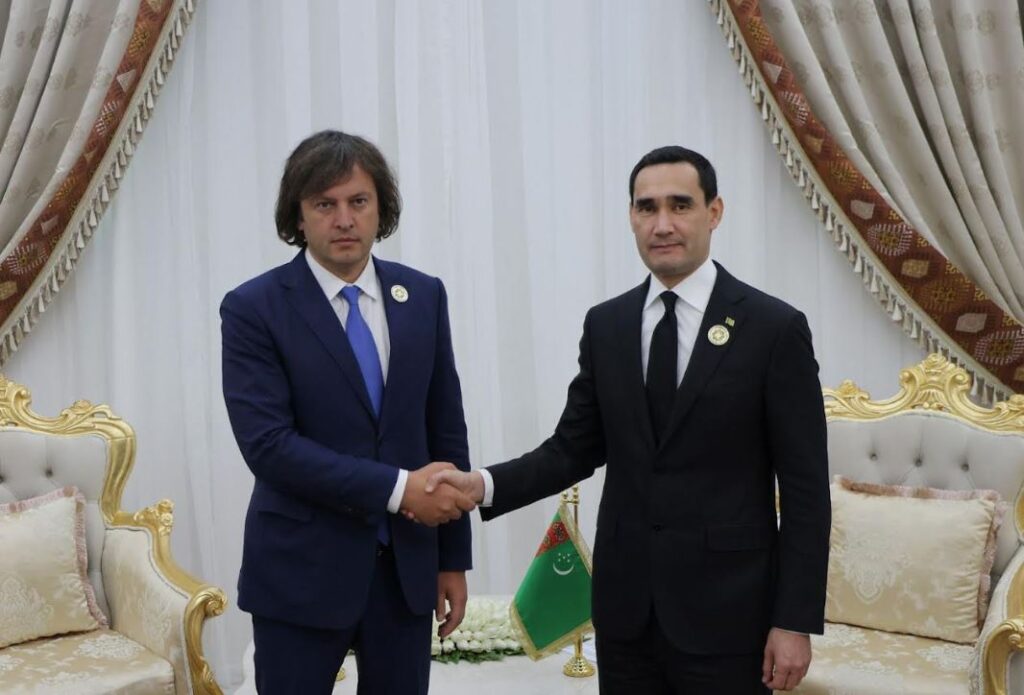
The Turkmen president spoke of the joint use of ports on the Caspian and Black seas.
“Serious negotiations are already under way on the use of port infrastructure. This involves using ports on the Caspian and Black seas on a mutually beneficial basis,” Berdimuhamedov said.
He did not name any specific ports or provide details on the scale of investment or the project’s timeline.
In 2025, Georgian exports to Turkmenistan totalled $63.6m, while imports exceeded $39m. Between January and May 2026, bilateral trade fell to about $38.6m.
Georgia mainly imports oil and petroleum products from Turkmenistan, while exporting passenger cars and meat.
Energy expert Murman Margvelashvili sees short-term potential for refining Turkmen oil in Georgia, particularly at the new oil refinery in Kulevi.
A more long-term project is the Trans-Caspian gas pipeline. It would carry Turkmen gas across the Caspian Sea to Azerbaijan, before continuing through Georgia and Turkey.
“A more strategic and long-term direction could be a project that has been under discussion for many years: the Trans-Caspian gas pipeline,” Margvelashvili said.
Turkmenistan has some of the world’s largest natural gas reserves. However, the Trans-Caspian pipeline has been discussed for several decades and there is currently no firm timetable for its implementation.
Middle Corridor: shared strategic interest for Georgia and Central Asia
One issue featured consistently in Georgia’s talks with all five Central Asian states: the Trans-Caspian International Transport Route, better known as the Middle Corridor.
-
What is the Middle Corridor?

The Middle Corridor, officially known as the Trans-Caspian International Transport Route (TITR), is an international trade route linking China and Central Asia with Europe while bypassing Russia.
The route runs through China, Kazakhstan, across the Caspian Sea to Azerbaijan, through Georgia and onwards across the Black Sea to Europe.
Why is it important?
nterest in the Middle Corridor has grown since Russia’s full-scale invasion of Ukraine, as European and Asian businesses have sought alternatives to transport routes passing through Russia.
The corridor offers several advantages:
— it reduces dependence on Russian transit routes;
— provides an alternative to the Northern Corridor;
— can be faster than maritime shipping in some cases;
— and connects Central Asian economies with European markets.
Georgia’s role
Georgia is one of the key countries along the Middle Corridor:
— it provides the rail and road links connecting Azerbaijan with the Black Sea;
— it is home to the ports of Poti and Batumi;
— the planned deep-water port at Anaklia is widely seen as central to expanding the corridor’s capacity.
Its main advantage is that it would be able to accommodate large container ships, something Georgia’s existing ports cannot fully support.
The Middle Corridor has gained strategic importance since Russia’s full-scale invasion of Ukraine. Central Asian countries are seeking alternatives to transporting goods through Russia, while Western governments and businesses are increasingly interested in supply chains that are less dependent on both Russia and China.
However, the Middle Corridor still faces a number of challenges:
- Limited capacity at ports on the Caspian and Black seas;
- Customs procedures that differ from one country to another;
- A lack of coordinated tariff policies;
- Delays at the junctions between maritime and rail transport;
- High transportation costs;
- Insufficient infrastructure.
As a result, political declarations alone will not be enough to make the corridor competitive. It will require ports, railways, a digital customs system and a coordinated tariff policy.
Anaklia: A project that could benefit Central Asia
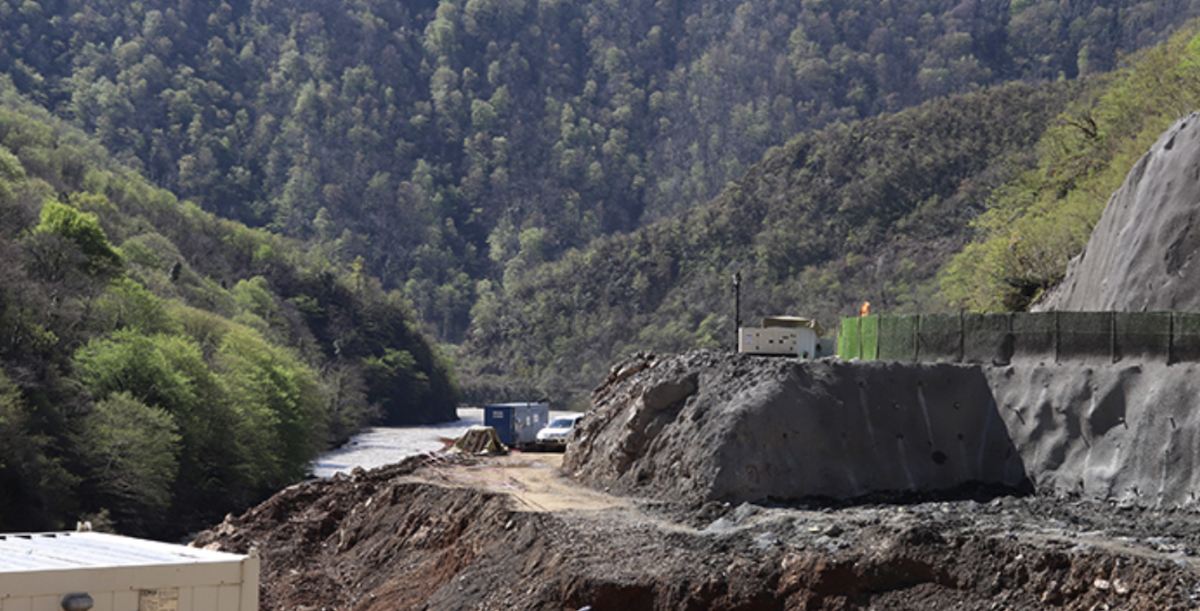
The Georgian government has described the deep-water port of Anaklia as the key infrastructure project of the Middle Corridor.
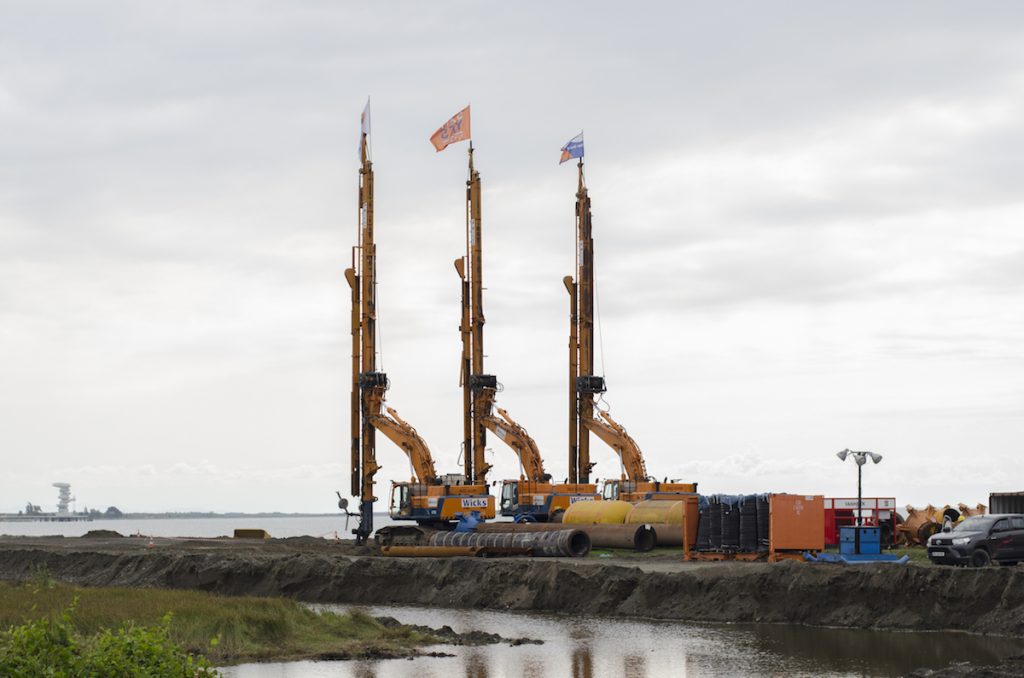
According to the Ministry of Economy, the first phase of construction is scheduled for completion in 2029. The port will have an annual capacity of at least 600,000 TEU and will be capable of handling Panamax-class vessels.
The marine works are being carried out by the Belgian company Jan De Nul. However, the port operator has yet to be selected, and the project’s final financing model has not yet been determined.
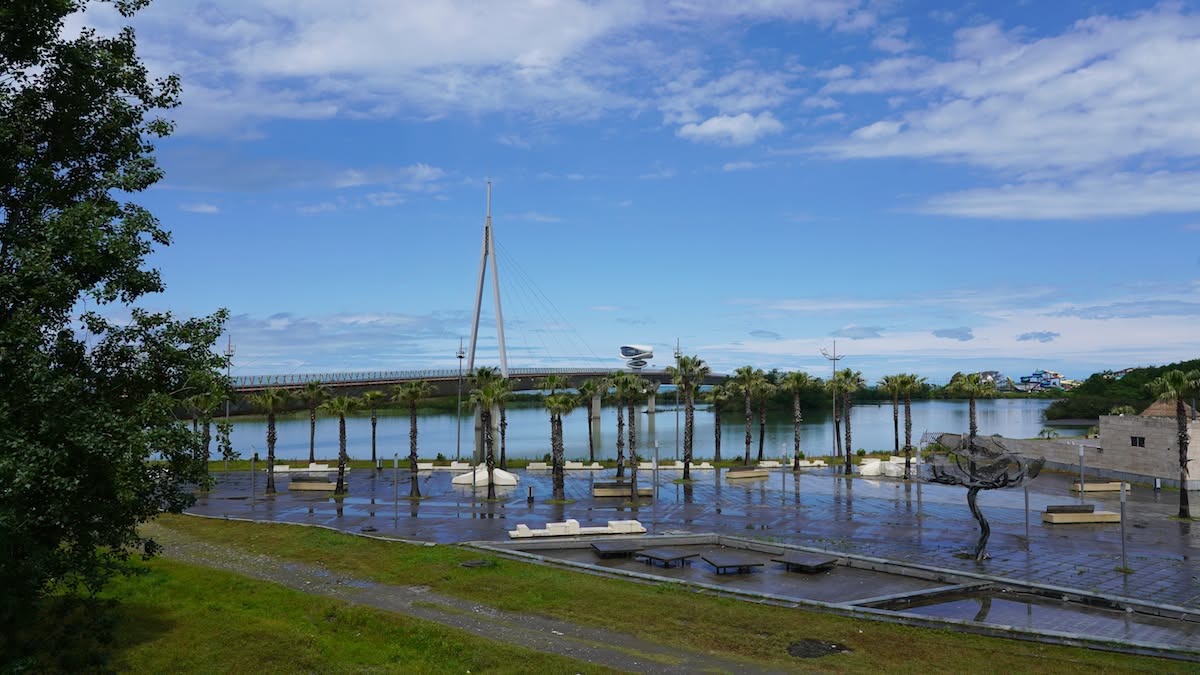
The issue of Anaklia was discussed separately during meetings with the Kazakh and Uzbek delegations. Experts suggest that companies from Central Asia could eventually be considered as operators of the port’s terminals. The Georgian government has not announced any such agreement.
Anaklia’s commercial success will depend on securing guaranteed cargo volumes. For Georgia, therefore, agreements with Central Asian countries are not merely a matter of diplomacy. They also form part of the port’s economic rationale.
Western interest in Central Asia
Central Asia is not only a priority for the Georgian government. The United States, the European Union, China and Russia are all deepening their engagement with the region.
In April 2025, the EU and the five Central Asian states upgraded their relations to a strategic partnership. The bloc also announced a €12 billion Global Gateway investment package covering transport, critical raw materials, energy, water and digital connectivity.
In June 2026, the European Commission launched a new platform to develop transport infrastructure linking Europe with Central Asia via the Black Sea and the South Caucasus. Agreements signed with international financial institutions are expected to mobilise up to €2 billion in investment.
The United States’ primary interest lies in critical minerals. Central Asia is rich in uranium, copper, tungsten, gold and rare earth elements.
The countries of the region are using this growing interest to balance their foreign policies. They continue to cooperate with Russia and China while also seeking access to Western capital and markets.
What does closer cooperation with Central Asia mean for Georgia?
Experts agree that cooperation with Central Asia is important for Georgia. At the same time, the government is presenting these ties as a possible alternative to the country’s traditional Western orientation.
According to economist Rati Tsiklauri, the economic relationship between Georgia and Central Asia appears more substantial in official statements than it does in the actual trade statistics.
“Ultimately, all cooperation with Central Asia comes down to our role as a transit country. Unfortunately, our economy is not large enough to sustain a fully fledged two-way exchange of goods with these countries,” Tsiklauri said.
In Tsiklauri’s view, closer cooperation with Central Asia is a positive development. However, it should not become compensation for Georgia’s deteriorating relationship with the West.
“We should not try to build ties with East and Central Asia only to present them as proof that we no longer need the West because we have China, Kazakhstan and Turkmenistan. That simply won’t work,” Tsiklauri said.
Nika Alavidze, Georgia’s former deputy economy minister and co-founder of the public movement Georgia First, focuses on the quality of trade. In his view, vehicle re-exports generate revenue, but they cannot serve as a sustainable model for economic development.
“Re-exports do not create industry. Growing oil exports do not mean energy independence. Higher trade turnover does not amount to a technological breakthrough,” Alavidze wrote on his blog.
He argues that “portraying Asia as an alternative to the West is a dangerous political illusion.”
“The circumstances created by the Russia-Ukraine war have opened a temporary trade window for Georgia, but that is not a strategy—especially when it comes with serious reputational risks,” Alavidze said.
In his view, Georgia’s greatest asset is its integration with the Western system. The country can become a reliable legal, financial and transit platform for Central Asia, but only if it remains connected to European rules and standards.
“What matters to Central Asian markets is Georgia’s geopolitical role, not simply its geographical location. They fully understand that geography alone offers them nothing. By contrast, Georgia’s geopolitical weight allows them to integrate their economic model, culture, legal framework and institutions more smoothly with major Western markets. Asia needs a connection to Europe, just as Europe needs a connection to Asia. If we limit ourselves to serving only as a geographical corridor, we will gain nothing, remain merely a transit route and ultimately be left with little more than environmental or infrastructure-related costs alongside short-term benefits,” Alavidze said.
Economist Elguja Khokrishvili also sees Georgia’s geographical advantage as only a temporary opportunity. In his view, cargo owners will continue to use the Georgian corridor only as long as it remains competitive.
Khokrishvili also notes that the Central Asian countries possess other sources of leverage. Kazakhstan offers partners oil, uranium and a large market. Uzbekistan has gold, copper, uranium and a growing economy. Georgia’s main advantage, by contrast, is its geographical location.
“But geographical advantages quickly lose their value once alternative routes are developed,” Khokrishvili wrote.
Zaza Shengelia, a researcher at EPRC, highlights the financial and institutional support associated with Georgia’s EU candidate status. In his view, partnership with Central Asian countries cannot replace that resource.
“It would be a mistake to suggest that this partnership is an alternative or a substitute for the enormous institutional support that was practically within our grasp thanks to EU candidate status,” Shengelia said.
Taken together, the experts reach a similar conclusion: Central Asia is an important market and transit partner for Georgia. However, the economic value of these relationships depends to a large extent on Georgia’s connection with Europe.
Georgia can serve as Central Asia’s gateway to the West. But to do so, it must itself remain integrated into the West’s economic and legal space.
Otherwise, the country will be left with little more than a favourable geographical location. And a good place on the map is not an economic policy.
Georgia’s Asian pivot