Courtrooms without cameras: How Georgia's courts closed their doors to media






How the media lost access to Georgia’s courts
For more than a year, video recording has been completely banned during court hearings in Georgia.
Since July 2025, photography, video recording and audio recording have been prohibited not only inside courtrooms, but also in the corridors and courtyards of court buildings. The ban was introduced while the courts were hearing cases against pro-European protesters and opposition politicians—cases of significant public interest.
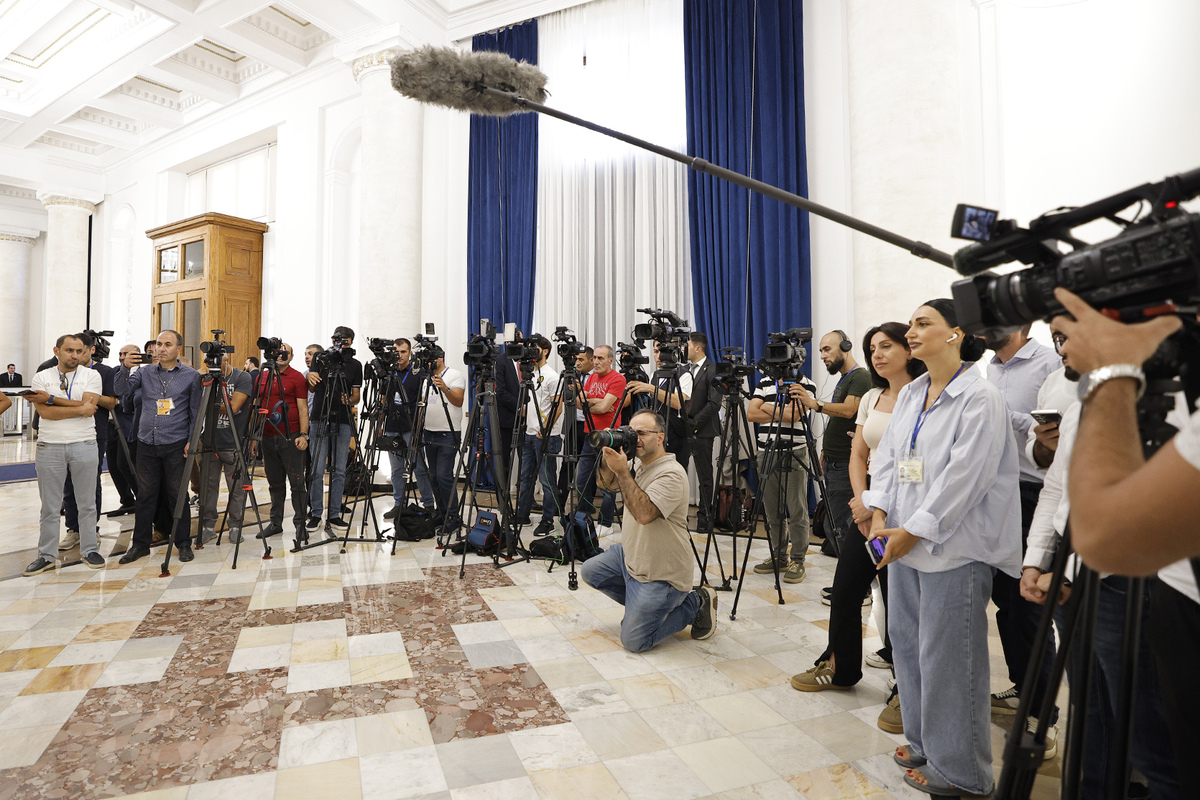
For the past year, journalists have been forced to work outside court buildings. They spend hours waiting for hearings to end, standing outside in the sun, rain, snow and wind.
- OSCE Parliamentary Assembly adopts key resolution on Georgia
- ‘41 steps towards Russia’ – Transparency International’s report on Georgian Dream policy
- GYLA study: Laws passed in Georgia since 2024 affect fundamental rights
Georgia’s courts have been closed to the media before. The first ban was introduced in 2007, during the rule of the United National Movement. In 2013, the Georgian Dream party, which had come to power promising to restore justice and reform the judiciary, reopened the courts, presenting the move as a major achievement.
How have the rules for journalists covering Georgia’s courts changed? What led to the latest restrictions? And how did the country return to a practice that the government once proudly abolished?
The latest changes: a ban on video recording in court
Last summer, the Georgian Dream party fast-tracked amendments to the Organic Law on Common Courts. The changes came into force just days later.
On 26 June 2025, parliament—made up solely of Georgian Dream and its satellite parties—approved the amendments in their third reading. Eighty MPs voted in favour of the bill, with no votes against.
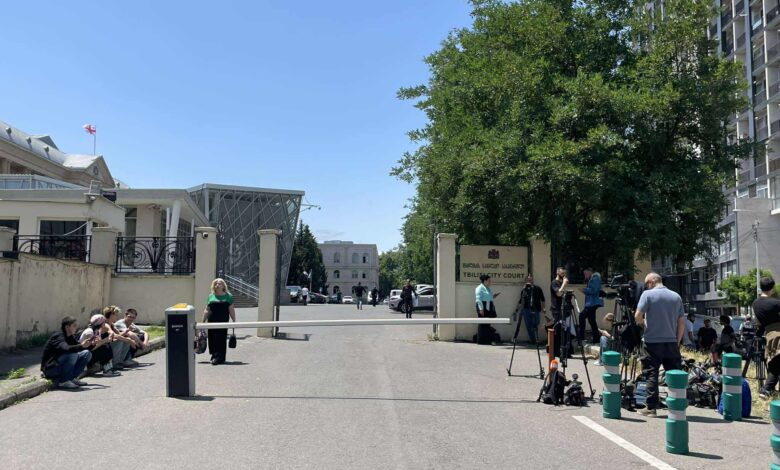
Following the changes:
- Photography, filming, video recording, live broadcasting and audio recording were banned inside court buildings and in their courtyards.
- From then on, only the court or a person authorised by the court would have the right to make such recordings.
Under the amendments:
- Courts may themselves release photographs, film, video and audio recordings of court hearings, provided this does not violate the law.
- Media outlets must apply in advance to Georgia’s High Council of Justice for permission to record video footage.

On the day the amendments came into force (30 June), journalists applied to the High Council of Justice for permission to film specific court hearings. They never received a response.
Later that evening, journalists gathered outside the High Council of Justice in protest. They sought to attend a council meeting, but court administration officials refused to let them in.
Journalists submitted several more requests in the months that followed, again without success.
The online outlet Publica covers all of Georgia’s high-profile court cases. Its journalists have submitted around 20 applications to the High Council of Justice.
Natia Amiranashvili, who regularly reports from the courts, says none of them has ever received a substantive reply.
“We received neither permission nor a refusal. <…> In response to every application, we were told by email that requests had to be submitted on paper rather than electronically. It gives the impression that they are trying to make the application process less accessible for the media.”
The High Council of Justice has granted permission to cover court proceedings only once—and only selectively. The pro-government TV channel Imedi and the Georgian Public Broadcaster were allowed to film the trial of Giorgi Bachiashvili, the businessman whom Bidzina Ivanishvili had described as his “personal prisoner”.
What led to the changes?
The closure of the courts to the media coincided with a period when judges were hearing cases involving opposition politicians and people arrested during the pro-European protests. Reports by human rights organisations say many of these proceedings failed to meet the standards of a fair trial.
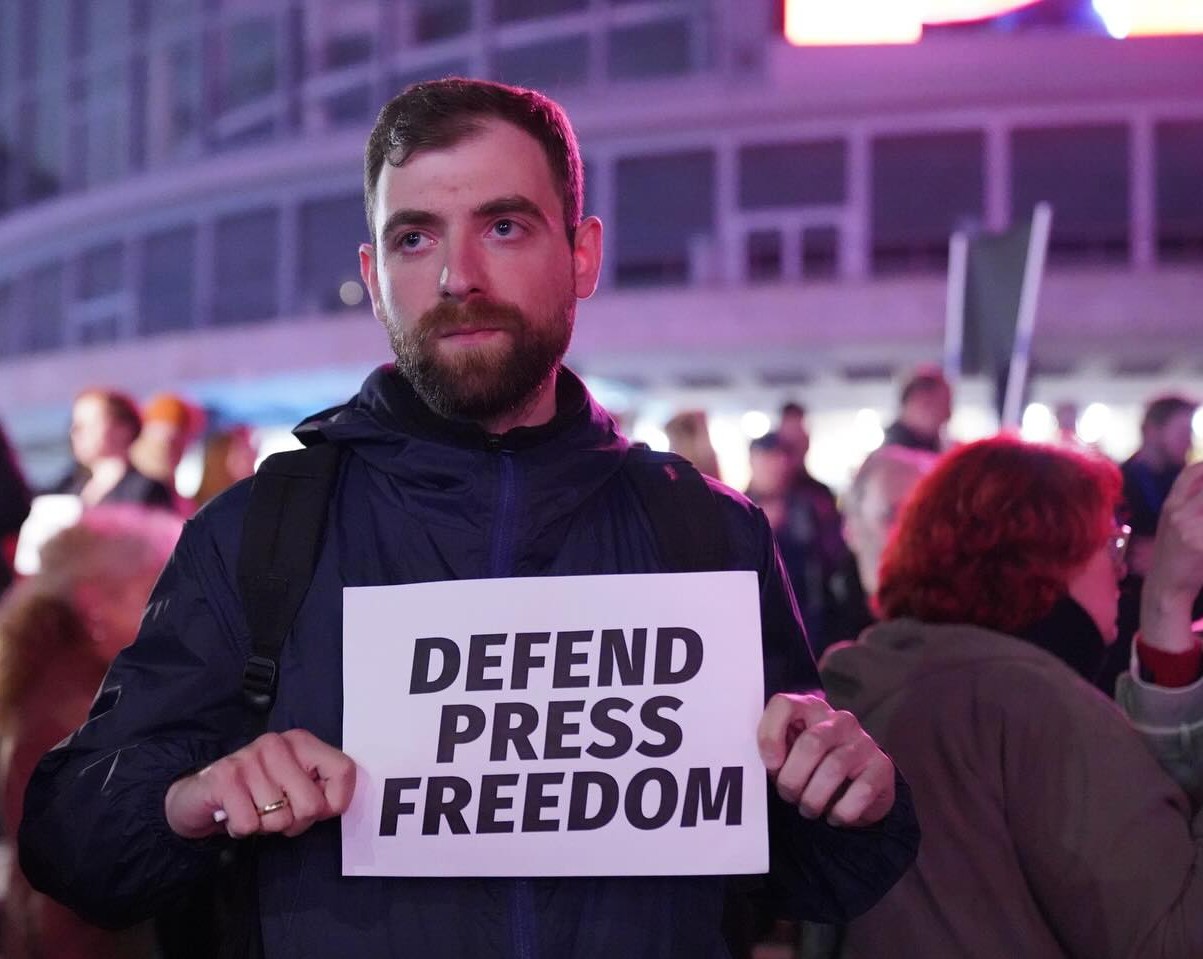
Video footage and photo reports from court hearings vividly illustrated what was happening. Every day, dozens of hearings were held at Tbilisi City Court, with journalists reporting directly from inside the courtrooms.
Reporters attended hearings with their laptops, posting live updates on social media as proceedings unfolded. During breaks, they published videos and photo reports from the court corridors.
Many in Georgia believe this coverage helped undermine Georgian Dream’s disinformation campaign, which sought to portray those detained as criminals.
“The media’s consistent and highly important work allowed the public to clearly see the scale of the legal and moral contradictions in these trials. It exposed the extent to which the court, the prosecution and their witnesses flagrantly violated the law, and how little compassion the court showed towards the defendants and their families,” the Social Justice Center said in its assessment.
According to the organisation, this strengthened public solidarity with the defendants and highlighted the systemic problems facing Georgia’s judiciary.
“That was, of course, unacceptable and dangerous for Georgian Dream and the judicial clan.”
Journalists covering the trials say they sensed long before the amendments were adopted that the courts would eventually be closed to the media.
Minda Gabadze, a photojournalist at Publica, attended virtually every trial involving prisoners of conscience. She became one of the leading chroniclers of these proceedings, creating a unique visual archive.
In her column, The Photojournalist’s Final Word, Gabadze describes how court officials repeatedly tried to prevent journalists from taking photographs.
“My camera contains several photographs showing the hand of a court press officer or a court bailiff reaching into the frame. <…> Their goal was to prevent us from capturing emotional images. That is why members of the court’s press office spent hours attending the hearings,” she writes.
Georgia’s courts have been closed before: the 2007–2013 timeline
Open justice was one of the core principles enshrined in Georgia’s Organic Law on Common Courts. Court proceedings were to be held in public, and photography and video recording during hearings were permitted.
But at one point, open court proceedings became a problem for the authorities. This happened during the rule of the previous government, the United National Movement.
In 2007, a Georgian court was hearing the case of the murder of Sandro Girgvliani, a 28-year-old banker. He was found dead near Okrokana Cemetery in Tbilisi in 2006, and investigators later confirmed that he had been murdered.
The case implicated senior officials from the government of the time, including law enforcement officers. It sparked widespread public outrage and fuelled suspicions that the investigation was protecting those responsible.
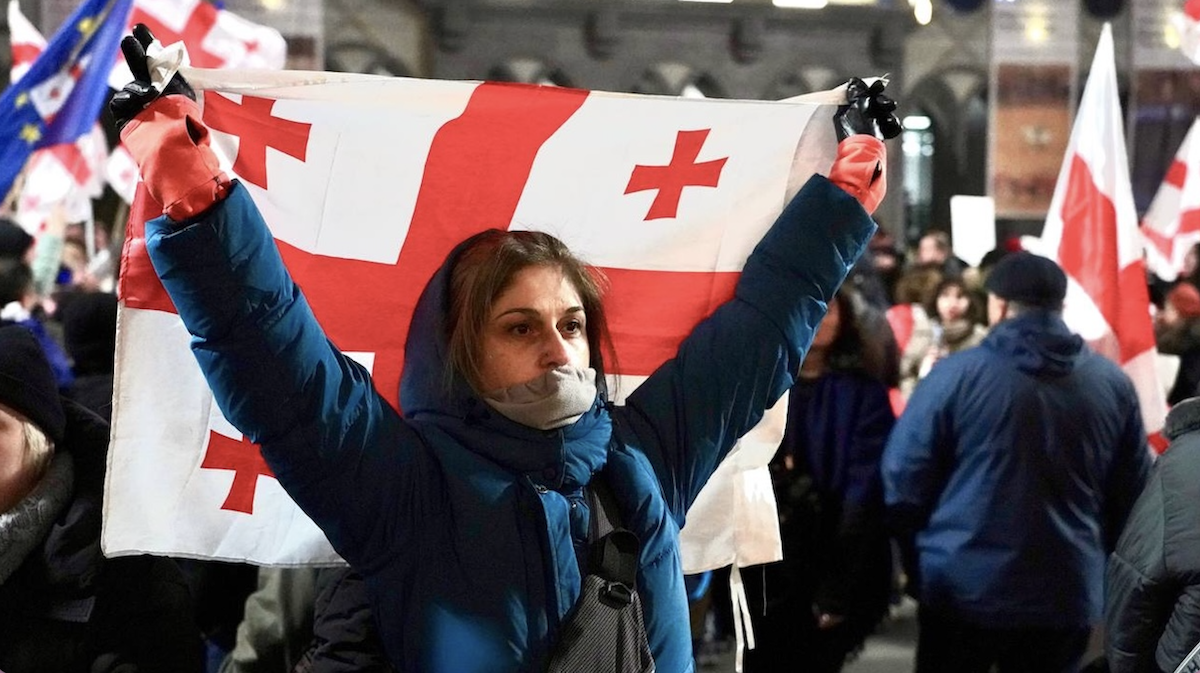
On 11 July 2007, amendments to Georgia’s Organic Law on Common Courts banned photography and video recording inside courtrooms. The government argued that cameras could influence witnesses, trial participants and the administration of justice.
The then Public Defender, Sozar Subari, strongly criticised the amendments, arguing that they undermined the right to a fair trial.
Today, Subari is a member of parliament and a supporter of the very restrictions he once opposed. He entered parliament in 2012 on the Georgian Dream ticket and, following the most recent elections, represents the People’s Power party, a satellite party aligned with Georgian Dream.
In 2012, Georgia underwent a change of government. The new Georgian Dream administration presented greater transparency in the courts as one of its key political promises. One of its first judicial reforms was to reopen the courts to the media.
In the spring of 2013, journalists regained access to the courts, although only partially. The Georgian Public Broadcaster was granted exclusive rights to record court hearings and was required to share its footage with other media outlets.
If the broadcaster chose not to cover a particular hearing, another television company could do so instead by obtaining permission from the presiding judge before the hearing began.
All forms of media coverage were also permitted inside court buildings and in their courtyards. Even photography inside courtrooms required only the approval of the judge hearing the case. One media outlet would be authorised to take photographs and then distribute them to other news organisations.
The Georgian Dream government highlighted these legislative changes as one of its signature judicial reforms and a major achievement.
What have been the consequences of the amendments?
For the past two years, Nina Baidauri, a journalist at Netgazeti, has spent much of her working time covering court hearings. Before the amendments, Netgazeti was also able to publish photographs and video footage from inside the courts.
Now, Baidauri says she has to rely almost entirely on text to help readers imagine the defendants’ emotions, body language and behaviour.
“No matter how well you write, in today’s world—and particularly in the context of information warfare—text alone does not have the same impact as video. That is especially true in politically motivated cases,” she says. “We could no longer film the defendants. We could no longer present them to the public. We could no longer show their emotions or capture their testimony. We could no longer let people hear their voices. What cannot be seen simply does not resonate in the same way.”
Why are the amendments controversial?
Civil society organisations argue that the amendments go far beyond restricting journalists’ work. In their view, they are part of an effort to turn the judiciary into a political instrument of Georgian Dream.
They say the changes undermine the fundamental principles of openness and transparency in the justice system.
In a joint statement, several organisations said the amendments “return us to the practices of 2007–2013”, when photography and video recording during court hearings were subject to strict restrictions.
“These amendments are yet another significant and alarming step in Georgian Dream’s accelerated process of consolidating and entrenching authoritarian rule,” the Social Justice Center said in its assessment.
Mamuka Andguladze, head of the Media Advocacy Coalition, argues that an open judiciary should primarily be in the interests of the courts themselves.
“Openness is the way for courts to demonstrate to the public that the rule of law is being upheld. But captured state institutions are not interested in transparency—quite the opposite,” he says.
How the media lost access to Georgia’s courts