Poland and Ukraine clash over legacy of Ukrainian Insurgent Army






The Conflict Between Poland and Ukraine
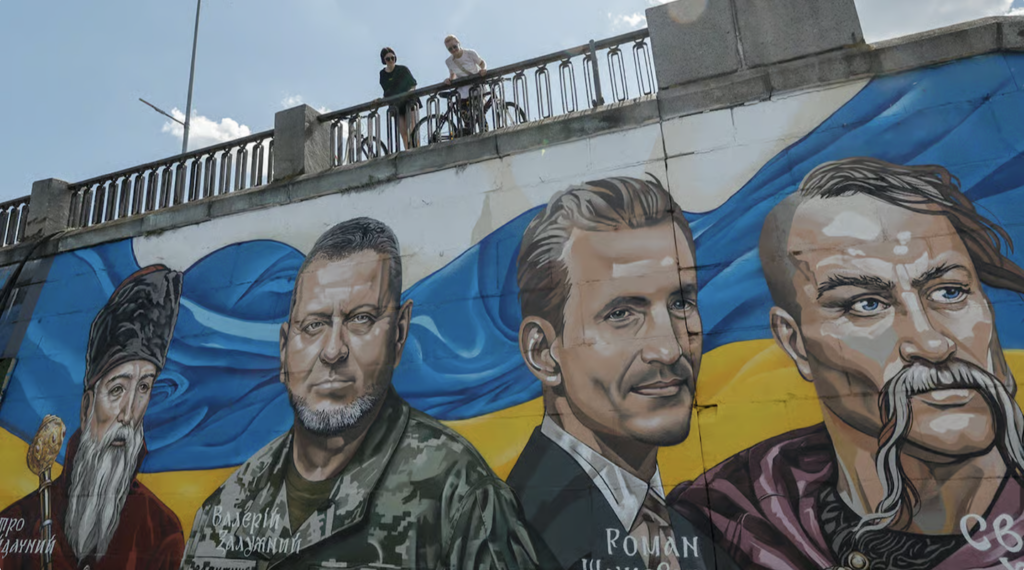
Polish President Karol Nawrocki revoked Volodymyr Zelenskyy’s highest state honor, the Order of the White Eagle, after the Ukrainian president granted one of the country’s military units the honorary title of “Heroes of the Ukrainian Insurgent Army.” For many Poles, the UPA remains chiefly associated with the atrocities of the Volhynia massacres.
In response to Nawrocki’s decision, Zelenskyy and other Ukrainian officials returned Polish state decorations and accused Warsaw of playing into Moscow’s hands. Polish officials, however, have also stressed that the only beneficiary of the dispute is the Kremlin.
Arguments between Poland and Ukraine over the legacy of the UPA have persisted for decades, but the current flare-up is more than another historical quarrel. As historian and expert on historical memory and military history Konstantin Pakhaliuk argues, it is “a consequence of the political deadlock” in which both countries have found themselves in the fifth year of war.
Novaya Gazeta Europe examines the roots of the dispute with the help of historians.
A report by Novaya Gazeta Europe.
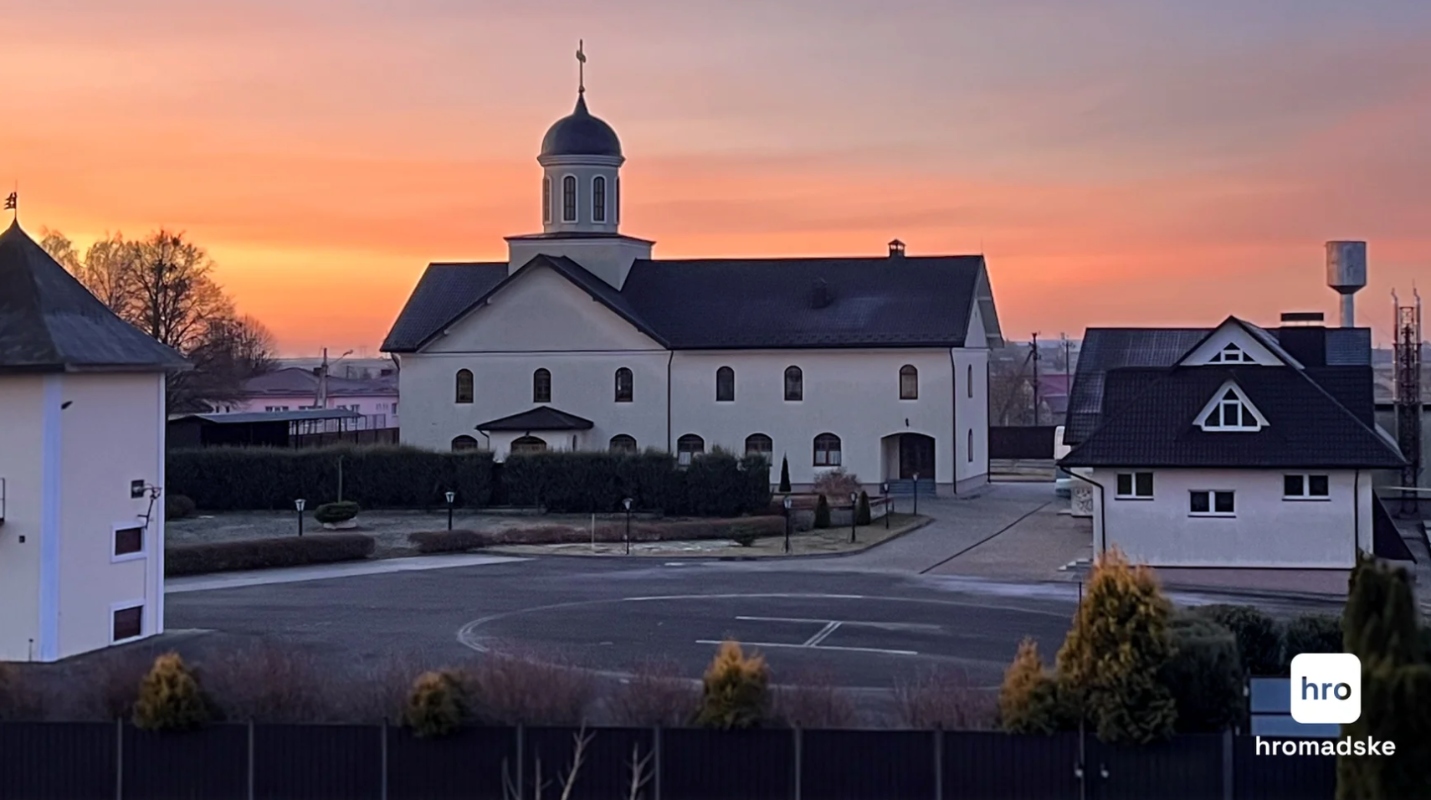
What Happened?
A historical dispute has flared up between Poland and Ukraine, rooted in a long-running disagreement over the events of World War II—specifically, the actions of the Ukrainian Insurgent Army.
On May 26, Volodymyr Zelenskyy signed a decree granting the Ukrainian Armed Forces’ Separate Special Operations Center “North” the honorary title “Heroes of the Ukrainian Insurgent Army (UPA).”
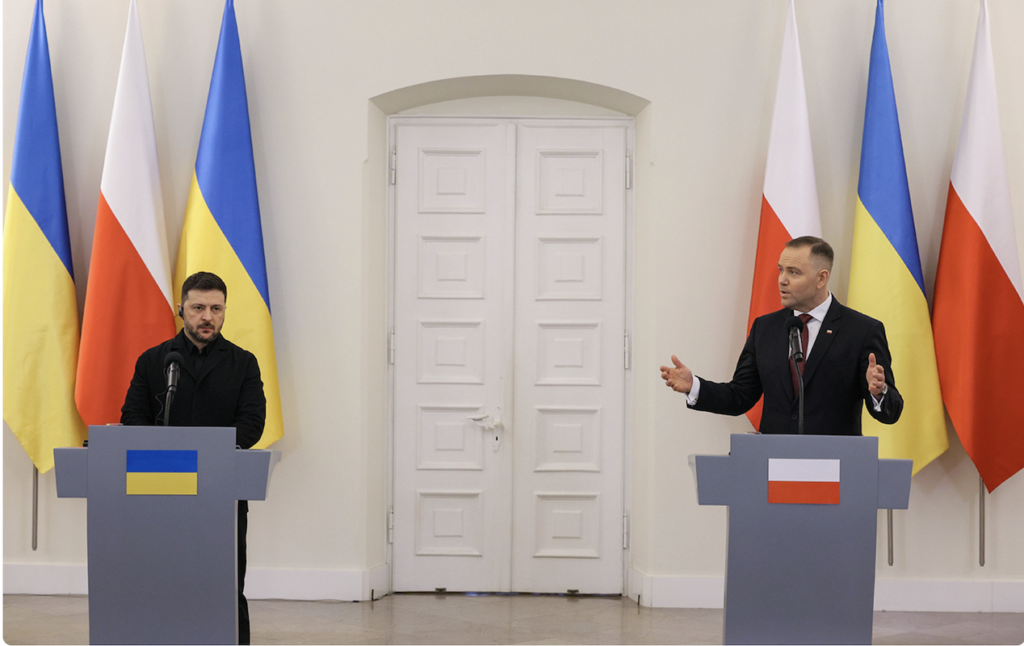
In response, Karol Nawrocki—who, before becoming president, headed the Institute of National Remembrance—said he had received Zelenskyy’s decision “with great sadness.” He also described the move as “unwise” and “ill-considered.”
On June 19, Nawrocki revoked Zelenskyy’s Polish state decoration, the Order of the White Eagle—the country’s highest honor—which the Ukrainian president had received in 2023 from then-President Andrzej Duda.
“The decision of the Ukrainian authorities to glorify the UPA is not only outrageous, but incomprehensible, and it causes deep disappointment,” Nawrocki said. “It is a blow not only to historical memory. It is also a blow to the trust built over years and in recent months. It is a blow to the foundations of reconciliation. It is a blow to the belief that truth can be a common language for our peoples.”
The decision, however, still requires approval from Poland’s prime minister, Donald Tusk, in order to take full legal effect.
The dispute emerged shortly before a conference on Ukraine’s postwar reconstruction. The annual event, scheduled for June 25–26 in Gdańsk, is still expected to be attended by Zelenskyy himself.
What is the Volhynia tragedy?
The Volhynia massacre refers to the mass killings of Polish civilians carried out between 1943 and 1945 by the Ukrainian Insurgent Army.
According to Sławomir Sieradzki, senior analyst at Polish public radio, the UPA’s goal was to establish an independent Ukrainian state, and local Ukrainians often joined its units. The violence took place in Volhynia (now western Ukraine) and neighboring provinces, which at the time were occupied by Nazi Germany and inhabited by Poles, Ukrainians, and other ethnic groups.
As a result of UPA attacks, Polish historians estimate that between 40,000 and 100,000 Poles were killed, though the exact number is difficult to determine. Entire villages were burned, and civilians were killed in brutal attacks.
Some Ukrainian historians, however, argue that these figures are inflated and suggest the death toll may be closer to 30,000–35,000 Polish victims.
Sieradzki emphasizes that the crimes were not one-sided: the Polish underground carried out retaliatory operations in which an estimated 2,000 to 3,000 Ukrainians were killed. However, he notes that the scale of the losses was not comparable.
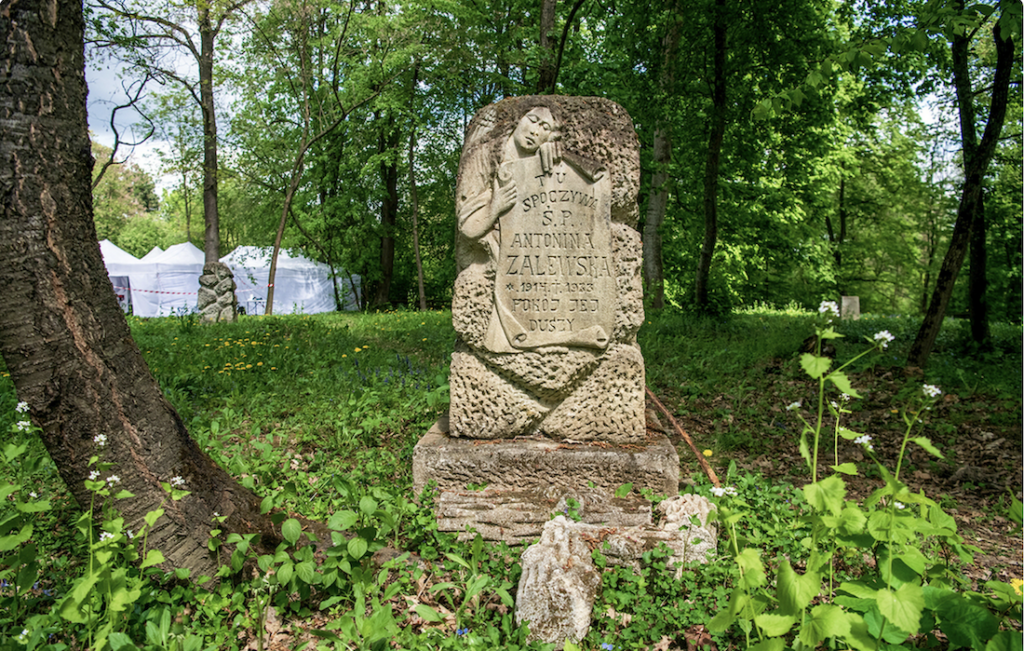
Thousands of victims of the Volhynia massacre have still not been properly buried. In 1994, the two sides signed a bilateral agreement on the protection of memorial sites, and in subsequent years carried out several exhumations. However, in 2017, Ukraine’s Institute of National Remembrance imposed a moratorium on the exhumation of Polish victims, in response to the demolition by Polish activists of a monument to the Ukrainian Insurgent Army in Hruszowice.
In 2024, Ukraine agreed, following negotiations, to resume exhumation work, and in January 2025 both sides announced an agreement to proceed with the exhumation of victims of the Volhynia tragedy. However, officials in Poland have at times argued that the process is moving too slowly and faces administrative obstacles on the Ukrainian side.
Why the decision is seen as outrageous in Poland
For the “overwhelming majority of Polish society,” the Ukrainian Insurgent Army remains primarily responsible for crimes committed against Polish civilians during World War II, Nawrocki noted in his decision.
As early as 2016, the Polish parliament, the Sejm of the Republic of Poland, formally recognized crimes committed by the Organization of Ukrainian Nationalists and the UPA as genocide. The same act established July 11 as the National Day of Remembrance for the Victims of Genocide.
“At least 100,000 Polish citizens were killed by the Ukrainian Insurgent Army in Volhynia, Eastern Galicia, Lublin, and Subcarpathia simply because they were Poles, Jews, or members of other minorities,” Nawrocki said.
Poland’s Institute of National Remembrance argues that the Ukrainian Insurgent Army was not merely a partisan formation, but an organized armed structure operating within the framework of the Organization of Ukrainian Nationalists.
According to the institute, the UPA’s primary objective was the physical extermination of the Polish civilian population—a planned campaign of genocide—while its struggle against Soviet forces was secondary.
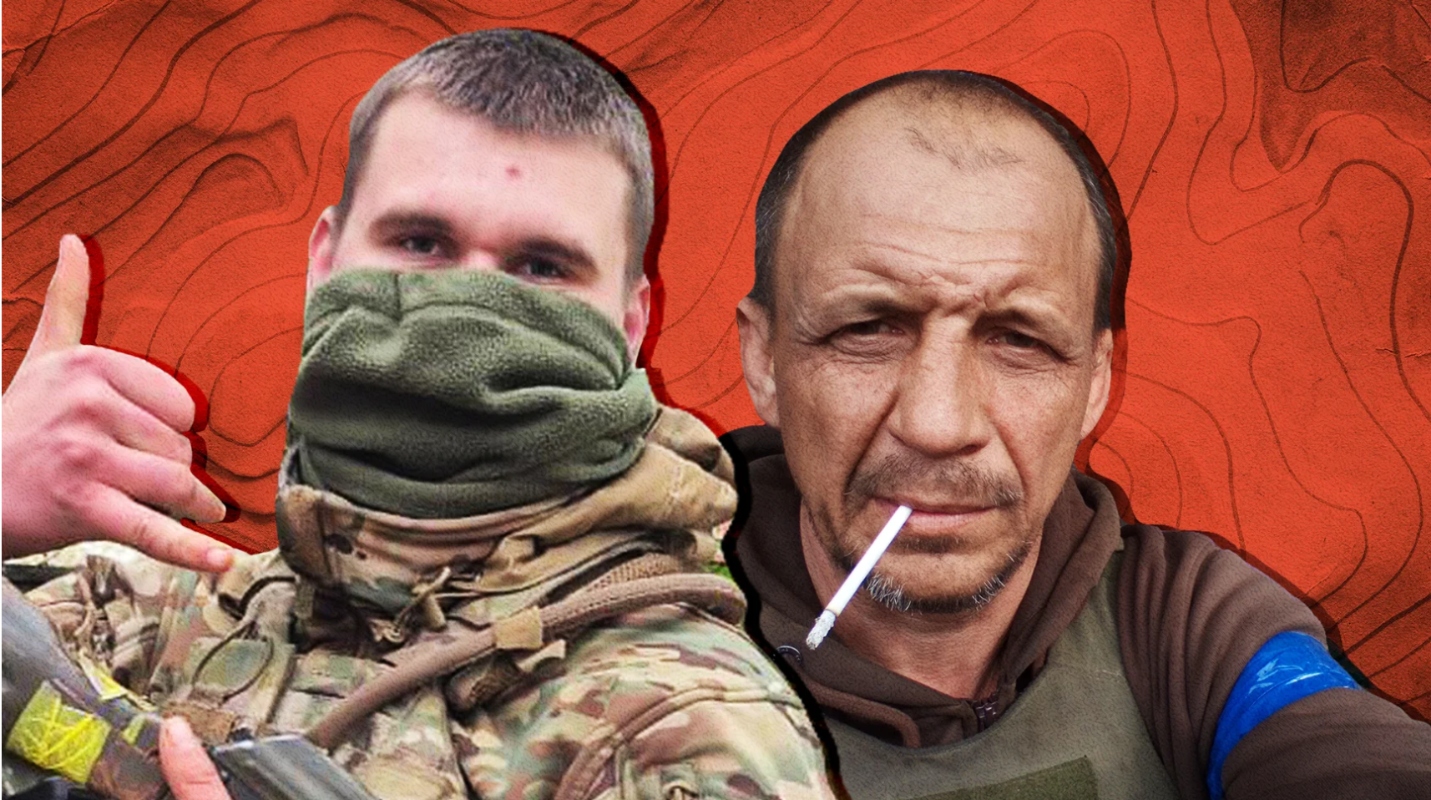
What do people in Ukraine think about the UPA?
For many Ukrainians, the Ukrainian Insurgent Army is seen as a symbol of the struggle for independence and national liberation. Its often brutal actions are frequently interpreted within the harsh context of war, occupation, and survival, notes Sławomir Sieradzki, senior analyst at Polish public radio.
In Ukraine, the UPA is largely commemorated for its resistance to both the Soviet Union and Nazi Germany. The Ukrainian Insurgent Army is described as a partisan force that fought against Soviet power, resisted the NKVD, and for years tried to preserve the idea of an independent Ukrainian state, adds Polish Radio journalist Katarzyna Semaaan.
“After Russia’s aggression in 2014 and the full-scale invasion in 2022, for many Ukrainians the Ukrainian Insurgent Army has come to symbolize resistance to Russian imperialism. For modern Ukrainian soldiers, it is part of a broader tradition of fighting for freedom,” she says.
For the Ukrainian side, given the current wartime conditions, it is clearly important to construct a heroic narrative, Konstantin Pakhaliuk told Novaya-Europa. In his view, the UPA is significant as a memory of Ukrainians who fought against external enemies and two occupying powers—Hitler and Stalin.
“Ukraine is in a difficult position right now—there are around 25 million people left in the country (demographers and officials estimate 22–29 million, though an exact figure is impossible to determine during wartime without a census), and intense fighting is ongoing. Ukrainians can be understood: there is little room for sentimentality. At the same time, I cannot judge whether glorifying the UPA truly helps consolidate society,” the historian says.
Why has the conflict escalated again now?
Poland plays a major role in providing real support to Ukraine, but the war has dragged on and is now in its fifth year, while the Russian army shows no sign of a near-term defeat, Konstantin Pakhaliuk told Novaya-Europe. The result, he argues, is a narrowing set of choices: either a compromise that many are unwilling to accept, or continued war with an uncertain outcome.
In Pakhaliuk’s view, a political deadlock has already formed around the conflict. Ukraine requires far more substantial support from the broader democratic community, he says. What is emerging now, he adds, is not merely a historical dispute, but a consequence of that impasse.
“For many years, Poles were willing to overlook certain things,” he says. “But now, in the fifth year of the war, there are those asking: why should we ignore things that we dislike and that are not directly connected to confronting Russian aggression?”
He also references historian Łukasz Adamski, who raises the question of whether a struggle for independence can justify crimes committed in its course. “Yes, this is a serious question,” Pakhaliuk says. “But we should not exaggerate the scale of disagreement between Poland and Ukraine.”
How did Zelenskyy and Ukrainian officials respond?
In response, Volodymyr Zelenskyy immediately returned the award to Warsaw on June 20, sending the Order of the White Eagle by postal delivery service.
“We believed that the Order of the White Eagle, awarded in 2023, was intended for the Ukrainian people and our army. That is how it was described at the time,” Zelenskyy wrote on Telegram. “Ukraine is grateful to the Polish people for their support and cooperation, which play a significant role in the struggle for our independence and yours from Russia.”
The Ukrainian president also said Ukraine would remain open to all formats of cooperation with Poland in order to prevent misunderstandings over “the difficult and painful pages of the past between our peoples” and to ensure proper respect for all innocent victims of the 20th century.
Later, Zelenskyy also compared Nawrocki to Hungarian Prime Minister Viktor Orbán and warned that such policies “will end badly.”
Following Zelenskyy’s move, three former Ukrainian presidents—Leonid Kuchma, Viktor Yushchenko, and Petro Poroshenko—also returned their Orders of the White Eagle.
Any steps that weaken Ukrainian-Polish unity serve only the interests of the Kremlin, said Irina Vannykova, spokesperson for Yushchenko. Poroshenko similarly argued that only one capital benefits from escalation—Moscow.
“I consider President Karol Nawrocki’s decision to be wrong and unfair to the Ukrainian people. It is no coincidence that he has already been congratulated by Medvedev. The Kremlin always applauds anything that weakens the unity of Ukraine and Poland,” Poroshenko wrote.
Kuchma, meanwhile, expressed confidence that friendly and allied relations between Ukraine and Poland will be preserved.
“But today I feel sadness and anxiety. It is one thing when an enemy attacks. It is something entirely different when hostility separates friends. And it is even more frightening when friends are threatened by a common danger.”
In addition, several Ukrainian officials also returned their awards: Ukraine’s Foreign Minister Andrii Sybiha (who had received the Commander’s Cross with Star of the Order of Merit of the Republic of Poland); the head of President Zelenskyy’s office, Kyrylo Budanov; his deputy Ihor Zhovkva; and Ukraine’s ambassador to Poland, Vasyl Bodnar (all of whom had received the Knight’s Crosses of the Order of Merit of the Republic of Poland). Former Ukrainian Prime Minister Volodymyr Groysman also returned his Polish state decoration.
Sybiha called the Polish president’s decision a “strategic mistake” from which only Moscow benefits. Budanov said that both heroic and tragic pages of history should be a subject of deep reflection, not “crude political exploitation.” “Ukraine does not tell any nation how to study its history. Therefore, we reserve the fair right to our own national memory and dignity,” he said. Bodnar also said that in such disputes, “Moscow always wins.”
What are polish politicians saying?
Polish politicians, like their Ukrainian counterparts, emphasize that the only beneficiary of the dispute between the two countries is Vladimir Putin.
In a public statement, Polish President Karol Nawrocki said that Ukraine “should remember that nothing serves the interests of the Kremlin more than a conflict between Poles and Ukrainians.” In his view, disputes over historical memory weaken both nations and “strengthen those who seek to divide and conquer Europe.”
He stressed that Poland has provided unprecedented assistance to Ukraine since the beginning of Russia’s full-scale invasion in 2022—and even earlier. Poland, he noted, opened its borders, hosted millions of Ukrainian refugees, provided financial aid, and trained Ukrainian soldiers.
“At the same time,” he added, “we cannot ignore the fact that some of them will now serve under the banner of the UPA. This is unacceptable for us.”
At the same time, Nawrocki stressed that his move was not directed against the Ukrainian people and does not alter Poland’s strategic security policy. Poland continues to regard Russia as the aggressor and Vladimir Putin as the architect of the war, he said, and will maintain its support for Ukraine.
Poland’s Foreign Minister Radosław Sikorski said that “the winner of the war of history and medals can only be Moscow.”
Prime Minister Donald Tusk, Nawrocki’s political opponent, urged restraint, saying that “a conflict between Poland and Ukraine delights Putin and shocks allies.” “The front line runs elsewhere,” he wrote.
The decision by Ukrainian authorities has caused “deep pain, concern, and protest in Poland,” said Poland’s Defense Minister Władysław Kosiniak-Kamysz.
He stressed that Poland stood with Ukraine from the first hours of the war, “because we know that a free Ukraine also means security for Poland and for our part of Europe.”
The deputy prime minister noted that some Ukrainian citizens may associate the Ukrainian Insurgent Army with the struggle for independence. However, for Poles, he said, the UPA is “not a neutral symbol of a fight for freedom, but above all a symbol of crimes committed against defenseless civilians.”
How is Moscow pesponding to the dispute?
Sławomir Sieradzki, a senior analyst at Polish public radio, says that Moscow actively exploits any tensions between Poland and Ukraine. Russian propaganda, he notes, amplifies narratives about alleged Polish territorial ambitions or unresolved historical grievances, portraying Poland as a country seeking to take advantage of Ukraine’s weakness and Ukraine as an ungrateful ally.
For example, Russian Foreign Ministry spokeswoman Maria Zakharova described the decorations returned by Ukrainian officials as “surrendered” and suggested that Poland should not keep them, but instead send them to Canada, where, she wrote, “other Nazi collaborators” reside.
“They would be happy to wear them after Zelenskyy. Does anyone know whether Göring was stripped of this principled award, or did he give it up himself?” she said.
Why have Ukraine and Poland still not reached a consensus?
As Polish historian Łukasz Adamski argues, the dispute extends far beyond questions of historical memory and national heroes. Speaking to Novaya-Europe, Konstantin Pakhaliuk broadly agrees and frames what he sees as Adamski’s central question: can a person be commemorated if they fought for national independence but also committed crimes against humanity?
“The question can be broadened,” the historian says. “Can monuments to Bohdan Khmelnytsky be justified, given that he was, in effect, a 17th-century Hitler for Jews? Can the White movement be commemorated, despite its association with numerous pogroms? Should Lenin monuments and his mausoleum remain, considering that the Red Terror was far more extensive than the White Terror? The same question applies to Israel: is it acceptable to celebrate the heroism of paramilitary groups that carried out attacks against the British? How can the heroic narrative of Israel’s founding be reconciled with the Nakba?”
Pakhaliuk argues that commemorating heroism does not automatically amount to justifying crimes. At the same time, the very fact that such crimes were committed can call into question whether this kind of recognition is appropriate.
In his view, the dispute between Poland and Ukraine today is political rather than historical in nature. Painful episodes from the past are bound to resurface from time to time, he says, and there is “nothing unusual” about that.
“In this case, neither Poland nor Ukraine stands to gain from the conflict,” the expert said, adding that, in his opinion, the dispute will ultimately be resolved “more or less normally.”
exchange