BTK railway line and Baku–Tbilisi train resume operations - what does it mean for South Caucasus?






BTK railway line resumes operations
On 26 May, the Tbilisi–Baku passenger train is expected to resume operations. The return of the daily service after a six-year suspension signals the effective return of the Baku–Tbilisi–Kars railway line to full operation.
The timetable has already been clarified. According to a preliminary agreement between Azerbaijan Railways and Georgian Railways, trains will depart from Baku every day at 23:10 and arrive in Tbilisi at 08:41 the following morning. Services from Tbilisi will leave at 21:00 and reach Baku at 06:24 the next day.
Azerbaijan is taking this step despite maintaining restrictions on land borders. Although the reopening of the Baku–Tbilisi train service now appears likely, the country continues to keep land borders with neighbouring states — including Russia and Iran — closed.
Azerbaijan closed its land borders in March 2020, citing the need to prevent the spread of Covid-19. Authorities repeatedly extended the measure, and the country’s land borders have now remained closed for more than six years.
Georgia’s Ministry of Economy said the first train would depart on 26 May. Meanwhile, Azerbaijan’s cabinet extended the country’s special quarantine regime until 1 July 2026.
In practice, three parallel stories intersect here.
- The first is the human dimension: the train restores opportunities for family travel, small business activity, tourism and movement beyond air transport.
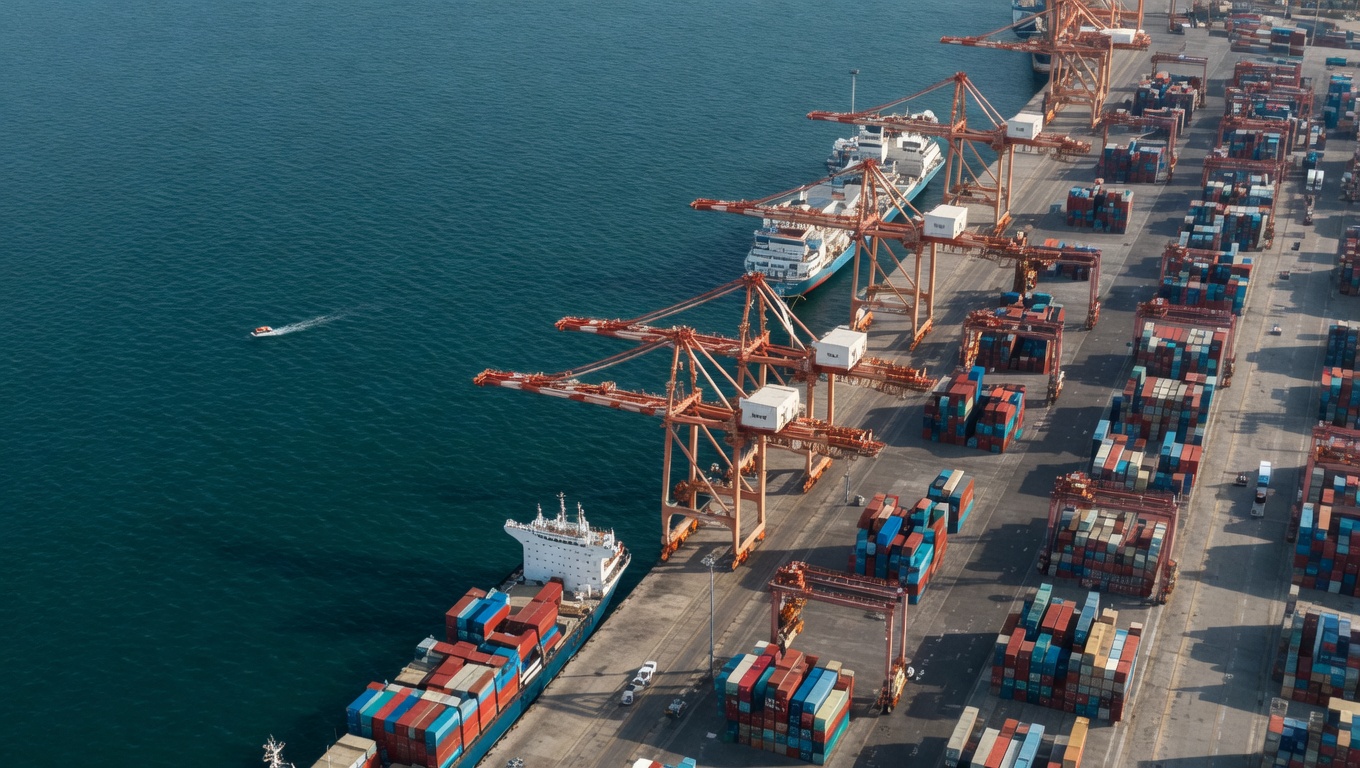
- The second is economic. The Baku–Tbilisi–Kars railway is no longer only a symbolic geopolitical route. It is becoming a fully functioning trade corridor operating alongside the Alat port, logistics zones and the Middle Corridor.
- The third concerns the regional balance. Baku, Tbilisi and Ankara are putting into operation a transport triangle they have spent years building — now covering both freight and passenger transport.
A second life for the BTK railway
The political foundations of the Baku–Tbilisi–Kars (BTK) project were laid in 2007, and the railway officially opened on 30 October 2017. At the initial stage, the route was designed to carry 1 million passengers and 6.5 million tonnes of cargo a year. Long-term plans aimed to increase capacity to 3 million passengers and 17 million tonnes of freight. Turkey’s Foreign Ministry has also confirmed targets of 17 million tonnes of cargo and 3 million passengers by 2034.
However, a long gap emerged between political ambitions and the railway’s actual operation. Passenger services stopped in 2020 because of pandemic restrictions. Freight transport also faced major disruptions and, at times, stopped entirely — especially between May 2023 and May 2024 — during large-scale modernisation work on the Georgian section. The first freight train on the upgraded route departed from the Absheron Logistics Centre to Kars only on 20 May 2024.
The Georgian section remained the main bottleneck. According to official figures, Azerbaijan Railways completed the modernisation of a 184-kilometre stretch running through Georgia in 2024. The upgrade increased the line’s capacity from 1 million to 5 million tonnes of freight per year.
The modernisation covered 13 stations, 55 bridges, eight railway power substations and hundreds of infrastructure facilities. Materials prepared by Georgian Railways for the Tbilisi Silk Road Forum also noted that the BTK component created 2,324 jobs.

Current situation and economic impact
The full reopening of the BTK railway comes within a broader framework: policymakers increasingly view the Middle Corridor as a route linking Chinese and European markets through Central Asia and the South Caucasus. According to World Bank estimates, the Middle Corridor could triple freight volumes and nearly halve delivery times by 2030.
During the first 11 months of 2024, freight volumes along the Middle Corridor rose by 63% and reached 4.1 million tonnes. This figure carries particular significance for the BTK railway. The line’s new annual capacity of 5 million tonnes effectively reflects already established and rapidly growing regional demand for cargo transport.
For Azerbaijan, the main benefits extend beyond transit fees. Key economic advantages involve port services, customs processing, logistics, warehousing infrastructure, container transport and export-oriented manufacturing. The current capacity of the Alat port stands at 15 million tonnes of cargo a year. Authorities plan to increase that figure to 25 million tonnes after expansion.
The Alat Free Economic Zone, located near the port, also aims to attract new manufacturing and logistics companies. For Azerbaijan, the BTK railway is therefore more than a rail project. It is an important part of infrastructure supporting the development of the non-oil economy. In their latest reports, the World Bank and the EBRD also identify transport connectivity, job creation and growth in the non-oil sector as key priorities.
The return of passenger services also carries economic significance. Georgian authorities believe the route will boost tourism and generate additional income for hotels, restaurants and small businesses along the railway. The train is particularly important for passengers seeking an alternative to expensive air travel. In that sense, the BTK railway could become not only a transport alternative but also a driver of economic activity in the service sector.

Prospects and risks
According to a presentation by Georgian Railways, the modernisation could cut transport times by 5–6 hours by removing several technical constraints. Digital customs data exchange between Azerbaijan and Kazakhstan could save another 4–5 hours. Upgrades to locomotive fleets and new operating rules could reduce travel times by an additional 1–3 hours. Combined, the total effect could reach 12 hours. If these changes prove effective, the BTK railway could become a more competitive transit route with faster and more predictable freight delivery.
However, risks remain. Delays in port and border procedures, a shortage of vessels on the Caspian Sea, tariff competition from alternative routes and geopolitical instability could weaken the corridor’s competitiveness.
In addition, the stated target of 17 million tonnes by 2034 significantly exceeds the current capacity of 5 million tonnes. Reaching that figure will likely require additional railway tracks, a second line and expanded terminal infrastructure.
BTK railway line resumes operations