Top stories in Azerbaijan, Armenia, and Georgia from 11-15 May, 2026
 Live
Live




-
Friday, 15 May, Azerbaijan. The United States believes Azerbaijan plays a central role in ensuring strict sanctions enforcement along major transit routes
-
Friday, 15 May, Armenia. Nikol Pashinyan: “There is no example of our cooperation with the EU causing concrete harm to Russia”
-
Friday, 15 May, Georgia. The number of prisoners in Georgia reached a historic high in 2025
-
Thursday, 14 May, Armenia. The pro-Russian opposition accuses Nikol Pashinyan of “handing the country over to Azerbaijan"
-
Thursday, 14 May, Georgia. The sanctioned TV channel Imedi TV has been banned from working in the European Parliament
-
Thursday, 14 May, Azerbaijan. New opportunities for Slovak businesses on the Azerbaijani market
-
Wednesday, 13 May, Azerbaijan. A record number of participants in the history of the World Urban Forum have registered to attend the event in Baku
-
Wednesday, 13 May, Armenia. Angry criticism and threats from Moscow ahead of Armenia’s June 7 parliamentary elections
-
Wednesday, 13 May, Georgia. The 142nd Catholicos-Patriarch of All Georgia, Shio III [Mujiri], was enthroned
-
Tuesday, 12 May, Armenia. Nikol Pashinyan will not take part in the Russia-led Eurasian Economic Union summit
-
Tuesday, 12 May, Azerbaijan. Atlantic Council proposes lifting US restrictions on arms sales to Azerbaijan in exchange for the release of dozens of political prisoners
-
Monday, 11 May, Armenia. Russia’s harsh reaction to Armenia’s intensified dialogue with its European partners
-
Monday, 11 May, Azerbaijan. Ilham Aliyev: “We never had any intention of destroying Armenia or taking away its independence. European observers do not need to protect Armenia”
-
Monday, 11 May, Georgia. A new head of the Georgian Orthodox Church is being elected today
-
Top stories in Azerbaijan, Armenia, and Georgia from 4-8 May, 2026

-
Friday, 15 May, Azerbaijan. The United States believes Azerbaijan plays a central role in ensuring strict sanctions enforcement along major transit routes
● The 7th meeting of the European Union–Azerbaijan Security Dialogue will take place in Baku next week, EU Ambassador to Azerbaijan Mariana Kuyunjich said, noting the dynamic development of bilateral relations between Baku and Brussels.
● Kuyunjich noted that this year Azerbaijan and the EU mark the 30th anniversary of their partnership, “based on trust, stability and shared prosperity.” Speaking in Baku on Europe Day, she made the following statements:
• Thanked Azerbaijan for humanitarian assistance to Ukraine.
• Said the EU sees support for peace, stability and international law beyond Europe as an important part of its own security.
• Said the EU will continue supporting the peace process between Azerbaijan and Armenia, including through transport infrastructure development and demining initiatives, where the EU is already the largest donor.
• After the recent incident involving an Iranian drone in Nakhchivan, the EU expressed unequivocal support for Baku.
• Shortly after the incident, European Council President Antonio Costa visited Azerbaijan to express solidarity with the Azerbaijani people.
• EU representatives will participate in the 13th session of the World Urban Forum (WUF13) in Baku on May 17–22.● Renewable energy has become a particularly important area of cooperation between Azerbaijan and the EU, especially the development of energy corridors from the Caspian region through the Black Sea to Europe, Deputy Foreign Minister Yalchin Rafiyev said. He also noted that Azerbaijani natural gas is supplied to 16 countries, including 10 EU member states. The start of supplies to Austria and Germany this year once again confirms Azerbaijan’s role as an important partner in diversifying Europe’s energy supplies. Rafiyev also described transport corridors as a key area of cooperation, highlighting the Middle Corridor, Baku Port, the Baku–Tbilisi–Kars railway, and future projects involving the Nakhchivan Autonomous Republic. These initiatives will strengthen the region’s role as a bridge between Europe, the South Caucasus, Central Asia and other regions, he said.
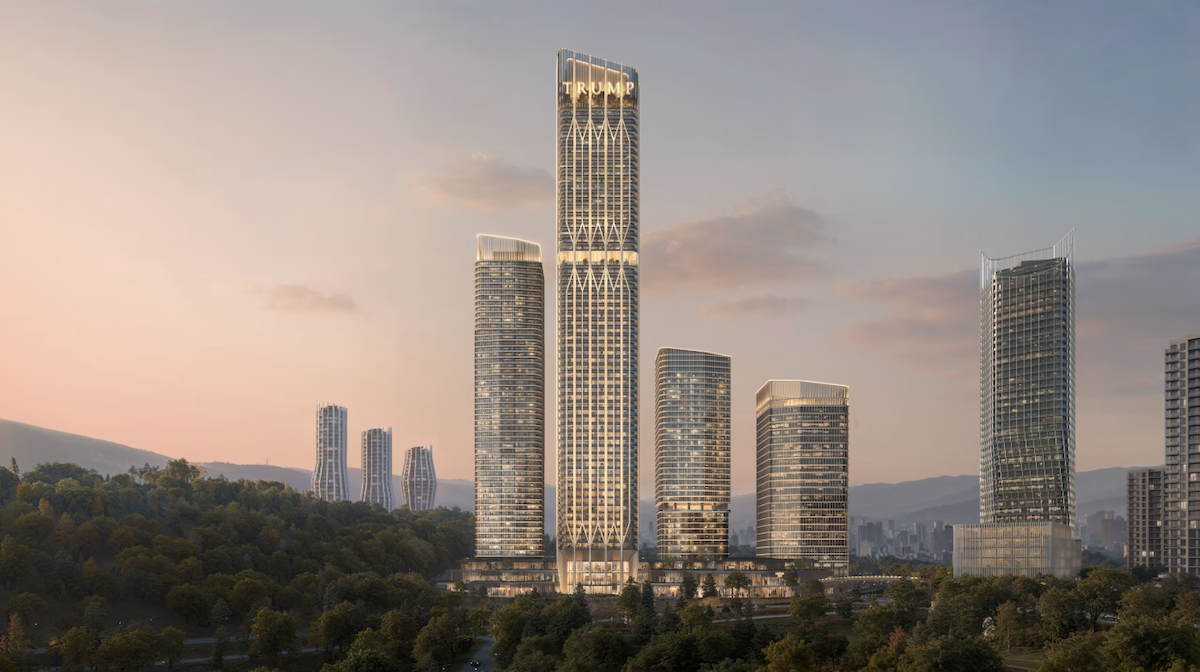
● Azerbaijan must play a central role in ensuring strict sanctions compliance along major transit routes in order to become a genuine regional hub, U.S. Embassy Chargé d’Affaires Amy Carlson said. She highlighted the growing role of the TRIPP transit project, also known as the “Trump Route.” “The route will connect Azerbaijan with its Nakhchivan exclave through Armenian territory, while also giving additional momentum to growth of the Trans-Caspian corridor. Given trade volumes, some actors may attempt to use these routes for transshipment of dual-use goods and other sensitive items. Vigilant oversight and robust compliance mechanisms supported by both government and business are necessary to preserve transparency of these trade flows and effectiveness of sanctions regimes,” Carlson said.
● An Azerbaijani delegation discussed in Moscow possibilities for further increasing exports of Azerbaijani agricultural products to Russia, including simplifying export procedures.
● Another group of 18 Ukrainian children arrived in Azerbaijan for rehabilitation treatment. Ukrainian Ambassador Yuriy Husyev wrote on X: “Since the start of Russia’s full-scale invasion of Ukraine, Azerbaijan has hosted 594 Ukrainian children, demonstrating solidarity and hospitality. We are grateful to Azerbaijan and everyone supporting our children.”
● Azerbaijan’s Electronic Security Service warned about a new wave of cyber fraud: fake social media pages are spreading offers to pay fines and settle debts, while scammers attempt to steal users’ banking data.
● A state waste management agency has been established under the Ministry of Ecology and Natural Resources.
● Part of filming for the new movie in the famous franchise “Armour of God 4: Ultimatum,” starring Jackie Chan, will take place in Azerbaijan. According to Variety, production begins in July and the global premiere is scheduled for the second quarter of 2027. Filming will take place in Azerbaijan and Kazakhstan. The movie will be directed by Robert Kun, produced by Esmond Ren and Igor Tsai, and made by Kazakhstan’s Salem Entertainment. The “Armour of God” franchise began in 1986 and became one of Jackie Chan’s most popular action series. The latest installment, “Chinese Zodiac,” was released in 2012 and grossed more than $140 million worldwide.

-
Friday, 15 May, Armenia. Nikol Pashinyan: “There is no example of our cooperation with the EU causing concrete harm to Russia”
● Russian Communist Party leader Gennady Zyuganov called for “stopping the reception of Armenian Prime Minister Nikol Pashinyan in Moscow.” His remarks in the State Duma followed a statement by President Vladimir Putin, who compared the situation in Armenia to developments in Ukraine. “I could imagine anything except hearing voices from Yerevan threatening to shell Red Square in Moscow,” Zyuganov said, without naming Volodymyr Zelenskyy directly but clearly referring to his speech in Yerevan. Speaking at the opening of the European Political Community summit in Yerevan on May 4, the Ukrainian president said that “Russians are afraid drones will be buzzing over Red Square.”
● Pashinyan responded briefly: “I think these are emotional statements.” Answering journalists’ questions, he ruled out escalation in relations between Armenia and Russia and accused the opposition of trying to create such a scenario. “That will not happen: entering into confrontation with Russia is beyond Armenia’s scale, we are a small country,” Pashinyan said. He also reminded reporters that Armenia remains a full member of the Russian-led Eurasian Economic Union (EAEU). “If I had pursued policies against the EAEU, its work would collapse, because decisions there are made by consensus,” he added.
● Nikol Pashinyan: “During my visit to Russia, one of my colleagues (from the EAEU) said Armenia’s cooperation with the European Union harms Russian interests. I replied that we do not want to harm Russia’s interests and asked them to provide at least one example of how our cooperation with the EU had caused concrete damage to Russia. The answer was silence. I asked the same question a second time, and again the answer was silence. Some election participants, as well as observers, including outside Armenia, are trying to give the June 7 parliamentary elections a geopolitical context. But there is no such context or subtext, because Armenia is pursuing a balancing policy.”
● Armenia has been added to Russia’s list of countries with an elevated risk of Russian citizens being detained at the request of the United States. The list was published on the Russian Foreign Ministry’s website. The head of the ministry’s human rights department advised Russians traveling abroad to consider the risk of detention and extradition to the United States from third countries.
● Foreign Minister Ararat Mirzoyan avoided directly answering a journalist’s question about the destruction of Armenian historical and cultural monuments in Azerbaijan and said: “Do you want to say that no words of hatred toward Azerbaijan are heard from Armenia? From various forces, not from the authorities. Unfortunately, the same is happening in Azerbaijan.”
● Ararat Mirzoyan: “Dialogue between Armenia and Turkey has matured to the point where full normalization could be expected at any moment.”
● Armenia’s Anti-Corruption Committee conducted searches in the town of Spitak at the office of the opposition Armenia bloc, associated with former president Robert Kocharyan and known for its pro-Russian reputation. Authorities said that, despite a ban on charitable activities during the election period, the office head had allegedly provided money free of charge to a local voter. Investigators also claim he and several others threatened violence against another voter, obstructing the free exercise of voting rights. Criminal proceedings have been launched and several people detained.
● The Armenia bloc issued a response statement, saying: “What is happening is not a legal process, but another attempt to obstruct the normal functioning of our structures.”
● Armenia is deepening defense cooperation with India and studying the possibility of establishing local production lines for the Pinaka rocket system and 155-mm artillery ammunition. Indian Defence Research Wing (IDRW) reported that the move signals a transition from direct purchases toward long-term industrial cooperation.
● David Babayan, former foreign minister of the former unrecognized Nagorno-Karabakh Republic, who was sentenced to life imprisonment in Azerbaijan, released a public audio address. He said the trial against him “was falsified, norms of humanity, international law and even their own legislation were violated,” and said he intended to appeal to an international court.
● Armenia will provide humanitarian aid to Lebanon following a government decision. For this purpose, 60 million drams (just over $150,000) were allocated from the reserve fund to the economy ministry. Of that amount, 34 million drams ($90,000) will be spent on food and sanitary supplies, while 26 million drams (around $80,000) will go toward medicines.
● Prosecutors have asked the court to approve the pre-trial arrest of blogger Artak Avetisyan, who had publicly called Prime Minister Nikol Pashinyan a “traitor.”
-
Friday, 15 May, Georgia. The number of prisoners in Georgia reached a historic high in 2025
● Parliament speaker from ruling Georgian Dream party Shalva Papuashvili said that “Georgia has no place in such a European Union, where Soviet Moscow is gradually being replaced by allied Brussels.” The comment followed a decision by the European Parliament to ban pro-government TV channel Imedi from working at its sessions for one year. Read more here
● Foreign Minister Maka Bochorishvili will take part in the 135th session of the Council of Europe’s Committee of Ministers in Chisinau. According to the Foreign Ministry, she is expected to deliver a speech. Moldova denied accreditation to three pro-government Georgian TV channels to cover the session.
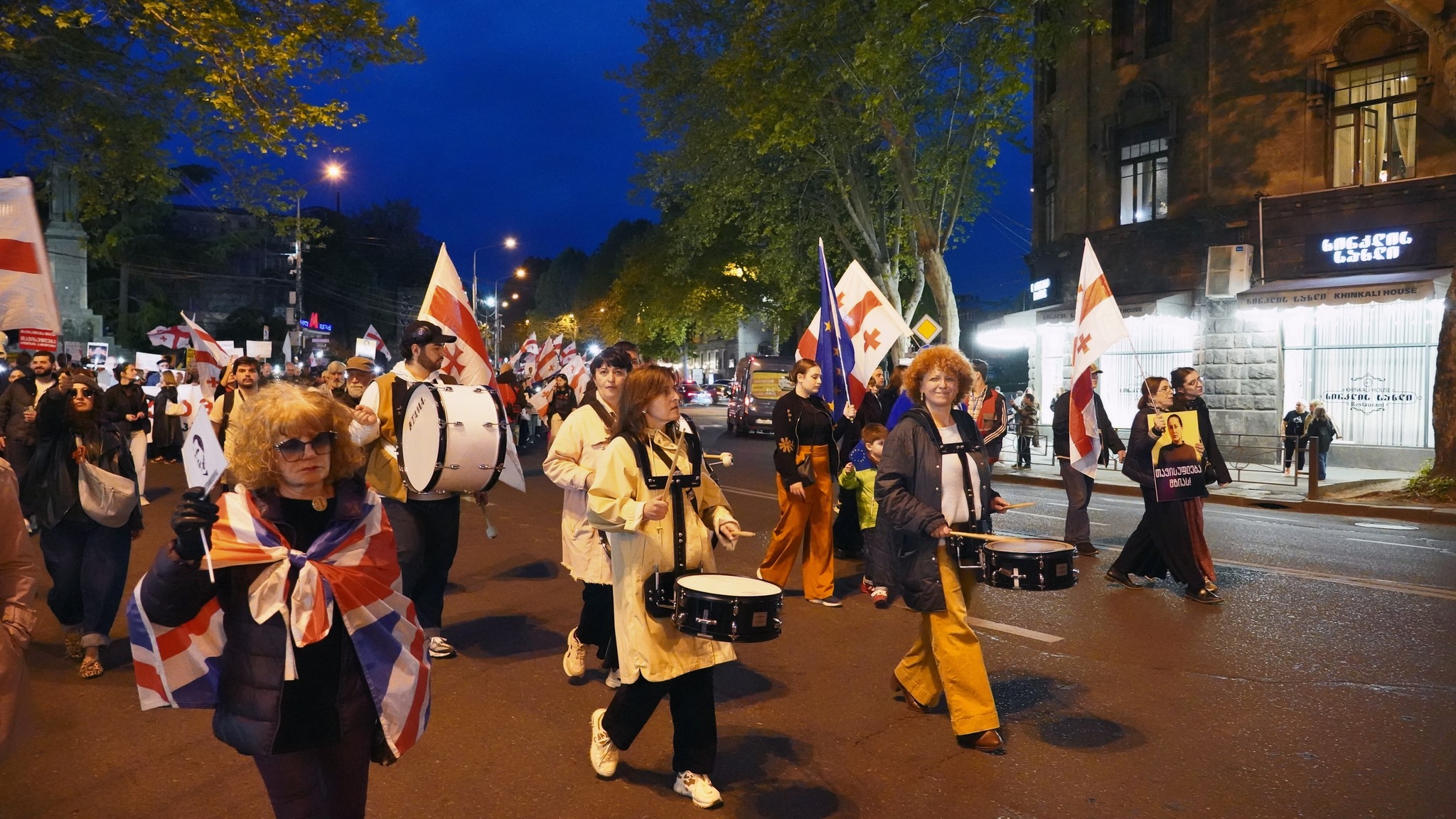
● Former state minister for European and Euro-Atlantic integration (2012–2014) Aleksi (Buka) Petriashvili was sentenced to three days of administrative detention. He was accused of standing on the sidewalk outside parliament during a pro-European protest on Dec. 17, 2025, and “artificially” obstructing pedestrian movement.
● The number of prisoners in Georgia reached a historic high in 2025. According to official data, a total of 22,767 people were held in the penitentiary system over the year. This marks a 25.5% increase compared to 2024 and the highest figure since the National Statistics Office began collecting data.
● Former Georgian Economy Minister Levan Davitashvili has become chief executive of oil company Italiana Petroli, acquired by Azerbaijan’s state oil and gas company SOCAR.
● A parliamentary delegation led by Foreign Affairs Committee chairman Nikoloz Samkharadze held meetings in the Italian Senate. Samkharadze said the main topics discussed included security issues, ongoing wars in the region, and Russia’s occupation of Georgian territories. “Italy supports and will continue to support Georgia’s European integration, in which Georgia is a very important partner for them,” Samkharadze told journalists.
● A group of Georgian doctors issued a statement expressing deep concern about patients with rare diseases, including Duchenne muscular dystrophy. The statement noted that such diseases are progressive and life-limiting, and require timely access to appropriate treatment.
● The Ministry of Education, Science and Youth announced a study to determine the estimated procurement cost of 1,801,000 school uniform sets for primary school students in public schools for the 2026–2027 academic year.
● On May 17, officially declared Family Sanctity Day in Georgia, Patriarch Shio III will lead the first праздничная liturgy at the Holy Trinity Cathedral (Sameba) in Tbilisi. May 17 is also the International Day Against Homophobia.
-
Thursday, 14 May, Armenia. The pro-Russian opposition accuses Nikol Pashinyan of “handing the country over to Azerbaijan"
● The Foreign Ministry welcomed Turkey’s decision to lift restrictions on bilateral trade with Armenia. “This decision is of substantial importance in terms of expanding trade between the two countries and ties between business communities, stimulating economic interconnectedness in the region, and ensuring peace and prosperity. This is an important step toward developing full and normal relations between the two countries, which could logically continue through the opening of the Armenia-Turkey border and the establishment of diplomatic relations,” the statement said. Read more here
● Serdar Kılıç, Turkey’s special representative for normalization with Armenia, called the decision “another important step toward establishing long-term peace and stability in the region.”
● Iranian liquefied gas will arrive in Armenia in the coming days, the economy minister said. Until now, only Russian liquefied gas had been present on the Armenian market, and its price rose significantly after Russia increased export duties.
● Union of Informed Citizens representative Daniel Ioannisyan said the ruling party organized the participation of teachers and students in its campaign rally in the Aparan community, interrupting school classes. According to Ioannisyan, this violates Article 23 of the electoral code and Article 84 of the labor code. The organization is considering going to court if any participant reports being involved against their will. So far, there have been no such complaints. “Anyone who provides evidence of coercion will receive a reward of up to 500,000 drams (about $1,300) from the Union of Informed Citizens,” Ioannisyan said. Critically important parliamentary elections will take place in Armenia on June 7.
● Prime Minister Nikol Pashinyan reacted to the report. “No violation can remain without consequences. I have ordered an internal investigation and will answer questions during a briefing,” he said.
● The Central Electoral Commission also issued a statement. It reminded the public that the use of administrative resources during the election period is unacceptable and explained the term as the use by officials of employees and public-sector finances under their control to achieve party goals.
● Parliamentary elections scheduled for June 7 in Armenia must take place in an environment free from fear, unjustified external influence, and abuse of administrative resources. This was stated by a delegation from the Parliamentary Assembly of the Council of Europe following its May 11–12 visit to Yerevan.
● PACE specifically urged Armenian authorities to intensify efforts to protect the electoral process from foreign interference. “The delegation heard reports that external interference has gone beyond traditional disinformation and now includes illegal political financing from abroad, cyberattacks, economic coercion, and direct attempts to manipulate the electoral process. These hybrid tactics are aimed not only at influencing public opinion, but also at securing long-term geopolitical leverage over Armenia,” the statement said.
● “Apart from minor incidents, there have been no casualties on the border with Azerbaijan over the past two years, and the number of shootings has fallen to zero. Economic relations with Azerbaijan also confirm that we are moving toward stable peace,” Armenian Security Council Secretary Armen Grigoryan told reporters.
● Armen Grigoryan also commented on reports about the desecration of Armenian cemeteries in Azerbaijan and the destruction of monuments in Karabakh. “It is unpleasant to see such things, but peace should be viewed not as a one-time event, but as a long-term process,” he said. He noted that while such incidents do not help build trust, there are other factors pointing to progress, such as stable life in border communities. The Security Council secretary stressed that advancing the peace agenda and creating a secure environment around Armenia remain priorities.
● Russian dollar billionaire Samvel Karapetyan accused the current authorities of “systematically destroying the country.” He is currently under house arrest in Yerevan on charges of calling for the overthrow of state power in Armenia. At the same time, he has been nominated as a candidate for prime minister if his party, Strong Armenia, wins the parliamentary elections. Karapetyan and his party are considered pro-Russian. During a meeting with voters, he spoke of the “degradation of education and culture” in the country. “The authorities are trying to reduce citizens’ interests exclusively to food and entertainment, while national dignity and even the very concept of homeland are being deliberately erased from public consciousness. Under the slogans of reforms, the government is closing hundreds of schools, especially in border areas, effectively preparing to surrender these territories and deprive future generations of their roots,” Karapetyan said.
● Former President Robert Kocharyan, who also has a pro-Russian reputation, accused the authorities of “handing the country over to Azerbaijan.” “Pashinyan’s so-called ‘peace’ will last only as long as it benefits Azerbaijani President Aliyev. Everything Pashinyan promised in 2018, when he came to power, has failed. The country received only war, losses, and victims. Now everything is repeating itself,” Kocharyan said.
-
Thursday, 14 May, Georgia. The sanctioned TV channel Imedi TV has been banned from working in the European Parliament
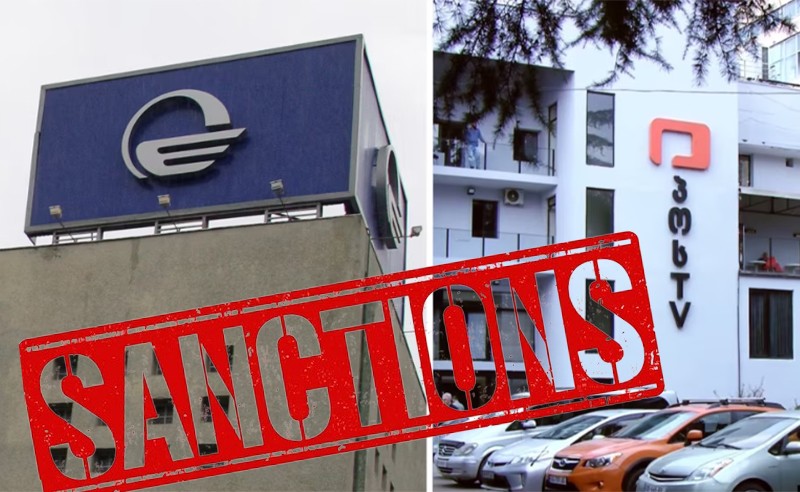
● The pro-government TV channel Imedi TV, which is under UK sanctions for pro-Russian propaganda, said that the European Parliament has banned it from working at its sessions for one year. At the same time, authorities in Moldova refused accreditation to Imedi and two other pro-government Georgian TV channels — POSTV and Rustavi 2 — meaning their correspondents will not be able to attend the upcoming meeting of the Committee of Ministers of the Council of Europe in Chisinau.
● Representatives of the temporary parliamentary commission investigating the unprecedented rise in food prices said at a briefing that their main goal was to study the problem rather than directly lower prices.
● The International Press Institute commented on the arrests of several special forces officers accused of using violence against journalists and activists during pro-European protests in Georgia. “This is an important step, but it does not change the country’s systemic problem — impunity for violence against media representatives,” the statement said.
● Denis Krivosheev, regional director of Amnesty International for Eastern Europe and Central Asia, said in an interview with Formula TV that the new laws adopted in Georgia are repressive, calling them “draconian and inhumane” toward journalists and participants in the pro-European protests that have continued for more than a year and a half.
● Georgian Dream plans to restore the bonus system in the public sector. Parliament is expected to review the government’s legislative amendments this week. The initiative would bring back a mechanism whose use had been restricted several years ago because of corruption risks.
● Ecumenical Patriarch Bartholomew I sent warm congratulations to the newly elected Catholicos-Patriarch of All Georgia, Shio III, wishing him a long, blessed, and fruitful leadership.
● In 2025, Georgia ranked second in the number of citizens deported from European Union countries. According to Eurostat, EU member states expelled 10,475 people to Georgia over the past year.
● Within 24 hours, a joint operation by the Interior Ministry and the Prosecutor General’s Office led to the arrest of 44 people linked to the “criminal underworld.”
-
Thursday, 14 May, Azerbaijan. New opportunities for Slovak businesses on the Azerbaijani market
● A memorandum of understanding and cooperation between the parliaments was signed during the visit of Slovak Parliament Speaker Richard Raši to Baku.
● Slovakia remains a reliable and balanced partner of Azerbaijan on the European market, Richard Raši said at a joint press conference with Milli Majlis Speaker Sahiba Gafarova. He also announced that direct flights between Bratislava and Baku will begin in October. Raši invited Gafarova to pay an official visit to Slovakia.
● During a meeting between President Ilham Aliyev and Richard Raši, the sides discussed new opportunities for Slovak businesses on the Azerbaijani market. Raši wrote on Facebook that one of the topics was the “smart village” project in Karabakh, which involves Slovak experts.
● Ombudsperson Sabina Aliyeva met with members of the Slovak National Council, Marcela Čavojová and Zuzana Matejčíková, who are visiting Azerbaijan.
● A delegation from the Defense Ministry is on a visit to Belarus.
● In Baku, Russian citizens Igor Zabolotsky and Ilnur Valitov were sentenced after being accused of laundering large amounts of незаконных funds. The court applied a legal mechanism for reducing punishment: the original seven-year prison term was reduced to three years. Zabolotsky, an IT specialist, had previously been prosecuted in 2020 and fined for organizing an illegal online casino operation from Russia.
● Ali Karimli, leader of the opposition Azerbaijan Popular Front Party who is under house arrest, was not allowed to attend his father’s funeral. According to the Azerbaijani service of Radio Free Europe/Radio Liberty, citing party representatives, Karimli learned about his father’s death only three days later.

-
Wednesday, 13 May, Azerbaijan. A record number of participants in the history of the World Urban Forum have registered to attend the event in Baku
● Richard Raši arrived in Azerbaijan on an official visit. Before departing, he wrote on X: “I am heading into talks on strategic partnership, support for Slovak companies, and new opportunities for Slovakia. Follow me — in the coming days I will show behind-the-scenes moments and report on important negotiations directly from Baku.”
● There are new promising areas for developing defense cooperation between the United Kingdom and Azerbaijan, British Ambassador Fergus Auld said during a farewell meeting with Azerbaijani journalists. He recalled that several months ago the defense ministries of the two countries signed a bilateral cooperation plan for 2026/27.
● Fergus Auld described the decision to elevate relations between London and Baku to the level of a strategic partnership as the most significant achievement of his diplomatic mission. According to him, the partnership will be built around three key areas: defense and security, trade and investment, and innovation and education.
● Fergus Auld: “The United Kingdom continues to remain the largest source of foreign investment in Azerbaijan, as it has been over the past 30 years. As an embassy, we have focused on supporting the diversification of Azerbaijan’s economy in clean energy, infrastructure, transport, and professional services.”
● Fergus Auld: “I am proud of the participation of British companies and non-governmental organizations in the demining process in Karabakh with the support of the UK government. Since 2022, we have led international efforts in this area — it has been one of the most significant projects ever undertaken by our embassy. It was especially remarkable to see in Aghdam and Jabrayil dogs and even rats trained to detect mines. We also proudly supported the inclusion of female deminers in national demining teams.”
● Azerbaijan’s Media Development Agency, MEDIA Agency, held a roundtable discussion titled “President Ilham Aliyev’s Peace Strategy — A Guarantee of Stability.” Participants emphasized the importance of Azerbaijani media actively promoting ideas of peace at the international level.
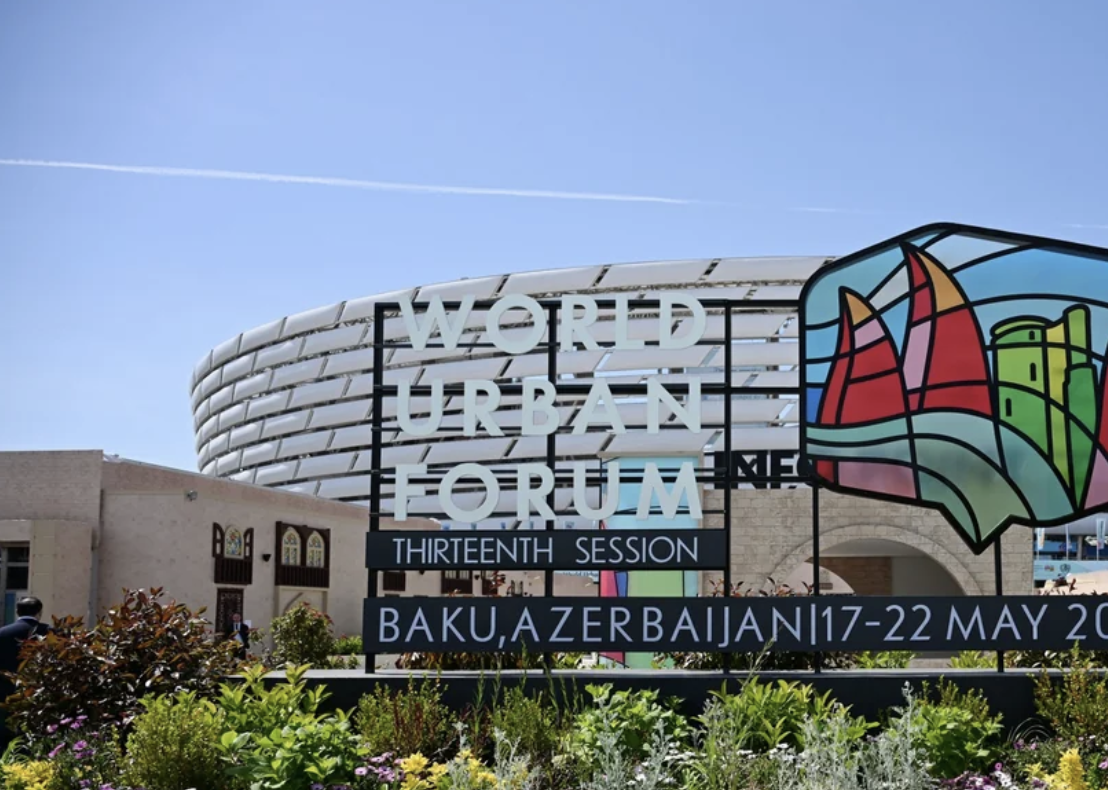
● A record number of participants in the history of the event — 32,225 people from 180 countries — have so far registered for the 13th session of the World Urban Forum (WUF13), which will take place in Baku on May 17–22. The forum is being organized in close cooperation with UN-Habitat and is aimed at exchanging international experience in sustainable urban development, “smart cities,” and innovative urban solutions.
● For participants of the World Urban Forum, an open-air “WUF13 Boulevard” covering 2.5 hectares has been created on the grounds of the Baku Olympic Stadium, featuring cafés and recreation areas. The main event hall, where the opening and closing ceremonies will be held, will be able to accommodate up to 6,000 participants.
● President Ilham Aliyev and Pakistani Prime Minister Shehbaz Sharif discussed preparations for WUF13 during a phone call. Sharif said he would not be able to attend personally, but Pakistan would be represented at the session at a high level. The leaders also exchanged views on the situation in the Middle East, with Ilham Aliyev highly praising Pakistan’s active mediating role.
● Shehbaz Sharif invited President Ilham Aliyev to visit Pakistan, and it was reported that the invitation was accepted with satisfaction.
● Allahshukur Pashazade, chairman of the Caucasus Muslim Board, sent a congratulatory letter to the newly elected Catholicos-Patriarch of All Georgia, Shio III, and invited him to visit Azerbaijan. Pashazade recalled that the late Catholicos Ilia II had been the first Christian religious leader to visit Azerbaijan after the restoration of the country’s independence.
● Baku International Tobacco is launching cigarette production as part of its new status as a resident of the “Araz Valley Economic Zone” industrial park in the Jabrayil district. The project is valued at 47 million manats (approximately $28 million). According to reports, 20 business entities have so far received resident status in the industrial park, and more than 130 jobs have been created.
-
Wednesday, 13 May, Armenia. Angry criticism and threats from Moscow ahead of Armenia’s June 7 parliamentary elections
● Chairman of the State Duma Vyacheslav Volodin compared the holding of the European Political Community summit in Armenia on May 4–5 with the developments that preceded the war in Ukraine. He particularly highlighted what he called the “anti-Russian speech” delivered at the forum by Ukrainian President Volodymyr Zelenskyy. “Now the question has become obvious to everyone: how will relations between our countries develop after such actions by Pashinyan? Will there be less tension in relations or more? Most likely the latter. One cannot help drawing a parallel: this is exactly how everything began in Ukraine. Do ordinary citizens of Armenia need this?” Volodin wrote on social media. His statement became another in a series of sharply intensified criticism and threats from Moscow against Armenia just weeks before Armenia’s parliamentary elections scheduled for June 7, which many consider decisive for the country’s future foreign policy course. Read more here
● Mikhail Kalugin, head of the CIS Department at Russia’s Foreign Ministry, also made harsh statements toward Armenia. “Yerevan’s so-called European path could lead to systemic changes in relations with Moscow. It will not be possible to sit on two chairs,” he said. Kalugin made several accusations against the Armenian authorities:
- • He called President Zelenskyy’s visit to Yerevan “clearly inspired by Brussels.”
- • He accused the Armenian authorities of “carefully ignoring his disgusting anti-Russian remarks.”
- • He stated that “the European Union is trying to use Armenia’s June 7 parliamentary elections to strengthen its influence and weaken Russia’s position.”
- • “European ‘specialists’ are literally trying to shape Russia into an enemy.”
- • “Two European missions are already operating in Armenia, similar to those used during election campaigns in Moldova.”
- • He called the EU’s promise of €2.5 billion in investments in Armenia’s economy a “mirage,” saying Europeans are “trying to sell what does not exist.”
- • He criticized discussions between Armenia and the EU on reconstructing the Metsamor nuclear power plant, one of the key elements of Armenia’s energy system traditionally linked to Russia.
● Armenia’s ambassador to Russia, Gurgen Arsenyan, said that Moscow’s outrage over President Zelenskyy’s speech at the EU forum in Yerevan was limited to summoning him to the Russian Foreign Ministry. No formal protest note was sent to Armenia’s Foreign Ministry.
● “We are not pursuing the goal of ‘divorcing’ Russia, and we are not planning to ‘divide the children’ either,” Armenian parliament speaker Alen Simonyan said. “They say they do not need us — then why are they so alarmed? Whatever happens in Yerevan, Moscow immediately responds with statements such as: ‘More Armenians live in Russia than in Armenia itself,’ or ‘Armenia would not even exist as a state without Russia,’” Simonyan said.
● One of the main reasons for rising liquefied gas prices is the new high duties introduced by Russia on imports, Economy Minister Gevorg Papoyan said. He stressed that the tariff applies to all countries trading with Russia, not only Armenia.
● Deputy Prime Minister Mher Grigoryan met with a US delegation that arrived in Yerevan to discuss work related to the regional transit route known as TRIPP, the “Trump Route.” The sides also discussed Armenia’s government project “Crossroads of Peace,” aimed at unblocking all regional communications.
● A delegation from the Parliamentary Assembly of the Council of Europe observation mission visited Armenia’s Central Election Commission. Discussions focused on preparations for the elections, regulation of election campaigning, and electoral legislation in general.
● Armenian Prime Minister Nikol Pashinyan and Foreign Minister Ararat Mirzoyan found themselves in an awkward situation during a campaign meeting with residents in Yerevan. Mirzoyan quietly informed Pashinyan about certain changes related to Turkey, but the conversation was accidentally broadcast through a live microphone. Later, Pashinyan explained that the message referred to Turkey preparing to change export procedures for goods sent to Armenia. Until now, goods were first exported to a third country and only then brought into Armenia. Under the new rules, Armenia can now be directly indicated in shipping documents as the destination country.
● A Yerevan resident, Artak Avetisyan, was detained on suspicion of promoting hatred, discrimination, and intolerance, as well as distributing related materials, after shouting in a public place: “Nikol is a traitor!”, according to local media. Armenia’s Interior Ministry has not yet commented on the incident.
● Algeria’s ambassador presented credentials to Armenia’s president.
● Garegin II, Catholicos of All Armenians, congratulated the newly elected Catholicos-Patriarch of All Georgia, Shio III, and wished him health, long years, and fruitful pastoral service.
● YouTube monetization has officially launched in Armenia for the first time. The decision, considered highly important for local content creators, was announced on February 10 during a visit to Yerevan by US Vice President JD Vance.
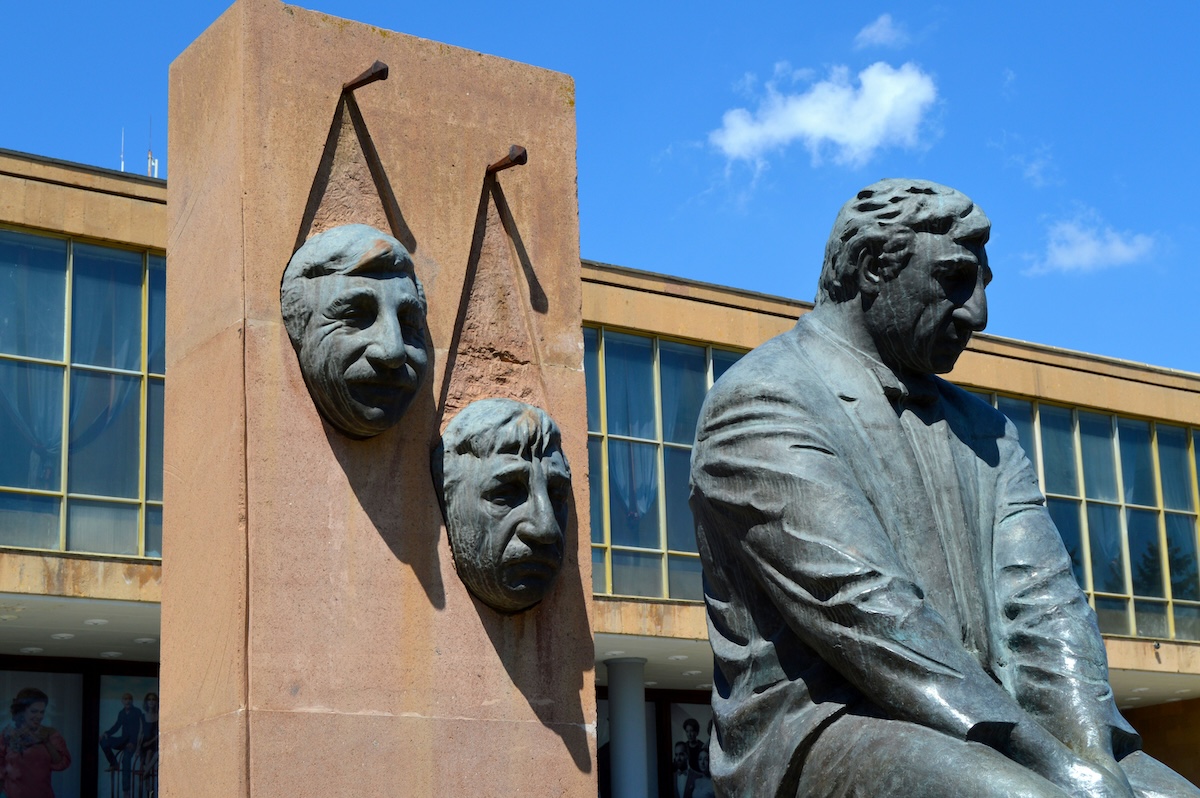
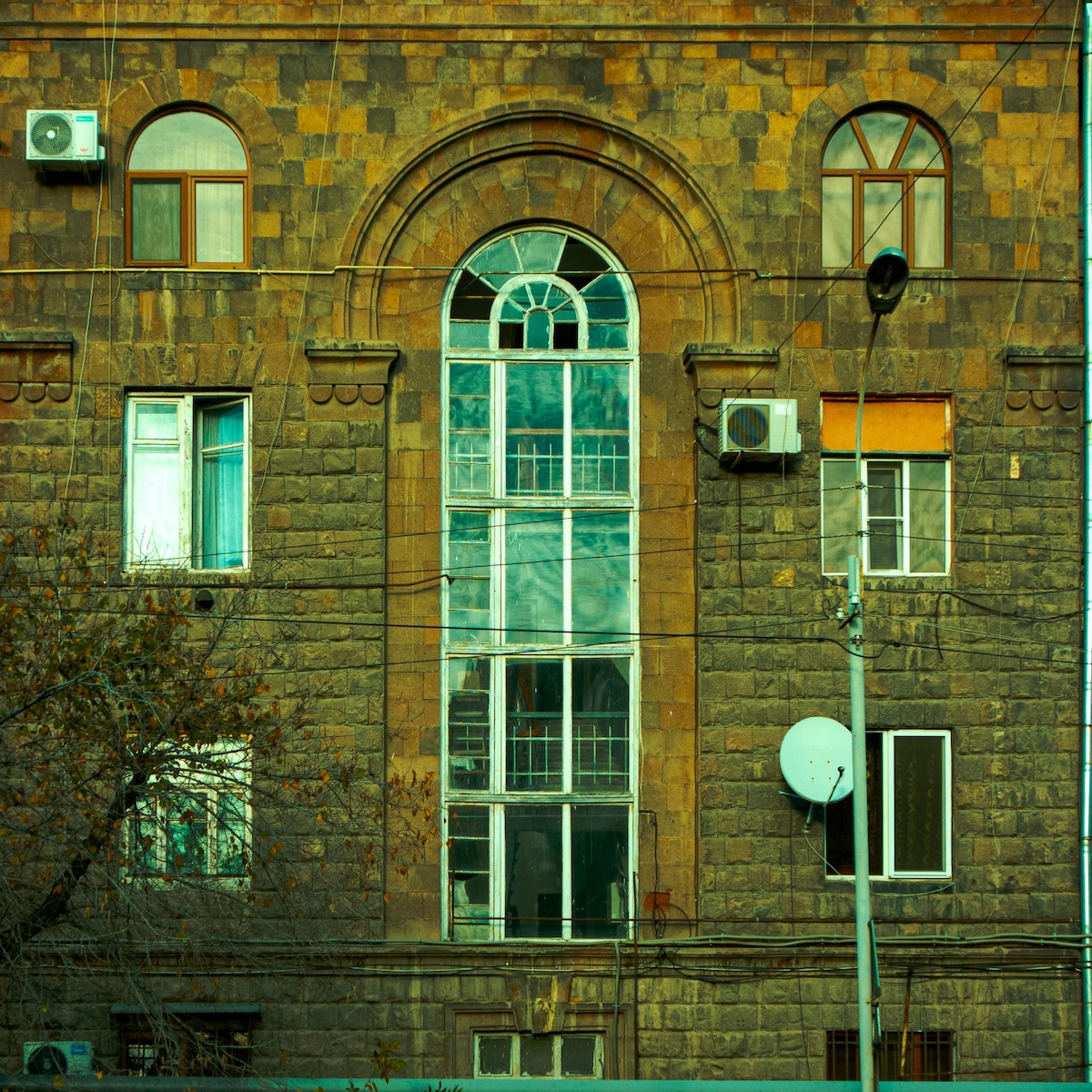
Photo by Robert Levonyan, the monument in Gyumri dedicated to the renowned Armenian actor Frunzik Mkrtchyan
-
Wednesday, 13 May, Georgia. The 142nd Catholicos-Patriarch of All Georgia, Shio III [Mujiri], was enthroned
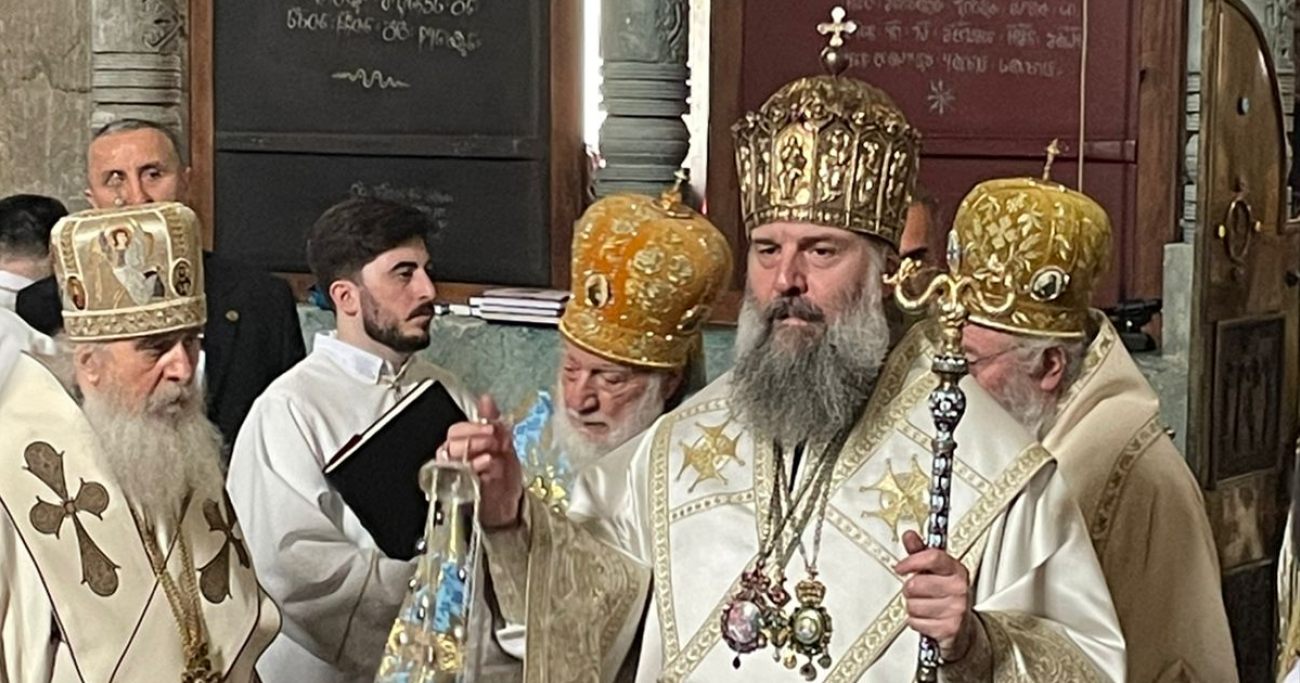
● The enthronement of the 142nd Catholicos-Patriarch of All Georgia, Shio III [Mujiri], took place at the Patriarchal Cathedral of Svetitskhoveli Cathedral.
● “It is necessary to open the doors of the Church wide for everyone — not only for the flock, but also for our spiritual children beyond the walls of the Church, who perhaps, like prodigal children, do not dare come to us. It is precisely in this service that our soul and our calling are fulfilled,” Patriarch Shio III said in his third sermon.
● Metropolitan Nikoloz Pachuashvili of Akhalkalaki, Kumurdo, and Kari called on the Synod not to delay the canonization of the late Catholicos-Patriarch Ilia II.
● The Delegation of the European Union to Georgia congratulated Shio III on his election as the 142nd Catholicos-Patriarch of All Georgia. “The world is in urgent need of moral clarity, reconciliation, and hope. We believe that the spiritual leadership and wisdom of Your Holiness will become a source of inspiration for all those striving for unity in times of uncertainty and division,” the EU delegation’s letter said.
● Metropolitan Malkhaz Songulashvili of the Evangelical Baptist Church of Georgia congratulated Catholicos-Patriarch Shio III on his enthronement.
● The National Assembly of France adopted a resolution reaffirming its support for Georgia’s European integration while sharply criticizing the policies of the Georgian government. The document calls on the French government, in cooperation with European partners, to support targeted sanctions against Bidzina Ivanishvili, billionaire founder of the ruling Georgian Dream party, and his close associates, similar to calls by the European Parliament and sanctions already imposed by the United States.
● Russian State Duma deputy and deputy chairman of the committee on Eurasian integration Konstantin Zatulin stated that “the European Union is using Georgia’s aspiration to join the EU and NATO as an instrument of pressure and is encouraging Tbilisi to escalate relations with Russia.”
● Parliament Speaker Shalva Papuashvili responded to widespread calls for the release of arrested and imprisoned participants of the pro-European protests that have continued in Tbilisi for more than a year and a half. “Forgiveness is not within my competence, but repentance always precedes forgiveness. This is the law of both the people and the Church. Is there repentance among those who tried to burn people alive with Molotov cocktails, tried to set parliament on fire, and overthrow the government?” Papuashvili told journalists.
● Shalva Papuashvili also responded sharply to statements by Germany’s ambassador to Georgia, Peter Fischer, who had called Papuashvili’s remarks about him defamatory. “Peter Fischer will leave Georgia in a few weeks and go straight into retirement, which we welcome, because it means he will no longer be able to damage Germany’s relations not only with Georgia, but with any other country as well.”
● Six rugby players and the former chief doctor of Georgia’s national team have received lengthy suspensions. Following a joint investigation with World Rugby, the World Anti-Doping Agency confirmed violations of anti-doping rules.
● Georgia’s Interior Ministry reported the detention in Tbilisi of one person accused of fraudulently obtaining a large sum of money. The suspect faces up to nine years in prison.
-
Tuesday, 12 May, Armenia. Nikol Pashinyan will not take part in the Russia-led Eurasian Economic Union summit
● Armenian Prime Minister Nikol Pashinyan will not take part in the Eurasian Economic Union summit on May 28–29. He told journalists he could not leave the country because of the election campaign and the military parade scheduled for Հանրապետության Day on May 28. “I informed the Russian president about this during my visit to Russia in April,” Pashinyan said.
● “If we decide that the moment has come to make a decision, we will not wait for others to tell us so, because in the end it is our decision. We know better when the time comes,” Prime Minister Nikol Pashinyan said in response to statements by Russian President Vladimir Putin. Earlier, Putin commented on Armenia’s plans to join the European Union, again raising the issue of choosing between the EU and the Russia-led Eurasian Economic Union and calling on Armenia to hold a referendum on the matter.
● Two Armenian NGOs — Union of Informed Citizens and the Helsinki Citizens’ Assembly Vanadzor Office — warn that Russia’s 102nd military base in Gyumri is interfering in Armenia’s internal affairs. According to their statement, the base is allegedly being used “for direct pressure on electoral processes in Armenia.” The NGOs say Armenian citizens working at the base are being forced to vote for a specific political force under threat of dismissal.
● Armenia’s Foreign Ministry has proposed opening diplomatic offices instead of full embassies in some countries. Foreign Minister Ararat Mirzoyan said such offices would provide diplomatic representation where opening a full embassy is not financially or otherwise practical. Parliament approved the proposal.
● All Armenian citizens aged 16 and older will now be required to obtain identification cards. In the future, biometric passports will only be issued to those holding such cards.
● Displaced persons from Nagorno-Karabakh will now be able to obtain Armenian citizenship without documents confirming military service. People over the age of 27 who lost or never received military service documents because of forced displacement will no longer face obstacles in obtaining citizenship.
● “Armenia and Azerbaijan have agreed to continue border delimitation from north to south,” Prime Minister Nikol Pashinyan said. He recalled that in 2024 the two countries signed and ratified regulations for the border delimitation commission, with the Alma-Ata Declaration adopted as the basic principle. “This means that the borders of Soviet Armenia and Soviet Azerbaijan should become the borders between the two countries,” he said.
● The NGO Union of Informed Citizens is launching a campaign called “Do Not Become a Participant in an Electoral Crime.” Its aim is to uphold legality and prevent vote-buying. Informational leaflets will be distributed to all citizens entering the country through airports and border checkpoints, warning that “accepting or offering money for votes is a criminal offense carrying responsibility for both sides.”
● “The Armenian authorities are once again buying weapons they will not be able to use,” former Armenian president and leader of the Armenia Alliance Robert Kocharyan said during election campaigning in Ijevan. According to him, the authorities are trying to “throw dust in people’s eyes” by announcing a military parade and weapons display on May 28.
● Gagik Tsarukyan, leader of the Prosperous Armenia party, ruled out any possibility of cooperation with Nikol Pashinyan’s party after the elections.
-
Tuesday, 12 May, Azerbaijan. Atlantic Council proposes lifting US restrictions on arms sales to Azerbaijan in exchange for the release of dozens of political prisoners
● The American think tank Atlantic Council is proposing that the Trump administration lift restrictions on arms sales to Azerbaijan in exchange for Baku releasing dozens of political prisoners. The model is based on the approach successfully used by the White House in negotiations with Belarus, which resulted in the release of more than 500 prisoners. The authors of the proposal — Eurasia Center Deputy Director Andrew D’Anieri and Mercedes Sapuppo — write that changes in US policy in the South Caucasus, the upcoming parliamentary elections in Armenia, and the importance of reaching a final peace agreement increase the likelihood of a “grand bargain” between Washington and Baku. Among the prisoners whose release is being proposed are economist Gubad Ibadoghlu (currently under house arrest), Radio Free Europe/Radio Liberty journalist Farid Mehralizade (sentenced to nine years in prison), former Voice of America correspondent Ulviya Ali, and lawyer Alasgar Mammadli. All of them have officially been charged with financial crimes, but they strongly deny the accusations and say they are being persecuted for their honest professional activities.
The article also emphasizes that some Armenian detainees held in Baku could potentially be released as well.
● “Azerbaijan’s next goal is to become one of the world’s leaders in the ‘green energy revolution,’” Deputy Energy Minister Elnur Soltanov said during a panel session of the Belgrade Energy Forum dedicated to the energy transition in Southeastern Europe. He stressed that Azerbaijan, through its energy projects, is currently meeting not only the needs of its own economy but also those of the wider region.
● Defense Minister Zakir Hasanov is on a visit to Slovakia. During official meetings, the sides are discussing prospects for bilateral military and military-technical cooperation.
● A delegation from the General Jonas Žemaitis Military Academy of Lithuania is visiting Azerbaijan in accordance with the 2026 bilateral military cooperation plan. In addition to official discussions, visits to military units and to Karabakh are planned for the delegation.
● Japan will receive a shipment of Azerbaijani oil for the first time since the escalation in the Middle East began, amid supply disruptions through the Strait of Hormuz. Reuters reports that a tanker carrying Azerbaijani oil is expected to arrive at the port of Yokohama today. Before military operations against Iran began in late February, around 95% of Japan’s oil imports came from Middle Eastern countries. In addition to Azerbaijan, Japan has also increased oil purchases from the United States.
● Baku is preparing to host the 13th session of the World Urban Forum (WUF13) from May 17 to 22. Special free 24-hour shuttle buses for forum participants will operate between the city and the airport, including direct routes to the forum venue. The forum is being organized in close cooperation with UN-Habitat and is aimed at international exchange of experience in sustainable urban development, “smart cities,” and innovative urban solutions.
● Two servicemen were injured after hitting a landmine in the Kalbajar district, which was retaken from Armenian forces during the Second Karabakh War in autumn 2020. The wounded men are being treated at a clinic, and their condition is reported to be stable.
-
Monday, 11 May, Armenia. Russia’s harsh reaction to Armenia’s intensified dialogue with its European partners
● An official campaigning period has begun in Armenia ahead of the parliamentary elections scheduled for June 7. The Central Election Commission has registered 19 political forces to participate in the vote.
● Armenian citizens permanently residing abroad will be able to participate in the June 7 parliamentary elections only by traveling to Armenia, as there will be no voting at polling stations located in embassies or consulates. Central Election Commission spokesperson Seda Ghukasyan recalled that this practice was introduced through amendments to the electoral code adopted in 2012. Exceptions apply to diplomats, military personnel on long-term assignments or studying abroad, as well as their family members. They are provided with electronic voting.
● Russian President Vladimir Putin: “Armenia’s plans to join the European Union require special consideration. It would be logical for Armenia to hold a referendum on whether the country wants to be a member of the EU or the EAEU (the Russia-led economic union).” Here is an analytical review: “Russia’s harsh reaction to Armenia’s intensified dialogue with its European partners.”
● “How will Armenia’s authorities explain to Russia the statements made by Zelensky in Yerevan?” — this question was raised by former president Robert Kocharyan, who is widely regarded as a pro-Russian politician. The President of Ukraine took part in the European Political Community summit held in Yerevan on May 4–5. In his speech, he spoke, among other things, about the need to continue pressure on Russia in order to stop its war in Ukraine. Kocharyan has been nominated as a candidate for prime minister by the opposition Armenia bloc, which is running in the June 7 parliamentary elections as an alliance of two parties: Dashnaktsutyun and Revived Armenia. At a meeting with voters, Kocharyan said that during his presidency (1998–2008) he pursued a complementary foreign policy. “One should not play on the contradictions between superpowers. It ends badly. Saakashvili did that. We never did. Major powers, despite their disagreements, also have points of convergence. That was the basis of our relations with Russia, the United States, and the EU,” Kocharyan said.
● Kremlin spokesperson Dmitry Peskov said that he “sees nothing improper in handshakes between Armenia’s leadership and politicians unfriendly to Russia in Yerevan.” “At international summits everyone greets each other. There is nothing improper in that. And the war in Ukraine is not Armenia’s war,” Peskov said.
● Deputy Prime Minister Mher Grigoryan commented on the problem that undelimited sections of the Armenian-Azerbaijani border could create for the transit “Trump Route” (TRIPP). The route will run from Azerbaijan to its exclave of Nakhichevan through Armenian territory. “When it becomes necessary to specify the crossings connected with this route, we will delimit those sections separately. It will not be a labor-intensive process,” Grigoryan said.
● Mher Grigoryan also rejected Russia’s claim that the trilateral Yerevan-Baku-Moscow agreements include issues related to the delimitation of the Armenian-Azerbaijani border. “Issues connected with the unblocking of transit routes were indeed discussed in the trilateral working format between the deputy prime ministers. But the mandate of this working group was limited exclusively to unblocking issues. We never discussed delimitation in any trilateral format,” Grigoryan said.
● Azerbaijani President Ilham Aliyev: “We never had the intention of destroying Armenia or taking away its independence. But European observers are still stationed on the Azerbaijani-Armenian border and behave as if they are protecting Armenia from us. There is no need to protect it from us. We have already achieved what we wanted.”
● The parade marking First Republic Day on May 28 will serve as a report to society on the work accomplished, Defense Minister Suren Papikyan said, promising to display “all the weapons and military equipment that we have acquired but have not yet shown.”
● Prime Minister Nikol Pashinyan congratulated Péter Magyar on assuming the post of Prime Minister of Hungary. “My best wishes for success in your important mission. We are ready to strengthen friendly and mutually beneficial relations with Hungary,” Pashinyan wrote on X.
● The participation of Belarusian opposition leader Sviatlana Tsikhanouskaya, who holds the status of president-in-exile, in the European Political Community summit in Armenia was under threat of disruption, according to her adviser Denis Kuchinsky. According to him, the Belarusian authorities attempted to use the interstate wanted-person mechanism under which Tsikhanouskaya has been declared wanted in order to prevent her participation in the forum. For security reasons, Kuchinsky declined to comment on the specific response measures taken by the Armenian authorities.
● Catholicos of All Armenians Garegin II visited Russian dollar billionaire Samvel Karapetyan, who is under house arrest in Yerevan on charges related to calls for the overthrow of state power. What was discussed has not been disclosed. It is only known that Garegin II wished him endurance and strength.
● The sacred flag of the shrine of the Iranian Imam Reza was brought to the historic Blue Mosque in Yerevan during a ceremony held as part of the “Under the Shade of the Sun” program dedicated to the ten-day Karamat celebrations, the Iranian agency Tasnim News Agency reports. Iranian Ambassador Khalil Shirgolami stated that “the cultural and spiritual status of Astan Quds Razavi serves as a center of Iran’s soft power.”
-
Monday, 11 May, Azerbaijan. Ilham Aliyev: “We never had any intention of destroying Armenia or taking away its independence. European observers do not need to protect Armenia”
● Over the weekend, the 103rd birthday of national leader Heydar Aliyev — the father of the country’s current president — was widely celebrated across Azerbaijan.
● President Ilham Aliyev: “We know that in Armenia’s political sphere there are enough circles that live with hatred toward the Azerbaijani people and state. If they come to power, the Armenian people will face major troubles. We liberated our lands from the occupiers by shedding blood. We demonstrated willpower, professionalism, high moral standards, and dignity both on the battlefield and in the political arena. That is why respect for Azerbaijan today has increased perhaps dozens of times compared to the previous period. But as long as there are political forces in Armenian society that live with hatred toward Azerbaijan, we must remain vigilant.”
● Ilham Aliyev: “If Azerbaijan had not wanted peace, there would be no peace. If we wished, we could carry out any military operation anywhere. The leadership of Armenia knows this, and so do those standing behind it. No matter how much support they receive, they know they have no chance against our strength — they are helpless. Some foreign leaders who today visit Armenia and pretend to be heroes were also in power in their countries in 2020 — so why did they not come then and help Armenia? All they are engaged in is empty talk, which is why their approval ratings in their own countries are 10–15 percent. Now they claim they have supposedly saved Armenia from us.”
● Ilham Aliyev: “We never had any intention of destroying Armenia or taking away its independence. Today, so-called European observers are still standing guard on the Azerbaijani-Armenian border. I said back then as well: if we fired even once, they would run away instantly and not a trace of them would remain there. But they behave as though they are protecting Armenia from us. Armenia does not need protection from us. We have already achieved what we wanted.”
● Ilham Aliyev: “The countries whose representatives co-chaired the OSCE Minsk Group on the settlement of the Karabakh conflict wanted to stop Azerbaijan for their own reasons. During the 44 days of the second Karabakh war in the autumn of 2020, pressure was repeatedly exerted on us. And these are nuclear powers, permanent members of the UN Security Council. Each of them bent over backwards to make this occupation permanent and use it as an instrument. But we expelled the enemy from our lands and restored our territorial integrity. Before that, we had built a strong economy, a strong army, and effectively managed to pull Azerbaijan out of international isolation.”
● Ilham Aliyev met with families who moved into the first residential complex in the city of Zangilan, which was liberated from occupation by Armenian forces during the second Karabakh war. Aliyev personally handed apartment keys to the families.
● Foreign Minister Jeyhun Bayramov: “Work within the process of delimitation and demarcation of the Azerbaijani-Armenian border is continuing. This is not a process that can be completed in a short period of time. There are many technical issues involved, and the work is ongoing. During the visit of the Azerbaijani delegation headed by Deputy Prime Minister Shahin Mustafayev to Armenia on April 29, three documents were agreed upon that define the procedure and regulations for further work.”
● The European Parliament’s Subcommittee on Human Rights held hearings on Azerbaijan. Journalist Leyla Mustafayeva and lawyer Samad Rahimli spoke at the session. “Repression in Azerbaijan intensified after the European Parliament adopted a resolution in December last year protesting the long prison sentences handed down to activist Bahruz Samadov and researcher of Talysh ethnic issues in Azerbaijan Igbal Abilov,” said Leyla Mustafayeva, editor-in-chief of the Berlin-based exile media outlet Gazetci. “Since the end of 2023, the Azerbaijani government has launched an unprecedented wave of repression against civil society. The number of political prisoners has reached approximately 400 people. Four months have passed since the European Parliament demanded the release of Samadov and Abilov, but both remain in prison,” Leyla Mustafayeva said.
● Azerbaijan sent another shipment to Armenia — 16 railcars of diesel fuel with a total volume of 986 tons. To date, more than 9,000 tons of diesel fuel, 979 tons of AI-92 gasoline, and 2,955 tons of AI-95 gasoline have been exported from Azerbaijan to Armenia. Also ready for shipment to Armenia in transit through Azerbaijan are six railcars of fertilizer weighing a total of 402 tons and four railcars of grain weighing a total of 276 tons. Earlier, more than 27,000 tons of grain, over 4,000 tons of fertilizer, 133 tons of aluminum, and 68 tons of buckwheat had already been delivered to Armenia along this route.
● Today, the second stage of the Azerbaijani cycling race “Baku–Khankendi” will take place. The distance is 193.2 kilometers. The route starts in Baku, passes through Shamakhi, and finishes in Ismayilli. The five-stage race holds category 2.1 status from the Union Cycliste Internationale (UCI), with 24 teams from 20 countries participating. The first stage took place over the weekend, and the winner was Belarusian cyclist Alexey Shnirko, representing the Chinese team Li-Ning Star. The race will conclude on May 14, with the final stage taking place in Khankendi in Karabakh. The prize fund exceeds 50,000 euros.
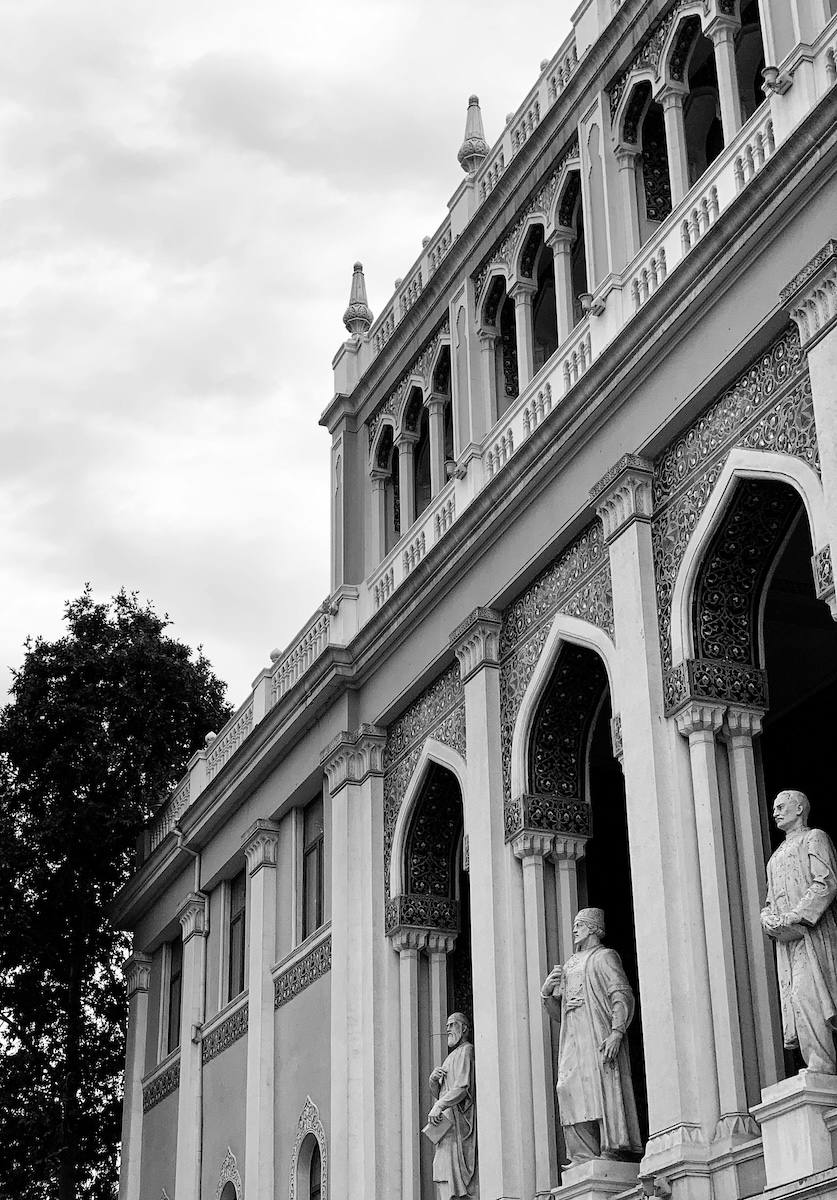
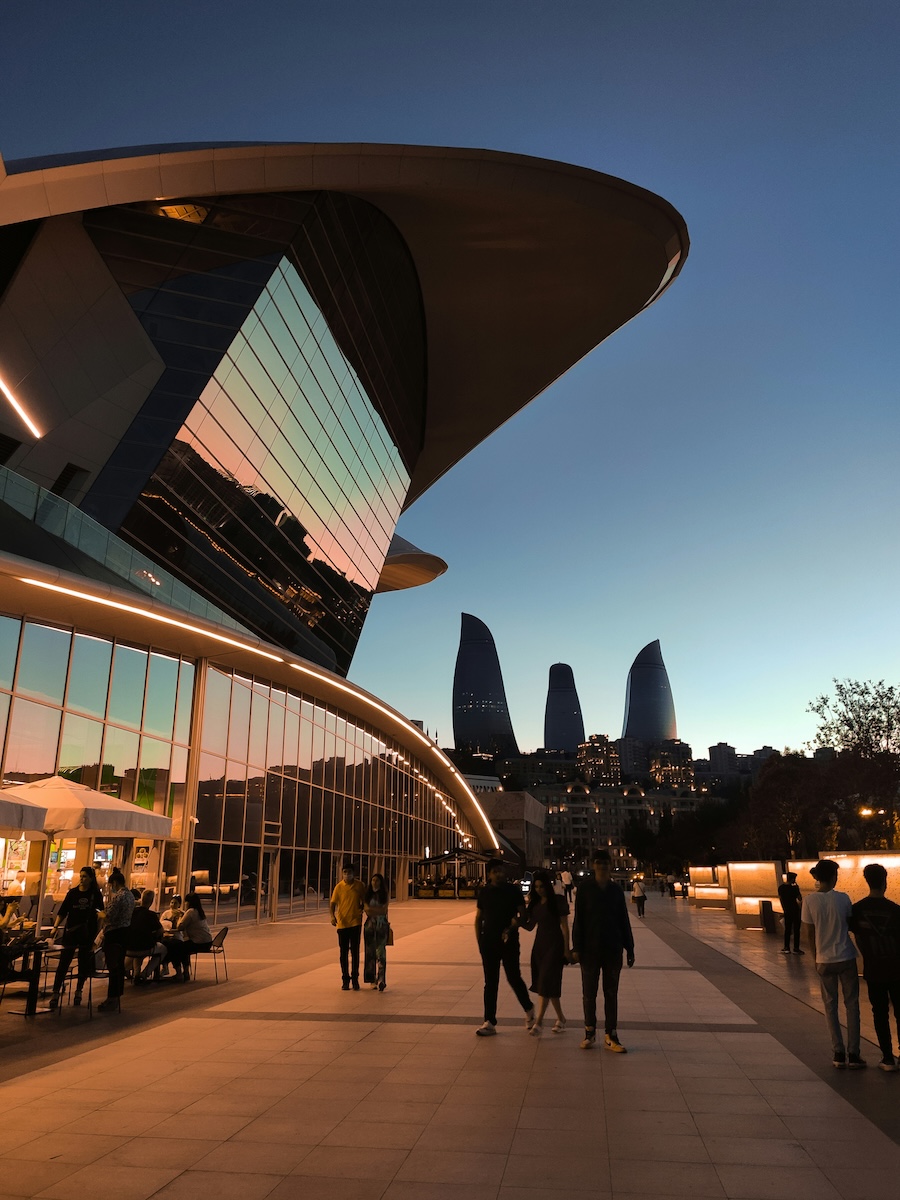
Photo bt İltun Huseynli
-
Monday, 11 May, Georgia. A new head of the Georgian Orthodox Church is being elected today
● Today, all public attention is focused on an important event: at an expanded session of the Holy Synod, a new head of the Georgian Orthodox Church will be elected. After the first session of the Synod, the main frontrunner became the locum tenens of the patriarchal throne, Metropolitan Shio Mujiri. His rivals are Metropolitans Grigol Berbichashvili and Iob Akiashvili. The question of who will become the new Patriarch is viewed by society as a political one, since it concerns the future of the country’s most influential institution. The Georgian Church has historically been linked to the Russian Church, and many argue that Moscow maintains significant influence over Georgia precisely through the church. That is why the election of the Georgian Patriarch is being closely watched in Russia. Detailed analysis here.
● Foreign Minister Maka Botchorishvili said she hopes that Ukraine’s attitude toward Georgia “will change in deeds, not only in words.”
● Russian President Vladimir Putin submitted to the State Duma a draft law on ratifying an agreement on deepening allied cooperation between Russia and the Russian-occupied region of South Ossetia, which is internationally recognized as part of Georgia under the name Tskhinvali region. The document, published on the State Duma website, states that the agreement was signed in Moscow on May 9, 2026. Assessments of this process from South Ossetia itself are available here.
● In response to an inquiry from the publication Tabula, the Interior Ministry reported that an investigation has been launched into the attack on journalist Gela Mtivlishvili, founder of the popular outlet Mtis Ambebi.
● Georgia’s fifth president Salome Zourabichvili appealed to the European Union Ambassador to Georgia Pawel Herczynski with a request to help identify funding opportunities and other support mechanisms for patients with Duchenne muscular dystrophy.
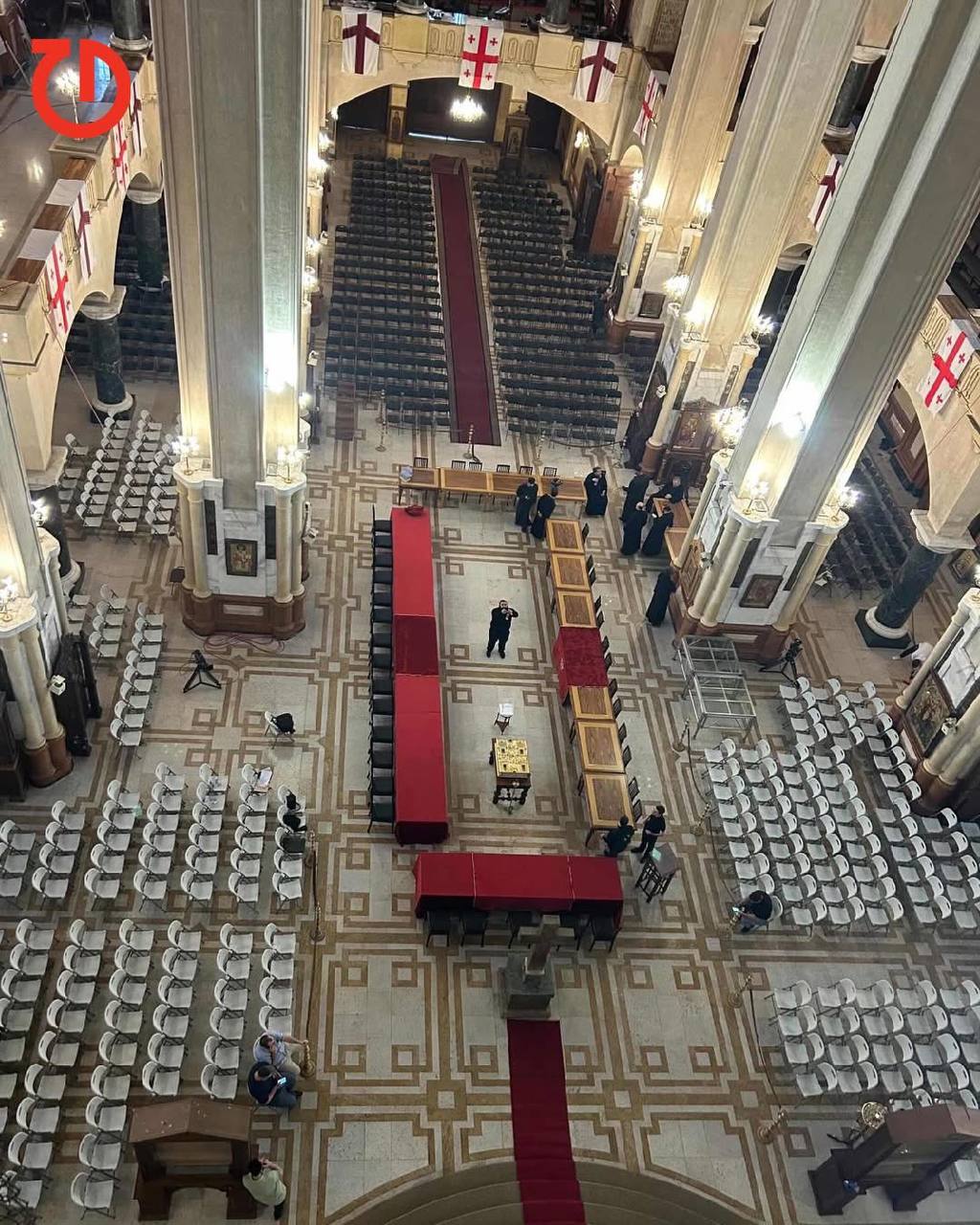
The photo shows the Holy Trinity Cathedral of Tbilisi, where Georgia’s new Patriarch will be elected today.
-
Top stories in Azerbaijan, Armenia, and Georgia from 4-8 May, 2026