Opinion: 'Control over corridors, not territories, is becoming decisive'






Transit corridors in the South Caucasus
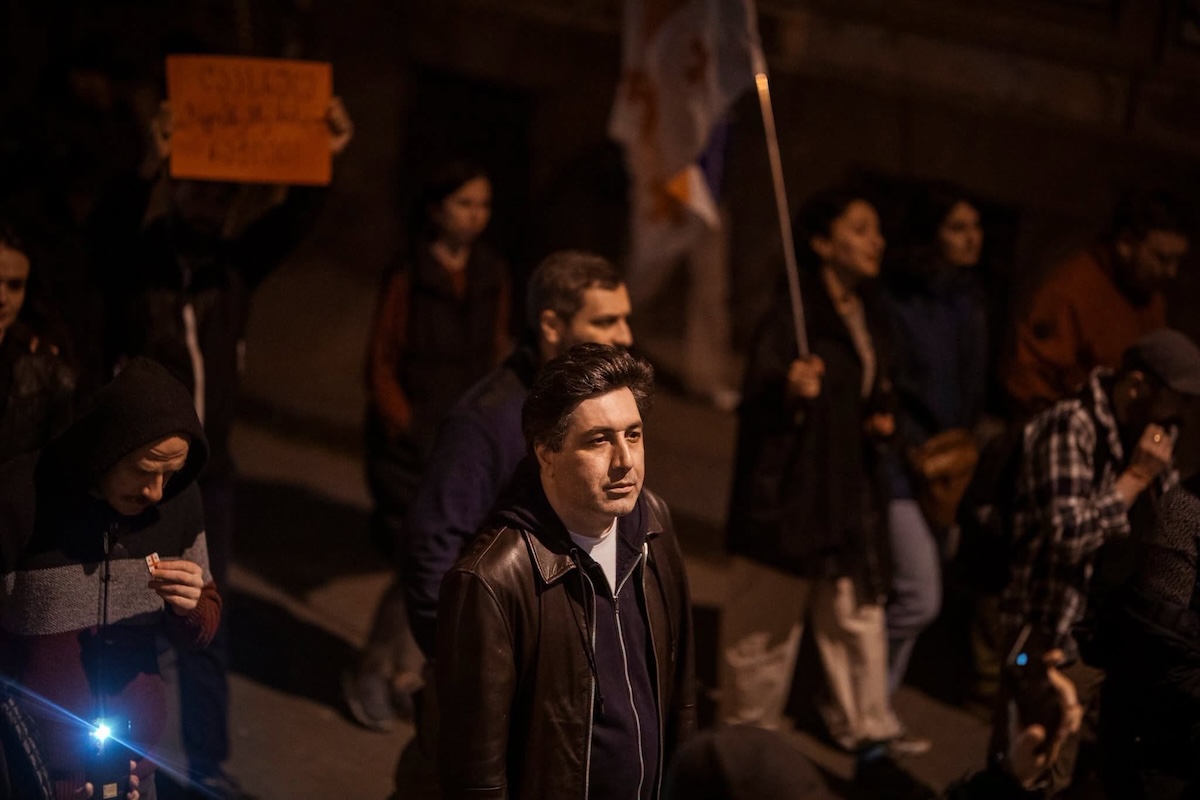
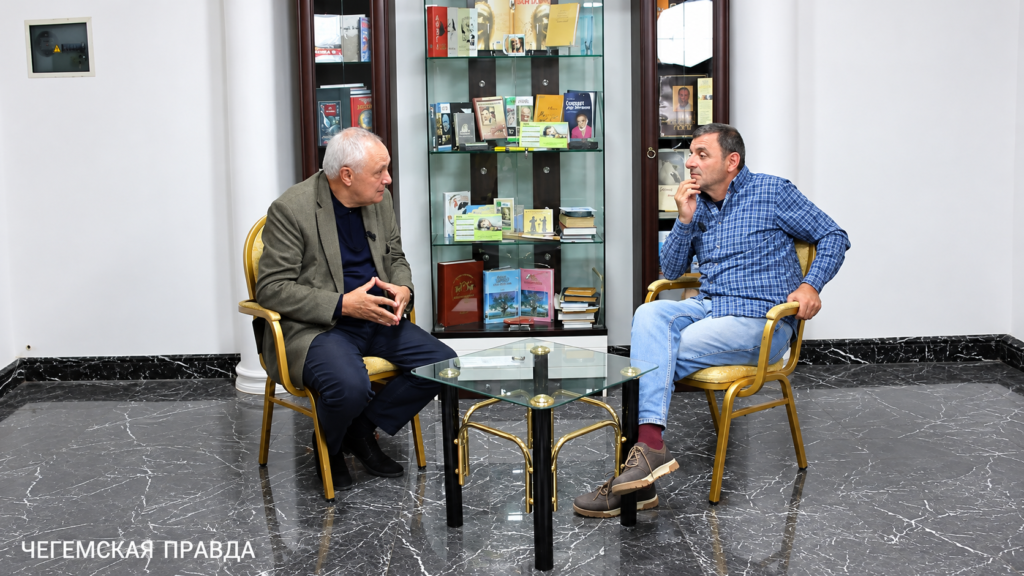
Georgian political analyst Paata Zakareishvili argues that the South Caucasus has entered a phase of deep transformation, where conflicts no longer define the logic of regional development. The key question now is not who controls territory, but who controls routes and infrastructure, and who is capable of integrating into global systems.
In this new reality:
- Azerbaijan is emerging as a central hub,
- Armenia is adapting and seeking to reduce its dependence on Russia,
- Turkey is shaping the region’s architecture,
- Russia and Iran are attempting to limit this transformation,
- Georgia finds itself in a state of strategic uncertainty.

- Trump Route: Western illusion or turning point in South Caucasus?
- Azerbaijan lifts all cargo transit restrictions through Armenia: expert views from Baku
For a long time, the South Caucasus was seen as a space of conflicts, frozen crises and external control. Regional dynamics were shaped less by economic development than by power balances, military clashes and competition between major powers.
This logic, formed during the First World War and reinforced over subsequent decades, is now rapidly evolving.
A new reality is taking shape before our eyes, where control over flows — primarily transport and energy — is becoming more important than control over territory (as reflected in discussions of the “geopolitics of connectivity” in research by the Carnegie Endowment for International Peace).
In this new system, not only the instruments of influence are changing, but also the roles of the region’s states.
- Azerbaijan is becoming a key node in the new architecture,
- Armenia is emerging as an adapting actor seeking to reduce its dependence,
- while Georgia risks losing its agency despite its favourable geographical position.
Azerbaijan as a functional leader in the region
Azerbaijan is increasingly described as a leader in the South Caucasus.
However, its leadership is not classical — it is neither military, civilisational nor ideological. Rather, it is functional.
Azerbaijan has become a central node of the regional system due to three factors:
- control over energy flows, including the expansion of gas supplies to the EU following agreements with the European Commission in 2022;
- participation in the development of transit corridors linking Central Asia, Turkey and the EU, as highlighted in World Bank assessments of the Middle Corridor;
- a strategic alliance with Turkey, providing political, diplomatic and military stability.
In other words, Baku controls not so much territory as the rules governing movement across the region.
Key routes — both existing and planned — pass through Azerbaijan. This makes it not just a participant, but a co-architect of the region’s emerging logic.
Importantly, Azerbaijan’s policy remains pragmatic.
Despite its close alliance with Turkey, Baku maintains strategic flexibility by balancing relations with Russia, the West and even Israel. This allows it to avoid dependence on any single power and strengthens its position as an independent centre.
- Visit of European Council president to Baku amid war in Iran: what does European Union want?
- Azerbaijan’s new battery storage system: what does it mean for the country and region?
Armenia’s position is existentially complex
Unlike Azerbaijan, Armenia has inherited deep infrastructural and energy dependence on Russia. Its railways and a significant share of economic links are managed by Russian Railways, while its gas system is closely tied to Gazprom.
This means that political statements by Armenia’s leadership about reorienting towards the West or reducing dependence on Moscow are, for now, ahead of real structural change.
Armenia exists in a state of dual reality: politically, it is striving towards a new system, but institutionally it remains partly embedded in the old one.
Nevertheless, a key shift has already taken place: Yerevan is seeking to integrate into regional and international corridors.
This is reflected in its willingness to facilitate transport links between Azerbaijan and its exclave of Nakhchivan, as well as in the gradual expansion of economic contacts with Baku and Ankara.
In this sense, Armenia is not so much “following Azerbaijan” as trying to integrate into a system in which Azerbaijan is the central node.
Peace between Armenia and Azerbaijan, within this framework, becomes less a result of reconciliation and more a product of pragmatic choice.
Economic interdependence and participation in corridors are emerging as stronger stabilising factors, in line with assessments by the International Crisis Group on the role of economic connectivity in post-conflict regions.
Corridors are becoming a new form of power — in other words, an institutional form of power.
Unlike military control, which tends to create dependency and instability, infrastructural connectivity fosters interdependence and predictability.
The more actors are involved in the system, the more resilient it becomes.
This turns corridors into not only economic but also political tools of stabilisation.
In this context, projects such as TRIPP or the Middle Corridor are not merely logistical initiatives, but elements of a new geopolitical architecture.
- Hybrid attacks on Armenia by two supposedly rival hacking groups
- Robert Kocharyan named prime minister candidate: will he become represent opposition in Armenia’s upcoming elections?
- ‘Let them bang their heads against the wall’: Armenia’s government reacts to proposal to join Russia’s Union State
Turkey: not an arbiter, but an architect of a new system
External actors — above all Turkey — play a key role in shaping this emerging order.
For the first time since the collapse of the Soviet Union, Ankara is acting in the South Caucasus not as an arbiter, but as an architect.
Its strategy combines the peace process, infrastructure projects and political cooperation, including through formats such as the Organisation of Turkic States.
This reflects a shift from traditional diplomacy to systemic regional design.
Unlike Russia, Turkey does not seek direct control, but instead builds a system of interconnectivity, linking markets, infrastructure and political interests.
Its model can be described as influence without absorption.
Even in its close alliance with Azerbaijan, Ankara does not suppress sovereignty, but reinforces it through integration into a broader network.
Russia: from architect to constraint
Russia’s role in the region has changed fundamentally. Where it once acted as the main architect of the regional system, its influence today is increasingly inertial.
Moscow still retains infrastructural positions — particularly in Armenia — as well as political ties and certain levers of pressure.
However, it has lost its monopoly over setting the agenda.
The problem lies not only in declining resources, but in the model itself. Russia’s approach is based on control and limiting external influence — a model poorly suited to infrastructural geopolitics built on openness and interdependence.
As a result, Russia is increasingly acting not as a system-builder, but as a factor slowing transformation.
At the same time, it actively relies on informal economic networks and mechanisms to circumvent sanctions. Recent statements from Moscow further harden this stance. A recent remark by foreign ministry spokeswoman Maria Zakharova — that Georgia would become an “unfriendly country” if it joined the EU — effectively narrows Russia’s own room for manoeuvre.
Iran: a strategy of containment
Iran occupies a more limited but distinct role. Unlike Russia, it is not seeking to preserve the old system, but to prevent a new one from emerging.
For Tehran, corridors that bypass its territory pose a direct threat. They reduce its transit role and diminish its geopolitical weight.
Iran not only criticises the alternative model, but also promotes its own — more closed and controlled.
In this sense, it acts as a blocking actor, seeking to limit the very possibility of regional transformation.
Georgia: a hub without a strategy
Against this backdrop, Georgia’s position appears paradoxical.
Despite its advantageous geography and key role in transit, it is not emerging as the centre of the new system.
The reasons are political rather than geographic:
- deteriorating relations with the West
- lack of a clear strategic direction
- a reactive approach to decision-making
Georgia is also becoming entangled in parallel economic practices, including sanctions evasion schemes, which undermine trust among Western partners.
As a result, the country risks shifting from a strategic actor to a transit territory.
Even renewed efforts around projects such as the construction of the deep-sea port of Anaklia may appear less as a strategic breakthrough and more as an attempt to catch up with processes already under way.
- What did Georgia lose by halting Anaklia port project?
- 34 years since Georgia restored independence: timeline of key events, 1991–2025
- Navigating the Middle: Georgia’s strategic position in the Middle Corridor among EU and China
Conclusion
Perhaps the most important conclusion is this: the region has already changed. The question is whether its states will change with it.
Transit corridors in the South Caucasus