ISFED: How two sanctioned Georgian TV channels circumvent social media advertising restrictions






Sanctioned Georgian TV channels bypass restrictions
Sanctions imposed by the United Kingdom have significantly affected the social media activities of two pro-government Georgian television channels, Imedi and POSTV.
The organisation International Society for Fair Elections and Democracy (ISFED) says that after the sanctions were introduced, both channels encountered problems promoting their content on Meta platforms and attempted to create new Facebook pages in order to place their advertisements.
According to ISFED’s monitoring, advertising posts on the official social media pages of both broadcasters stopped on 25 February — the day after the sanctions were imposed. As of 10 March, Meta’s Ad Library indicated that the pages had been restricted from placing advertisements due to violations of the platform’s standards.
Meta has made no official statement on the matter, but ISFED suggests the company may have imposed the restrictions on the broadcasters’ Facebook pages in connection with the sanctions.
The organisation notes that this is particularly significant given that both channels were among the largest advertisers in Georgia’s social media space.
According to Meta data, in the incomplete month of February 2026 alone, Imedi and POSTV placed around 1,000 advertisements on their pages worth nearly 38,000 dollars. Between August 2020 and 25 February 2026, the two broadcasters spent at least 786,305 dollars on Meta advertising through various pages — a record figure for Georgian media outlets.
ISFED also found that after the sanctions were introduced, POSTV created two new Facebook pages — “POSTV-News” and “POSTV-Insight”. Both pages were created in March 2026 and were granted authorisation to place political advertisements on 4 March. All the adverts were published within the following two days. According to the organisation, both pages listed identical contact details in the Ad Library.
The “POSTV-News” page placed a total of 111 advertisements on Facebook with a combined value of 493 dollars. According to ISFED, the promoted posts mainly contained anti-Western messages. Some narratives portrayed the West as interested in prolonging the ongoing conflicts in Ukraine and Iran.
The adverts also widely circulated statements by representatives of the ruling Georgian Dream party claiming that the West had “used Ukraine” and misled it about prospects of joining NATO and the European Union. Other posts emphasised the Georgian authorities’ “peaceful policy”, while presenting the West as a force pushing the country towards war.
Some of the promoted content also criticised the Ukrainian authorities. In particular, a video report was circulated accusing Ukrainian President Volodymyr Zelensky of interfering in Hungary’s sovereignty and influencing democratic elections.
According to ISFED, the advertising materials also targeted independent Georgian online media, portraying them as “executors of orders from external forces”.
The second page, “POSTV-Insight”, placed 23 advertisements worth a total of 227 dollars. Alongside anti-Western messaging, the adverts also criticised representatives of opposition parties and civil society.
Targets of the discrediting campaign included former Public Defender Nino Lomjaria and former defence minister Tina Khidasheli. In one advert, Lomjaria was accused of acting against the country’s interests because of a meeting with the German ambassador, while criticism of Khidasheli intensified after she publicly criticised the Georgian authorities for deepening diplomatic relations with Iran.
According to ISFED, neither of the new POSTV pages can currently be found. They were active for only a few days, and the reason for their disappearance remains unknown.
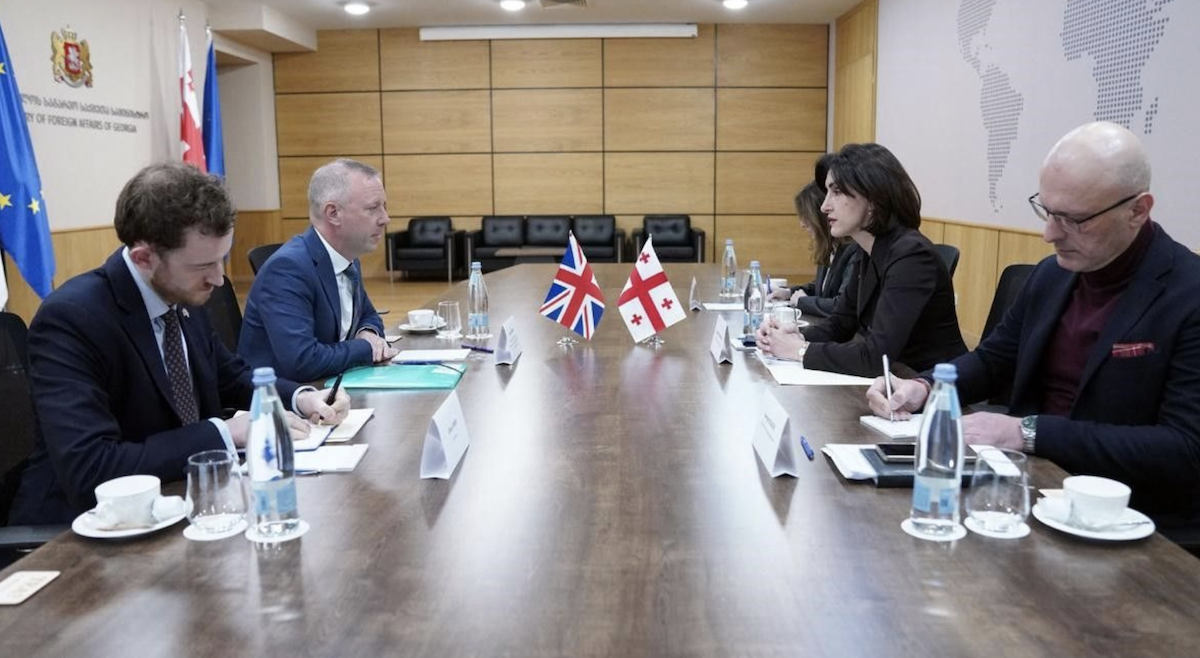
Similar steps were also taken by the television company Imedi. After advertising stopped on its main pages, a new Facebook page, “Imedi Supporters”, was created on 3 March.
The page received authorisation to place advertisements on Meta on 5 March and on the same day sponsored a video titled “Quote by Sandro Gamsakhurdia — Agent Tina Khidasheli”. At present, the page contains only two posts: a statement by the broadcaster regarding the sanctions and the above-mentioned video.
ISFED also notes another detail: on 25 February, a limited liability company with the identical name “Imedi Supporters” was registered in the public registry. The owner of 100% of the shares and the company’s director is Nika Kldiashvili, who heads the social media division at Imedi.
According to the organisation, the case demonstrates how sanctioned media outlets attempt to circumvent restrictions imposed by social media platforms and maintain access to their audiences.
Context
On 24 February, the United Kingdom imposed sanctions on the television companies Imedi and POSTV under its new package of anti-Russian sanctions.
The sanctions include an asset freeze, trust services sanctions and a director disqualification sanction. The latter restricts an individual from acting as a company director, establishing a company or managing one for a certain period, with breaches treated as a criminal offence.
Georgian Dream Prime Minister Irakli Kobakhidze described the decision as “frivolous and shameful”. According to him, “nothing is valued in London any more”, including media freedom.
Kobakhidze formally characterised the sanctions as a violation of press freedom but added that they would bring no practical results. He said the Georgian government would take full responsibility to ensure that the situation of journalists at any television company does not worsen.
“Of course, all state and private companies should continue cooperating with Imedi TV and POSTV,” Kobakhidze said.
Sanctioned Georgian TV channels bypass restrictions