Estonian envoy: 'What’s happening to Georgia’s higher education is not Estonian model'






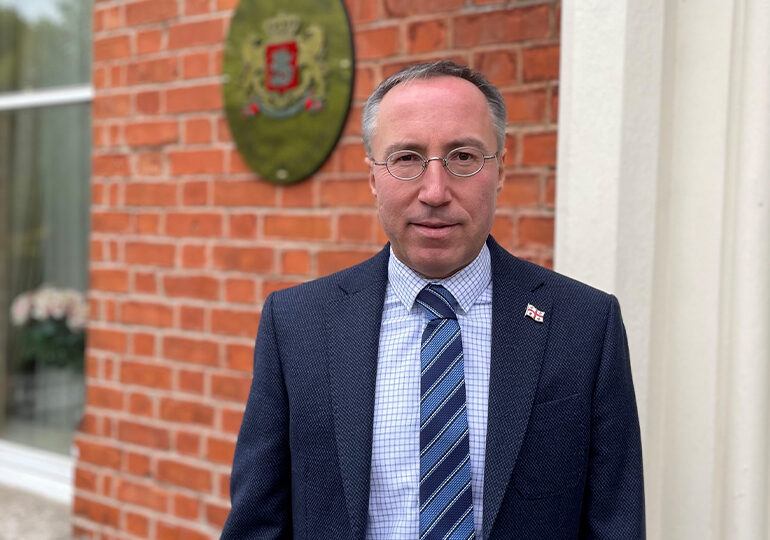
Estonia’s ambassador to Georgia, Marge Mardisalu-Kahar, has said that the processes currently unfolding in Georgia’s higher education system do not represent the Estonian model.
In an exclusive interview with Interpressnews, she was responding to claims by the Georgian government that the reform being implemented in the higher education sector is largely based on Estonia’s experience.
According to Mardisalu-Kahar, any borrowed model can only be useful if it is adapted to the local environment, culture and political context.
The Georgian government is introducing sweeping changes to the country’s higher education system.
Under the new reform, student admissions to state universities will be distributed according to a strict specialisation principle, with specific academic fields assigned to particular cities and universities.
The government says the aim of the reform is to better align education with labour market needs and concentrate resources. However, the changes have already raised questions about academic freedom, regional development and the autonomy of universities.
More details about the education reform can be found here.

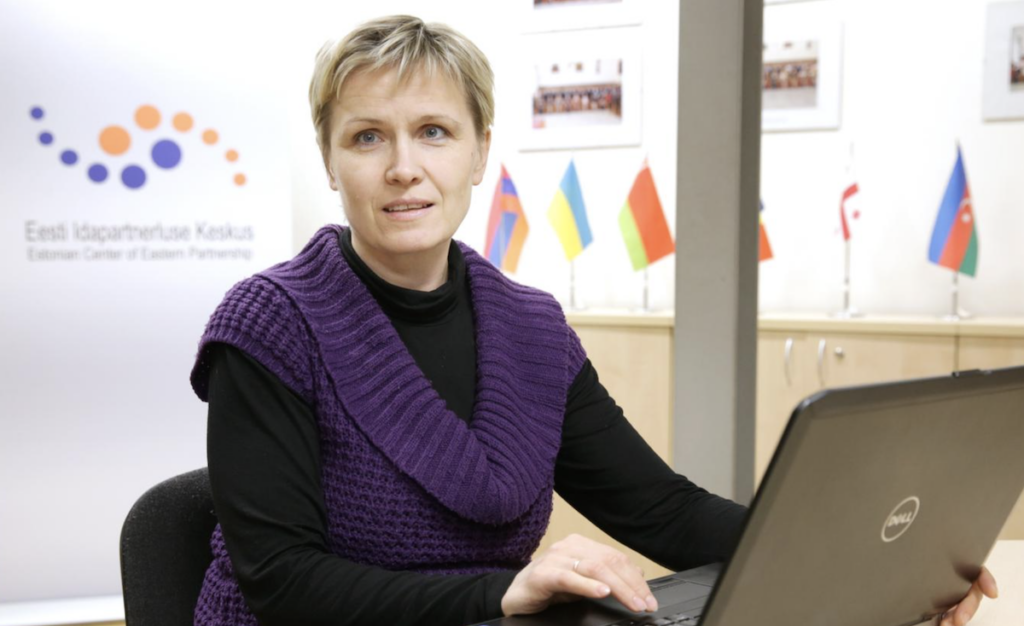
Marge Mardisalu-Kahar: “We share our experience. We tell our story, with its strengths and weaknesses, and then Georgia decides which parts of that experience are useful and which are not. The intention is never to simply transfer one country’s model to another. It does not work that way.
For any model to be useful, it must be adapted to the local environment, culture and political context. Direct copying of experience does not happen. There is indeed strong interest from Georgia in Estonia’s experience, particularly in the education sector. This includes primary, vocational and higher education.
But at the moment Georgia is moving in the opposite direction in this regard. This is not directly about the reform itself. Our education sector is also constantly undergoing reforms. We have also reduced the number of universities. The issue is not the number of institutions or the reform itself.
The issue lies in the fundamental principles on which the reform is based. These are democratic principles, including whether academic institutions have autonomy, whether academic freedom exists, and whether Georgia’s education system aligns with the Bologna Process and European standards.
In this context, we see that the direction of Georgia’s education system is unfortunately the opposite. This is not the Estonian model and it does not reflect its spirit. The key issue is the fundamental principles on which the education system is based. That is what fundamentally distinguishes what is happening in Georgia from Estonia’s model. In our system there is academic freedom, autonomy of academic institutions and democratic standards in education.”

About Georgia’s education reform