'Yerevan and Baku are on the same side in global geopolitical struggle' - Armenian political scientist






Yerevan and Baku accept US hegemony
“I am returning with even greater confidence in peace [between Armenia and Azerbaijan],” Prime Minister Nikol Pashinyan said on social media en route back from the first meeting of the Board of Peace founded by Donald Trump.
According to Robert Ghevondyan, Pashinyan’s confidence reflects his renewed conviction in the United States. He believes Armenia and Azerbaijan are on the same side in the “big geopolitical game”. This means there is no danger of the conflict continuing.
“Trump has come to offer the world US hegemony — but not the kind that existed in the 1990s, rather hegemony in a multipolar world. There are countries that agree with this approach, with this agenda. Armenia and Azerbaijan have agreed with this approach. And in the current geopolitical struggle, they already occupy a corresponding position,” the analyst explained.
- US vice-president’s visit to Armenia hailed as ‘historic’ – what it delivered
- US stake in TRIPP project to reach 74%, Yerevan and Washington say
- ‘Deepening ties with US and EU does not mean expelling Russia’ — Armenian foreign minister
Board of Peace
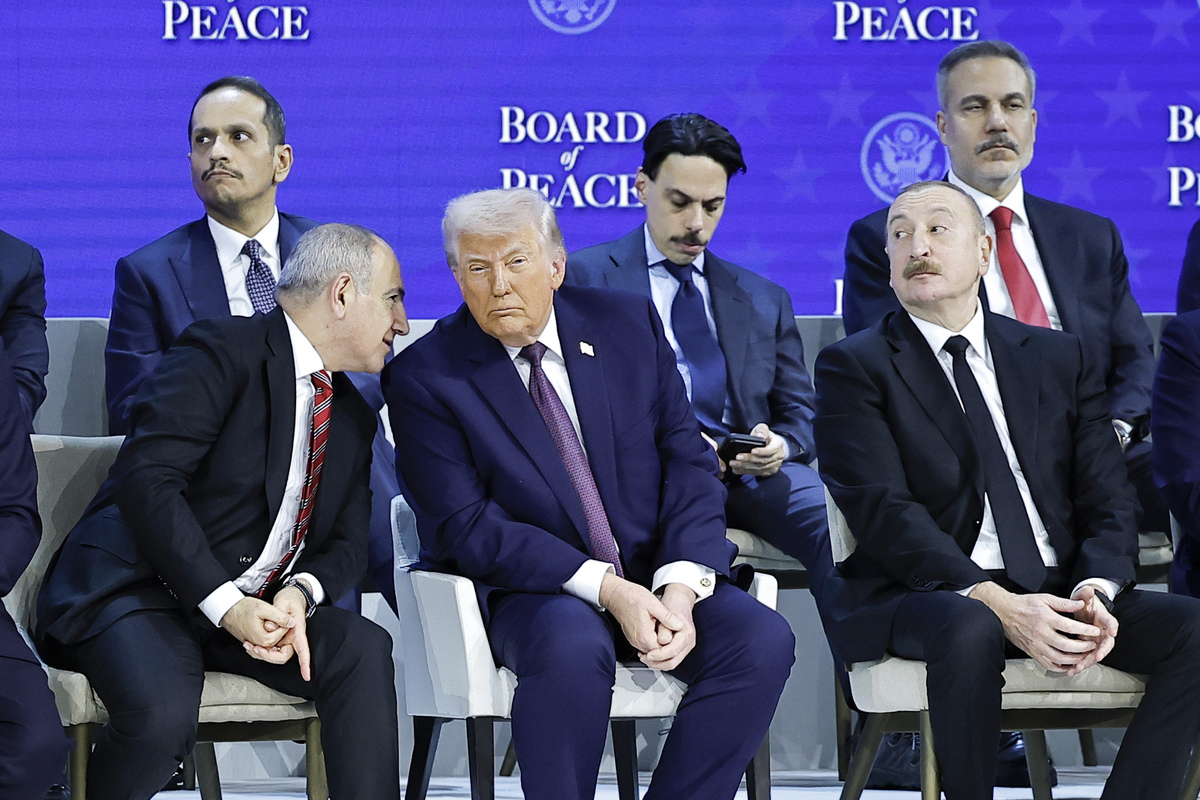
At the first meeting of the Peace Council, Armenia was represented by Nikol Pashinyan and Foreign Minister Ararat Mirzoyan. During the session, a peace plan for resolving the conflict in Gaza and the planned next steps were presented.
In his speech, Trump once again praised the peace established between Armenia and Azerbaijan through his mediation.
Armenia joined the peace council, created by the US president, as a founding member. On 22 January, Nikol Pashinyan took part in the formal ceremony to sign the organisation’s charter. It was initially stated that the initiative’s goal was to oversee the reconstruction of Gaza. Later, President Trump noted that the council would address broader issues and global conflicts.
Expert opinion
Political scientist Robert Ghevondyan suggests that the US president is forming a new body to regulate peace which, in essence, would replace the UN Security Council.
“It is too early to say whether this will be a new UN Security Council or something similar. In any case, Trump wants the Peace Council to become a new regulatory body capable of acting as an observer and guardian of order,” he explained in an interview with a local outlet.
Ghevondyan is not certain whether Trump will succeed, given that only three years remain in his term. He also says that not all EU countries are aligned with the US president’s actions and vision, though they understand the need to strengthen their resilience to external threats.
“In the world as Trump sees it, all other poles must be one level below the United States. If the EU descends to that level, it is not impossible that the leaders of the European Union will decide to join this new body,” he believes.
Ghevondyan says the current geopolitical struggle centres on US hegemony in a multipolar world, with Yerevan and Baku on the same side:
“Yerevan and Baku are on the same side in this global geopolitical struggle. The more actions and meetings Armenia conducts within the logic of this agenda, the more expectations we may have of the United States — the leading global superpower at present.”
Ghevondyan says that if Armenia or Azerbaijan had aligned with China and Russia, which oppose Trump’s agenda, their conflict would likely still be ongoing.
“Since both Armenia and Azerbaijan position themselves within this camp, it indicates that they should not have problems with each other — at least in the short term. That would contradict the logic promoted by Trump.”
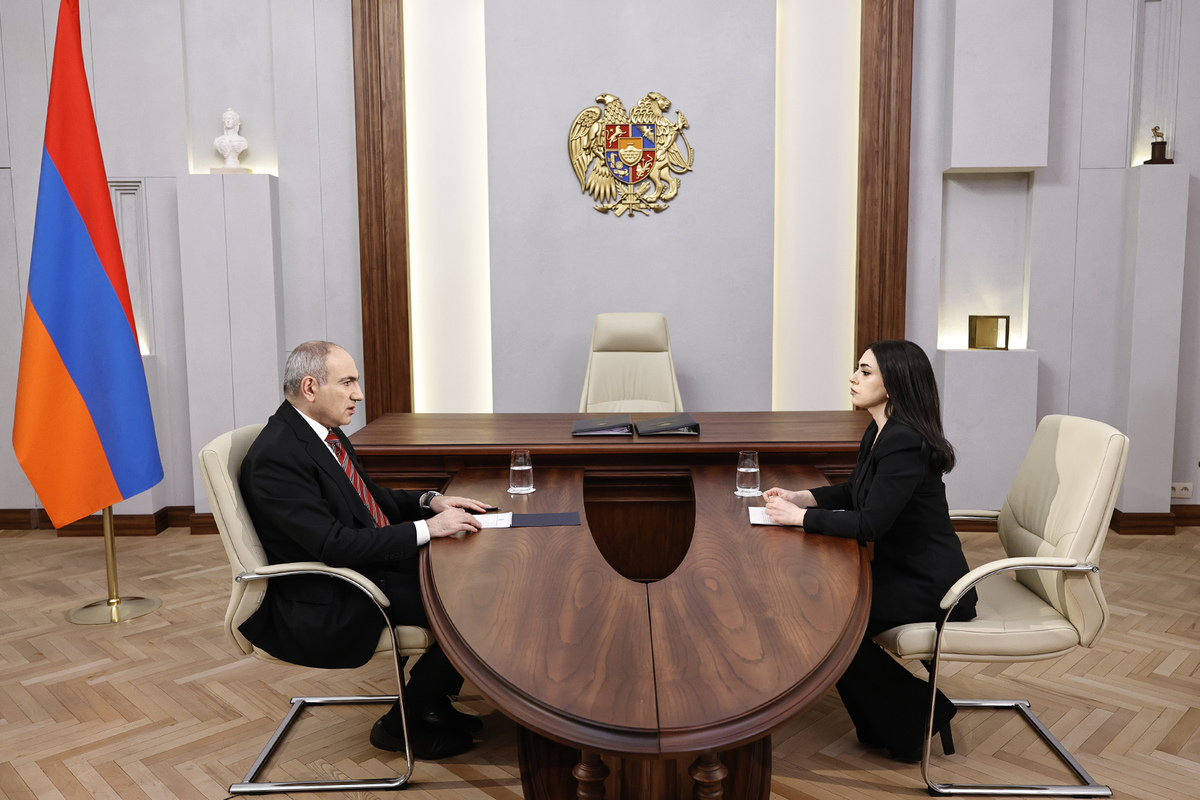
Commenting on the prospective peace treaty with Azerbaijan, the analyst says Baku has used — and continues to use — the issue of amending Armenia’s constitution to delay the process:
“This is a manifestation of the intention to keep Armenia in a state of dependence and expectation for longer. At the same time, rumours persist in Armenia and Azerbaijan that Baku may sign the treaty even before the constitutional referendum in Armenia. However, this would be on the condition that ratification takes place after the referendum.”
Amendments to Armenia’s constitution are a precondition set by Baku for signing a peace treaty. In Azerbaijan, the document is seen as containing territorial claims. For Azerbaijan, the issue is constitution’s reference to the Declaration of Independence, which mentions the “reunification of Armenia and Nagorno-Karabakh”.
Official Yerevan insists that it has no territorial claims against any of its neighbours. Constitutional change is regarded in Armenia as an internal matter. However, the adoption of a new constitution began to be discussed alongside Baku’s demands. Previously, the Armenian authorities had spoken of constitutional amendments rather than the adoption of a new constitution. In any case, the matter can only be resolved through a nationwide referendum.
At the same time, the political scientist notes that holding a referendum does not guarantee the outcome expected in Azerbaijan. In his assessment, Baku does not know what it would do if, for example, the referendum were to fail.
Ghevondyan says the new draft constitution, due in March, is unlikely to reference the Declaration of Independence.
The analyst suggests closely monitoring developments and how they affect public opinion. He points to the European Political Community summit in Yerevan in May and the parliamentary elections on 7 June.
“If all this creates a favourable environment, it is quite possible that the referendum will succeed. But even if the expected result is not achieved, this would not necessarily mean the failure of the peace treaty. If the benefits of peace outweigh the disadvantages of its absence, Baku will sign and ratify the treaty even without constitutional amendments,” he believes.