“The ritual is complete”: Why the Kremlin needs elections to the State Duma






Russia State Duma elections
Based on a report by Novaya Gazeta Europe
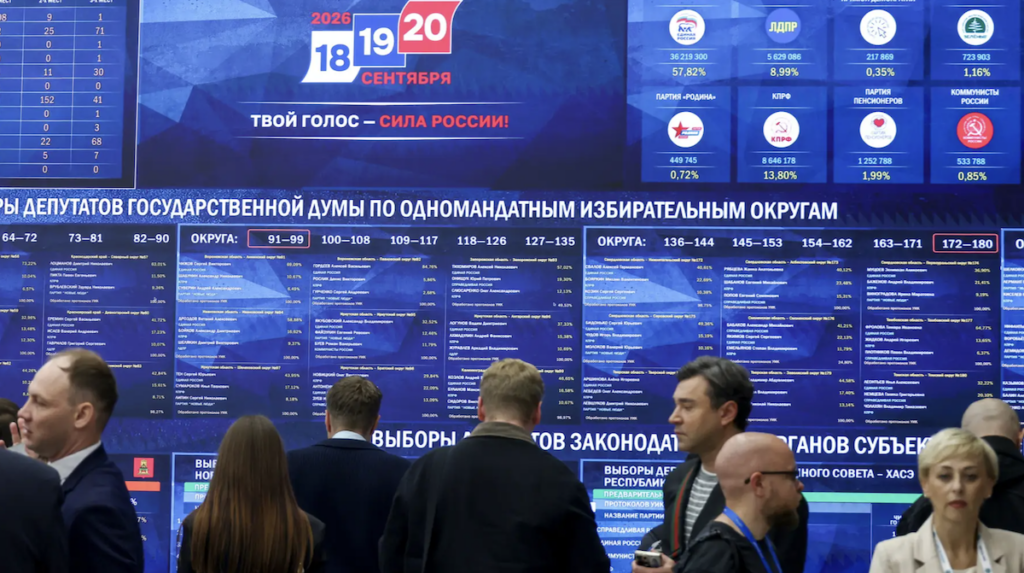
Russia’s first State Duma elections since the start of the full-scale war in Ukraine have brought few surprises. According to preliminary official results, the ruling United Russia party has retained its constitutional majority.
Political observers say there is now little genuine political competition left in the country.
But if the vote does little to determine either the composition of the real centers of power or the direction of the Kremlin’s policies, why does the Kremlin continue to hold elections? And what significance do they still have for the authorities and for Russian society?
To explore those questions, Novaya Gazeta Europe spoke with political scientists, a sociologist, a political strategist and an electoral expert.
Yabloko disrupted the script of a quiet campaign
According to an electoral expert who asked not to be identified for security reasons, the authorities had initially planned a campaign that would be as uneventful and tightly controlled as possible.
“Overall, all the candidates and parties that made it onto the ballot tried to run their campaigns as inconspicuously as possible, so as not to give the authorities grounds to target them. Everyone except Yabloko played by the system’s current rules. Yabloko, by contrast, played by the rules the system had five years ago,” he said.
The situation surrounding Yabloko became the campaign’s main development to break from the prescribed script. According to the expert, the party’s position had not changed, but after years of war, the authorities had come to view it as radical.
The federal list of Yabloko was barred from the election by a decision of the Supreme Court. The Central Election Commission removed information about the party from the federal ballot.
“In the end, the authorities chose the coercive route: they removed Yabloko, barred all the more or less prominent candidates, and eliminated the regional lists — with the exception of Novgorod Region. This really became the central story of the election campaign,” the expert said.
Sociologist Igor Eidman said that Yabloko’s attempt to take part in the election at least demonstrated that opponents of the war still exist in Russia. But it produced no meaningful electoral result.
Political analyst Ivan Preobrazhensky does not consider the campaign a genuine election at all. In his view, it was closer to a “performance” or a “special electoral operation,” resembling the Soviet-era plebiscitary votes in which voters were offered no real alternative.
Eidman likewise argues that voters had little meaningful influence over the distribution of political power.
“This was pure political farce — a staged performance, a fake imitation of a political process that does not exist in Russia. The script was written long ago, and all the figures were determined in advance,” he said.
Yet the predetermined outcome does not make the elections meaningless for the Kremlin.
State Duma elections as a political ritual
Political strategist Stanislav Belkovsky describes the elections as a political ritual.
“The event is meaningless in terms of the actual political process, but it is an integral part of the rituals of power. In that sense, it can be compared with the Victory Day parade on Red Square or the Kremlin reception held to mark June 12.”
In his view, Vladimir Putin regards adherence to such rituals as part of maintaining the stability of his own rule.
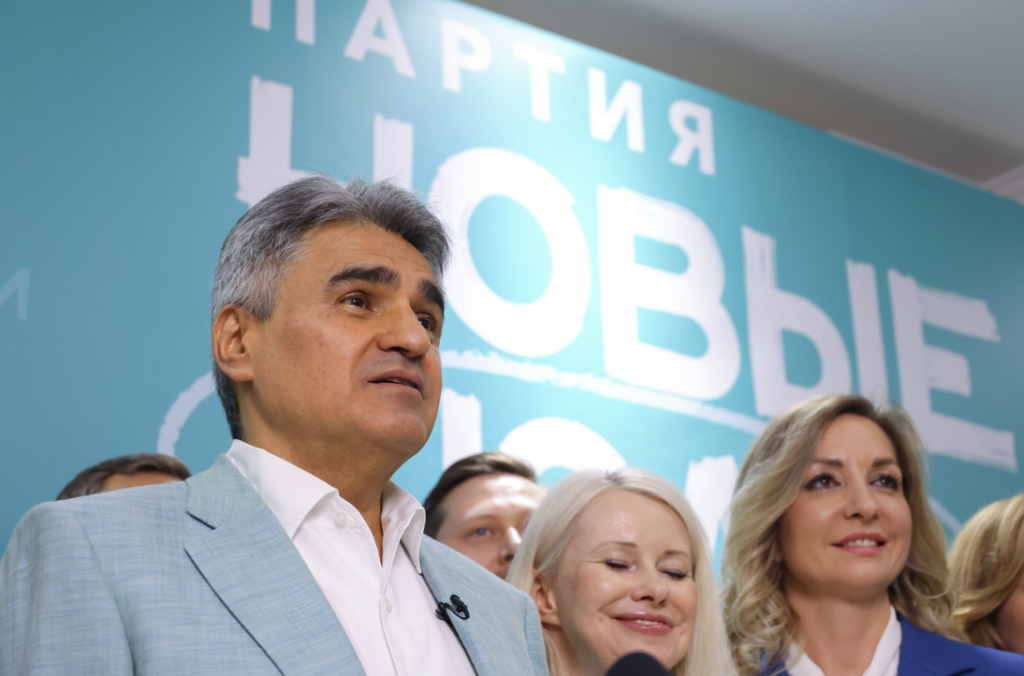
Belkovsky says the Kremlin is also interested in preserving a liberal façade in the form of the New People party. In his view, its presence allows the authorities to project an image of Russia as a country where legal liberal political forces still exist.
At the same time, he argues that on fundamental issues, the party does not differ from the other established political forces.
There was also uncertainty surrounding A Just Russia, which was hovering near the 5 percent electoral threshold. According to preliminary official results, the party cleared the threshold.
Preobrazhensky argues that even if the party disappeared from Parliament, it would not fundamentally change Russia’s domestic politics.
“There is not a single genuine political party that would be allowed to take part in Russian elections today,” he said.
Was there any point in voting?
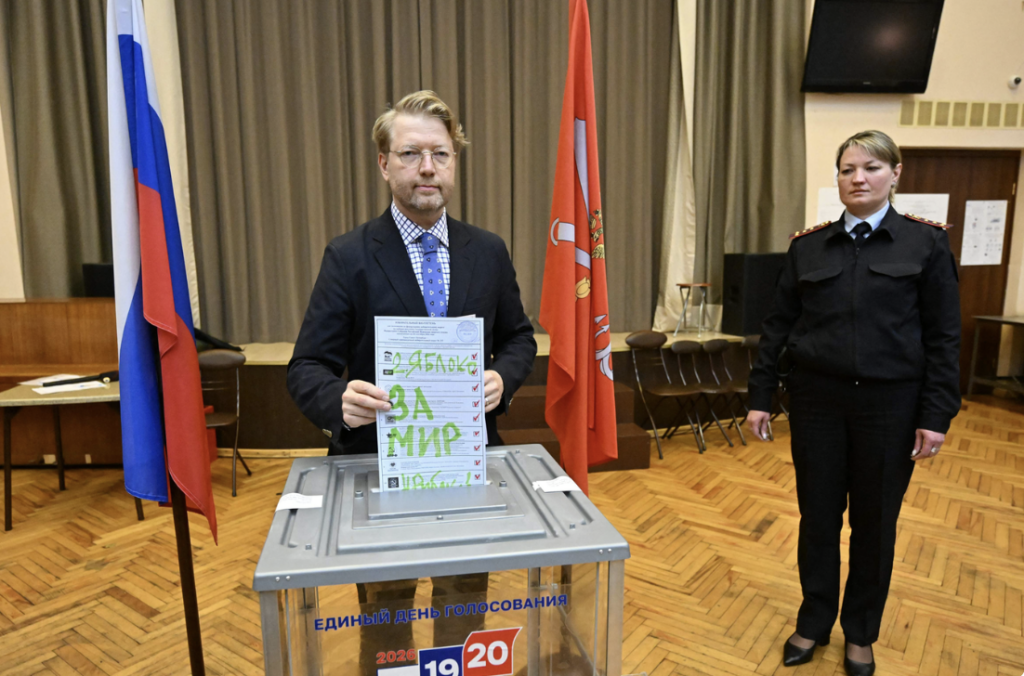
Preobrazhensky believes that taking part in the election may have had a primarily psychological significance. For some people, simply going to the polls, deliberately spoiling a ballot or taking part in the “Noon for Peace” protest became a way to engage in at least a symbolic political act.
Eidman takes a different view. He argues that mass participation helps the authorities maintain the appearance of a normal electoral process.
He points to the 2024 presidential election as an example. At the time, large lines of Putin opponents formed outside polling stations abroad. Yet the official election results remained unchanged.
An independent electoral expert disagrees.
“The greatest joy for anyone rigging an election is absenteeism — people staying away from the polls. It makes their job much easier. High natural turnout is always a problem for those who manipulate elections,” he said.
What happened with election fraud
According to the anonymous expert, opportunities for independent election monitoring have sharply diminished in these elections. As a result, it has become far more difficult to compare the official results with what actually happened at polling stations.
“In my view, even the information that is available is enough to conclude that, in the overwhelming majority of regions, the official results do not correspond to how people actually voted,” he said.
That is the assessment of the newspaper’s source. Russian authorities, by contrast, said the voting took place without violations capable of affecting the outcome. Independent observers and opposition groups reported violations and restrictions on election monitoring.
The expert believes the nature and scale of possible manipulation may also be changing. In the past, observers focused primarily on precinct-level election commissions. Now, he said, some manipulation may be taking place higher up, at territorial election commissions where results from individual polling stations are consolidated.
As an extreme example, he points to Chechnya, where, according to official figures, Ramzan Kadyrov received 99.85 percent of the vote.
“That would mean that across the entire republic, fewer than 1,000 people supposedly voted against Kadyrov, despite turnout being virtually 100 percent. That is even more extreme than in the Soviet Union,” the expert said.
The source also drew particular attention to Moscow. On the final day of voting, the system for issuing paper ballots experienced a failure there.
The expert stressed that there is no evidence that the disruption was deliberate. But many voters who had deliberately chosen not to vote electronically were planning to go to polling stations precisely on the final day.
Preobrazhensky points to another change. In the past, he said, discussion centered on individual regions with particularly conspicuous electoral anomalies. Now, in his view, the anomalies are becoming regions where the alleged falsifications are less extensive and less obvious.
The question of how to legitimize the results, however, remains. Preobrazhensky argues that it is important for the Kremlin to convince both Russians and audiences abroad that the official figures genuinely reflect public sentiment.
“In the West, there is, in my view, a mistaken argument: ‘Perhaps no one elected Putin, but we know anyway that he is supported by an absolute majority of Russians.’ That is not true, because no one knows that,” the political analyst said.
What will change after the election
Belkovsky believes it would be a mistake to view the State Duma election as a turning point after which the Kremlin should embark on a fundamentally new course.
In his view, the State Duma is not an independent center of key political decision-making.
“The State Duma election in itself is neither a milestone, nor a turning point, nor a ‘barometer’… It is simply part of a ritual, and that ritual has been completed,” he said.
Belkovsky said any decision on a new formal mobilization would likewise not be directly linked to the election results. At the same time, he said, the Kremlin still has ways of replenishing the armed forces through less visible and indirect means.
Eidman believes the official results could serve a different purpose for the authorities — as evidence of a public “mandate” for further decisions.
Preobrazhensky points to another possible consequence of the campaign: a struggle for influence within the Russian government itself.
In his view, the election exposed a conflict between the Federal Security Service, or FSB, and the presidential administration over control of domestic politics.
“The main question that emerged during the election was: Who controls domestic policy? During the so-called election campaign, domestic policy was quite clearly controlled primarily by the FSB,” the expert said.
According to Preobrazhensky, the future direction of Russia’s domestic politics will depend to a significant extent on whether the FSB retains that control.
exchange