Russia drops probe into Azerbaijani plane downed by its air defences: reaction in Baku






Azerbaijani plane downed by Russia
Azerbaijan’s Foreign Minister Jeyhun Bayramov has sharply criticised Moscow’s unexpected announcement that it is ending the criminal investigation into the Azerbaijani passenger jet shot down by Russian air defences on 25 December 2024 as it approached Grozny in Chechnya.
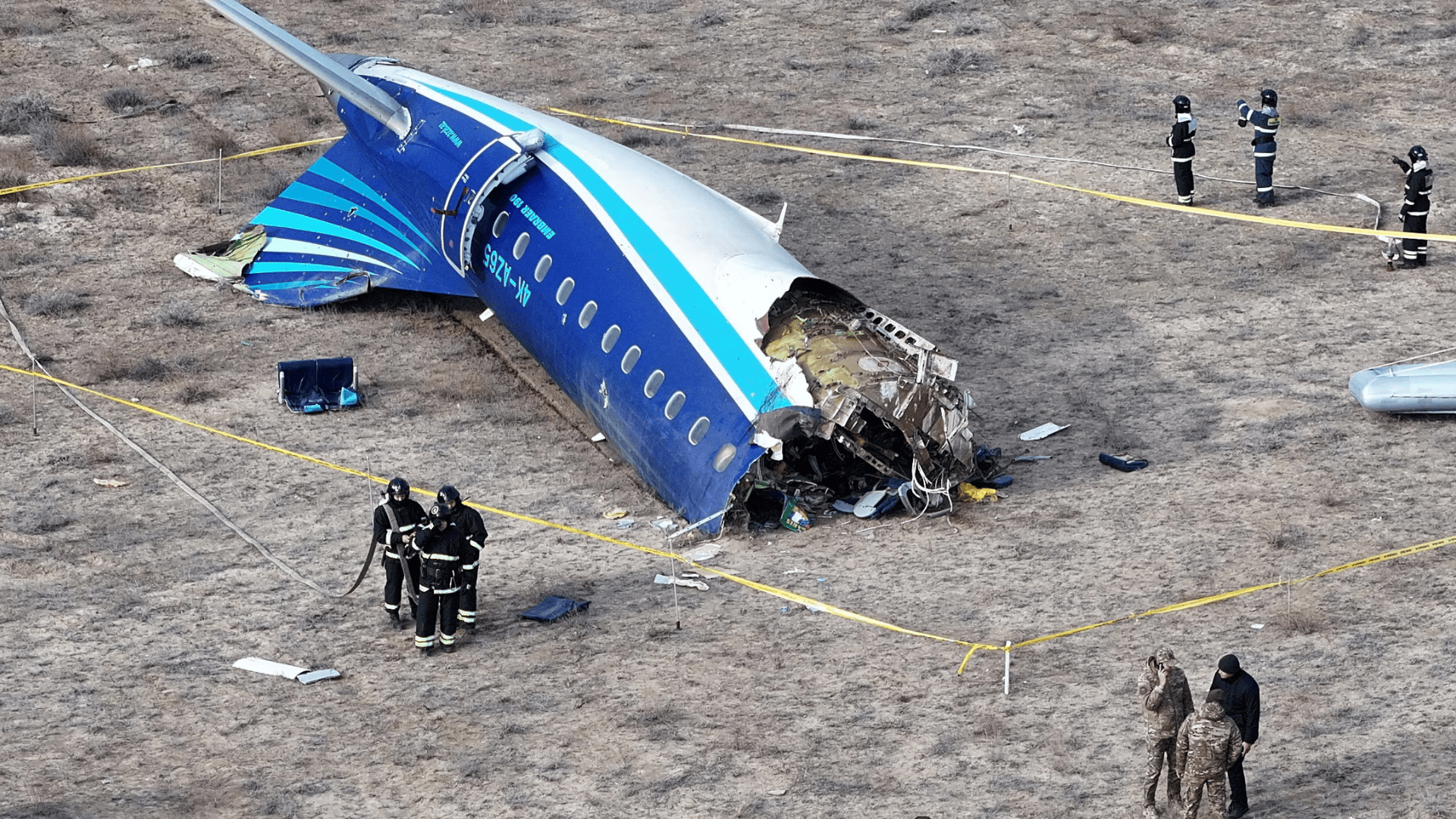
Russian air traffic controllers redirected the damaged aircraft to Aktau, where it crashed three kilometres from the airport. Of the 67 people on board, 38 were killed.
Speaking at a press conference in Baku on 27 December, Bayramov said the decision by Russia’s Investigative Committee raised “very serious questions” in Azerbaijan.
“Russia sent a letter to Baku informing us of the termination of the investigation, which came as a surprise to Azerbaijan. Azerbaijan formally replied with a note of protest, setting out its position in detail,” he said.
Bayramov recalled earlier assurances given by Moscow.
“The fact that the aircraft was hit was later acknowledged by the Russian side, and compensation payments were also announced. This was an important statement. We expect the process to be completed in line with the agreements reached during talks between the leaders of the two countries,” he added.

Context of tragedy
On 25 December 2024, an AZAL passenger Embraer 190 aircraft flying from Baku to Grozny crashed near Aktau in Kazakhstan. Of the 67 people on board, 38 were killed.
Subsequent joint investigations found that the crash was not caused by a technical malfunction but by an external impact, specifically the aircraft being hit by a missile.
This conclusion was confirmed by a joint investigation involving specialists from Kazakhstan, Azerbaijan, Russia and Brazil, with the participation of the International Civil Aviation Organization (ICAO).
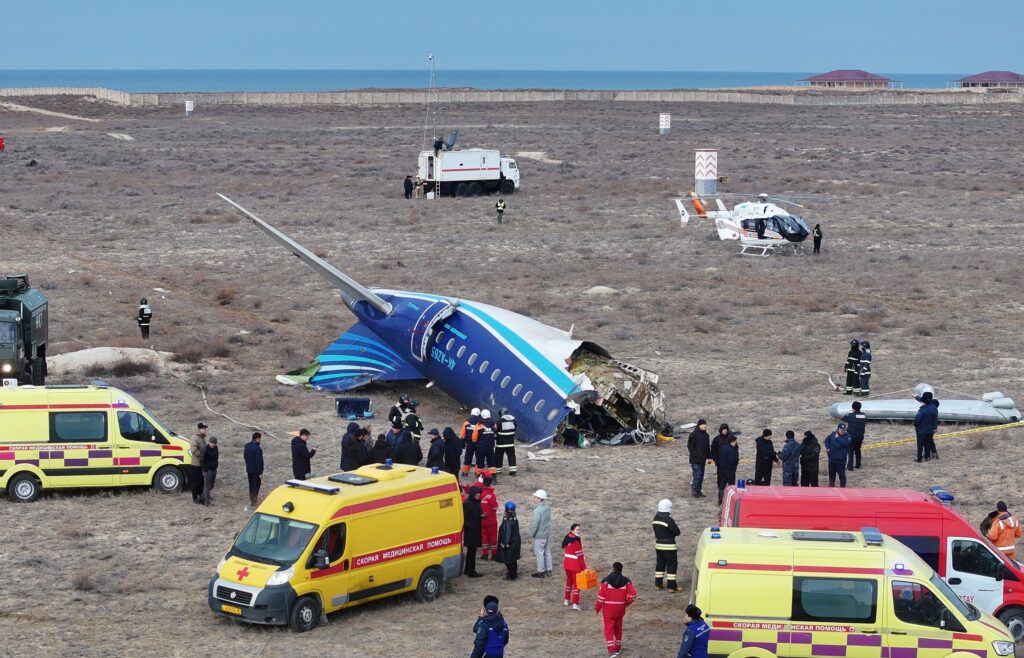
An interim report published by Kazakhstan’s Ministry of Transport on 25 December 2025, the anniversary of the tragedy, refuted the version of an internal explosion on board the aircraft, thereby ruling out a terrorist attack or a technical blast.
The report says that metal fragments of external origin were found on the aircraft’s fuselage — remnants of an explosive device “presumably linked to military weaponry”.
The report does not specify the model of the device, but Azerbaijan’s Foreign Ministry recalls the following:
“In a political statement in October 2025, Russian President Vladimir Putin acknowledged that the surface-to-air missile system that struck the aircraft belonged to the air defence forces of Russia’s Ministry of Defence.”
In other words, the investigation has effectively already established that the aircraft was shot down by Russian military air defence systems.
In recent days, official Moscow has sought to present its own explanation of what happened. Russian Foreign Ministry spokesperson Maria Zakharova described the crash of the AZAL aircraft as a “shared tragedy for a number of countries”, citing Ukrainian drone attacks on Russian territory as the main cause.
According to Zakharova, “the Kyiv regime’s drone attacks on Russia’s civilian infrastructure forced the Russian side to act with particular caution in the airspace that day, which ultimately led to this tragedy.”
Russia said it hoped that the Kazakh commission’s investigation would be completed in the near future and that “after that, Russia and Azerbaijan would be able to close all remaining issues.”
Analysts believe that by halting the investigation, Russia is seeking to shield its servicemen from legal accountability.
According to Azerbaijani media, one of the commanders of the Russian military unit who gave the order to strike the AZAL aircraft, General Alexander Tolopilo, was not punished after the incident and, on the contrary, received a promotion.
Viewed in an international context, Russia is currently at war with Ukraine and is therefore unlikely to wish, under these conditions, to open criminal cases or impose punitive measures against its own military personnel.
Instead, official explanations have sought to indirectly justify the downing of the aircraft by shifting primary responsibility onto Ukrainian drones.
For Baku, however, the key issue remains that if the fact of a civilian aircraft being hit is acknowledged, then the specific individuals responsible must face legal accountability for their actions.
Baku has made it clear that it does not accept a unilateral termination of the investigation.
Cooling in Azerbaijani–Russian relations and what may come next
The Azerbaijani aircraft shot down by Russia and the subsequent developments surrounding the tragedy have had a serious impact on the already complex relationship between the two countries.
Immediately after the disaster, Baku called on Moscow to assume responsibility. In the final days of 2024, President Ilham Aliyev demanded an official apology and an admission of guilt from the Russian leadership.
On 28 December 2024, Vladimir Putin phoned Aliyev and apologised for the fact that the tragedy had occurred in Russian airspace. At that point, however, Moscow was in no hurry to publicly accept full responsibility.
In January 2025, Aliyev openly criticised Russia for refusing to acknowledge its guilt and demanded that those responsible be punished. Against this backdrop, bilateral relations began to deteriorate rapidly.
Unusual forms of confrontation were also recorded. In particular, incidents took place in Russia that Baku described as “ethnic raids” against Azerbaijanis, while in response some Russian citizens were detained in Azerbaijan.
In late June, two Azerbaijanis were killed in Yekaterinburg during an operation by Russian security services. Following this, employees of the Russian state media outlet Sputnik were detained in Baku on espionage charges, further undermining relations.
All this suggests that the aircraft incident, in a broader sense, created an atmosphere of distrust and led to a marked cooling in Azerbaijani–Russian relations.
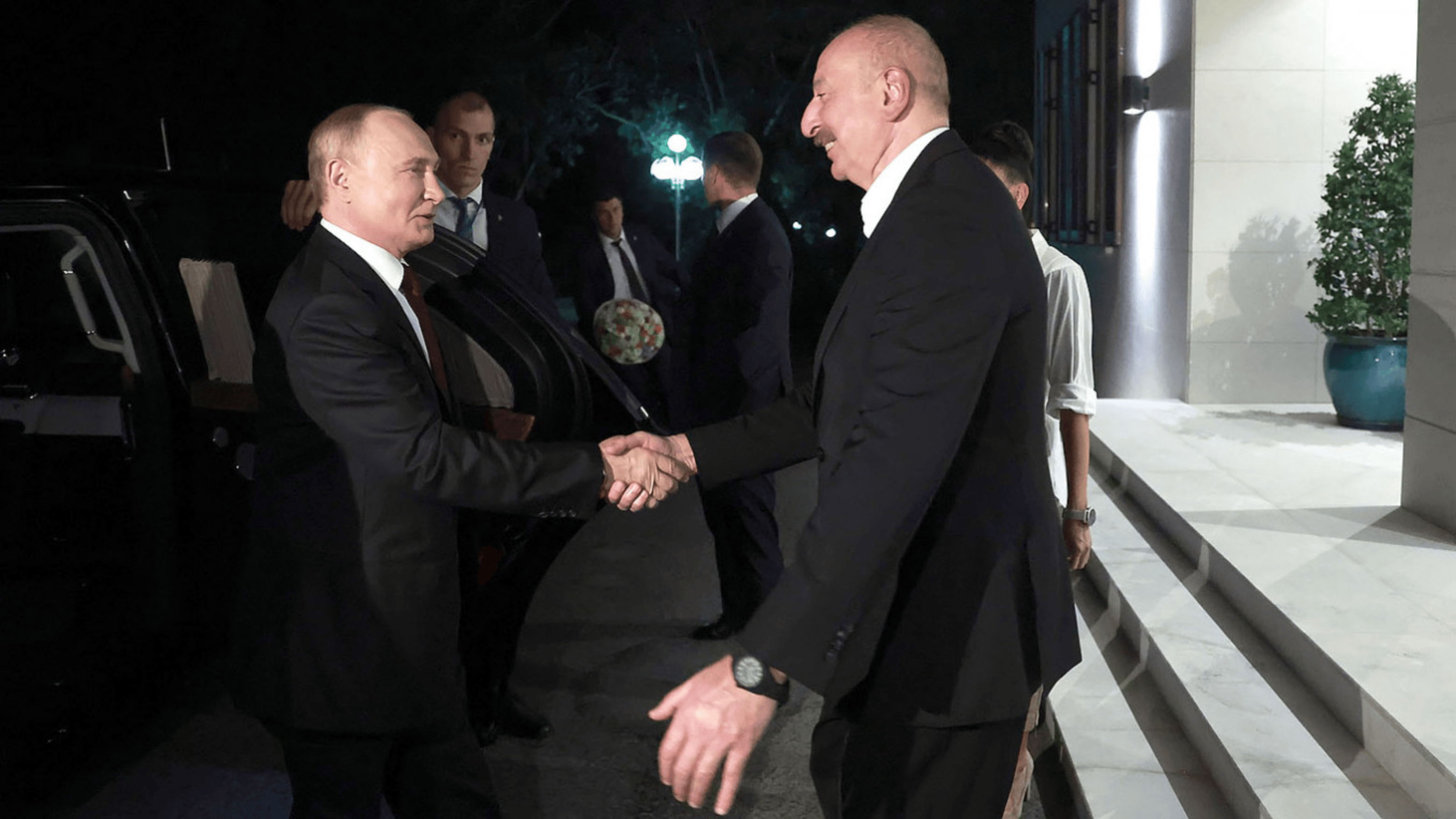
A partial easing of tensions came only in October this year. A long-awaited meeting between Ilham Aliyev and Vladimir Putin took place on the sidelines of a Commonwealth of Independent States summit in Dushanbe.
At that meeting, Putin for the first time openly acknowledged that the AZAL aircraft had been mistakenly shot down by Russian air defence forces and formally apologised to Azerbaijan. The Russian leader also promised to pay all necessary compensation and assured that the actions of officials responsible for the incident would be given a legal assessment.
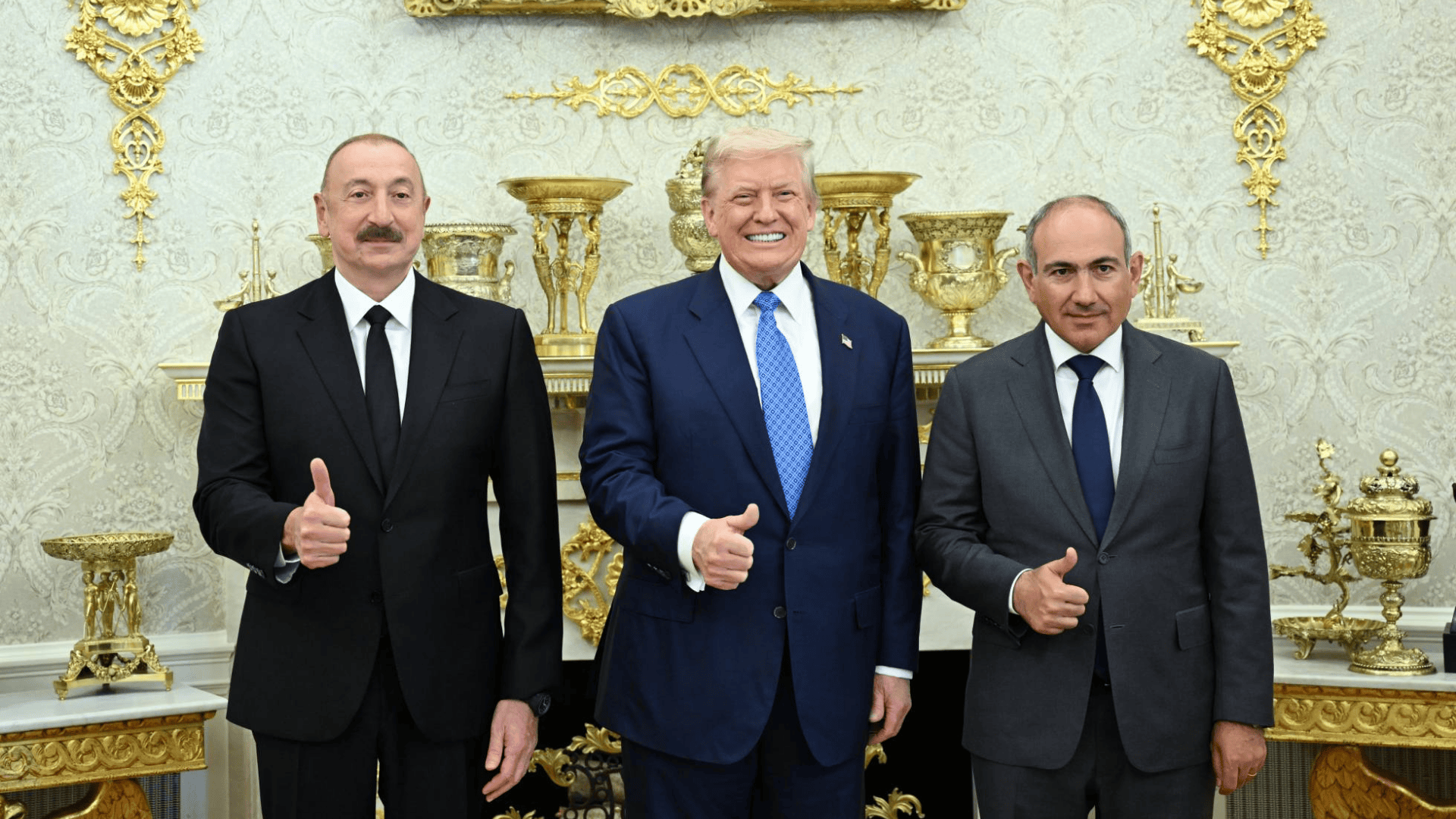
These statements largely eased tensions along the Baku–Moscow line. According to Jeyhun Bayramov, Russia’s apology and admission of responsibility “created an important foundation for restoring dialogue”.
However, two and a half months have passed since those statements, and Russia has yet to pay the promised compensation or take steps to hold those involved in the downing of the aircraft to account.
Against this backdrop, attention was drawn to another episode that took place in December this year.
President Ilham Aliyev did not attend the informal summit of Commonwealth of Independent States leaders held in Saint Petersburg. Officially, it was said that the head of state was unable to attend due to a busy work schedule, but many observers interpreted this as a subtle signal of protest by Baku towards Moscow.
Local analysts note that Aliyev’s decision not to take part in the summit was not emotional, but principled in nature.
In their view, Baku is seeking to convey to Moscow that “against the backdrop of unresolved tragedies and unfulfilled promises, it is impossible to build normal political cooperation.”