'Main obstacle to Armenia’s EU integration is frozen EU-Georgia dialogue' – Pashinyan






Pashinyan urges to resume EU-Georgia talks
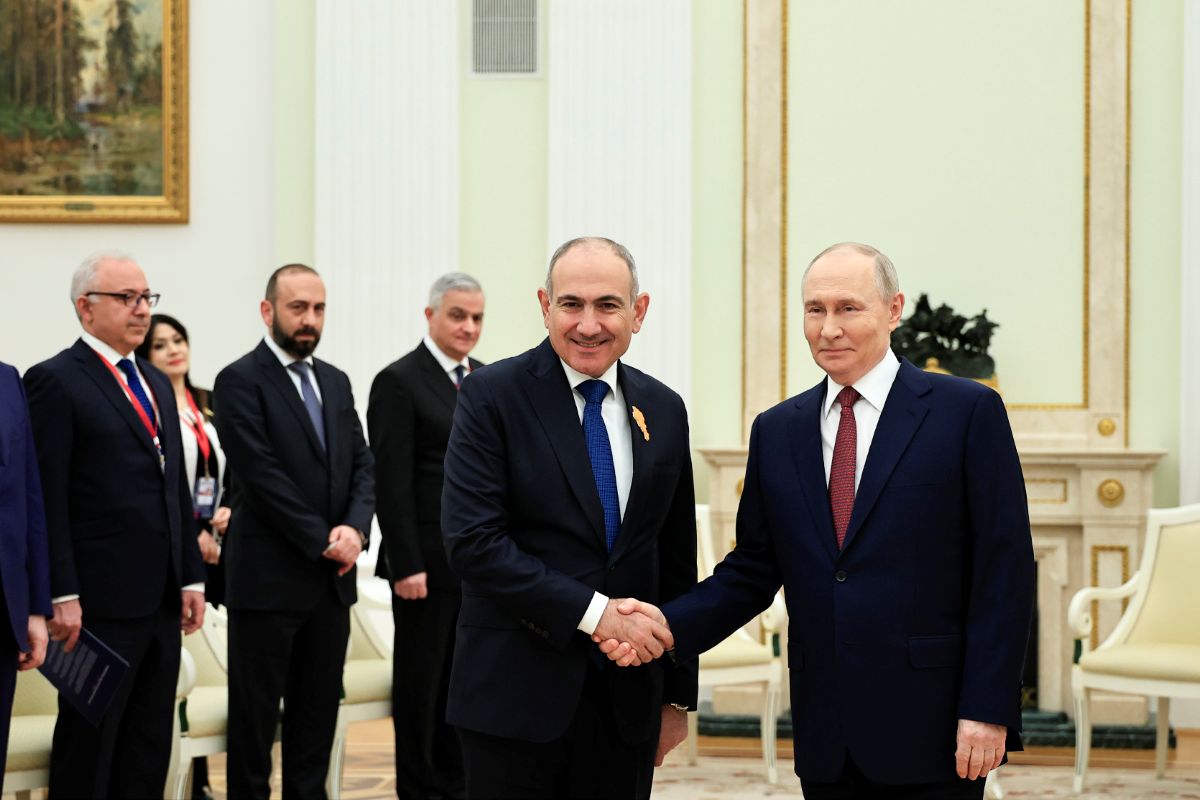
“The biggest problem on the path of Armenia’s integration into the EU at the moment is the frozen state of the political dialogue between the European Union and Georgia”, — Armenian Prime Minister Nikol Pashinyan said this while speaking at the European Parliament.
He recalled the law adopted by Armenia’s parliament to launch the process of the country’s accession to the European Union. He stressed that lawmakers passed the law after Georgia received EU candidate status:
“This made Armenia’s EU membership prospect tangible, and it is our expectation and request that the European Union-Georgia constructive process should develop. This is important for Armenia, just as important as for Georgia”.
The Armenian prime minister also addressed the possibility of Armenia joining the European Union. He said the country now faces the task of continuing reforms in order to meet membership criteria. After that, he said, the EU will decide whether to admit Armenia.
He acknowledged that EU enlargement requires a political decision. He added that Armenia would still benefit even if it did not become a member. As he explained, it would “become a country that fully meets EU standards”.
In his speech, the Armenian prime minister spoke not only about the prospect of EU membership but also about the peace process with Azerbaijan, the upcoming parliamentary elections and the domestic political situation. Members of the European Parliament gave him a standing ovation.
- ‘Let them bang their heads against the wall’: Armenia’s government reacts to proposal to join Russia’s Union State
- Events around Iran pose no threat to ‘Trump route’, Armenian parliament speaker says
- Opinion: Armenia would benefit from returning its railways to state control
‘It pains us to see what is happening in the Middle East’
In his speech at the plenary session of the European Parliament, the Armenian prime minister addressed the situation in the Middle East.
He highlighted the current scale of Armenia’s partnership with the United States. At the same time, he said Iran is “a friend and a centuries-old neighbour”. He added that Armenia recently established diplomatic relations with Saudi Arabia. He also said that the UAE, Qatar, Oman, Kuwait, Jordan, Lebanon, Bahrain and Syria remain long-standing partners of Armenia.
“We are pained by what is happening in the Middle East. Against the backdrop of such an international crisis of such magnitude, we are a small, modest state, and we can only pray for the repose of the souls of all the victims and for the wisdom of our partner leaders to find diplomatic solutions as soon as possible.“
‘Where has perfect peace ever been established? Where and when did it exist?’
Pashinyan said the situation on the Armenian-Azerbaijani border has remained calm for eight months. No casualties or injuries have been reported. He repeated his view that peace requires constant care.
“Otherwise it will collapse very quickly. Just as regions that remained stable for decades can fall into the whirlpool of war within a matter of days before our eyes.”
He said critics accuse the Armenian authorities of accepting a peace with Azerbaijan that is not perfect. In response, the prime minister addressed European lawmakers with a question:
“Please tell me, where has perfect peace been established, where and when did it exist? On the contrary, the willingness to care for peace makes it possible to improve it.”
‘Ready to provide Azerbaijan with road transit’
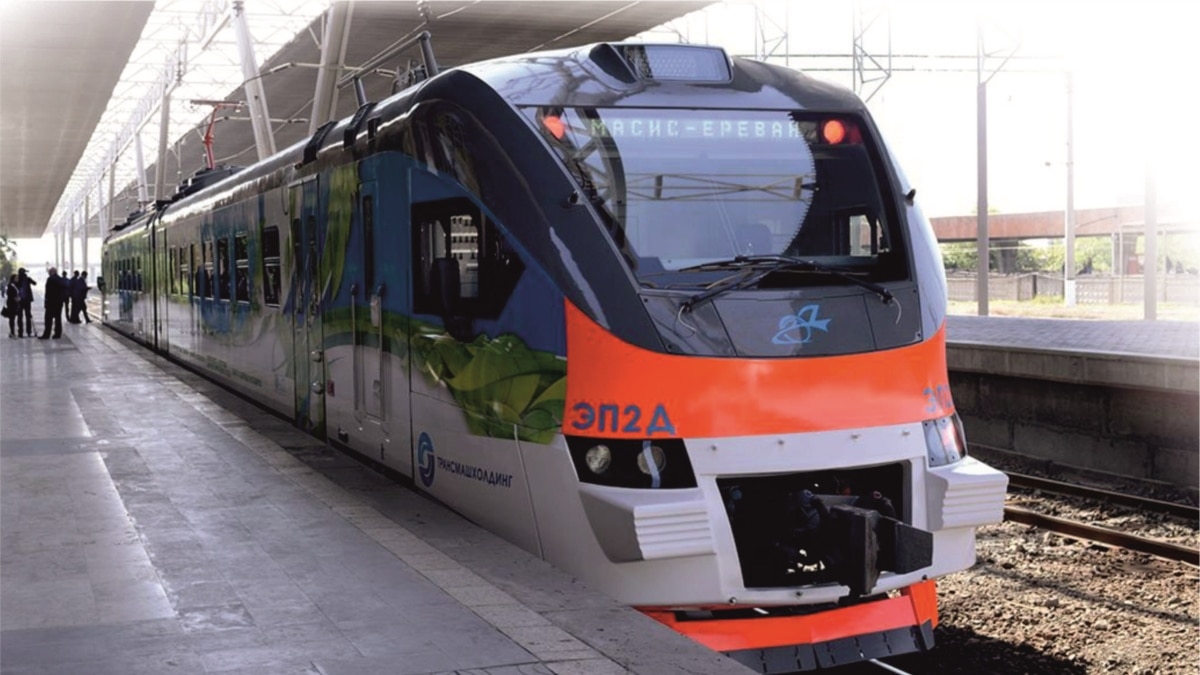
Speaking about the benefits of peace, Pashinyan recalled that Azerbaijan lifted restrictions on railway transport through its territory. In November 2025, cargo reached Armenia along this route for the first time since the conflict began.
“We plan to use the Georgia-Azerbaijan railway for exports as well. I hope Azerbaijan will also become an export destination for Armenia in the near future,” he said.
The Armenian prime minister repeated his proposal to allow transit from Azerbaijan to Turkey and back immediately. Baku and Ankara have not used this opportunity so far. Pashinyan said they may believe it could delay the implementation of the “Trump Route” project.
“Trump Route for International Peace and Prosperity” (TRIPP) is a road project that would connect Azerbaijan with its exclave of Nakhchivan through the territory of Armenia.
“Armenia has neither the intention nor any grounds to delay the implementation of the TRIPP project. The project fully serves Armenia’s short-, medium- and long-term interests and in no way undermines Armenia’s sovereignty, territorial integrity or jurisdiction,” he said.
From the European Parliament podium, Armenia’s prime minister called on Azerbaijan to provide road transit.
“Now I also want to say that the Republic of Armenia is ready to provide a road connection between the western regions of Azerbaijan and the Nakhchivan Autonomous Republic via the Kornidzor-Goris-Yeghegnadzor-Yeraskh route using the existing infrastructure.“
Returning to the issue of railway links, Nikol Pashinyan said:
“Just as Azerbaijan is waiting for the establishment of a connection through the territory of Armenia to Nakhchivan, so we are waiting for the establishment of a railway connection between the south and north of Armenia through the territory of Nakhchivan. This railway route has no alternative for Armenia, the mountainous terrain of Armenia does not allow for a railway connection between the south and north of the country in any other way. As you can see, the expectations of Armenia and Azerbaijan do not contradict each other.“
“Democracy must make peace irreversible”
Pashinyan said Armenia achieved peace thanks to its commitment to democratic values. He said he hopes the parliamentary elections scheduled for 7 June will make both democracy and peace irreversible.
“The next parliamentary elections will be held in the Republic of Armenia, and with these elections, our democracy must make peace irreversible, and then, with peace, democracy will become irreversible. We are going this way, and I say this as a legitimate representative of the people of the Republic of Armenia.“
‘Some clergy have taken leadership of the party of war’
The prime minister said Armenia stood on the brink of losing its statehood before the start of the border demarcation process with Azerbaijan on the Tavush–Gazakh section in spring 2024.
“If in April 2024 we had failed to make a decision to launch the process of demarcation with Azerbaijan, the Republic of Armenia would be a territory under foreign rcontrol at best today.”
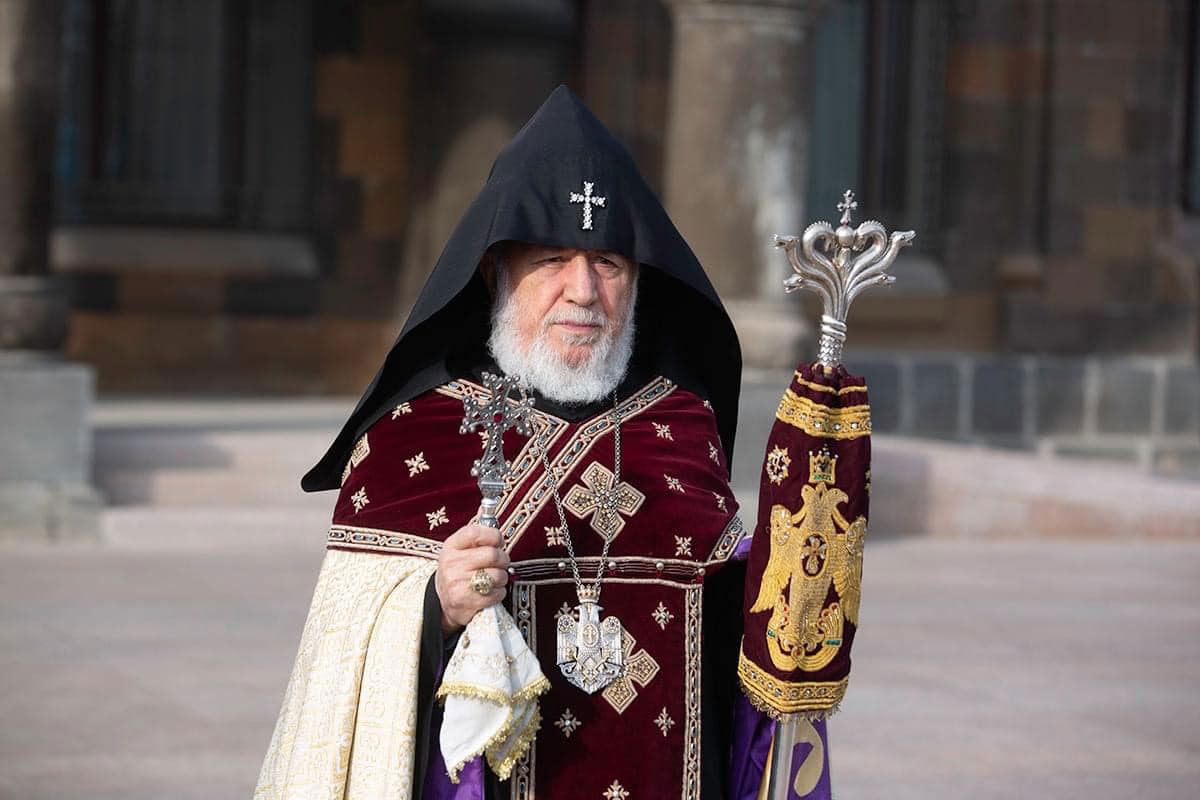
He said an archbishop supported by the Catholicos of All Armenians launched a protest movement at that time. Pashinyan referred to Archbishop Bagrat Galstanyan, who led the opposition movement “Sacred Struggle”. According to the prime minister, the movement demanded the rejection of delimitation and sought to escalate the conflict.
Pashinyan said some senior clergy and opposition forces that support them carried out a “disinformation campaign”. He said they tried to convince people that the government planned to hand over sovereign Armenian territory and ancient churches located there to Azerbaijan.
“And how did we solve the problem? We talked to our employer, the people. And now, the village of Kirants in Tavush region, which the leaders of the church-opposition movement had made their symbol, convincing people that the village would be emptied and abandoned, has had about a 50 percent increase in houses with the support of the Government after the demarcation and today is an absolutely peaceful, safe and colorful settlement. And the ancient churches are being restored or renovated.” he said.
Pashinyan said clergy involved in what he described as a “process against peace”, together with their supporters, try to spread several claims in the European Parliament and other international organisations.
He said they claim that:
- the Armenian government restricts freedom of conscience,
- the country lives under a dictatorship,
- and political prisoners exist.
“These clergy have taken leadership of the party of war. They have gathered around themselves former Armenian presidents, their allied forces, and several Russian and pro-Belarusian oligarchs. They are trying to sacrifice Armenia’s independence to serve the interests of third countries,” the prime minister said.
Speaking about the Russian oligarch, the prime minister refers to dollar billionaire Samvel Karapetyan, who remains under house arrest for calls to seize power. By the pro-Belarusian oligarch, he refers to one of Armenia’s richest businessmen, Gagik Tsarukyan. Both have announced that the political parties they lead will take part in the parliamentary elections scheduled for June.
Pashinyan said these clergy had “cynically violated all rules of spiritual morality and made themselves vulnerable to foreign intelligence services”. He also claimed that some of them had worked as agents of the Soviet KGB and that documents prove this. In this case, he referred to a document published by Armenia’s National Security Service stating that the brother of the Catholicos, Archbishop Yezras Nersisyan, had been recruited by the KGB.
‘We will not allow a new conflict, a new war, we will not allow the consciousness, peace and independence gained at the cost of thousands of victims to be sacrificed for anti-Christian purposes. In the text of our liturgy of the Armenian Apostolic Holy Church, the word peace is mentioned more than 40 times, and it is not only about the person, the soul, but also about world peace, about which there are dozens of supplications in the canonical text of our liturgy, to our Lord and Savior Jesus Christ, and today some are using the altar of Christ to preach conflict, war and/or intra-Armenian violence, trespassing the boundaries of the legislation of the Republic of Armenia‘, — prime-minister said.
‘Diplomatic efforts continue to secure the return of compatriots held in Azerbaijani prisons’
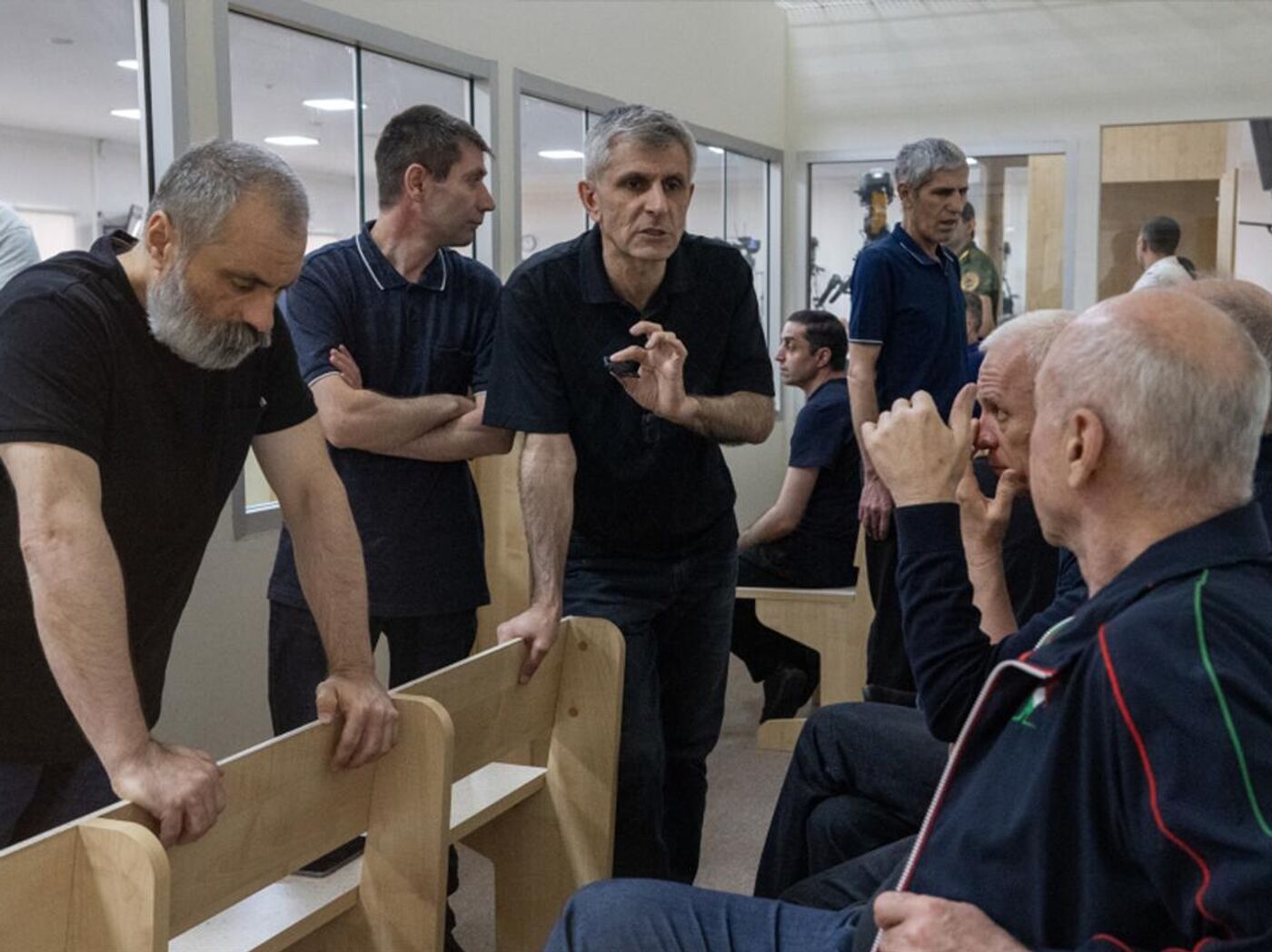
Speaking about Armenian prisoners held in Baku, Pashinyan said the Armenian authorities continue diplomatic efforts for their release “quietly”.
“Recently, Azerbaijan released four more of our compatriots. The Armenian society, we all experienced happiness on that occasion. But the Government very quickly returned to continuing its silent diplomatic work, for the sake of the return of others”
He said that if the authorities had not pursued this diplomatic approach — without publicising negotiations — the four Armenian prisoners would not have returned home.
“One of our important tasks is also to ensure that the emotions of our Karabakh sisters and brothers who have become refugees are not exploited, giving them false hopes.”
According to Nikol Pashinyan, the government follows the following strategy:
“Our strategy in this regard is very clear: our Karabakh sisters and brothers must receive Armenian citizenship and be permanently settled in the Republic of Armenia. We have already launched their resettlement program, which has benefited 4,886 families so far. We need the greatest possible support from our international partners to solve this problem aimed at strengthening peace.”
The prime minister said it is also important that no one plays with the emotions of these “people who became refugees by giving them false hope”. Pashinyan appeared to refer to narratives about their return to their homeland, which the opposition has voiced recently.