Pashinyan-Putin meeting in Moscow: Working visit to tackle pressing issues






Pashinyan-Putin meeting in Moscow
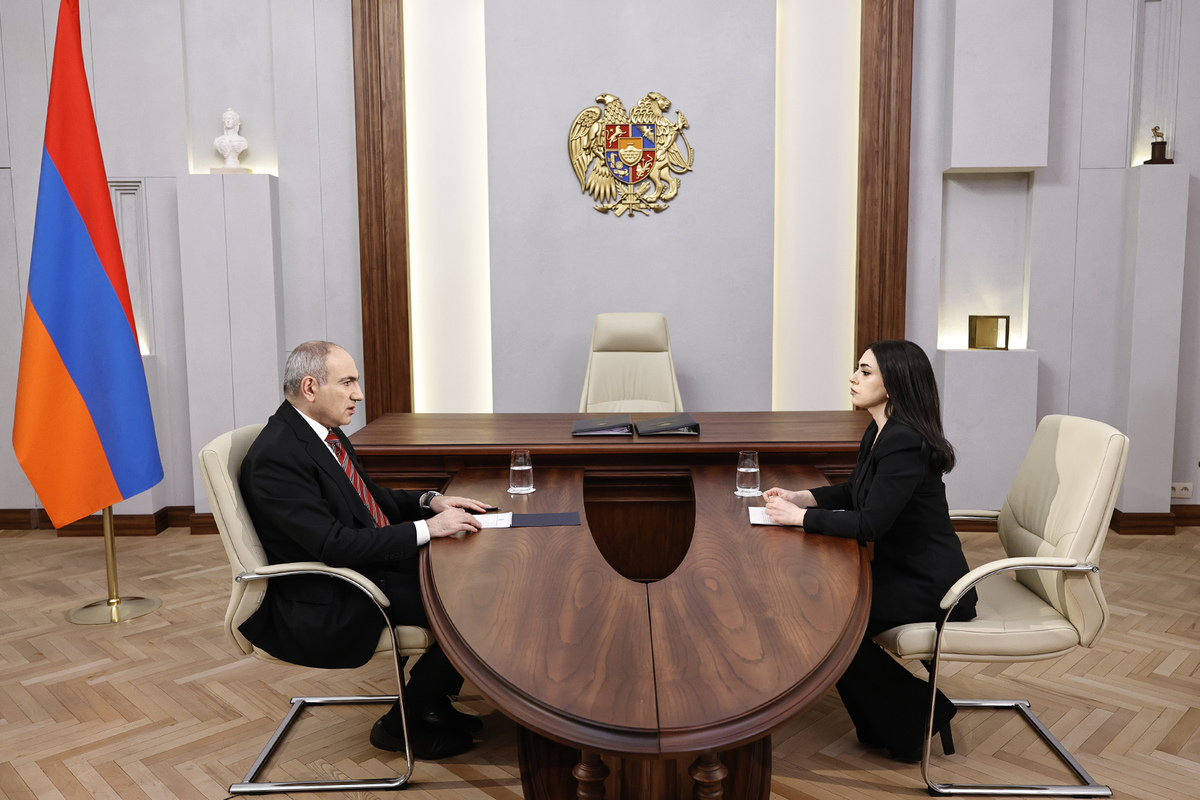
Prime Minister of Armenia Nikol Pashinyan, who is in Moscow on a working visit, was received by Russian President Vladimir Putin. Earlier in the day, reports from Moscow suggested the two leaders were expected to hold a “working breakfast”, however Pashinyan’s flight departed significantly later than planned. The talks instead began in the evening.
Expanded-format negotiations were also held at the Kremlin. The Armenian prime minister travelled to Moscow accompanied by Deputy Prime Minister Mher Grigoryan, Foreign Minister Ararat Mirzoyan and his deputies.
Judging by the participation of the heads of Rosatom and Russian Railways on the Russian side, it can be assumed that the meeting addressed issues Yerevan currently considers most pressing.
In particular, the Armenian side raised plans to replace the existing nuclear power plant with modular stations. In Russia, this is likely to be interpreted as Armenia’s intention to diversify its energy system and potentially move away from cooperation with Rosatom in favour of Western partners, particularly the United States.
Additionally, Pashinyan discussed the possibility of transferring the concession for Armenia’s railways from Russia to a country considered friendly to both Yerevan and Moscow. The prime minister recently stated that Armenia is losing its competitive advantage in developing regional railway links because its railway network is managed by a Russian company. A day before Pashinyan’s visit, Moscow signalled it had no intention of relinquishing the concession.
Since 2008, Armenia’s railways have been operated under concession by the South Caucasus Railway, a wholly owned subsidiary of Russian Railways. Armenian experts note that during this period freight turnover has halved, some routes have ceased operating, and mandatory investment commitments have largely remained unfulfilled.
There is no information yet on the outcome of the closed-door part of the talks. However, it appears that all these issues were discussed by the delegations with the participation of the Armenian and Russian leaders.
- ‘Armenia’s security guarantor led us to slaughter’ — Nikol Pashinyan
- ‘Let them bang their heads against the wall’: Armenia’s government reacts to proposal to join Russia’s Union State
- Opinion: Armenia would benefit from returning its railways to state control
Putin: ‘Russia and Armenia share special relations‘
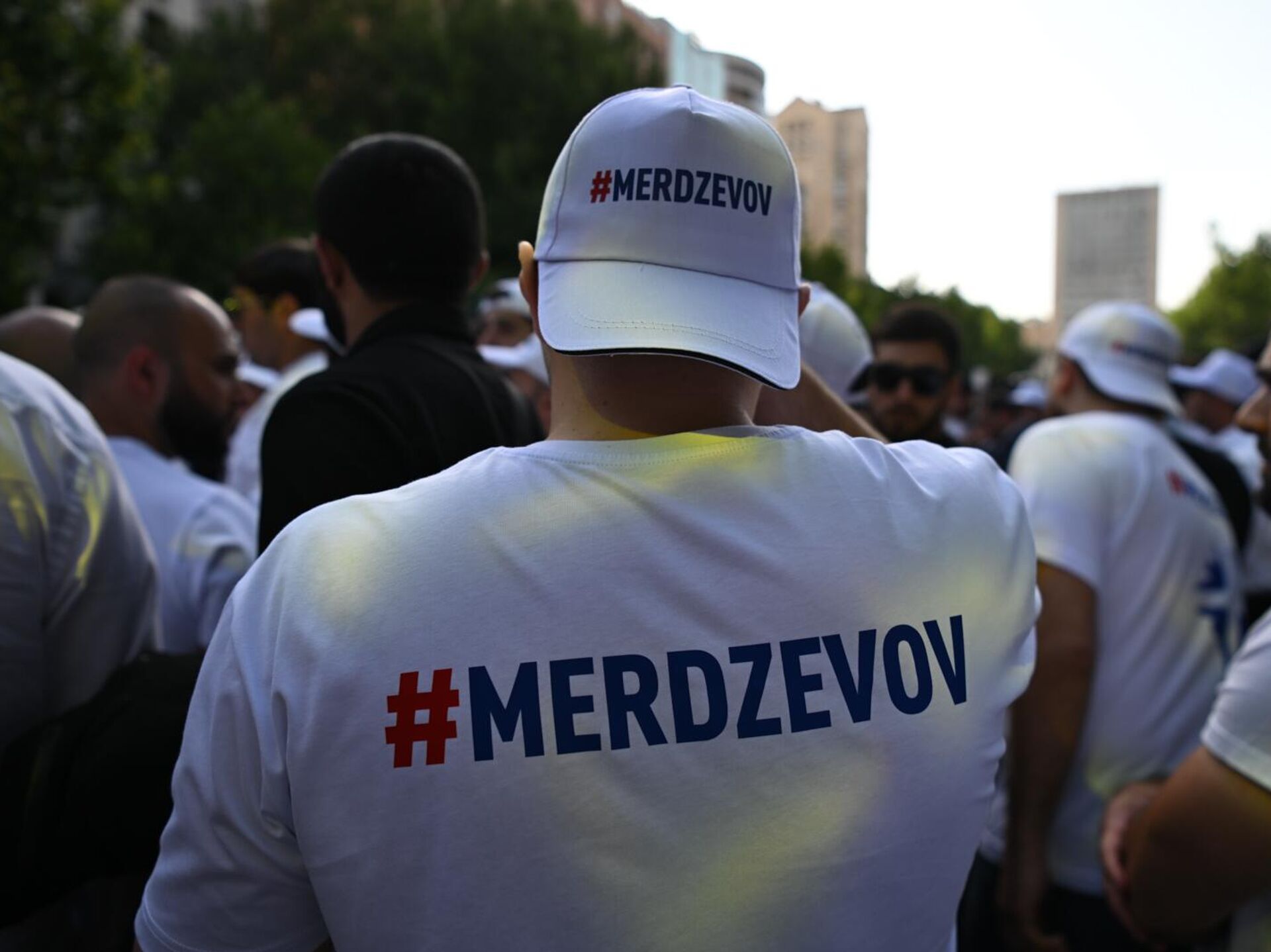
During the part of the meeting open to the press, Vladimir Putin said that regardless of the outcome of Armenia’s parliamentary elections scheduled for June, “the course towards building and strengthening Russian-Armenian relations will continue.” He also expressed hope that Russia’s “friends” — pro-Russian political forces — would be able to take part in the vote. He was likely referring to the party linked to Russian businessman Samvel Karapetyan, who is currently under house arrest on charges of calling for the seizure of power, as well as a bloc led by former president Robert Kocharyan.
Putin also addressed disagreements between the two countries over cooperation within the Russian-led military alliance Collective Security Treaty Organization. He framed the Armenian authorities’ dissatisfaction with the bloc largely in the context of the Karabakh issue, stating that Russia could not intervene in a conflict over territory internationally recognised as part of Azerbaijan. This comes despite Armenia requesting allied assistance in 2021–2022 to defend its own sovereign territory.
The Russian president also said Moscow remains calm about Yerevan’s efforts to deepen ties with the European Union:
“We understand that any country seeks to maximise benefits from cooperation with third countries. But it must be clear and agreed in advance, so to speak, from the outset: membership in a customs union with the European Union and with the Eurasian Economic Union is simply impossible. It is impossible by definition. And this is not even a political issue — it is purely economic.”
Pashinyan: “Relations are developing dynamically”
Armenian Prime Minister Nikol Pashinyan began by emphasising the dynamic development of relations with Russia. He noted that in the new realities, with peace established between Armenia and Azerbaijan, cooperation with Russia has become more productive. Pashinyan recalled that, for the first time since independence, Armenia now has a railway connection with Russia and can import Russian goods via Azerbaijani territory. He also expressed hope that exports along the same route would soon become possible.
On EU membership, the Armenian prime minister said:
“Of course, we understand that, in principle, membership in two unions is impossible. [He was referring to the Russian-led Eurasian Economic Union and the European Union.] But what we are doing now, and the agenda we have, are compatible. That is a fact. And as long as it is possible to combine these agendas, we will do so. When these processes reach a point where a decision must be made, we — meaning the citizens of Armenia — will make that decision. Of course, in this context, our relations with Russia have never been and will never be in question.”
On energy cooperation, Pashinyan said active negotiations are ongoing both with Russia and with Western partners. He openly stated that Armenia is seeking the most beneficial options for the future development of its energy system.
Referring to the role of the US president in facilitating peace with Azerbaijan, Pashinyan also highlighted the Russian president’s interest in the process. At the same time, he stressed:
“What happened in Washington opens up new opportunities for our relations with Russia. That is a fact. The fact that there is now railway communication with Russia — we worked on this issue for decades, but unfortunately could not reach such a solution.”
Addressing the Karabakh issue, the Armenian prime minister reiterated that he considers the matter closed and sees this as a solid basis for establishing peace in the region.
Responding to comments by Vladimir Putin on the Collective Security Treaty Organization, Pashinyan said:
“We cannot explain to our people why the CSTO did not respond [to Armenia’s request for military assistance], contrary to the obligations set out in the Collective Security Treaty.”
He also addressed Putin’s remarks about pro-Russian forces participating in elections:
“Armenia is a democratic country, and we always have political processes. We even have citizens who believe Armenia is too democratic. But this is a matter of principle for us. Parliamentary elections are ahead, and these elections are, in fact, de facto elections of the prime minister.
And I would like to draw your attention to the fact that only citizens holding exclusively Armenian passports can take part in these elections. With all due respect, individuals holding Russian passports, according to Armenia’s Constitution, cannot be candidates for parliament or for prime minister.”
He was referring to Russian businessman Samvel Karapetyan, who, as a citizen of Russia and Cyprus, is seeking the premiership.
Pashinyan concluded by saying that dialogue with Russia will continue and that opportunities for cooperation which have not yet been utilised will be explored.