Top stories in Azerbaijan, Armenia, and Georgia from 15-19 December, 2025
 Live
Live




-
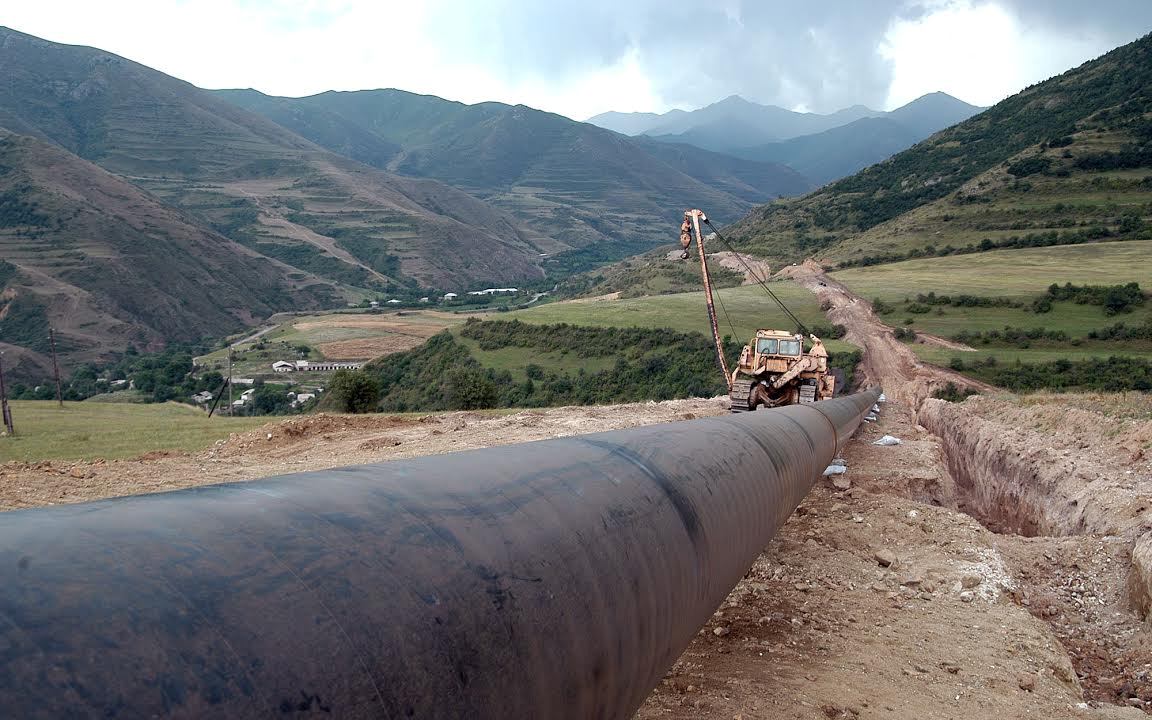
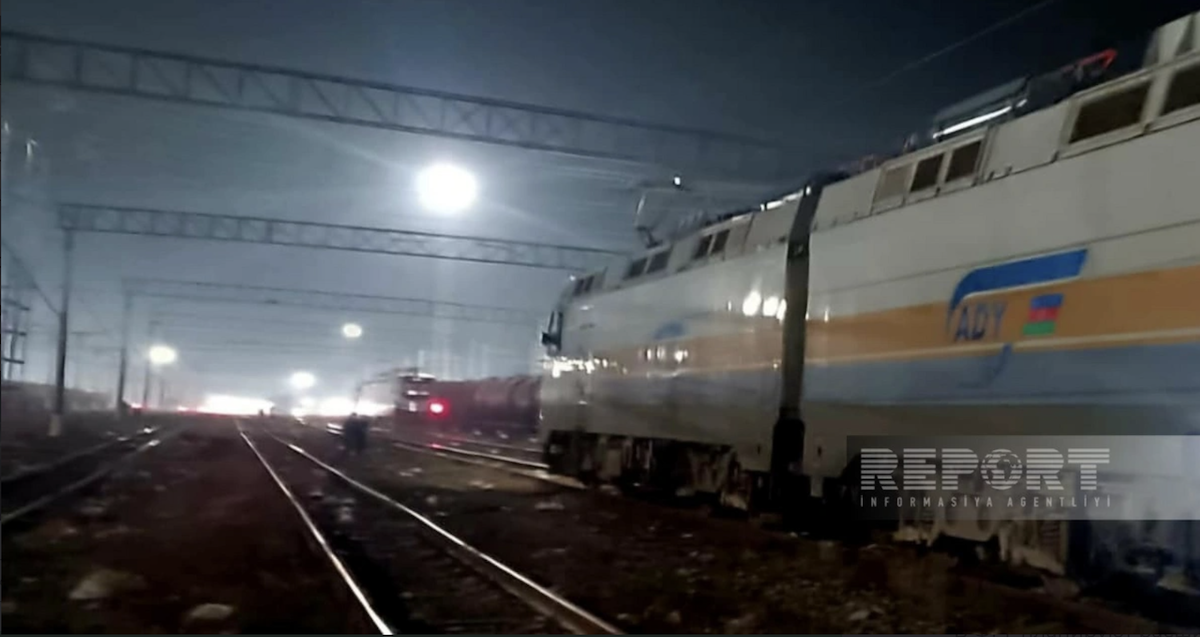
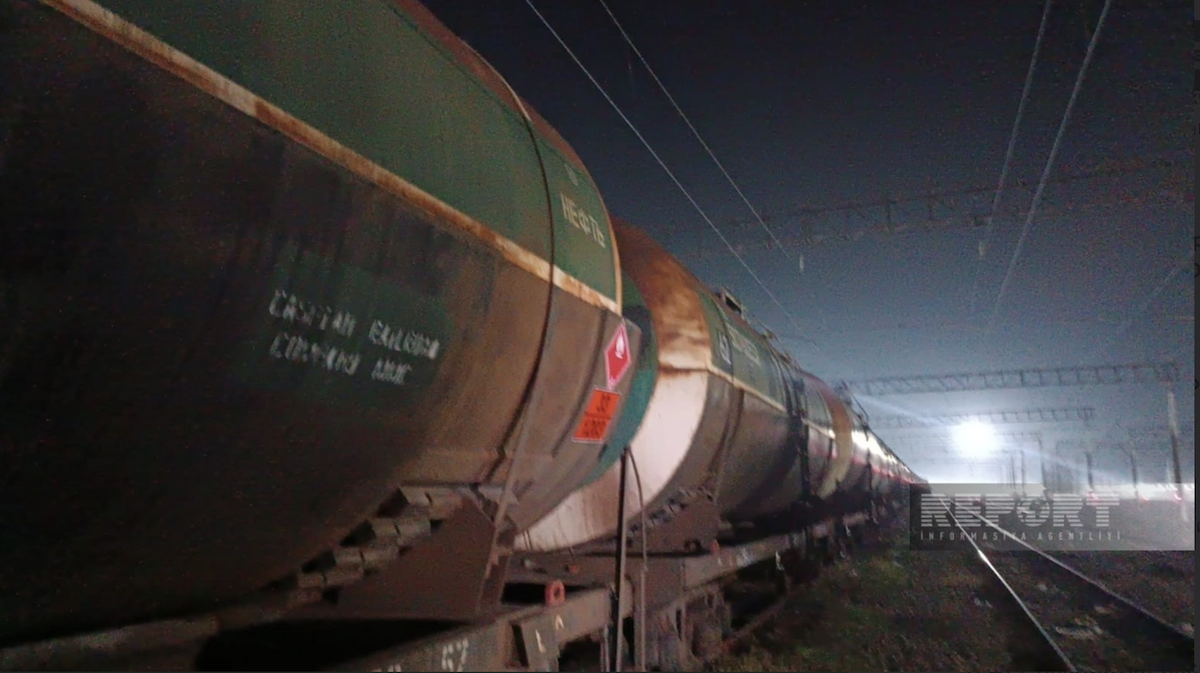
Friday, December 19, Azerbaijan. A train carrying petroleum products has departed from Azerbaijan to Armenia—the first since decades of conflict
-
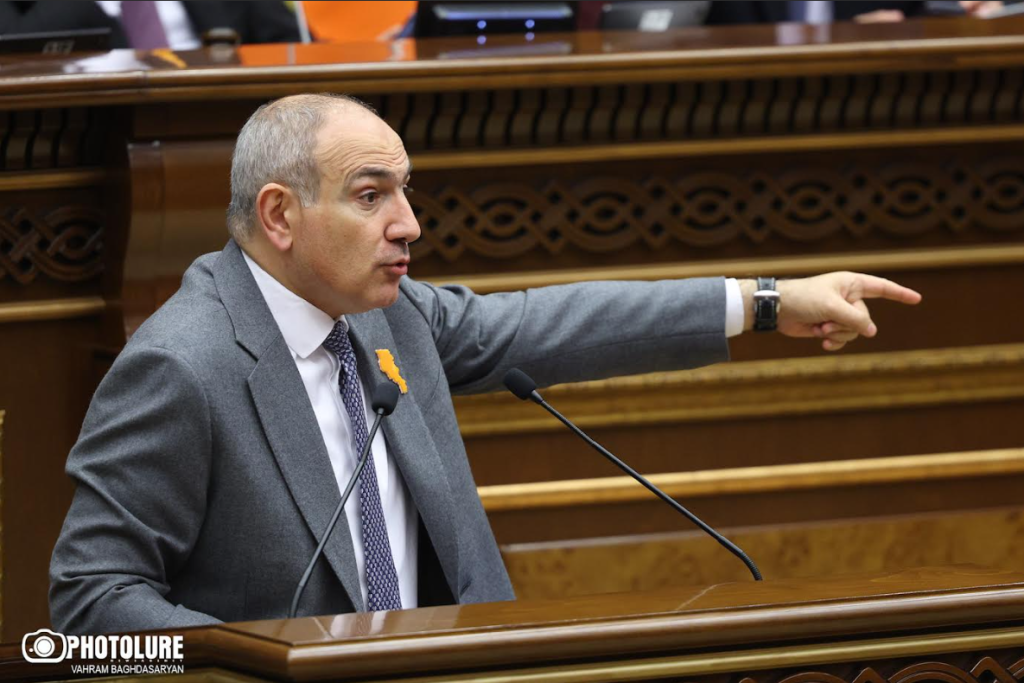
Friday, December 19, Armenia. Ten bishops and Nikol Pashinyan are opposing the Catholicos, as supporters of both sides hold protests
-
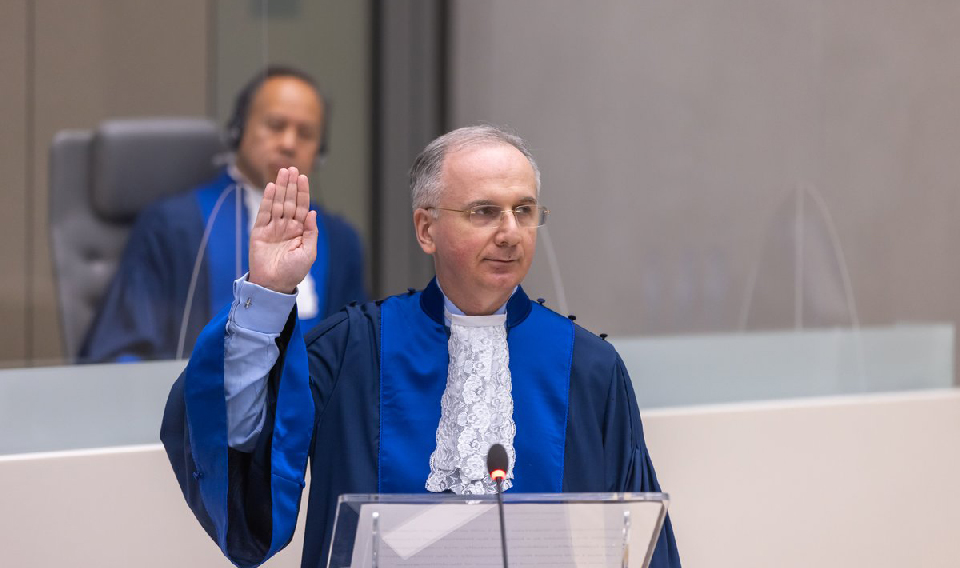
Friday, December 19, Georgia. The United States imposed sanctions on two judges of the International Criminal Court, one of whom is former Georgian justice minister
-
Thursday, December 18, Armenia. Ten bishops demanding the Catholicos’s resignation will hold a protest today in Etchmiadzin
-
Thursday, December 18, Georgia. “The actions of the Georgian authorities do not meet the EU’s expectations of an EU candidate country”
-
Thursday, December 18, Azerbaijan. Dairy producers will be granted subsidies
-
Wednesday, December 17, Azerbaijan. Iran has opposed the TRIPP transit route
-
Wednesday, December 17, Armenia. Ruling party MP: "Armenia has no plans to join NATO, but is interested in cooperation with the Alliance"
-
Wednesday, December 17, Georgia. Kaja Kallas: “If Georgia’s leaders continue to take actions that run counter to EU values, then Georgia has no future in the EU"
-
Tuesday, December 16, Armenia. The EU will help Armenia combat disinformation from Russia
-
Tuesday, December 16, Georgia. Archimandrite Dorote Kurashvili, who openly supports mass pro-European protests, has had his right to perform priestly duties suspended
-
Tuesday, December 16, Azerbaijan. Russia’s foreign minister accused the West of “seeking to break up the Caspian ‘five’ in order to dictate its decisions in the region"
-
Monday, December 15, Azerbaijan. A trial has begun against 12 journalists in the 'Meydan TV case'
-
Monday, December 15, Armenia. Nikol Pashinyan is explaining his campaign against the current church leaders and the reasons for it
-
Monday, December 15, Грузия. Mass participation in the global demonstration in support of Ukraine: “Stop the Safari on People / Save Kherson”
-
Top stories in Azerbaijan, Armenia, and Georgia from 8-12 December, 2025

-
Friday, December 19, Azerbaijan. A train carrying petroleum products has departed from Azerbaijan to Armenia—the first since decades of conflict
● A freight train carrying petroleum products for Armenia departed early this morning, Friday, from the Boyuk-Kyasik station in Azerbaijan’s Aghstafa district. The shipment consists of 22 railcars carrying 1,220 tons of AI-95 gasoline. The cargo will be delivered to Armenia via Georgia. The agreement was reached on November 28 at a meeting between Azerbaijani Deputy Prime Minister Shahin Mustafayev and Armenian Deputy Prime Minister Mher Grigoryan in the Azerbaijani city of Gabala.
This is an extraordinary development for the region: any deliveries — especially fuel — between Azerbaijan and Armenia had been blocked for more than 30 years due to the conflict. The shipments began after President Ilham Aliyev decided in October to lift restrictions on cargo transit to Armenia. The first train previously delivered Kazakh wheat from Baku to Yerevan. At present, the only viable transit route runs through Georgia. Georgian authorities said the first transit of petroleum products would be carried out free of charge as a gesture of support for the peace process between the two countries.
Here is a comment on the issue from Baku.
Here is a comment from Yerevan.
● The European Parliament has called on Baku to release all political prisoners. In a resolution adopted on December 18, it noted that since the beginning of 2025 the number of political prisoners in Azerbaijan has approached 400. These include civil society activists, opposition leaders, journalists, academics, and human rights defenders arrested on political grounds.
The resolution is linked to the sentencing of young scholars Bahruz Samadov to 15 years and Igbal Abilov to 18 years in prison on charges of treason, which the European Parliament considers unlawful. It says their trials were held behind closed doors, violated international fair trial standards and the presumption of innocence, and that the only evidence against them was contact with Armenian colleagues. The document also notes that these arrests were preceded by unfair and unlawful sentences against two other scholars, Gubad Ibadoglu and Fazil Gasimov. None of them pleaded guilty.
The document further states that opposition Azerbaijan Popular Front Party chairman Ali Karimli was arrested on December 1 this year on charges of attempting a coup. The European Parliament strongly condemned his arrest and called for his immediate release.
● Prosecutors in Baku have demanded a life sentence for Ruben Vardanyan, the former “prime minister” of the now-defunct unrecognized “Nagorno-Karabakh Republic.” He is accused of crimes against peace and humanity, war crimes, terrorism, and financing terrorism. According to prosecutors, the charges against Vardanyan cover more than 40 episodes and are laid out in 422 volumes of case materials. The judicial investigation has concluded, and the next court hearing is scheduled for December 26.
-
Friday, December 19, Armenia. Ten bishops and Nikol Pashinyan are opposing the Catholicos, as supporters of both sides hold protests
● A large protest took place in Etchmiadzin. Ten bishops who support the prime minister’s campaign against the church leadership went there demanding the resignation of the Catholicos, joined by their supporters. At the same time, supporters of the Catholicos also arrived in the city. The bishops initially remained for a long time inside a restricted area of the St. Gayane Church, then came out and proceeded toward the cathedral, followed by special police units. Supporters of the Catholicos greeted them with chants of “Judas!” The bishops read out a statement and submitted a letter demanding the Catholicos’s resignation to the secretariat. “Our mission at this stage is complete. Next time, we will be here with you to pray from the Cathedral for the strengthening and enlightenment of our people, nation, and clergy,” the bishops said.
Several church representatives in Armenia are under arrest for political calls against the state. Prime Minister Nikol Pashinyan says the Catholicos violated the vow of celibacy and must step down. Local media have been actively reporting on alleged Russian support for church leaders. Here is more on the events in Etchmiadzin.
● No detentions were reported during the protest, but five people were removed from the cathedral grounds for “inappropriate and provocative behavior,” Interior Ministry spokesperson Narek Sargsyan said. During the rally, one clergyman fell ill and was later reported to require heart stenting surgery. A journalist also felt unwell and fainted during a live broadcast.
● “Today, by joining forces, we managed to prevent the authorities from storming the cathedral,” opposition MP Levon Kocharyan (widely regarded as pro-Russian) wrote on Facebook. “I am grateful to everyone who, aware of possible provocations and violence by the police, showed resolve and did not allow our holy church to be desecrated,” he wrote.
● The first meeting of the Armenian–US working group on implementing agreements reached at the Armenia–Azerbaijan leaders’ summit in Washington on August 8, attended by Donald Trump, has taken place. Armenia’s deputy foreign minister emphasized strong US support for the peace process in the South Caucasus and confirmed Armenia’s interest in actively implementing the Armenian–US memoranda of understanding on cooperation in the “Crossroads of Peace” transit project, innovation in artificial intelligence and semiconductors, and energy security.
● Armenia’s national security secretary met in London with the head of the UK’s foreign intelligence service.
● One train carrying petroleum products has departed from Azerbaijan to Armenia, though the exact volumes remain unclear, Prime Minister Nikol Pashinyan said.
● NATO Deputy Secretary General Radmila Shekerinska met with Armenia’s foreign minister and the speaker of parliament in Yerevan.
● A protest organized by relatives of people missing as a result of hostilities between Azerbaijan and Armenia took place outside the government building in Yerevan. Participants held signs reading “Bring our brothers home” and “We demand search operations.”
-
Friday, December 19, Georgia. The United States imposed sanctions on two judges of the International Criminal Court, one of whom is former Georgian justice minister
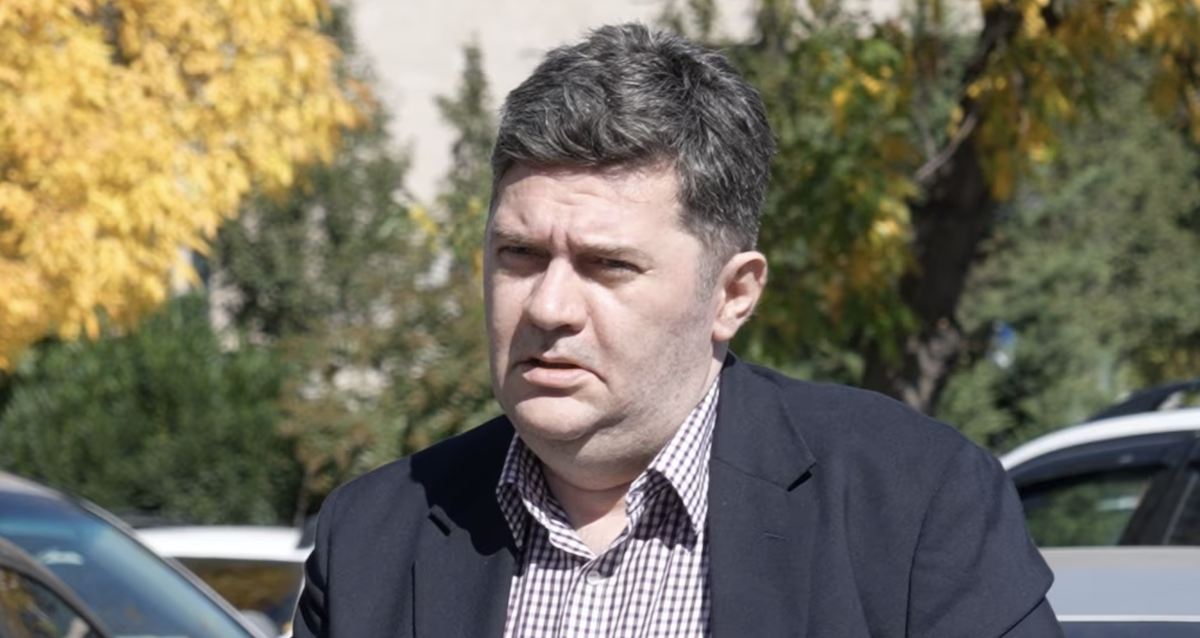
● On December 18, the United States imposed sanctions on two judges of the International Criminal Court, one of whom is former Georgian justice minister Gocha Lortkipanidze (pictured below). This is another step in the Trump administration’s campaign against those involved in investigating Israel’s actions in the war between Israel and Hamas. US Secretary of State Marco Rubio said the sanctions were imposed on Georgian citizen Gocha Lortkipanidze and Mongolian citizen Erdenebelsuren Damdin because they “were directly involved in ICC efforts, without Israel’s consent, to investigate, detain, or prosecute Israeli citizens, including in support of the majority decision of December 15 rejecting Israel’s appeal.”
● Speaking about today’s launch of a shipment of petroleum products from Azerbaijan to Armenia—the first in decades amid the conflict between the two countries—Armenian Prime Minister Nikol Pashinyan said there remain unresolved issues related to transit tariffs charged by Georgian Railways. At present, the only possible transit route between the two countries runs through Georgia. Pashinyan said the issue would be resolved, but if not, “businesses will find another route.”
● Kaja Kallas, the European Union’s High Representative for Foreign Affairs and Security Policy, said: “We support the Georgian people, but we do not support the Georgian government. It is leading the country in the wrong direction; this is not the path to European integration. Our firm message to the Georgian people is that we are on their side, but as long as their government takes the wrong steps, we will not support Georgia’s candidacy for EU membership.”
● On December 18, the UK government imposed sanctions on major Russian oil companies, including Russneft and Tatneft. The new sanctions package targets 24 individuals and entities linked to Russia. In October, Reuters reported that Russia’s Russneft delivered its first shipment of oil to a newly built Georgian oil refinery in Kulevi on the Black Sea coast. According to LSEG and a trader, the tanker Kaiser transported 105,340 tonnes of light Siberian crude from Russia’s Black Sea port of Novorossiysk to the Kulevi oil terminal on October 6. Georgia’s Finance Ministry later confirmed that the Panama-flagged tanker Kaiser entered Kulevi port in early October carrying up to 100,000 tonnes of oil destined for a Russian company.
● Several professors from Western universities have written to Georgian Dream Prime Minister Irakli Kobakhidze, urging him to reconsider education reform. The letter says the reform would increase state control over the higher education system while failing to address the sector’s many existing problems. More here.
● Georgian Dream–backed President Mikheil Kavelashvili is on a visit to Belgrade, where he met with Serbian President Aleksandar Vučić. Reports say the sides discussed deepening cooperation in various fields.
● Alan Gagloev, the “president” of the Tskhinvali region (the self-proclaimed “Republic of South Ossetia”), visited Russian-occupied territory in Ukraine and met with Russian military personnel. He reportedly delivered humanitarian aid, listened to soldiers’ concerns, and expressed readiness to “respond promptly to all requests.”
-
Thursday, December 18, Armenia. Ten bishops demanding the Catholicos’s resignation will hold a protest today in Etchmiadzin
● Ten bishops demanding the resignation of Karekin II said that today at 5:00 p.m. they will go to the Mother See of Holy Etchmiadzin to continue calling for the Catholicos of All Armenians to step down. In response, Ishkhan Saghatelyan, an MP from the opposition Armenia faction (widely regarded as pro-Russian), said they would also be there, but in support of the Patriarch.
Several church representatives in Armenia are under arrest for political calls against the state. Prime Minister Nikol Pashinyan says the Catholicos violated the vow of celibacy and must leave his post. Local media are actively reporting on alleged Russian support for church leaders. Here is an overview of the latest developments in this confrontation and its causes.
● “The regime plans to attack the Mother See of Holy Etchmiadzin tomorrow,” political analyst Stepan Danielyan wrote on Facebook regarding the planned action. He called the bishops demanding the Catholicos’s resignation separatists. “We’ll see how many believers, not counting believing police officers and National Security Service staff, will take part in this gathering,” Danielyan wrote.
● NATO Deputy Secretary General Radmila Shekerinska is arriving in Armenia today, according to NATO’s official website. Meetings are scheduled with the prime minister, the speaker of the National Assembly, and the ministers of foreign affairs and defense. Shekerinska will also meet with Armenian civil society representatives and NATO ambassadors.
● The Anti-Corruption Court has extended the detention of Gyumri Mayor Vardan Ghukasyan by another three months. He is accused of taking a bribe. The court rejected a request for his release submitted by MPs from the opposition Armenia faction.
● Representatives of the Armenian and French defense ministries have signed a cooperation program for 2026. The next strategic defense consultations will be held in Yerevan.
● The 24th meeting of the Armenian–Russian intergovernmental commission on economic cooperation was held in Yerevan, co-chaired by Armenian Vice Prime Minister Mher Grigoryan and Russian Deputy Prime Minister Alexei Overchuk. Agreements were reportedly reached on cooperation in energy, industry, transport, agriculture, digitalization, healthcare, science, and education.
● Yerevan City Hall and Yandex Armenia have signed a memorandum of understanding and cooperation under the project “Data Exchange for Improving the Urban Environment.” Yandex Armenia will provide the municipality with analytical data that could help introduce centralized management of the capital’s transport system.
● Starting January 1, 2027, the use of single-use plastic products will be reduced. Plastic bags will be banned except for those used in packaging and garbage bags, which must be made from recycled materials. Alternatives include reusable paper or cloth bags, paper and wooden cutlery, and paper or foil containers.
● Parliament has passed a law on universal health insurance.
● Armenia is preparing to transition to a single emergency number, 112, which will replace the current numbers 102, 911, and 101. The Interior Ministry explained that people currently have to choose which number to call depending on the type of emergency, and that problems have been identified with coordination between agencies and fragmented information, making a more accessible and effective response system necessary.
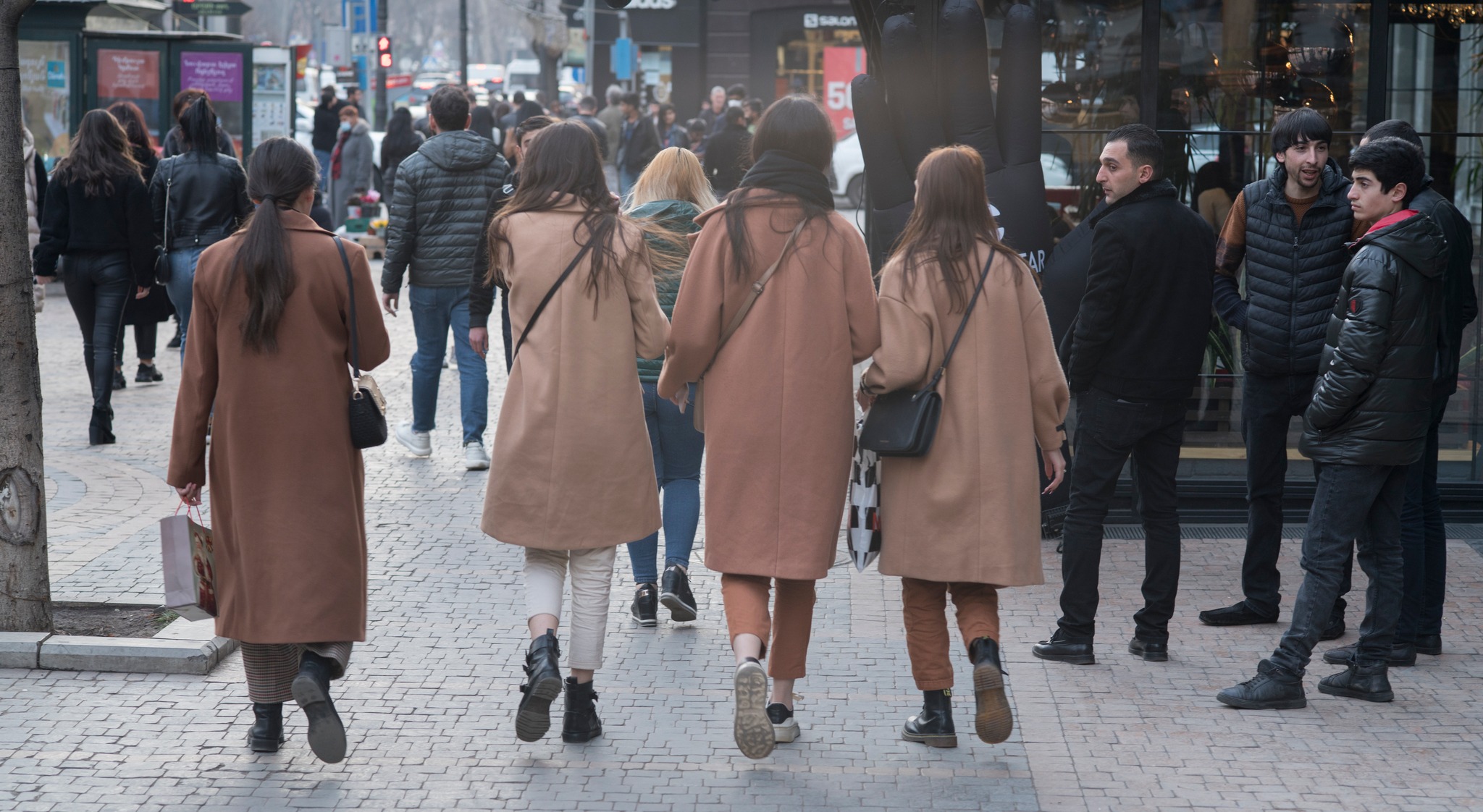
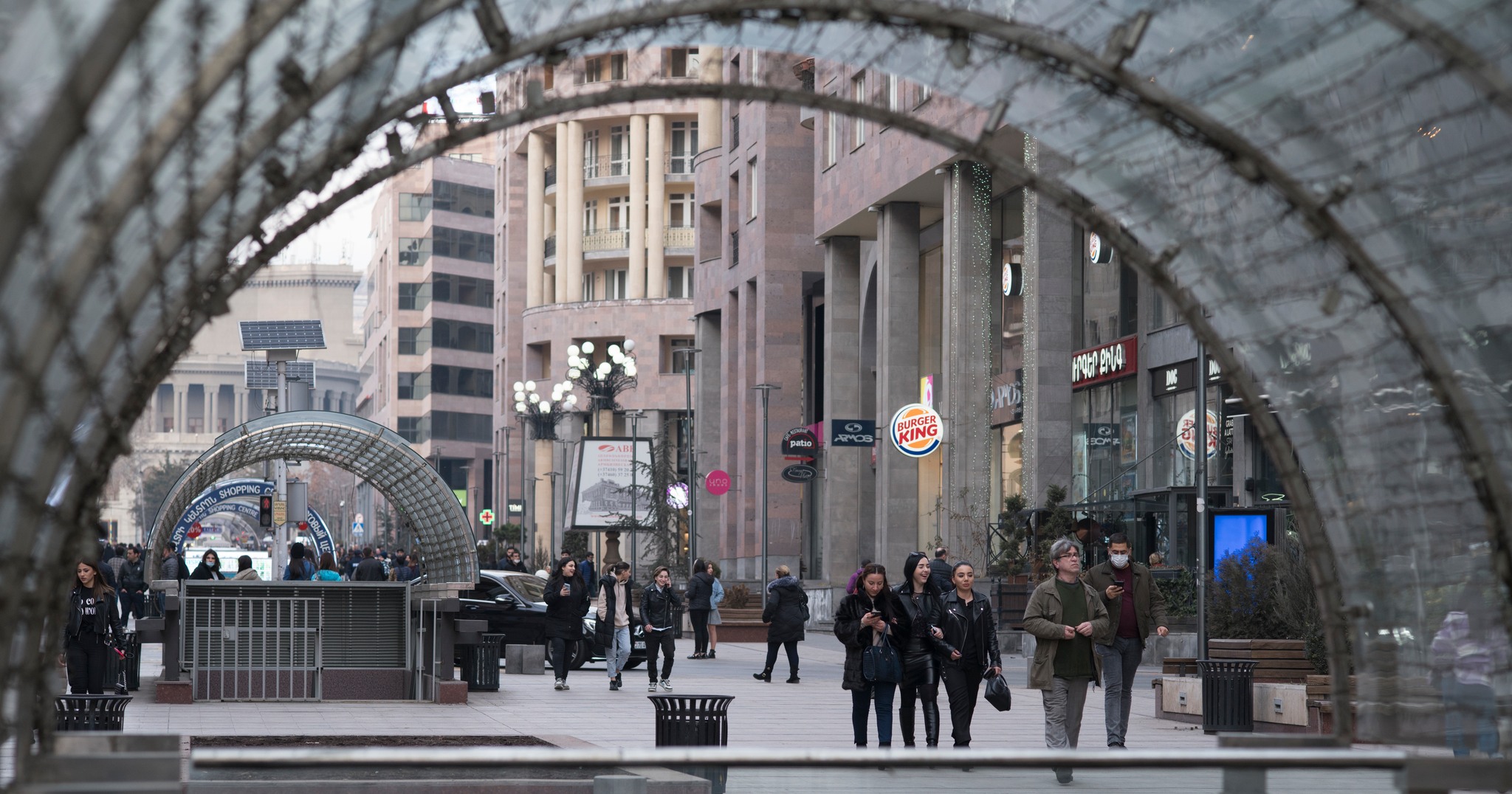
-
Thursday, December 18, Georgia. “The actions of the Georgian authorities do not meet the EU’s expectations of an EU candidate country”
● “The actions of the Georgian authorities do not meet the EU’s expectations of an EU candidate country,” the EU Council presidency said in its conclusions on enlargement. The document was supported by 26 of the 27 EU member states, with Hungary opposing it. The Council of the European Union called on the authorities to release all arbitrarily detained politicians, journalists, and activists, repeal repressive laws, and stop using aggressive rhetoric toward the EU. Read more here
● Prime Minister Irakli Kobakhidze of the ruling Georgian Dream party mocked the document. He said the EU had “decided to take responsibility for criminal actions” by the Georgian opposition and activists, adding that he personally “would not take responsibility for actions directed against Georgia’s statehood.” Read more here
● Council of Europe Commissioner for Human Rights Michael O’Flaherty sent a letter to Georgia’s Prosecutor General Giorgi Gvarakidze, expressing concern over the lack of “tangible progress” in investigating alleged cases of disproportionate use of force by law enforcement against protesters and journalists by the end of 2024. Read more here
● MPs from the opposition party For Georgia (Gakharia for Georgia) proposed creating a temporary parliamentary investigative commission to examine the legality of using special police units to disperse rallies in November–December 2024. The ruling Georgian Dream party did not support the initiative.
● Ombudsman Levan Ioseliani urged law enforcement not to abuse the new rules on assemblies, which require any protest to be approved five days in advance or be deemed a violation. He said the Interior Ministry must adhere to strict requirements of necessity and proportionality when interfering with the right to assembly, stressing that the law must not be applied in a way that effectively makes holding a protest dependent on permission, which is directly prohibited by Article 21 of Georgia’s Constitution.
● At an extraordinary session, parliament approved a new version of the Electoral Code under which Georgian citizens living abroad will be banned from voting in foreign countries. Read more here
● Georgian Dream–backed President Mikheil Kavelashvili is on an official visit to Belgrade, Serbia. The delegation includes the ruling party–appointed foreign minister, MPs, and representatives of the presidential administration. Meetings are scheduled with Serbia’s president, prime minister, and speaker of parliament.
● At its third and final reading, the Georgian Dream–led parliament approved the decision to abolish the “Administration of the Former South Ossetian Autonomous Region” and to invalidate two laws related to conflict resolution and property restitution. The decision was adopted unanimously by 83 votes and will take effect on January 1, 2026.
● The Energy Regulatory Commission announced that electricity and natural gas tariffs are under review, with new consumer rates to be announced on December 29.
● Parliament approved a Georgian Dream initiative in its third reading to return confiscated driver’s licenses to individuals whose licenses were revoked before December 16, 2025, for offenses including drunk driving, minor drug-related violations, refusal to undergo drug testing, leaving the scene of an accident, exhausting penalty points, or failing to pay previous administrative fines. Prime Minister Irakli Kobakhidze said the decision was “a kind of New Year’s gift to citizens.”
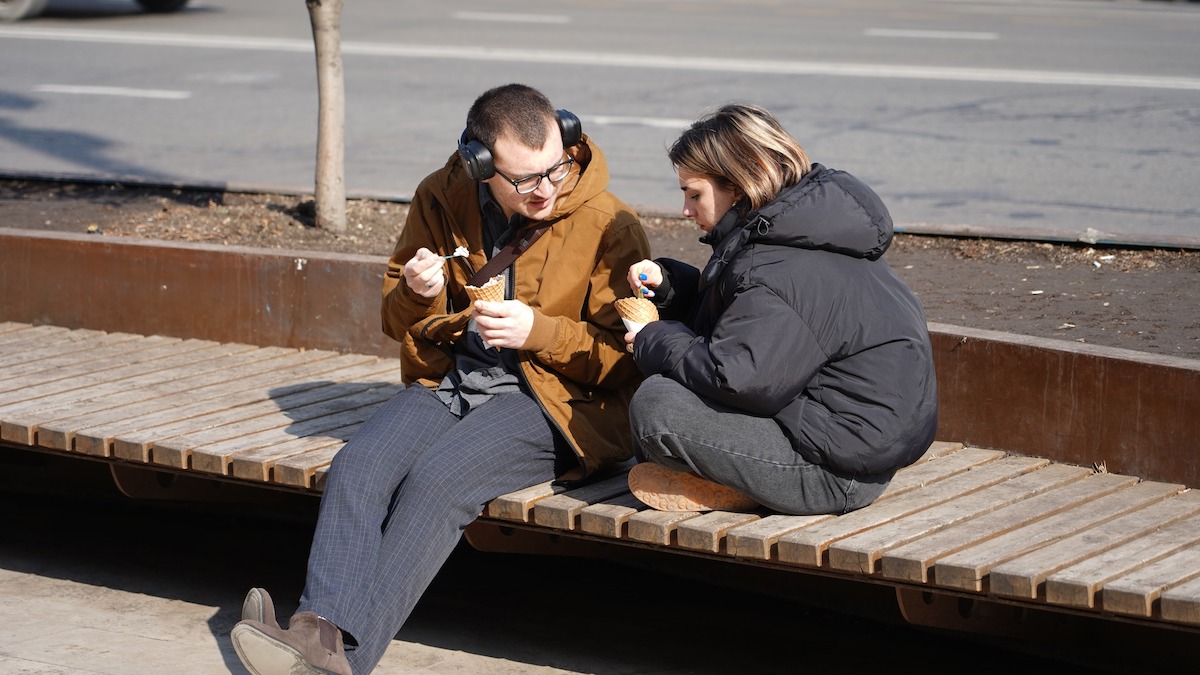
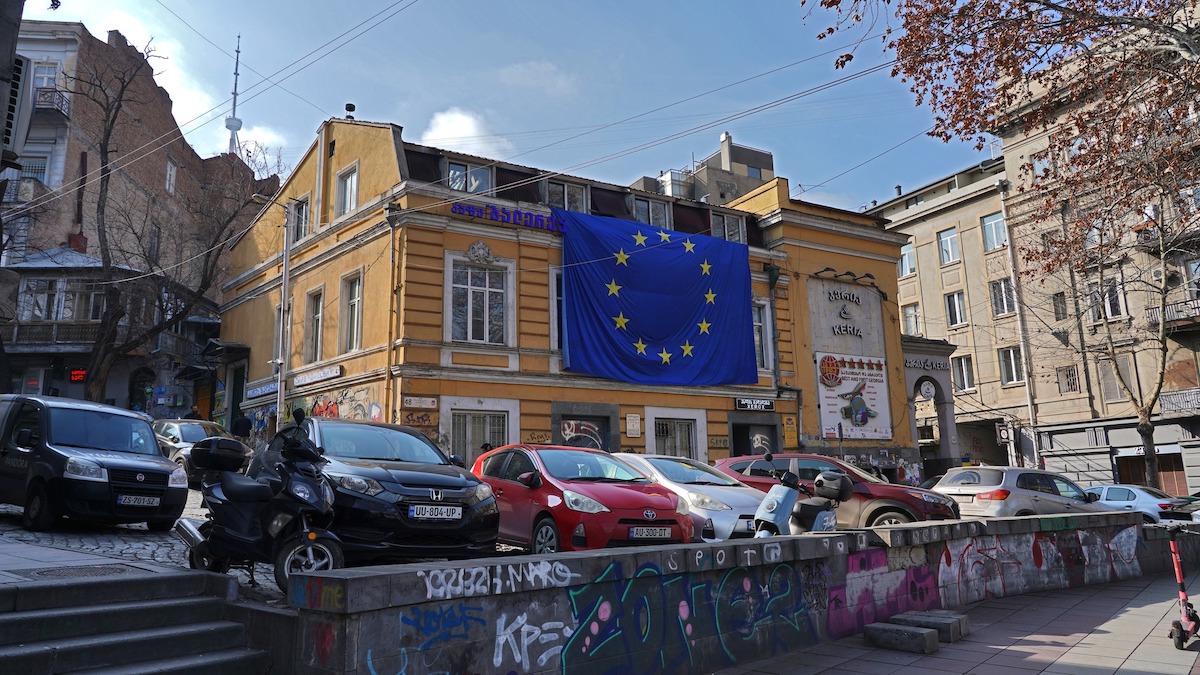
-
Thursday, December 18, Azerbaijan. Dairy producers will be granted subsidies
● Galib Bayramov, chairman of the board of the Public Union “Center for Economic Research,” who is under arrest in a criminal case against several NGOs, said at a recent court hearing that he does not plead guilty. “I have committed no crimes. I have never been a member of any political party. Within the framework of projects, I organized events between state institutions and civil society, attended by officials such as the head of the migration service. After the adoption of the new grants law, I did not receive grants from either Azerbaijan or other countries. I participated only in tenders,” Bayramov said.
He is the brother of professor Gubad Ibadoglu, who has been charged with document forgery and disseminating materials of religious extremism and is currently under house arrest.
The “NGO case” includes dozens of cases against civil society activists and organization leaders accused of criminal offenses related to receiving international funding and fraud. Most are under arrest and face prison sentences of up to 12 years. NGO representatives reject the charges and say they are being persecuted for political reasons.
● Azerbaijan’s State Security Service has declared former deputy prime minister Abbas Abbasov (who held the post from 1992 to 2006) wanted. He currently lives in Russia. The investigation is reportedly linked to the case of former head of the presidential administration Ramiz Mehdiyev, long regarded as the “gray cardinal” of Azerbaijani politics, who has been arrested on charges of attempting a violent seizure of power, treason, and money laundering. Investigators say Abbasov sought to establish control over the Azerbaijani diaspora and, through the Union of Azerbaijani Organizations of Russia (founded in 2012 and known as the “Union of Billionaires”), supported the opposition National Council with the aim of changing the government.
● “Regional realities and the progress achieved in the peace process between Baku and Yerevan demonstrate the bias of the European Parliament’s anti-Azerbaijani resolutions, particularly several provisions of the document ‘Strategic Agenda for the EU–Armenia Partnership,’” said Speaker of the Milli Majlis Sahiba Gafarova during a meeting with the EU ambassador to Azerbaijan, Mariana Koyundjic. At the same time, satisfaction was expressed with the positive dynamics in contacts between the EU and Azerbaijan.
How Baku explains its opposition to EU–Armenia Strategic Partnership Agenda – read more here
● Azerbaijan’s state oil company SOCAR and Hungary’s MOL Group have signed an agreement on hydrocarbon exploration and production at the Shamakhy–Gobustan block. MOL Group will act as the project operator and hold a 65% stake. The agreement is seen as an important milestone in the strategic partnership. MOL Group entered the Azerbaijani market in 2020, acquiring a 9.57% stake in the Azeri–Chirag–Gunashli field and an 8.9% stake in the Baku–Tbilisi–Ceyhan oil pipeline.
● The Ministry of Agriculture plans to provide subsidies to dairy producers to reduce production costs and, consequently, retail prices. The possibility of exempting livestock imported for fattening from value-added tax is also being considered.
● Another landmine explosion has occurred in territories liberated from Armenian forces during the Second Karabakh War. In Aghdam (Karabakh), a civilian was injured after stepping on a mine while working in a field and has been hospitalized with injuries.
-
Wednesday, December 17, Azerbaijan. Iran has opposed the TRIPP transit route
● Iran considers the TRIPP transit route (Trump Route for International Peace and Prosperity), which would connect Azerbaijan with its autonomous region of Nakhchivan through the territory of Armenia, to be a security threat and opposes it. This was stated by Ali Akbar Velayati, adviser to Iran’s Supreme Leader, during a meeting in Tehran with Grigor Hakobyan, Armenia’s ambassador.
The agreement to launch the TRIPP project was reached during the August summit of the leaders of Azerbaijan and Armenia in Washington, with the direct involvement of Donald Trump. At the same meeting, a peace agreement between Baku and Yerevan was ratified.
“Trump’s plan for the Caucasus is no different from the ‘Zangezur corridor,’ and Iran is categorically opposed to it. The corridor creates conditions for NATO’s presence near Iran’s borders and poses a serious threat to northern Iran and southern Russia,” Velayati said. He accused Washington of using economic projects to strengthen its military presence in the region.
Here is a detailed analysis of the TRIPP project from both sides — Baku and Yerevan.
● “Turkey is advancing the normalization process with Armenia in coordination and dialogue with Azerbaijan, and some symbolic steps will be taken as early as the beginning of next year,” said Turkish President Recep Tayyip Erdoğan. He emphasized that this process is linked to the fact that “Azerbaijan and Armenia are closer than ever to signing a peace treaty.”
● “Azerbaijan plays an important role in shaping the Middle Corridor, which presents particularly exciting opportunities,” said John Alderdice, the UK’s Trade Envoy to Azerbaijan and Central Asia, in a video address published by the British Embassy. He noted that during his visit to Azerbaijan he traveled to various regions of the country, from the Caspian Sea coast to Nakhchivan. “I am proud that our cooperation has deepened to the level of a strategic partnership in clean energy, Middle Corridor infrastructure, economic diversification, and education,” Alderdice said.
● Transit from Azerbaijan to Armenia via Georgian territory is currently being coordinated, and Tbilisi and Baku are also holding talks on the Southern Gas Corridor, Georgian Prime Minister Irakli Kobakhidze said. “The interests of Azerbaijan and Armenia are important to us, and we also have our own interests. I believe we will easily find the best solution that serves the interests of all three countries,” Kobakhidze said, calling Azerbaijan a “special friend of Georgia.”
In December, regional media widely discussed reports that Georgian authorities had increased transit tariffs for a first test shipment of Azerbaijani petroleum products to Armenia by forty times. Kobakhidze later stated that, in order to support progress toward peace between Azerbaijan and Armenia, Georgia would allow the first shipment of petroleum products to pass through its territory free of charge. Read more here
● A meeting was held in Baku between Mikayil Jabbarov, co-chair of the Azerbaijani–Israeli intergovernmental commission, and a delegation led by Israeli Finance Minister Ze’ev Elkin, who is also co-chair of the joint commission. The sides discussed opportunities to advance partnership in energy, trade, investment, agriculture, digitalization, innovation, logistics, and other areas.
● The investigation has been completed in the criminal case of Ruben Vardanyan, a citizen of Armenia and former “state minister” of the former unrecognized “Nagorno-Karabakh Republic,” who is currently in pretrial detention. He is charged with torture, mercenarism, war crimes, terrorism, and other offenses. According to the state agency Azertag, Vardanyan’s lawyer filed two motions. One requested the participation and questioning of a representative of the International Committee of the Red Cross as a witness in court; the prosecutor objected, stating that ICRC representatives could not add anything substantive to the charges. After hearing the parties, the court rejected the motion. A second request—to summon the investigator who searched Vardanyan’s office and residence—was also denied, on the grounds that there were no legal grounds to call the investigator during the trial. The next court hearing, scheduled for December 18, will be devoted to closing arguments.
● Parliament is discussing amendments to legislation banning the import, production, sale, and use of electronic cigarettes. Lawmakers argue that e-cigarettes pose serious health risks and increase dependence on tobacco products over time. Many MPs supported the initiative, noting that e-cigarettes are already banned in more than 40 countries worldwide. The amendments would be introduced into the laws “On Tobacco and Tobacco Products,” the Tax Code, and the law “On Advertising.”
● “Baku is an ideal city for hosting major sporting events,” said Francesco Lupattelli, President of the Association of European Capitals and Cities of Sport (ACES Europe), at a presentation announcing Baku as World Sports Capital 2026. The previous sports capital was Monaco. Youth and Sports Minister Farid Gayibov said the decision is a source of pride for Azerbaijan. “Formula 1 World Championship races have been held in Baku for many years. We proudly recall that the first European Games and the Islamic Solidarity Games were also held in Baku,” the minister said.
-
Wednesday, December 17, Armenia. Ruling party MP: "Armenia has no plans to join NATO, but is interested in cooperation with the Alliance"
● “Don’t you see that developments are taking place in Armenia’s domestic political sphere that can be regarded as attempts by another country to interfere? Don’t you see that disinformation campaigns are being conducted in our media space?” Deputy Speaker of the National Assembly Ruben Rubinyan told journalists. He did not name the country behind these campaigns, but based on previous rhetoric, he was referring to Russia. “Don’t you see that within two days some strange English-language websites appear and sensational fake news is published? For example, claims that Pashinyan bought a house in Canada or that, on Erdoğan’s orders, 12 mosques will be built in Armenia. Such ‘news’ is published on some newly created English-language website, allegedly written by a Turkish journalist, and a few days later it appears in Armenian media,” Rubinyan said.
● The Foreign Ministry will not comment on the critical statement made by Ali Akbar Velayati, an adviser to Iran’s Supreme Leader, regarding the “Trump Route,” which he voiced during a meeting with Armenia’s ambassador to Iran. This was stated by Foreign Ministry spokesperson Ani Badalyan. According to Iranian sources, Velayati said that Iran is categorically opposed to the “Trump Route” (TRIPP) project — a transit route that would connect Azerbaijan with its Nakhchivan exclave through Armenian territory. “In practice, it is no different from the ‘Zangezur Corridor.’ It is essentially the same project, simply renamed and now being implemented in the form of American companies entering Armenia,” Velayati said.
● The European Union has reaffirmed its support for the holding of free, fair, and transparent parliamentary elections in Armenia in 2026, according to a statement published by the EU Delegation in Yerevan. “Strong institutions and inclusive elections are key pillars of Armenia’s democratic future,” the statement said.
● Armenia and Luxembourg have signed a joint declaration on strategic partnership.
● “Armenia has no intention of becoming a NATO member, but the country is interested in cooperation with the Alliance,” said Sargis Khandanyan, an MP from the ruling Civil Contract party.
● The length of mandatory military service has been reduced from two years to 1.5 years, following the parliament’s adoption of the relevant law in its second and final reading.
● Defense Minister Suren Papikyan today presented the new NATO-style military uniform for the Armenian Armed Forces to Prime Minister Nikol Pashinyan (video below). A batch of the new uniforms is currently undergoing testing and approval. It was noted at the meeting that the new designs are adapted to Armenia’s conditions, with design elements produced to special order.
● The Ministry of Health has urged the public to get vaccinated against seasonal influenza in a timely manner amid the active spread of acute respiratory infections.
-
Wednesday, December 17, Georgia. Kaja Kallas: “If Georgia’s leaders continue to take actions that run counter to EU values, then Georgia has no future in the EU"
● EU High Representative for Foreign Affairs Kaja Kallas said: “On the one hand, Georgia’s leaders declare their desire to join the European Union and to choose a European path. But we also see steps taken by the government in the wrong direction. This is a signal to the government: if it continues to suppress the opposition, put pressure on free media, and take other actions that contradict EU values, then Georgia has no future in the EU.”
● Georgian Dream Prime Minister Irakli Kobakhidze, speaking on Georgian Public Broadcaster, claimed that the “deep state” still has influence in the United States and that the struggle between it and the Trump administration is now clearly visible. Kobakhidze also said that “the EU became a victim of both the August 2008 war (between Georgia and Russia) and the war in Ukraine, as they led to the decline of the European economy, the loss of its identity, and problems in industry.” He argued that “if the ‘deep state’ wins, the process of the EU’s decline will become irreversible.”
● Irakli Kobakhidze described Georgia’s prospects of becoming a NATO member as “vague,” especially after the publication of the U.S. National Security Strategy, which states that NATO should no longer be perceived as an alliance that is constantly expanding. “Talks about halting NATO enlargement began shortly after the war in Ukraine started. We must take a pragmatic view of developments and calmly and patiently wait to see how events unfold,” Kobakhidze said.
● Georgia has joined the International Commission for Ukrainian Claims, established in The Hague. The relevant convention was signed by Georgian Dream Foreign Minister Maka Bochorishvili. Read more here
● The EU’s highest human rights honor, the Sakharov Prize, was presented at the European Parliament to representatives of two laureates: Mzia Amaglobeli, founder of the Georgian outlets Batumelebi and Netgazeti, and Andrei Pochobut, a Belarusian journalist. Both are imprisoned in their home countries. The award on behalf of Mzia Amaglobeli was received by journalist Irma Dimitradze, while Pochobut’s prize was accepted by his daughter Yana. The Sakharov Prize amounts to €50,000 and is awarded annually for contributions to the defense of human rights and fundamental freedoms.
At the ceremony, Irma Dimitradze read out a letter from Mzia Amaglobeli. “Our freedom depends not only on our own struggle. We need solidarity and support from you—the peoples of Europe and the free people of the civilized world. […] Today, in my homeland, aspirations toward the European Union are met with repression. The government has established a regime that serves Russia’s interests. Georgian citizens have been protesting in the streets for more than a year against the suspension of the EU accession process. […] From the EU, we are hearing such clear statements of support for the Georgian people and Georgian society as never before. I am deeply grateful for this. I would like these statements to turn into action, and for European leaders to use all the existing mechanisms at their disposal to influence authoritarian rulers,” Mzia Amaglobeli wrote.
● Member of the European Parliament Rasa Juknevičienė said: “Mzia is a kind of symbol. She has said that the Sakharov Prize is awarded to all the people of Georgia who have been fighting in the streets for more than a year for the European future of their country. The regimes in Georgia and Belarus are puppets of Russia. The Kremlin wanted to seize Moldova in the same way it is now trying to seize Georgia—we saw Moldovans resisting major hybrid attacks. Many in Lithuania already know Mzia, especially her words: ‘Fight while there is still time.’ This struggle concerns us as well.”
● European Parliament President Roberta Metsola said that Mzia Amaglobeli and Andrei Pochobut embody courage and heroism. “Mzia Amaglobeli’s struggle represents those who believe that freedom and dignity must never be sacrificed,” Metsola said.
● Mikhail Kalugin, Director of the CIS Department at Russia’s Foreign Ministry, said that “Moscow takes the normalization of relations with Georgia seriously, provided that Georgia does not become a bargaining chip in games against Russia.” He once again praised the Georgian Dream government, saying that “Tbilisi is demonstrating healthy pragmatism,” and repeated the Kremlin’s rhetoric that the West has “stepped up destructive efforts” in the South Caucasus.
● The Interior Ministry reported that 63 people linked to organized crime have been brought to justice. Of these, 49 were arrested and 14 charged in absentia, including, according to the ministry, five so-called ‘thieves-in-law.’ Most of those detained had previously been convicted of serious and particularly serious crimes.
● According to local media, Georgian citizen Malkhaz Makatsaria has been detained in Abkhazia and accused of “illegal border crossing.”
-
Tuesday, December 16, Armenia. The EU will help Armenia combat disinformation from Russia
● Turkey is an important element of the TRIPP project (a transit route that will connect Azerbaijan with its autonomous region of Nakhchivan through the territory of Armenia – JAMnews). This was stated by U.S. Ambassador to Armenia Kristina Kvien in an interview with CivilNet. She noted that the United States is in direct contact with Turkey on this issue. Armenia is also working with Turkey on the steps necessary to implement the project, the ambassador said.
● The TRIPP transit project will be implemented on the basis of the principles of territorial integrity and will take into account Iran’s security and political concerns, said Armenia’s Ambassador to Iran Grigor Hakobyan during a meeting with Ali Akbar Velayati, adviser to the Supreme Leader of the Islamic Revolution on international affairs.
● Foreign Minister Ararat Mirzoyan took part in a working breakfast ahead of the meeting of EU foreign ministers in Brussels. It was reported that progress in the peace process with Azerbaijan and the reform efforts undertaken by Armenia’s current government were highly praised. Ministers expressed readiness to support Armenia in its efforts to counter hybrid attacks from Russia and the spread of disinformation through which the Kremlin seeks to influence the parliamentary elections scheduled for 2026. Here is an analysis on this topic
● “Armenia has requested assistance from the European Union to prevent external information interference, and this assistance will be provided,” said EU High Representative for Foreign Affairs and Security Policy and Vice-President of the European Commission Kaja Kallas.
● Cooperation between Armenia and the EU in various areas, including countering hybrid threats, is not new and has been ongoing for a long time, said Ani Badalyan, spokesperson for Armenia’s Foreign Ministry. As examples of broad cooperation, she cited the joint EU–Armenia Resilience and Growth program and the decision to deploy an EU monitoring mission in Armenia along the border with Azerbaijan. Badalyan added that the EU supports Armenia in ensuring that electoral processes comply with democratic standards.
● “The Armenian authorities will spend the funds received from the EU to discredit the opposition,” said Garnik Danielyan, a lawmaker from the opposition Armenia faction (which has a reputation for being pro-Russian), commenting on Kallas’s statement.
● A new shipment of goods is currently en route to Armenia through Azerbaijani territory, Armenian Economy Minister Gevorg Papoyan reported. “When they arrive, I will publish information about the new supplier countries and volumes,” he said.
● Defense Minister Suren Papikyan: “The situation on the border with Azerbaijan is very calm; we are preparing for the New Year.”
● The youth wing of the opposition Dashnaktsutyun party (which has a reputation for being pro-Russian) held another protest outside the EU building in Yerevan. “In Armenia, bishops, national benefactors, public and political figures, and leaders of opposition communities are being persecuted. People are held in pretrial detention for months and years, deprived of the right to a fair trial, and subjected to political persecution. Before 2018 (that is, before Nikol Pashinyan and his team came to power – JAMnews), the EU consistently expressed concern about violations of human rights, justice, and democratic standards. But now the same EU remains silent, and we ask why,” protest participants told journalists.
● In Armenia, owners of unfinished construction projects will be given one year to register their ownership rights, said Suren Tovmasyan, head of the Cadastre Committee. Only those structures that were recorded on maps during a nationwide video survey conducted in 2021 will be eligible for registration.
● In Armenia, starting January 1, 2026, pensioners and social benefit recipients will receive cashback of up to 20% for cashless transactions, instead of the current 12%. As a result, pensioners and benefit recipients will be able to increase their base pension or allowance by up to 10,000 drams (about $30), compared to the current 6,000 drams (about $16), the Ministry of Labor and Social Affairs reported.
● Prime Minister Nikol Pashinyan: “A new Code of Church Rules is needed, and it must include standards of integrity for clergy.”

-
Tuesday, December 16, Georgia. Archimandrite Dorote Kurashvili, who openly supports mass pro-European protests, has had his right to perform priestly duties suspended
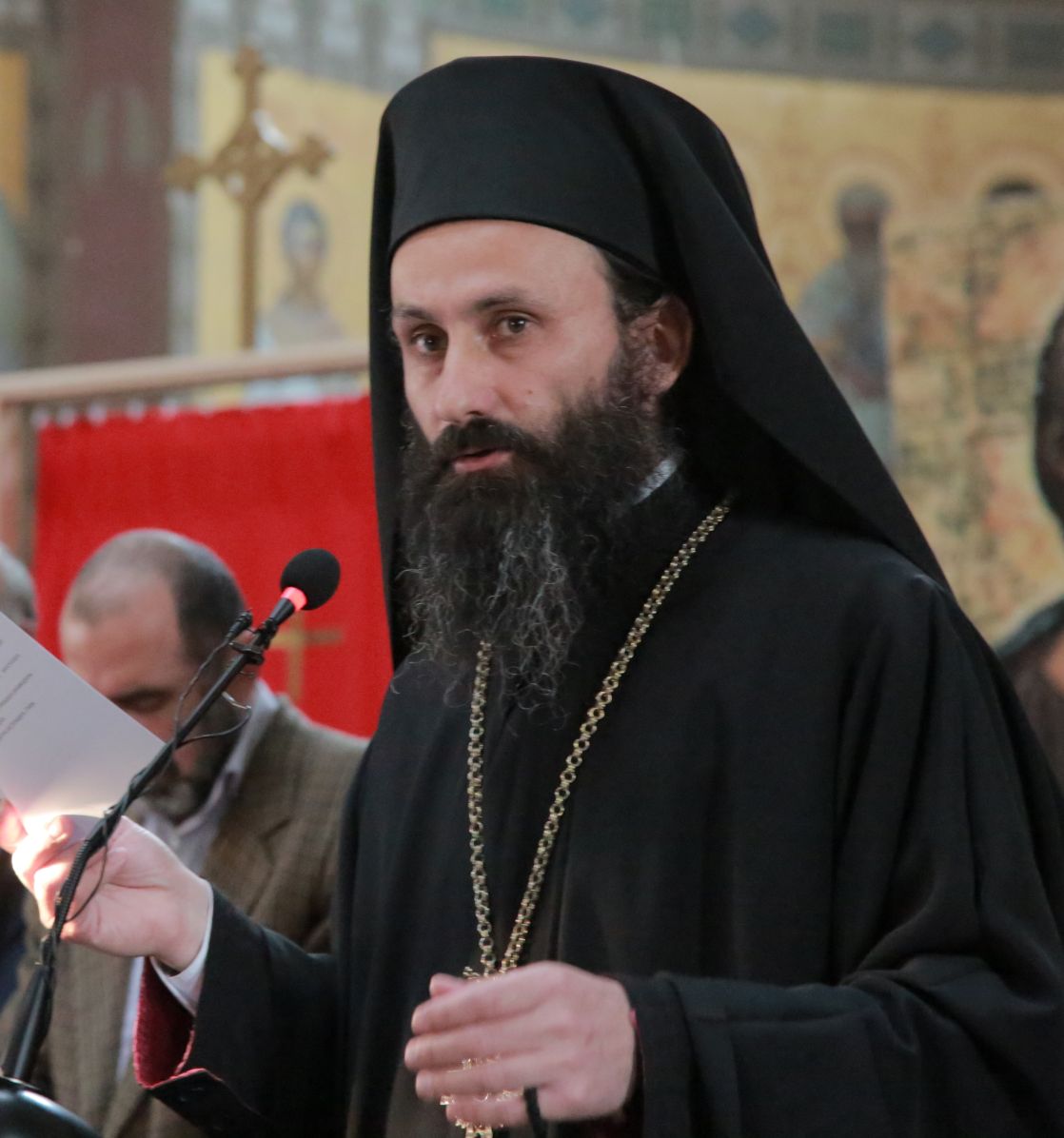
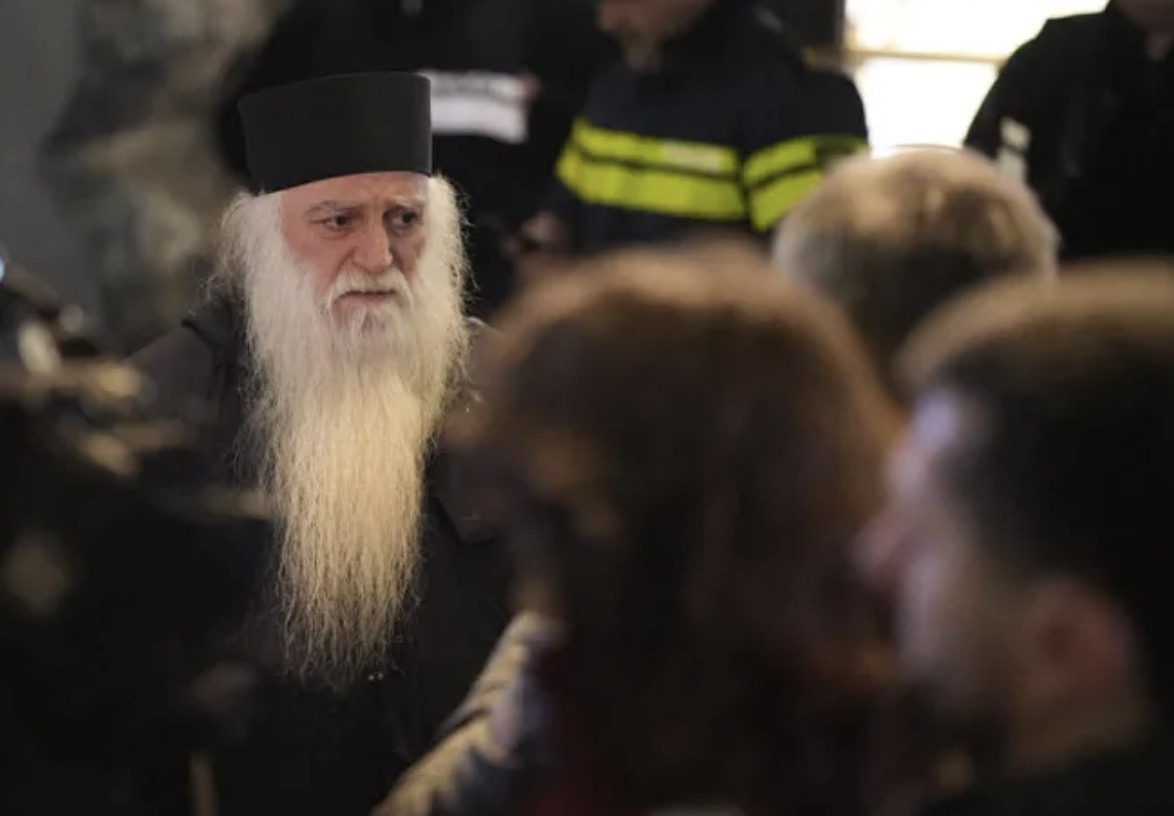
● Archimandrite Dorote Kurashvili (pictured), who has openly expressed support for mass pro-European protests, has had his right to conduct priestly service suspended. The order, signed by the Patriarch, states that the decision was made “following warnings and repeated violations of church canonical ethics, on the basis of the 55th Apostolic Canon.” Archimandrite Dorote serves at the Holy Trinity Cathedral in Tbilisi. He has actively supported demonstrators arrested during anti-government rallies and the pro-European protest movement, and frequently criticizes the actions of the ruling team both in his sermons and in public statements.
● Fifth President Salome Zurabishvili said that the Patriarchate’s decision to strip Archimandrite Dorote Kurashvili of his right to officiate disgraces the Georgian Church and its centuries-long struggle for freedom and independence. She also stated that she is convinced that “the Patriarch could not have agreed to such an injustice and therefore could not have signed a document containing such a decision.”
● Transparency International stated that it cannot consider selective actions by the ruling party against specific former officials to be a genuine fight against corruption. “It is clear to the organization that there is an internal confrontation between clans within the ruling party, and investigative bodies are being used for this purpose. Recent investigations into senior officials, their arrests, and subsequent release on bail have raised many questions. There is a view that the founder of Georgian Dream, oligarch Bidzina Ivanishvili, is getting rid of former party members under the guise of fighting corruption,” the statement said.
Transparency International claims that all former officials currently under investigation belong to the “clan” associated with either former head of Georgia’s State Security Service Grigol Liluashvili or former Prime Minister Irakli Garibashvili. “At the same time, there are numerous corruption allegations against many other high-ranking officials, yet investigations have not addressed those cases,” TI said.
● “The EU enlargement report states that Georgia is backsliding more than any other country,” said EU Commissioner for Enlargement Marta Kos ahead of a meeting of EU foreign ministers in Brussels. “If a country wants to move forward on the European path, it must behave differently. This applies to the government. And, of course, we will continue to support civil society and independent media. This is extremely important not only to give people hope, but also to send a message to the government that it is wrong to ignore what people want,” Kos said.
● A package of amendments to the Customs Code has been submitted to the parliament by the ruling Georgian Dream party, aimed at strengthening control over cargo flows. Deputy Interior Minister Aleksandre Darakhvelidze said the main reason was the recent detection of drug trafficking cases. He noted that joint teams of officers from the Central Criminal Police Department and the Customs Department will be established at border checkpoints, ports, and airports to conduct thorough inspections of all suspicious cargo.
● According to the draft legislative amendments submitted to parliament by Georgian Dream, penalties for involving minors in criminal activity and for complicity in crimes involving minors will be toughened.
-
Tuesday, December 16, Azerbaijan. Russia’s foreign minister accused the West of “seeking to break up the Caspian ‘five’ in order to dictate its decisions in the region"
● Gultekin Hajibeyli, a member of the Coordination Center of Azerbaijan’s National Council of Democratic Forces, has received an official decision banning her from Turkey for five years, although the notice does not state that she will be deported to Baku. In early December, Hajibeyli wrote that she had been detained, forcibly taken to a migration center in Istanbul, and was to be extradited to Azerbaijan. A court decision has been issued in Baku for her arrest in connection with the case of Ramiz Mehdiyev, the former influential “grey cardinal” of Azerbaijani politics. For decades, Mehdiyev served as head of the Presidential Administration (starting under Heydar Aliyev) and is currently under arrest on charges of attempting to seize power and treason. Several opposition figures have already been arrested in Baku in connection with this case, including Ali Kerimli, chairman of the Azerbaijan Popular Front Party, and his adviser Mammad Ibrahimli. Both are charged with attempting to violently seize power. Hajibeyli previously stated that she had submitted an urgent application to the European Court of Human Rights. She also said that she holds a two-year residence permit in Turkey and called on the Turkish government “to refrain from making an illegal decision under pressure from the Azerbaijani authorities.”
More details on the arrests of opposition figures here.
● President Ilham Aliyev has put forward an initiative to declare the largest amnesty to date. It is expected to affect more than 20,000 people in total. According to the draft, the amnesty would include, among others, the release of individuals who took part in combat operations in defense of the country’s territorial integrity. The lists are also expected to include close relatives of those who were killed or went missing during these operations, as well as those “who suffered as a result of Armenia’s military provocation against the civilian population.”
● Russian Foreign Minister Sergey Lavrov accused Western countries of “seeking to break up the Caspian ‘five’ in order to dictate their decisions in the region.” “They constantly try to infiltrate the processes taking place here and impose solutions on regional countries that primarily serve Western interests. This is a clear continuation of neocolonial policy — the West has always wanted to live at the expense of others,” Lavrov said in an interview with Iran’s state broadcaster.
● Iranian Foreign Minister Abbas Araghchi is paying a working visit to Moscow today. It was previously reported that the main topic of his meetings would be discussions of Tehran’s nuclear program. Ahead of the visit, Russian Foreign Minister Lavrov stated that “Moscow will support Tehran’s efforts to overcome the crisis in relations with the IAEA and the West.”
● EU High Representative for Foreign Affairs Kaja Kallas said at a press conference that Armenian Foreign Minister Ararat Mirzoyan spoke at a meeting of EU foreign ministers and briefed them on the details of the peace process with Azerbaijan and the current situation in Armenia. “Armenia is facing hybrid threats and massive disinformation ahead of elections (parliamentary elections in 2026). We are already seeing Russia repeat the same strategy it used in Moldova. In this context, assistance to the Armenian government in protecting against hybrid and cyber threats was discussed.”
Azerbaijani media have noted that Ararat Mirzoyan traveled to Brussels just two weeks after the signing of a strategic partnership agreement between the EU and Armenia, and that Armenia was not mentioned on the meeting’s agenda.
More details on the EU–Armenia agreement here
● Dutch State Secretary for Foreign Trade Aukje de Vries wrote on X about a meeting with Elchin Amirbayov, Special Representative of the President of Azerbaijan for Special Assignments. The discussion focused on strengthening trade and economic ties and prospects for cooperation in the agricultural sector and the maritime industry, according to the statement.
● Turkish President Recep Tayyip Erdoğan stated that during the Second Karabakh War in 2020, “false accusations were spread against Ankara.” “Certain circles, using the rhetoric of Ankara’s adversaries, accused Turkey of supporting Azerbaijan. False reports were circulated alleging that Turkey had supplied weapons to Azerbaijan and transferred jihadists,” Erdoğan said at the presentation of the Vision Concept of the Turkic World for the ruling Justice and Development Party (AKP) in Ankara.
● A bilateral visa-free travel agreement between Azerbaijan and the Republic of Maldives has entered into force.
● “More than three thousand children are already studying in schools in the territories of Azerbaijan liberated from Armenian occupation. More than 300 teachers are working there,” said Minister of Science and Education Emin Amrullayev in an interview with Real TV. He noted that construction of the Karabakh University campus is ongoing and that new academic programs are being developed. Up to 1,500 students are planned to be admitted next year. According to the minister, a vocational school in Shusha is also expected to be commissioned.
● A statement regarding the presence of heavy metals – cadmium and lead – in glass cups produced by the Chinese company Market Union Co. Ltd. was jointly issued by the Ministry of Health and the Food Safety Agency. Poland had previously issued a similar warning. Azerbaijani authorities reported that the product had not been submitted to the Ministry of Health’s sanitary and quarantine center and had not undergone laboratory testing. Citizens who purchased the cups are being urged to submit them to the center for free testing. If no hazardous substances are found, the cups will be returned to their owners.

-
Monday, December 15, Azerbaijan. A trial has begun against 12 journalists in the 'Meydan TV case'
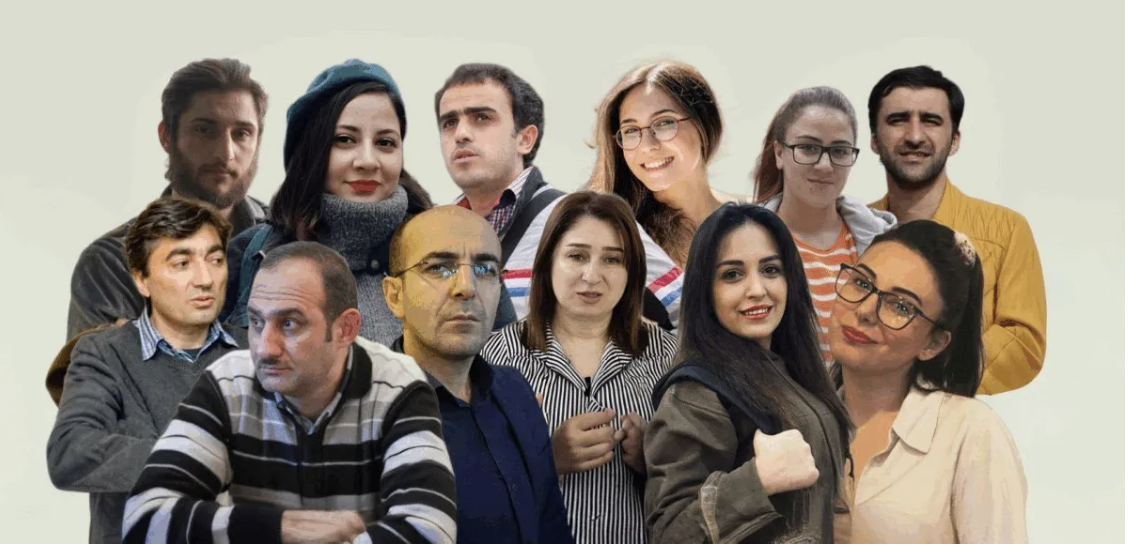
● A court trial has begun in Baku against 12 journalists currently under arrest in the so-called “Meydan TV case.” If found guilty, the journalists face up to 12 years in prison on a range of financial crime charges linked to alleged funding from Western donors, including currency smuggling, money laundering, and tax evasion. All defendants categorically deny the charges and say they are being persecuted for their critical reporting on the authorities. Those appearing in court include:
• Meydan TV journalists Natig Javadli, Khayala Aghayeva, Aytaj Tapdig, Aynur Elgunesh, Aysel Umudova, and Ramin Jabrailzade. They were arrested in December 2024 along with Ulvi Tahirov, deputy director of the Baku School of Journalism.
• Arqument.az editor-in-chief Shamshad Agha, who collaborated with Meydan TV, and freelance contributors Nurlan Gahramanli and Fatima Movlamli, who were arrested in February and March 2025.
• Former Voice of America correspondent Ulviya Ali, who denies any connection to Meydan TV. She was arrested in May 2025.
• Freelance photojournalist Ahmad Mukhtar, who was arrested in August this year.
Those charged in this case are among at least 24 journalists currently under arrest or imprisoned in Azerbaijan. Earlier this year, seven journalists were sentenced to prison terms of up to nine years on similar charges in the case involving the popular investigative outlet Abzas Media.
● The Committee to Protect Journalists (CPJ) protested and called on the Azerbaijani authorities to drop all charges and release the detained journalists. “The grim spectacle of the trial of 11 journalists and a respected journalism educator underscores the scale and unjustified nature of Azerbaijan’s crackdown on the independent press,” said Gulnoza Said, CPJ’s Europe and Central Asia program coordinator. The committee said it had sent a request to President Ilham Aliyev’s office for comment but received no response.
● A new stage in the development of energy partnership between Azerbaijan and the United States was discussed during meetings in Washington between Energy Minister Parviz Shahbazov and U.S. Energy Secretary Chris Wright, Director General of the U.S. Foreign Commercial Service David L. Vogel, and White House National Energy Dominance Council Director Jarrod Agen. “The role of Azerbaijan in bringing oil and gas resources to international markets, developing the Southern Gas Corridor, and green energy corridors was assessed,” Shahbazov wrote on X. He said the discussions covered cooperation opportunities in oil and gas export and transit routes, electricity, and the TRIPP transit project through the South Caucasus region. The expansion of cooperation with ExxonMobil, which is involved in the Azeri–Chirag–Gunashli field development project, was also discussed.
● A presentation of a new documentary film about Ruben Vardanyan took place in Baku. Vardanyan, a Russian oligarch and Armenian citizen currently in pretrial detention in Azerbaijan, was arrested as the former “state minister” of the former unrecognized “Nagorno-Karabakh Republic.” He is accused of torture, mercenarism, war crimes, terrorism, and other crimes.
The film, titled The Oligarch’s Design, was produced by AnewZ TV. It is described as an investigation into how “financial power, political influence, and targeted narratives can shape conflicts and public perception.” The film reportedly draws on international journalistic investigations, open-source intelligence data, and materials related to the exposed large-scale offshore financial network known as the Troika Laundromat, linked to Russian corporate and political interests. It also examines the context of Vardanyan’s decision to renounce Russian citizenship in 2022 and assume leadership of an unrecognized separatist entity.● Minister of Digital Development and Transport Rashad Nabiyev wrote on X about a productive meeting in San Francisco with a group of more than twenty ethnic Azerbaijanis working in Silicon Valley and at various U.S. technology companies. “There was an exchange of views on the contribution these young professionals could make to the development of Azerbaijan’s digital sector, as well as possible support for their work from the Azerbaijani side,” the minister wrote.
● Uzbekistan Culture Days are being held in Azerbaijan from December 14 to 20.
● Today, December 15, World Turkic Languages Day is being marked for the first time. The decision was adopted at UNESCO’s General Conference in November this year in Samarkand, Uzbekistan. The Turkic language family includes Azerbaijani, Kazakh, Kyrgyz, Turkish, Turkmen, and Uzbek, which together are the native languages of more than 200 million people. The initiative to establish World Turkic Languages Day was put forward by Azerbaijan, Kazakhstan, Kyrgyzstan, Turkey, and Uzbekistan and was supported by 21 countries.
-
Monday, December 15, Armenia. Nikol Pashinyan is explaining his campaign against the current church leaders and the reasons for it
● Ruben Babayan, director of the Yerevan Puppet Theatre, suggested flogging Archbishop Mikael Ajapakhyan, who was sentenced to two years in prison for calling for the overthrow of the government. Babayan proposed “adopting the punishment used in Iran — 20 or 30 blows with sticks.” “Many of our talkers would hold their tongues if they knew such a punishment awaited them,” he said in an interview with Public Television.
● Prime Minister Nikol Pashinyan attended a liturgy again, this time at a church in the village of Aygeshat in Armenia’s Armavir region. The service was led by the head of the diocese, Archbishop Sion Adamyan, together with Priest Mkrtich Mushadyan, who also conducted a liturgy in Gyumri last week. Services held by clergy who publicly support Pashinyan in his confrontation with the leadership of the Armenian Church have become a regular occurrence. The service in Gyumri sparked protests in Echmiadzin, where church representatives claimed the church had been “forcibly seized.” Several clergy are already under arrest for political calls against the state. Pashinyan has stated that the Catholicos violated the vow of celibacy and should step down. Local media are actively reporting on Russia’s support for church leaders. Here is more on the latest developments in this confrontation and its underlying causes.
● Nikol Pashinyan has started posting videos in which he talks about his campaign against the current church leaders and the reasons behind it. In one video, he answered why he now attends liturgy every Sunday, having not done so in previous years: “Because some high-ranking church officials, through their actions, have driven thousands, if not tens of thousands, of people like me out of the church. It is impossible to constantly remain in such an atmosphere and environment. There is much talk about sectarianism, but the biggest sectarian is Ktrich Nersisyan (the Catholicos’s secular name) and his narrow circle,” Pashinyan said.
● Armenia’s first president, Levon Ter-Petrosyan, has been re-elected as chairman of the Armenian National Congress.
● Armenia should commit to reimbursing the costs of medical care for Armenian citizens who seek asylum in European Union member states due to health-related issues. This was stated by Arman Yeghoyan, chair of the National Assembly’s Standing Committee on European Integration, in an interview with CivilNet. “Of course, our goal is for as few people as possible to leave for this reason, and for as many as possible to have access to comparable medical services here in Armenia. But if something cannot be provided and people seek asylum for this reason and incur expenses, then yes — Armenia must reimburse them. That is the plan,” Yeghoyan said.
● Twelve-year-old Albert Armenakyan placed fourth at the Junior Eurovision Song Contest 2025, the final of which was held in Tbilisi. The top three places went to France, Ukraine, and Georgia.
● The lights of Armenia’s main Christmas tree were switched on in Republic Square in Yerevan following a symbolic performance of “Brave Heart” by Junior Eurovision participant Albert Armenakyan. More than $1.5 million was allocated from the city budget for festive lighting and decorations — $150,000 more than last year.
-
Monday, December 15, Грузия. Mass participation in the global demonstration in support of Ukraine: “Stop the Safari on People / Save Kherson”
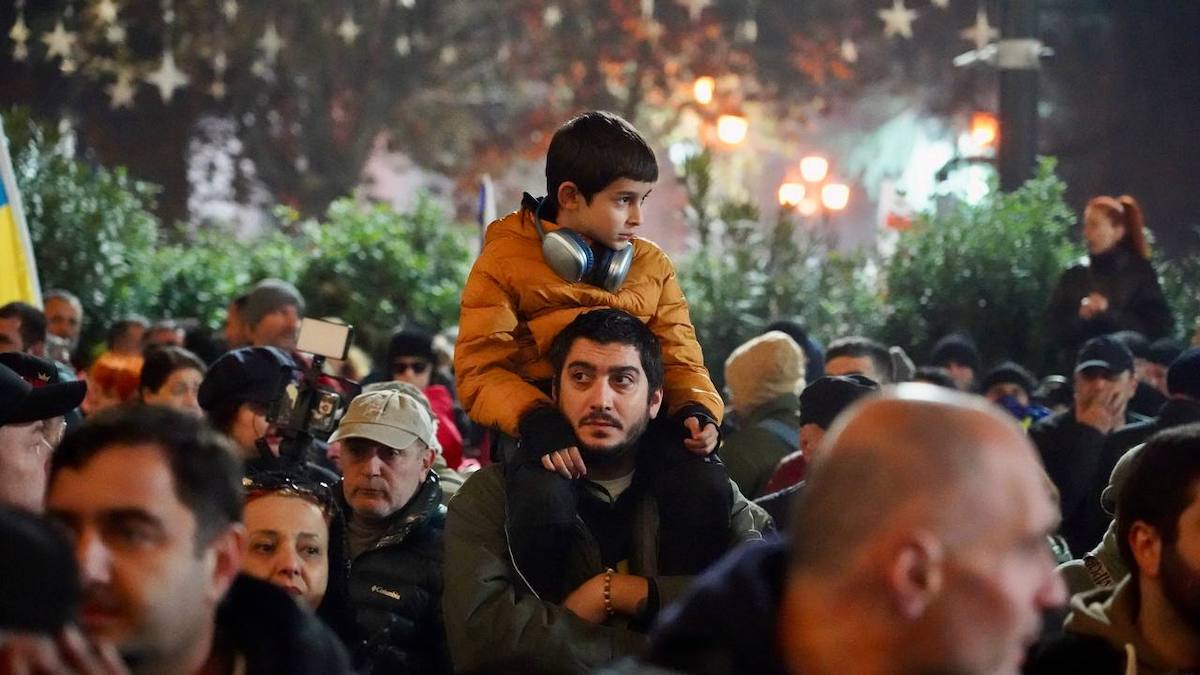
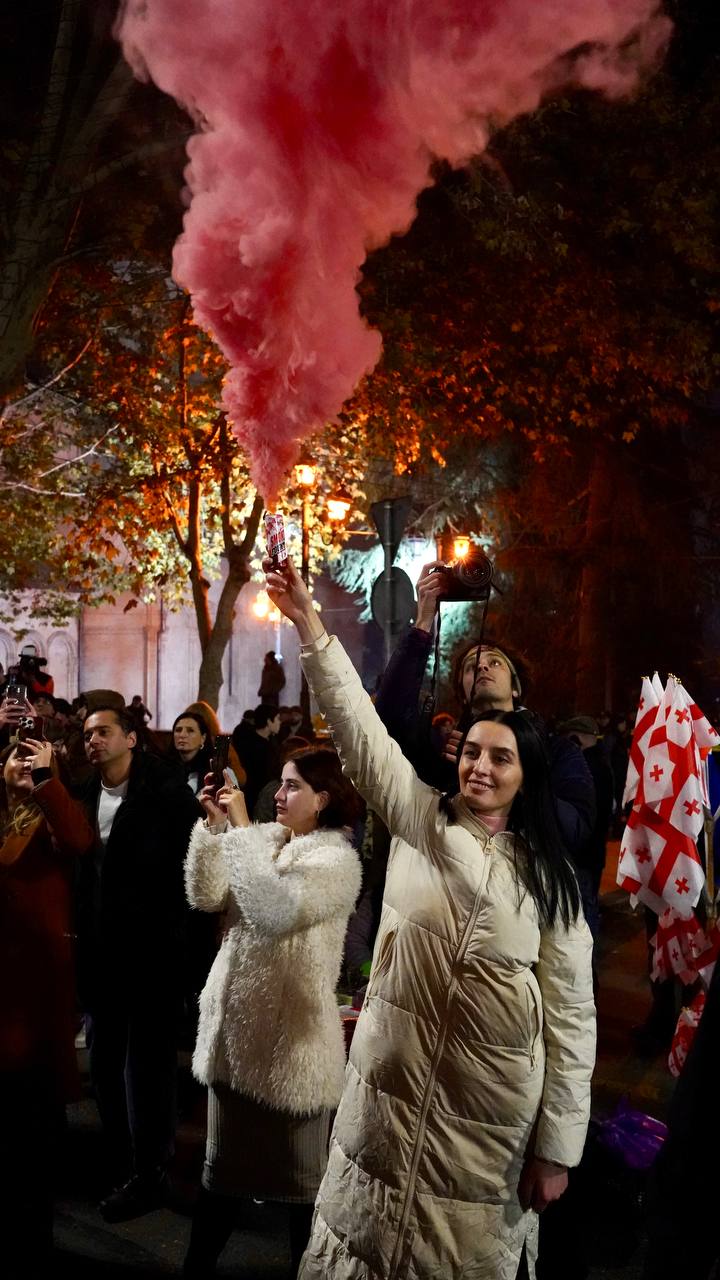
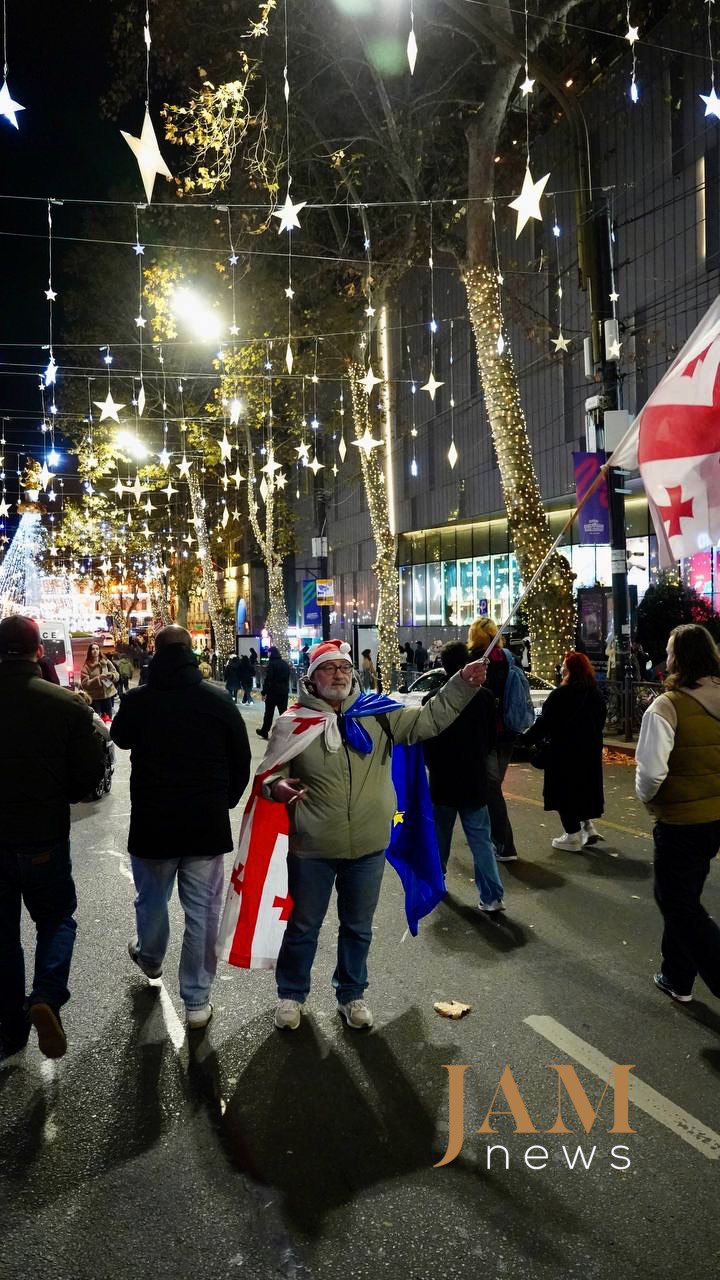
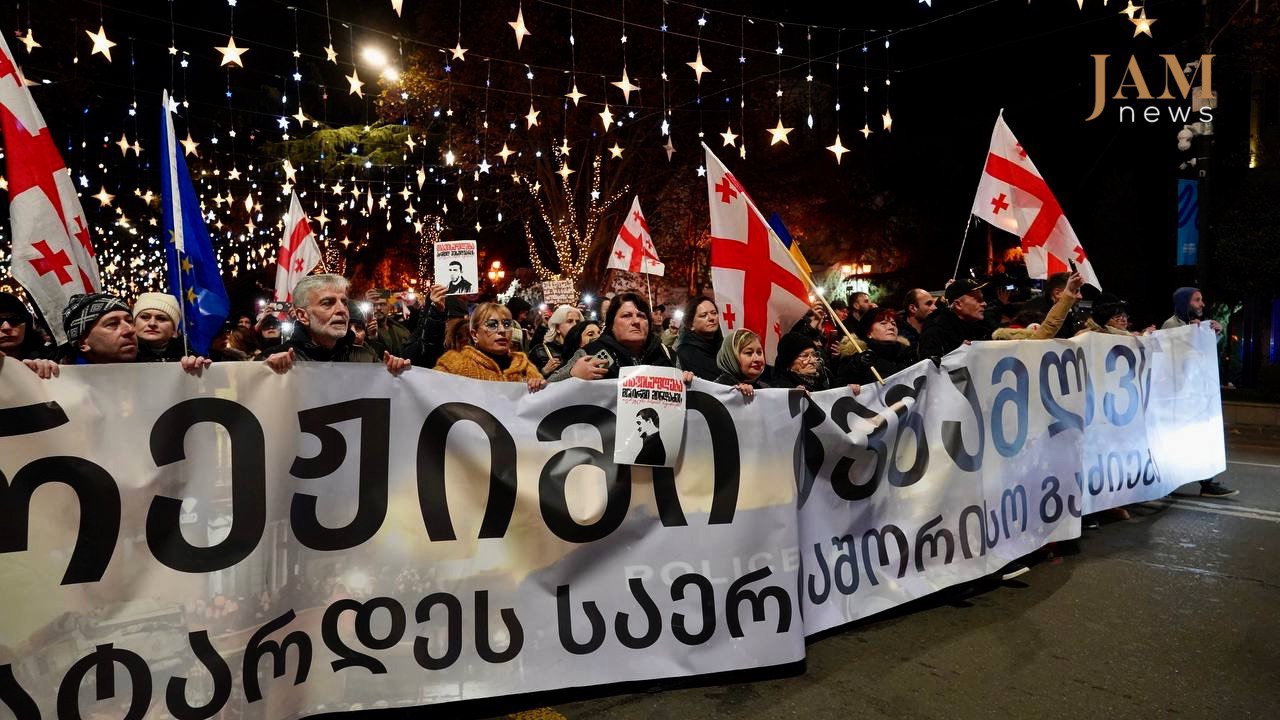
● Protests continue on Rustaveli Avenue in front of the parliament building in Tbilisi – for more than a year now, every day. On December 14, protesters joined a global demonstration in support of Ukraine — “Stop the Safari on People / Save Kherson.” The campaign opposes war crimes committed by Russia and is being held simultaneously in more than 40 cities worldwide on December 13, 14, and 15. In addition, the protesters in Tbilisi continue to demand new, fair parliamentary elections and the release of those detained during the protests.
● On Sunday, elections for the chair of the Georgian Bar Association took place. The vote drew media attention amid reports of violations. Independent media claim that lawyer-delegates were transported from the regions in minibuses on the condition that they support the pro-government candidate Irakli Kandashvili. Nevertheless, Kandashvili failed to win in the first round, receiving 1,283 votes, while Irakli Chomakhashvili, a defense lawyer for activists detained during protests, received 1,109 votes. A runoff is scheduled in two weeks.
● Zurab Japaridze, one of the leaders of the Coalition for Change, will be released from Rustavi prison on December 19 after serving seven months in detention. He was arrested on May 22 for refusing to cooperate with a parliamentary commission established by Georgian Dream to investigate the activities of the previous government during the presidency of Mikheil Saakashvili.
● The Unity–National Movement party has filed a lawsuit with the Constitutional Court against laws adopted by Georgian Dream that ban political parties and individuals from engaging in political activity. The party says the laws contradict the Constitution.
● Georgian Dream–backed President Mikheil Kavelashvili said that “Georgia definitely wants to be part of Europe, despite the fact that the European Union is currently going through a crisis.” He added that Georgia is not abandoning its path toward European integration and hopes the EU will withstand global challenges, including confrontation with the United States. “We are ready for dialogue with the EU, but protecting national interests is our priority. Our messages must be clear to everyone: we want peace, stability, and economic development, and we are ready for dialogue with all. We must remain vigilant to emerge victorious from these events — by which I mean preventing radical violence and foreign interference in Georgia’s affairs,” Kavelashvili said.
● The final of the Junior Eurovision Song Contest 2025 took place in Tbilisi. First place went to French performer Lou Deluze with the song “Ce Monde.” Second and third places were taken by representatives of Ukraine and Georgia — both ethnic Armenians — Sofia Nersisyan and Anita Abgaryan, respectively. Eighteen countries took part in the contest.

-
Top stories in Azerbaijan, Armenia, and Georgia from 8-12 December, 2025