Prime minister of Georgian Dream: “The migration issue is of particular concern to Georgian society”






Against migrants in Georgia
Prime minister from Georgian Dream, Irakli Kobakhidze, addressed the public in a video message on February 13. He said migration is one of the key issues “of particular concern to Georgian society” and announced tighter migration policies.
Kobakhidze stated that the government will strengthen the Interior Ministry’s migration department and “completely clear the country of illegal migrants” within several years.
He also stressed the need to protect the national and religious identity of Georgia’s citizens, citing official statistics on the number of foreigners and their economic contribution.
Official data and the speculation around it
According to Irakli Kobakhidze, preliminary census data show that Georgia has a population of 3,914,000, of whom foreigners make up at most 257,000, or 6.6%. This figure includes both legal and undocumented residents.
The prime minister said that, based on border-crossing data, about 70% of foreigners in Georgia are citizens of post-Soviet countries, EU states, as well as the United States and Israel. Among them, at least 40,000 are former Georgian citizens or people with Georgian surnames.
Kobakhidze added that citizens of Turkey and Iran account for no more than 0.7% of the population, which he said contradicts “widely spread speculation.”
The statement also stressed that the number of migrants from Gulf countries — including the United Arab Emirates, Saudi Arabia, and Kuwait — is insignificant.
Foreign students and the economy
According to Irakli Kobakhidze, about 37,000 foreign students are studying in Georgia, most of them citizens of India. He said there are also “significant numbers” from Jordan, Israel, Sudan, Pakistan, the United Kingdom, and Egypt.
Official data show that one foreign student pays an average of 15,500 lari per year in tuition and spends another 16,300 lari (about $6,000) in the country.
Altogether, their contribution to Georgia’s economy is estimated at around 1.2 billion lari (about $450 million). According to the prime minister, this translates into roughly 300 million lari (about $112 million) in annual budget revenues and supports more than 10,000 jobs.
Kobakhidze said foreign students do not affect the country’s demographic picture because “they leave Georgia immediately after receiving their diplomas.”

Tightening policy and deportation plans
Irakli Kobakhidze said the situation in this area “is not as bad as some politicians claim,” but acknowledged that “much still needs to be improved” in immigration policy.
He stated that over the past year the migration department has deported more illegal migrants than in the previous ten years combined.
According to the government, more than 20,000 illegal migrants are still currently in Georgia.
Kobakhidze also noted that starting March 1, foreign employment has been significantly restricted by law, and the government will fully enforce these rules. He also recalled the 2017 constitutional amendment banning the sale of agricultural land to foreigners.
A large part of the prime minister’s message focused on protecting national and religious identity, which he called “one of the most important national tasks.”
Context
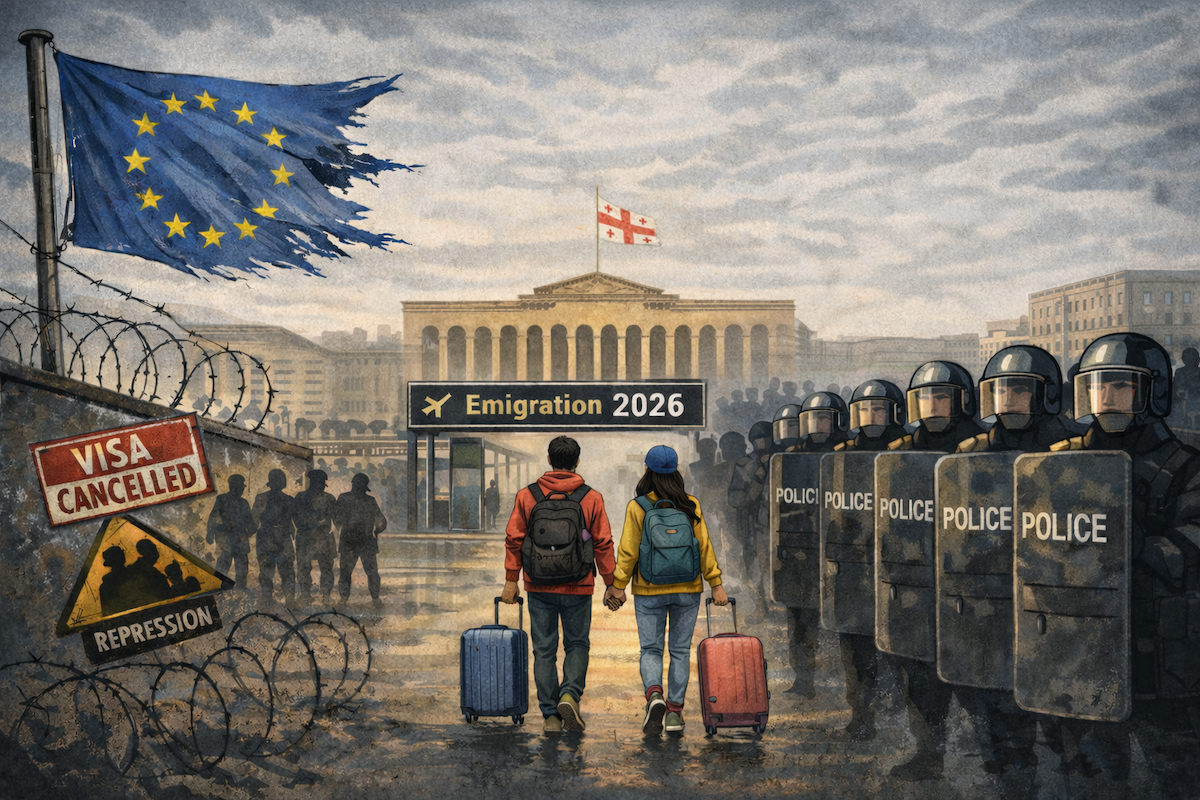
Migration has become a particularly sensitive issue in Georgia in recent years, especially after the liberalization of the visa regime with the European Union. As a result, both emigration and immigration have increased.
Since 2022, following Russia’s invasion of Ukraine, tens of thousands of Russian citizens have temporarily moved to Georgia, triggering negative reactions in society and becoming a major topic of domestic political debate.
Migration is often linked to concerns about economic competition, the labor market, and cultural identity.
News in Georgia