Fraudulent call centre industry in Georgia: power, money and selective justice






The article is based on a new study by the organisation Transparency International Georgia (TI).
_______________________________
In recent years, information about fraudulent call centres operating in Georgia has periodically appeared in investigations by both local and international media. Millions of dollars and euros stolen from citizens of Western countries point to the scale of the criminal networks behind these schemes.
However, despite numerous journalistic investigations and official statements, the key question remains unanswered: why has the Georgian government been unable to dismantle this industry for years?
Recent developments, including investigations launched against high-profile figures, have further reinforced suspicions that this is not simply a case of organised fraud.
The broader picture suggests a system in which justice is applied selectively, while criminal networks often benefit from political protection.

Stolen millions
In 2022, a whistleblower who worked as an IT specialist inside a fraud network described the scale of the business in detail. According to him, a single active call centre generated between $50,000 and $500,000 a day in illegal income from Western countries.
At the time, the number of such centres in Georgia had reached the hundreds, while the number of people employed in them ran into the thousands. The whistleblower estimated that the industry was generating millions of dollars every day.
Official figures appear to be relatively close to that assessment. In December 2026, Georgia’s Prosecutor General’s Office said that between 2021 and 2023, despite the authorities’ declared campaign against the schemes, several dozen fraudulent call centres were still operating in the country.
An investigation by the international journalism network OCCRP, published in March 2025, presented an even more detailed picture. One medium-sized network identified by reporters stole $35.3m over three years. One team of seven people alone had a monthly target of about $420,000.
If these figures are taken as an approximate average across the industry, the damage inflicted on Western citizens by numerous networks operating in Georgia could range from $350m to more than $1bn.
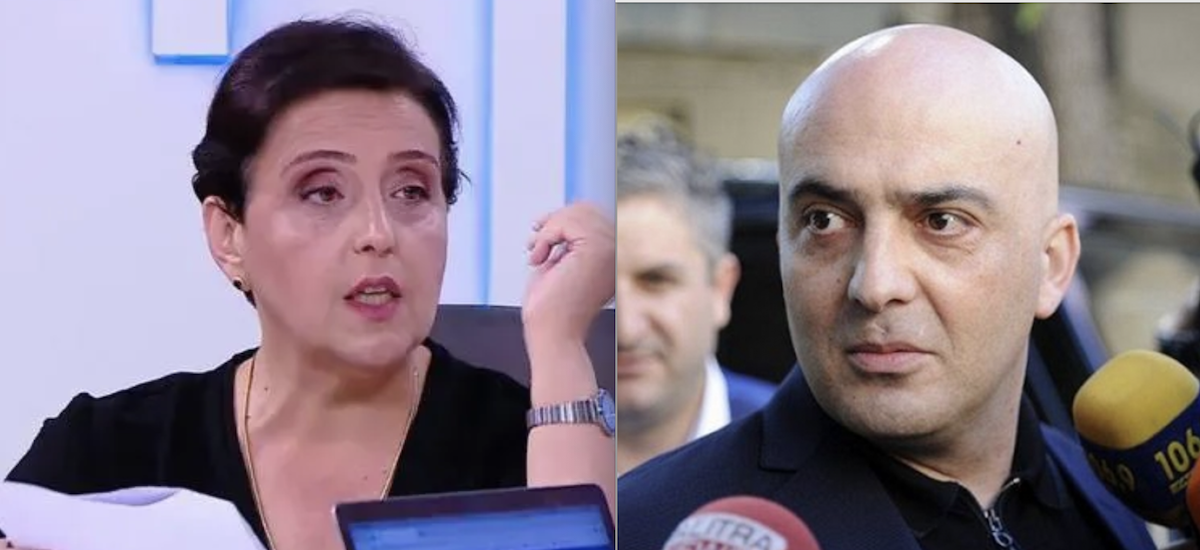
How fraudulent call centres operate
From the outside, these call centres often look like ordinary IT companies: offices in modern business centres where young employees speak foreign languages. Behind this facade, however, lies a complex psychological and technical scheme.
- The bait
The process begins on social media. “Affiliate” marketing companies distribute advertisements promising users quick financial profits. These campaigns often use deepfakes — fake videos featuring well-known figures. Artificial intelligence is used to create images of celebrities who supposedly recommend an investment platform.
- The first contact
After registering on the platform, the victim is contacted by a call centre operator. Operators speak foreign languages and almost always use fake names. The victim is asked to make a small deposit — usually $250 or €250 — to “activate a trading account”.
- The illusion of profit
After the payment is made, the victim receives access to an online platform where their investments appear to be growing. In reality, this is only a simulation. The money has already been stolen, while the platform exists solely to build trust.
- Psychological pressure
A more experienced employee then takes over, often described as a “broker”. Their role is to establish a personal connection with the victim and persuade them to invest additional funds. In some cases, victims are encouraged to use their entire savings, take out loans or even sell property.
- The block
When the victim attempts to withdraw their money, the system produces an “error”. They are told to pay additional taxes, insurance fees or other fabricated charges. By this stage, the funds have usually been converted into cryptocurrency and distributed across anonymous wallets.
- Secondary fraud
Victims are sometimes contacted later by someone claiming to be a lawyer or a representative of a “fund recovery service”. In reality, this is often the same group of fraudsters. They demand an additional payment to “investigate the case” and promise to recover the stolen money.
Untouchable patrons
Between 2021 and 2024, dozens of journalistic investigations into fraudulent offices operating in Tbilisi were broadcast on Georgian television. Law enforcement agencies in Western countries also became involved.
According to official data, criminal proceedings were launched against around 100 people during that period. However, the cases mainly targeted lower-level employees. Network organisers and alleged political patrons largely avoided responsibility.
The scale of the problem also prompted international political reaction. In 2024, the US Congress’s Helsinki Commission issued a statement raising concerns about the possible role of “black money” generated by call centres in Georgia’s domestic politics.
A whistleblower’s testimony
In 2022, a former employee who had worked as an IT specialist in a fraud network described the internal structure of the system in detail. In a television interview, he named several influential figures who he said provided protection to different networks.
According to his account, one of the main beneficiaries could have been businessman Ucha Mamatsashvili, a relative of Georgia’s informal ruler Bidzina Ivanishvili. He also mentioned former State Security Service chief Grigol Liluashvili and former prosecutor general Otar Partskhaladze.
At the time, these allegations were officially denied and the case did not lead to any legal proceedings.
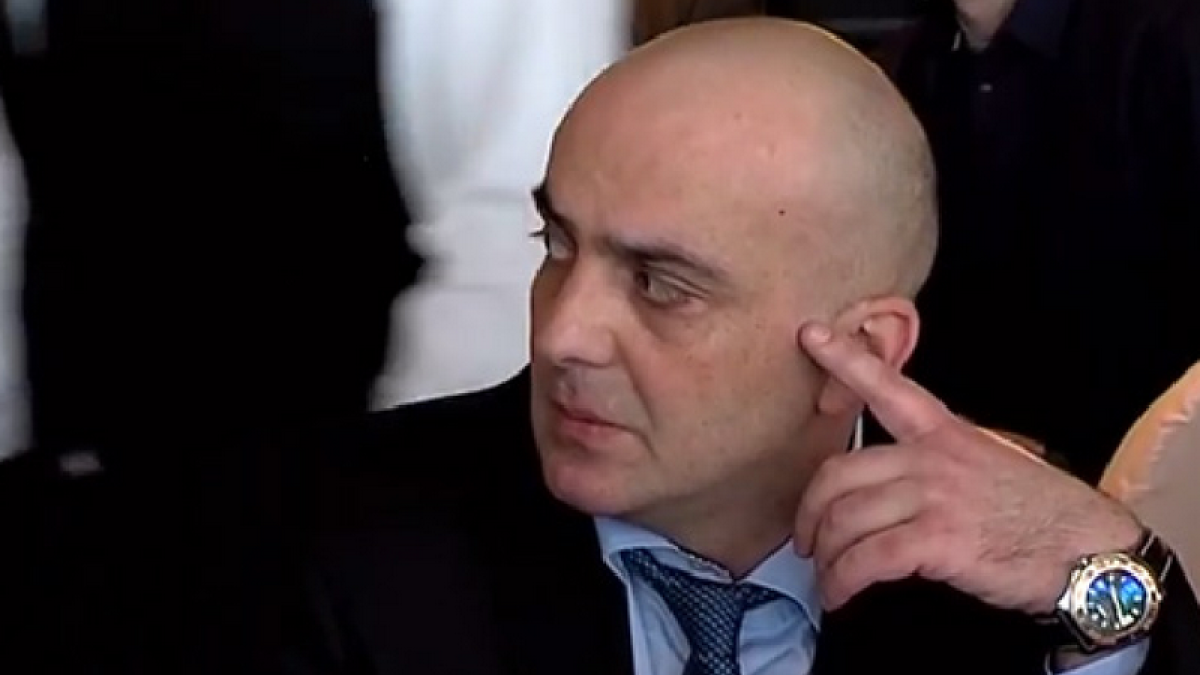
International investigation
In March 2025, the international investigative journalism network OCCRP published a report detailing the activities of one of Tbilisi’s call centres.
According to the journalists, the office was located just 500 metres from the headquarters of Georgia’s State Security Service and operated freely for many years.
Reporters managed to identify more than 6,000 victims from across Europe, the United Kingdom and Canada.
Between 2022 and 2025, the network stole at least $35.3m from them.
In December 2025, prosecutors detained former State Security Service chief Grigol Liluashvili. He was charged with providing protection to fraudulent call centres.
The arrest came after Liluashvili entered into a conflict over political influence with Bidzina Ivanishvili. Earlier, Liluashvili had successfully defended himself in court against television channels that had accused him for years of protecting the call centre networks. At the time, the court ruled that the journalistic investigations were defamatory.
The case of Otar Partskhaladze
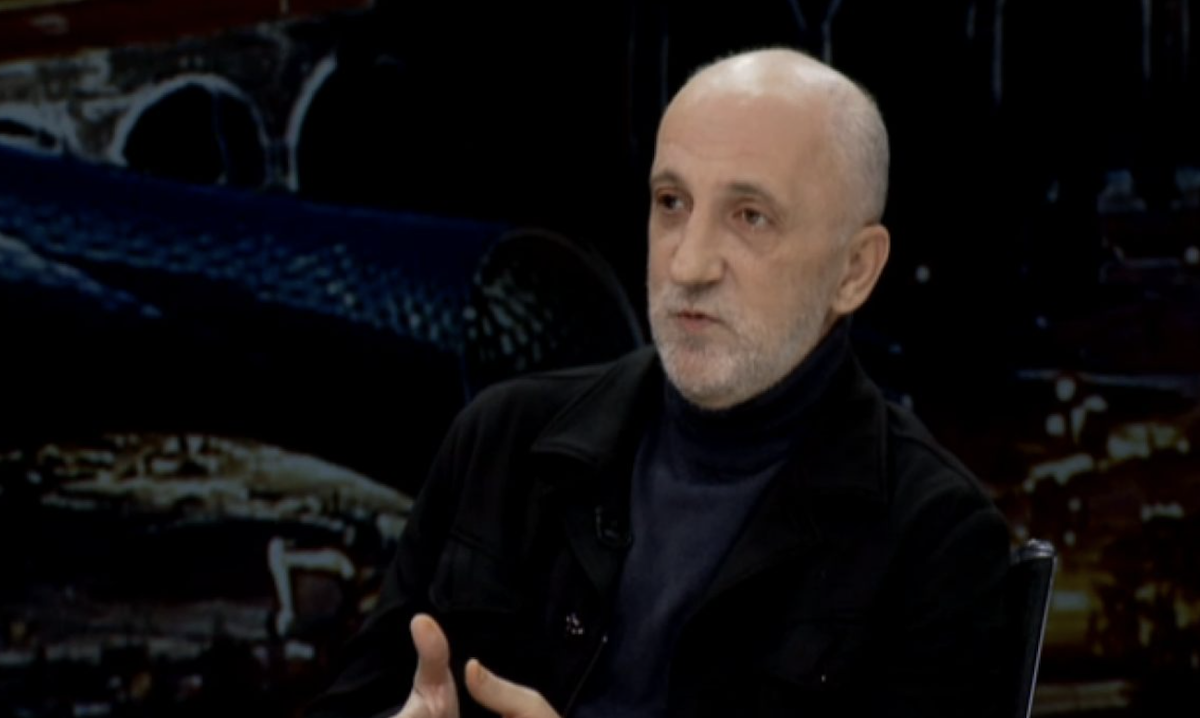
In February 2026, prosecutors launched criminal proceedings against former Prosecutor General Otar Partskhaladze and the Mikadze brothers. The case concerns money laundering and fraud allegedly linked to a call centre network.
For many years, Partskhaladze was considered one of the most influential figures in Ivanishvili’s circle. Even after the United States imposed sanctions on him, Georgia’s National Bank adopted a special regulation that softened their impact.
The investigation against the former prosecutor general began only after he became a suspect in another criminal case — the killing of businessman Levan Jangveladze, the brother of a well-known “thief-in-law”.
An unresolved problem
Despite several high-profile arrests, the system itself has not been dismantled. International and local journalistic investigations indicate that fraudulent call centres in Georgia continue to operate.
Whistleblowers say law enforcement agencies often detain only rank-and-file call centre operators or lower-level “brokers”, while the organisers usually avoid responsibility.
In some cases, those detained reach plea agreements or pay fines and are released soon afterwards, while still retaining access to the money that had already been stolen.
Many observers believe this practice effectively sends a signal to participants in the industry: in the worst-case scenario, they may simply have to return part of the stolen funds.
Selective justice
The call centre cases highlight a broader issue in Georgia — the selective application of justice.
The timeline of recent years suggests that investigations often begin not when the first evidence appears, but when the political situation changes and influential figures lose power.
Against this backdrop, the central question remains unanswered: if fraudulent networks were indeed operating in the country’s capital for years, why did investigations only become possible after the internal balance of power shifted?
Georgia call center fraud industry