Counterinsurgency: How the second Chechen war became a blueprint for Russian rule


The second Chechen war
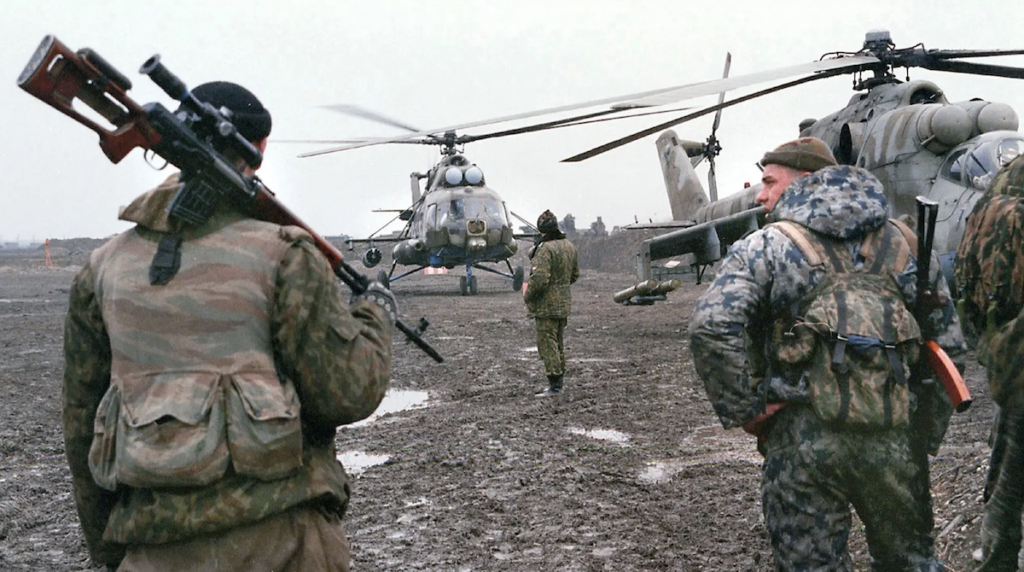
In these days of remembrance, the world is recalling Anna Politkovskaya, who was murdered 20 years ago. The gunmen have been identified, but those who ordered the killing have not. The motive, however, is clear: her work as a journalist. Above all, her reporting from Chechnya during the Second Chechen War, whose catastrophic consequences Russia has yet to confront or come to terms with.
Politkovskaya’s legacy consists of 500 articles published in Novaya Gazeta — 500 documents of an era that reveal what that war was.
Around the world, Politkovskaya is often remembered as Ramzan Kadyrov’s personal enemy. That characterization vastly understates the significance of her work in understanding modern Russia and how it arrived at a point of absolute inhumanity.
▇ Politkovskaya was no more an enemy of Kadyrov than she was of Putin. She was a pathologist of the war that brought them both to power.
Understanding her legacy without understanding how that war stripped us of our humanity is impossible.
We invite you to go back 27 years, to September 1999. That was when a country, frightened by terrorist attacks, placed its trust in Vladimir Putin, who promised to “wipe out” the terrorists. The terms of the bargain — freedom in exchange for security — included an expansion of presidential power. In the end, our shared future was at stake.
Based on an article by Novaya Gazeta Europe.
“Not for Publication”
In the summer of 2014, the hacker group Anonymous International hacked the email account of Igor Girkin, also known as Strelkov, one of the most prominent instigators and participants in the war in Ukraine, and handed his correspondence to journalists at Novaya Gazeta. Among the emails was a fictional story by Girkin titled Adventures of Scumbags. It describes in detail a day in the life of an FSB operative during the Second Chechen War, in which Girkin took part from 1999 to 2005.
Girkin writes: “Today we are supposed to head west, toward the city of Argun and the large ‘bandit’ village of Mesker-Yurt on the plains (…). Our contact, an armed local guide, is waiting in his car at the agreed meeting point. We move him into our vehicle and question him. Today, he is prepared to identify four houses where militants frequently take shelter or spend the night.”
- Chechnya’s recruitment machine: How Kadyrov sustains his forces by enlisting civilians
- Chechen woman taken from Georgia to Chechnya and later killed: what we know so far
- Journalist from Novaya Gazeta and lawyer assaulted in Chechnya
- “This family belongs in prison or in the ground” – Chechen authorities detain mother of an activist
The story ended as follows: “We dropped the local guide off in Argun and took Vovan to Khankala (…). Reporting, planning, organising…” Vovan was another FSB operative, while Khankala was the main base of Russian forces in Chechnya.
At first glance, there was nothing criminal about a story describing a meeting with a recruited Chechen informant. What was revealing, however, was a warning Girkin included in the email itself: “The story cannot be published because the people we detained usually disappeared without a trace after interrogation. Only those who were there by chance were released. The rest were [taken away] without trial…”
When Novaya Gazeta journalists asked Girkin’s press secretary, Anastasia Mikhailovskaya, to confirm his authorship, she replied: “If you publish it, there will be a scandal. You must not publish it. We will sue!”
Why was Girkin so afraid of the publication of a story about a war that had ended long ago?
A Catastrophic Miscalculation
Formally, the Second Chechen War began with secret decree No. 1255s, signed by President Boris Yeltsin on September 23, 1999. But the first link in the chain of events was the incursion into Dagestan’s Botlikh district on August 7, 1999, by forces led by Shamil Basayev and Khattab, a Saudi militant linked to al-Qaeda.
Nearly three years had passed since the Khasavyurt Accords ended the First Chechen War. Power in the de facto independent Chechen Republic of Ichkeria had become divided. Aslan Maskhadov, who had been legally elected president in 1997, faced opposition from Shamil Basayev, the best-known field commander and deputy prime minister. Alongside militants from the Middle East, Basayev sought to impose a strict Sharia-based regime rooted in Salafism, which was alien to local traditions. These ideas found little support among Chechens.
Basayev and Khattab were counting on Dagestan’s Salafists. During the 1990s, Sharia-based jamaats emerged in Dagestan, declaring autonomy from Russia’s secular system of government. The most significant enclave was considered to be the so-called Kadar Zone, comprising four mountain villages. But here, dreams of a caliphate collided with reality: the overwhelming majority of North Caucasus residents did not support an Islamic state. Unlike Chechnya, the republics of the region were not seeking independence either. The Dagestani poet Rasul Gamzatov put it this way: “Dagestan did not voluntarily join Russia, and it will not voluntarily leave it!”
The first to repel the militants were Dagestanis themselves. A popular militia forced Basayev’s and Khattab’s forces to retreat into Chechnya.
Russian authorities launched a military and police operation in the Kadar Zone. To divert Russian forces, Basayev and Khattab invaded Dagestan’s Novolaksky district. At the same time, the ideologues of the caliphate resorted to a far more terrifying tactic: bombing residential buildings in Russia. After an explosion destroyed a military dormitory housing servicemen’s families in Buynaksk, followed by the bombing of the first apartment building on Guryanova Street in Moscow, Basayev told Czech journalist Petra Procházková that these were “Dagestani bombs” that had exploded “in response to Russia terrorizing Dagestan.”
Basayev and Khattab were probably drawing on the precedent of Budyonnovsk, where the hostage-taking in May 1995 had shifted the balance in favor of the Chechen resistance. But this time, they made a catastrophic miscalculation. Basayev later categorically denied involvement in the bombings, but by then it was too late. The attacks shook Russia, unleashed a wave of hatred toward Chechens as a people, and gave the military an unassailable pretext for revenge.
Russia’s Response
From the first months of the campaign, Western analysts judged the Second Chechen War to be far more successful for Russia than the first. Many agreed with Anatoly Chubais, who declared that “the Russian army has been reborn in Chechnya.” The authorities and military had taken the lessons of the first war on board and were preparing for another.
There were no more reckless attempts to “take Grozny in two hours with a single airborne regiment.” The operation was led by experienced generals. Forces were built up gradually and methodically. Air power and artillery were deployed extensively and without restraint, including Grad multiple-launch rocket systems, self-propelled artillery and sustained, large-scale air strikes. According to estimates by Western specialists who studied the war at the Pentagon’s request, the air force accounted for more than 80% of all fire missions, while artillery accounted for 15–17%.
No targets were off limits to the military: not residential buildings, schools, hospitals or markets. Numerous reports by Russian and international human rights organisations attest to this. They are not the only evidence. The website of the state-run A. A. Kadyrov Memorial Glory Museum states: “Virtually all industrial, residential and transport infrastructure was destroyed. More than 80% of residential buildings in central Grozny and its neighbourhoods were completely destroyed or rendered beyond repair.”
This strategy resulted in enormous civilian casualties, but it also sharply reduced Russian military losses compared with the First Chechen War.
In the mountains, elite units were deployed to fight. Battles for strategically important gorges were deliberately scheduled for winter, when militants’ movements could be easily spotted from the air and the forests offered little cover. For the first time in Russian history, combat pay was increased severalfold and contract soldiers were offered social benefits. War became an attractive way to make a living.
But the conflict in the former Yugoslavia and NATO’s intervention had a greater influence on the “rebirth of the army” than Russia’s defeat in the first Chechen campaign. Western analysts were already warning that Chechnya had become a testing ground where Russia was rehearsing scenarios for future wars against external adversaries.
The Indian military expert and retired Major General Gagandip Bakshi compared Russia’s operation to the suppression of separatism in Jammu and Kashmir. In his view, the Balkans and NATO’s new mission beyond the alliance’s traditional area of responsibility had prompted Russia to revise its military doctrine and “conventionalise” the conflict in Chechnya.
“This is a full-scale military invasion in which [Russia] has disregarded international condemnation and transformed the conflict into a brutal, conventional war, where the laws of peacetime and human rights standards are no longer taken into account…”
Grozny became the symbol of this response. In 2003, the United Nations recognised it as the most devastated city on Earth since the Second World War.
From the NKVD to the FSB
On February 29, 2000, Lieutenant General Gennady Troshev, deputy commander of the Joint Group of Forces in the North Caucasus, announced the end of the military phase of the campaign. In five months, the army had brought all of the Chechen lowlands and a substantial part of the mountainous region under its control. Almost all major settlements had been destroyed. The exception was Gudermes, which was surrendered without a fight by the influential Yamadaev clan, which had switched sides to support Moscow.
Nearly half of Chechnya’s population — around 400,000 people — fled the republic. In Russia, no one was waiting to welcome them after the apartment bombings. People sought refuge in Ingushetia or risked crossing the mountains into Georgia in the depths of winter.
Tiny Ingushetia took in 240,000 refugees. It lacked the resources to house and feed them all. Because of delays in federal funding, hundreds of thousands of people went for months without hot meals or government food rations. Only international aid prevented mass starvation. It was then that Chechens began leaving for Europe and other countries. Before the war, the only established Chechen diaspora was in Jordan.
For Moscow, a new phase was beginning: holding the territory amid a guerrilla war. Western experts predicted serious difficulties, noting that Russia “had never developed a doctrine for conducting protracted counterinsurgency campaigns, which was one of the main reasons for its defeat in the First Chechen War.”
There was, indeed, no such doctrine. But there was a Soviet legacy of suppressing guerrilla movements in the 1940s: the Ukrainian Insurgent Army (UPA) in western Ukraine and the Forest Brothers in the Baltic states. The NKVD and MGB had developed a classic Soviet counterinsurgency playbook: sweeps and raids, filtration camps, enforced disappearances, secret prisons, torture to extract information or recruit informants, collective punishment designed to deprive guerrillas of popular support, and amnesties intended to fracture the underground resistance. All of these methods were deployed from the earliest days of the Second Chechen War.
The leading role belonged not to the military but to the security services. Once the army had re-established control over most of the republic, the generals were pushed aside and strategic command passed to the FSB. From 2001, the Joint Group of Forces was headed by serving or former security service officers who had formally transferred to the Interior Ministry.
It was at this point that Igor Girkin and operatives like him began activities in Chechnya that remained too sensitive to publish even nearly 30 years later.
“The Rest Were Taken Away Without Trial…”
Russian human rights defender Alexander Cherkasov used the records of human rights violations compiled by the Memorial Human Rights Center since the beginning of the war to establish the date of Girkin’s meeting with the informant near Mesker-Yurt. He also established what happened after the report was submitted to Girkin’s superiors — and what the author had left out of his story.
In the early hours of November 15, 2000, Russian forces carried out a “cleansing operation” in Mesker-Yurt. This was the term used in Chechnya for military raids on populated areas. The pattern was always the same. Masked soldiers in armoured vehicles with no license plates or identifying insignia sealed off a village or neighbourhood. They broke into homes, searched them and often looted property in front of the residents. But most importantly, they took large numbers of people away to unknown destinations without any legal grounds.
Detainees were transported to temporary detention centres that were, in effect, secret prisons, where they underwent so-called “intensive interrogations” — in other words, interrogations involving torture.
Everyone was subjected to violence, regardless of age or sex, although most were “random” victims, to use Girkin’s terminology. After several days, they were released, often after their relatives had paid a ransom. But some disappeared without a trace.
On November 15, 2000, Ilyas Gachayev, Shamil Yashuyev, Adam Soltamuradov and Emedi Soltamuradov were detained in Mesker-Yurt. Most of the other villagers detained in the following days were released. These four never returned home. They joined the ranks of the forcibly disappeared, whose numbers in Chechnya ran into the thousands.
To this day, there are no precise figures for the victims of enforced disappearances during the Second Chechen War. Neither Russian nor Chechen authorities kept a tally. Human rights groups attempted to document the cases as far as their limited resources allowed. While Russia’s Interior Ministry was still reporting figures, the statistics showed that 5,500 people had been detained in the first five months of the campaign alone. In the first two years, Memorial documented the disappearance without a trace of more than 1,250 detainees.
Local residents discovered at least nine mass graves and several dozen bodies buried separately in shallow pits. The bodies bore signs of elaborate torture: scalps cut away, finger joints severed, ears cut off, skin flayed from people while they were still alive, eyes gouged out, throats slit and bones broken. Almost all the bodies showed gunshot wounds consistent with execution.
In the village of Starye Atagi, the bodies of abducted people were discovered during the cleaning of a collective farm irrigation canal. An excavator caught on a chair to which the body of a young Chechen man had been tied with ropes. He had been bound to the chair while still alive, shot as a target and buried with it.
Bodies, and sometimes living people, were thrown from helicopters into the Grozny Sea reservoir and Chechen rivers. On April 1, 2000, residents of the Ingush village of Arshty saw a military helicopter drop a man into the Assa River. His body was identified as that of Rustam Temirsultanov, 24. A forensic examination found one of his own eyeballs inside his mouth.
According to Memorial, between 3,000 and 5,000 Chechens became victims of enforced disappearance over the ten years of the Second Chechen War. Human rights defenders stressed that their monitoring covered only between a quarter and a third of the republic’s settlements, and even there, the documentation was incomplete.
A Crime Against Humanity
Russian criminal law contains no specific offence of enforced disappearance, meaning that there is no corresponding legal classification or penalty. Yet on December 18, 1992, Russia was among the states that approved United Nations General Assembly Resolution 47/133, adopting the Declaration on the Protection of All Persons from Enforced Disappearance. The declaration defines enforced disappearance as the deprivation of a person’s liberty by state agents or people acting with state authorisation, followed by a refusal to acknowledge the detention and the concealment of the person’s fate or whereabouts.
The declaration called on states to prevent such practices and to make enforced disappearance a separate criminal offence. When disappearances are widespread and systematic, and the state refuses to acknowledge them, investigate them or punish those responsible, they may constitute crimes against humanity, which are not subject to a statute of limitations. Article 7 states: “No circumstances whatsoever, whether a threat of war, a state of war, internal political instability or any other public emergency, may be invoked to justify enforced disappearances.”
In 2006, Russia reversed its position and refused to ratify the International Convention that had been developed on the basis of the declaration. By then, it had effectively become the second European country, after Bosnia and Herzegovina, in terms of the number of people who had been forcibly disappeared. Lawyers from the Legal Initiative organisation alone won more than 1,000 cases concerning disappearances in Chechnya before the European Court of Human Rights (ECHR).
In late August, Serbian general Ratko Mladić died while serving a life sentence imposed by the International Criminal Tribunal for the former Yugoslavia for crimes against humanity. The tribunal found him guilty of the Srebrenica massacre, the largest mass killing in Europe since the Second World War. On Mladić’s orders, Bosnian Serb forces killed 8,372 men and boys from Bosniak Muslim families. Until their remains were found, exhumed and identified, the victims were considered forcibly disappeared. More than 40,000 people disappeared during the conflicts in the former Yugoslavia.
It is no coincidence that Russia has still not recognised the Srebrenica massacre as genocide, while its Foreign Ministry formally expressed condolences to Mladić’s family.
The “Health” Settlement
In early 2001, rumours spread across Chechnya about bodies found in the abandoned dacha settlement of Zdorovye, just over half a mile from Khankala, Russia’s main military base in the republic. Since January 2000, the headquarters of the Joint Group of Forces conducting the so-called counterterrorism operation had been based there. That was the official term used in Russia for the Second Chechen War. The settlement stood deserted, and people were afraid even to venture into it.
In early February, the family of Adam Chimaev, who had disappeared after being detained in December 2000, paid a Russian serviceman for information about the location of his body. Risking his life, Chimaev’s father found his son near a holiday cottage. The body bore signs of torture and three gunshot wounds to the chest. The father paid the military another $3,000 to retrieve the body and bury his son.
By the end of February, three more families had found the bodies of relatives who had disappeared during cleansing operations. The case then attracted widespread attention. Memorial and Human Rights Watch jointly produced a report titled The Dirty War: Disappearances, Torture and Extrajudicial Executions. The settlement was covered by Kommersant and Radio Liberty. Later, the Legal Initiative represented the victims’ relatives before the European Court of Human Rights after the state refused to investigate the crimes.
Technically, this was not a mass grave but a dumping ground, where the bodies of people tortured to death were discarded in place of rubbish. After the scandal broke, prosecutors opened an investigation and found around 60 bodies of men and women. Almost all were dressed in civilian clothes, and many had their hands and feet bound with wire. Most had gunshot wounds inflicted at close range to the abdomen, chest or head. The bodies were at different stages of decomposition, ranging from several weeks to a year. This meant the settlement had been used as a dumping ground for the dead for several months.
Immediately after the reports were published, the authorities cordoned off the settlement, claiming that militants had allegedly mined the area. The bodies were laid out for identification in a dilapidated hangar at an emergency services base in Grozny. Within two weeks, nearly 30 people had been identified. All had previously been detained by the military and then disappeared. Evidence indicated that at least five of them had been taken alive to the Khankala military base.
The last to be identified were three women: Nura Luluyeva, the wife of Chechen judge Said-Alvi Luluyev, and her cousins, Markha and Raisa Gakayev. According to the European Court of Human Rights judgment in Luluyev and Others v. Russia, on June 3, 2000, the women went to a market in Grozny and were caught up in a cleansing operation. Soldiers in camouflage uniforms and masks pulled sacks over the detainees’ heads and drove them away in a Ural military truck. The prosecutor’s office, Interior Ministry and FSB all claimed that the women did not appear on any list of detainees. When their bodies were found, sacks were still covering their heads — possibly the very ones used during their abduction.
The authorities then hurriedly buried the unidentified bodies in a mass grave on the outskirts of the cemetery in the village of Prigorodnoye.
The remains of Ilyas Gachayev and brothers Emedi and Adam Soltamuradov, who had been taken from Mesker-Yurt following the operational intelligence provided by Girkin, were identified by their relatives only after the mass burial, using photographs taken by forensic experts. The bodies were still clothed, with their hands bound behind their backs. Shamil Yashuyev was never identified, but one of the bodies gnawed by dogs was wearing a jacket resembling the one he had been wearing when he was taken from his home.
On August 21, 2001, Chechnya’s prosecutor, Vladimir Chernov, told the Interfax news agency: “There is no witness testimony confirming that federal forces were responsible for these killings. Therefore, the main theory pursued by investigators is that the mass grave was organised by Chechen militants.”
Mass Reburials
Chernov justified the hasty burials by citing the lack of facilities to store the bodies and claimed that the evidence collected would be sufficient for any future identification. Yet investigators failed to preserve the clothing or collect forensic evidence. They conducted no autopsies, established neither the causes of death nor injuries sustained before death, took no dental X-rays, recovered no bullets and collected no samples for DNA testing. The authorities did everything they could to ensure that the bodies would never be identified and the killers never found.
The remains of more than 30 people from the Zdorovye settlement still lie unidentified in a mass grave in Prigorodnoye.
The search for mass graves was long conducted by the General Lebed Peacekeeping Mission. According to its head, Alexander Mukomolov, who until recently was a member of the Human Rights Council under the Russian president, 119 mass burial sites were identified in Chechnya between 1999 and 2009. They may contain the remains of around 1,500 people: victims of enforced disappearances, Russian soldiers reported missing in action, and civilians killed in bombing raids and shelling.
Most of the burial sites remain unopened to this day. They are excavated only when they obstruct construction projects planned by the Chechen authorities. In such cases, the remains are dug up and reburied elsewhere. Reburial without identifying the victims of serious crimes has become standard practice in the republic.
For years, Russian and Chechen authorities have repeated the same explanation: Chechnya has no laboratory capable of identifying human remains, and Russia lacks the necessary specialists. In reality, Russia began building the infrastructure for identifying the dead, particularly soldiers, as early as 1995. American military personnel helped their counterparts in the Russian Defence Ministry master modern techniques and supplied equipment for DNA analysis.
The United States was a pioneer in this field. American anthropologists, forensic pathologists and criminal investigators played a crucial role in investigating crimes committed by military dictatorships in Latin America. FBI experts helped establish what became the world’s most advanced system for exhuming and identifying remains from mass graves in the former Yugoslavia. Mukomolov repeatedly cited the experience of Bosnia and Herzegovina as an international benchmark and urged the authorities to apply the same approach in Chechnya.
Russia itself drew on American expertise in 2008, immediately after the five-day war in Georgia. More than 100 Russian forensic specialists were deployed to South Ossetia, accompanied by a mobile laboratory. Russian authorities announced to the world that between 1,500 and 2,000 civilians had been killed in South Ossetia during the five-day war and attempted to accuse the Georgian authorities of genocide. In reality, the number of South Ossetian victims was ten times lower: 162 people. There was no need to deploy so many forensic specialists other than for propaganda purposes.
Two months before the war in Georgia, in June 2008, one of the largest burial sites in Chechnya was discovered in Grozny’s Leninsky district, near a Christian cemetery. It contained around 800 bodies. In July, another site containing several hundred bodies was found near the village of Goryacheistochnenskaya. But Viktor Ledenev, head of the Investigative Committee in Chechnya, refused to conduct exhumations, citing a shortage of specialists and inadequate infrastructure.
Even Nurdi Nukhazhiev, the former human rights ombudsman under the head of Chechnya, publicly identified what he saw as the real reason behind this policy of concealment:“It is precisely the Defence Ministry that is doing everything possible to obstruct the creation of an interagency commission to identify abducted and missing persons, as well as the establishment of a laboratory in the Chechen Republic to identify exhumed bodies…”
Freedom in Exchange for Danger
The official objective of the Second Chechen War was to combat terrorism. The authorities persistently referred to the campaign as a “counterterrorism operation,” rather than a war. This was largely a legal manoeuvre. Declaring martial law would have required the approval of a parliament that was still independent at the time and compliance with international obligations, above all the Geneva Conventions.
But in September 1999, public concern centred above all on security. Political scientists would later describe the social contract offered to citizens by the new prime minister, Vladimir Putin, as “freedom in exchange for security.” The public readily accepted it.
Initially, the West sharply criticised Russia’s methods. But those methods only drove more recruits into the militants’ ranks. The unrestrained brutality of the military and security services became one of the factors behind the emergence of shahidkas — women, often the widows and sisters of those killed, who were turned into “human bombs” after relatively rudimentary psychological and ideological conditioning.
After the September 11, 2001, terrorist attacks, Vladimir Putin was the first foreign leader to call US President George W. Bush to offer his condolences. Putin stressed that Russia had already spent two years defending the civilised world against Islamist terrorism in Chechnya. Western attitudes began to shift. Basayev, Khattab, Umarov and the Caucasus Emirate they led were placed on US terrorist lists. The West definitively abandoned the idea of an international tribunal for Chechnya.
When Putin opened Russian airspace to NATO aircraft and raised no objections to US military bases in Central Asia, the Second Chechen War came to be regarded as one front in the global war on terror.
In reality, the West and Russia shared a record of war crimes in this conflict. When confronted with accusations of human rights abuses in Chechnya, Russia pointed to Guantánamo Bay, Abu Ghraib, secret CIA prisons in Europe, and civilian casualties in Afghanistan and Iraq.
But a comparison of how the United States and Russia protected their citizens from terrorist attacks suggests that counterterrorism was never a priority for the Russian authorities. After September 11, the United States overhauled its security system. In the quarter-century since, no terrorist organisation has come close to repeating Osama bin Laden’s “success.” In Russia, by contrast, terrorist attacks became a recurring feature of life: the 2002 Moscow theatre siege, the 2004 attacks in Ingushetia and the Beslan school hostage-taking, the 2005 assault on Nalchik, and countless bombings targeting cars, buildings, hospitals, markets, aircraft and metro stations.
The authorities exploited every attack to concentrate presidential power and strengthen the security services. But the goal was not to fight terrorists; it was to suppress political opposition and civic dissent.
It was not until 2013, on the eve of the Sochi Winter Olympics, that the security services managed to stabilise the situation in the Caucasus. International developments played a significant role. When the Islamic State (ISIS), founded by former members of Saddam Hussein’s Iraqi security services, seized parts of Iraq and Syria and declared a caliphate, radicals from around the world, including the North Caucasus, flocked to join it. Russian security services simply opened the border to them.
In March 2024, Islamic State followers stormed the Crocus City Hall concert venue, opened fire and set the building ablaze. The attack killed 151 people and injured more than 600. Foreign intelligence agencies had warned the FSB of an impending terrorist attack. Yet on March 19, three days before the assault, Russia’s leadership publicly dismissed the warnings as “outright blackmail by Western countries” and an attempt to destabilise society. The FSB did nothing to prevent the attack.
Today, in Russia, Ukrainians are branded terrorists, while Islamic State militants are no longer the primary focus.
The terrorist attack took place in a climate of complete public silence. There is nowhere left to ask the authorities what became of the social contract of September 1999, and no one left to ask the question. This is what became of it: the methods of terror honed in Chechnya have become a central instrument of Russian state policy, both at home and abroad.
The practices of filtration — enforced disappearances, secret prisons, torture and extrajudicial executions — became a principal means of “bringing the population into line” after the annexation of Crimea, and later across all the regions of Ukraine occupied by Russian forces in the first months of the war. According to human rights defenders, the practice of so-called “short-term enforced disappearances” has also spread beyond Chechnya to regions across Russia itself.
▇ Replace Chechens with Ukrainians in Anna Politkovskaya’s articles, Novye Aldy and Khatuni with Bucha, Izium or Kherson, and Grozny, Komsomolskoye, Argun and Shali with Mariupol, Bakhmut, Kharkiv or, right now, Kyiv, and her reporting will read as entirely contemporary — and entirely prophetic.
This article was produced in collaboration with the Memory Project, a civic initiative comprising Russian lawyers, human rights defenders and researchers who investigate enforced disappearances and preserve historical memory.
Exchange