'Armenia is replacing one dependency with another': Former Security Council Secretary Armen Grigoryan’s assessment


Article by Armenia’s former Security Council secretary
“Armenia is replacing one dependency with another”: Former Security Council Secretary Armen Grigoryan’s view
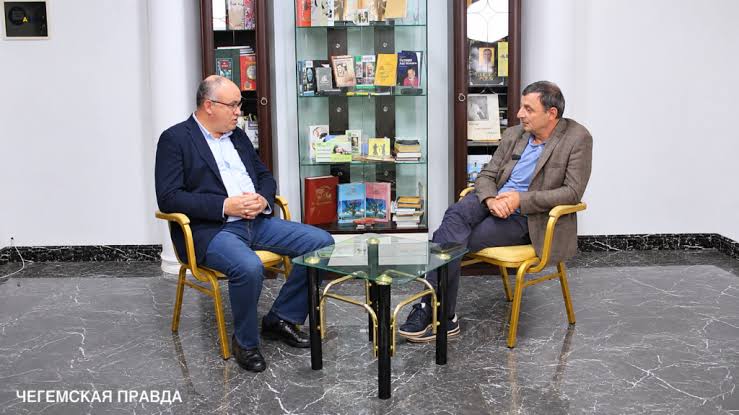
“The idea of Armenia joining the European Union seems attractive at first glance. But we often confuse what we want with what is possible,” says Armen Grigoryan, a former secretary of Armenia’s Security Council.
He published an article arguing that EU membership is an unrealistic prospect and contradicts the formula Armenia’s authorities have declared. That formula calls for “replacing dependence on a few with dependence on many”.
“This is not a genuine alternative or a diversification of foreign policy. It is simply a way to replace one dependency with another, one that offers fewer prospects and ignores regional realities,” he writes about Armenia’s prospects for European integration.
In Grigoryan’s view, the EU membership agenda once again leads Armenia into a dead end. It forces the country back towards forms of dependence that “have proved unsustainable”.
“Just as we once believed that Russia would solve our security problems, we now mistakenly expect the EU to solve the economic problems that will arise on the path to EU membership,” he argues.
Discussing potential risks, the former official said Armenia could once again face the harsh reality it has experienced since 2020. That was when the 44-day war in Nagorno-Karabakh began. He argues that “an external partner may not take responsibility for solving the problems we expect it to address”.
Grigoryan also raises the question of “how to reduce dependence on Russia without deepening that very dependence even further”. However, he does not offer a direct answer under this subheading. Instead, he speaks of the need for independent decision-making and closer cooperation with the EU, the US and other countries.
Below, we publish an abridged version of the article by the former Security Council secretary, which has sparked considerable debate in Armenia’s political circles.
- ‘The ball is in Armenia’s court’: Yerevan voices on Armenia losing its voting rights in Russia-led CSTO
- ‘Democrats do not see TRIPP as project exclusive to Trump administration’: opinion from Yerevan
- Will Turkey open its border with Armenia amid tensions with Baku? Views from Yerevan
Historical overview
“If we look at Armenia’s recent history, a very clear and harsh pattern emerges. Every time Yerevan has tried to move closer to the West, it has faced mounting pressure from Russia and ultimately ended up even more firmly in Moscow’s ‘embrace’.
In the 1990s, under Levon Ter-Petrosyan, attempts to build closer ties with European and Euro-Atlantic institutions ended with Armenia joining the Collective Security Treaty Organisation (CSTO) and signing a Treaty of Friendship, Cooperation and Mutual Assistance with Russia in 1997. This strengthened Armenia’s military and political ties with Moscow.
In the 2010s, under Serzh Sargsyan, an attempt to sign an Association Agreement with the EU ended with the decision on 3 September 2013 to join the Customs Union. Armenia subsequently joined the Eurasian Economic Union.
Today, this history appears to be repeating itself, but under a much more dangerous scenario.
“While Armenia continues negotiations and takes steps towards EU membership, I see a growing risk that the country could become involved in the Russia-Belarus Union State.”
Armenia has no immunity against pressure from Moscow
“Statements and steps towards EU membership are sharply worsening relations between Armenia and Russia.
Faced with Russia’s harsh and aggressive countermeasures, Armenia’s state immune system simply cannot withstand Moscow’s economic, political and hybrid pressure.
As a result, without real security guarantees from the West, Armenia cannot reduce its dependence on Russia. Instead, it becomes even more vulnerable to Russian pressure.”
The European integration agenda contradicts regionalisation
“An unrealistic EU membership agenda runs counter to the natural process of regionalisation. Armenia lies at the crossroads of three major regional powers: Russia, Iran and Turkey. Yerevan’s relations with each of them are closely interconnected and require a delicate balance.
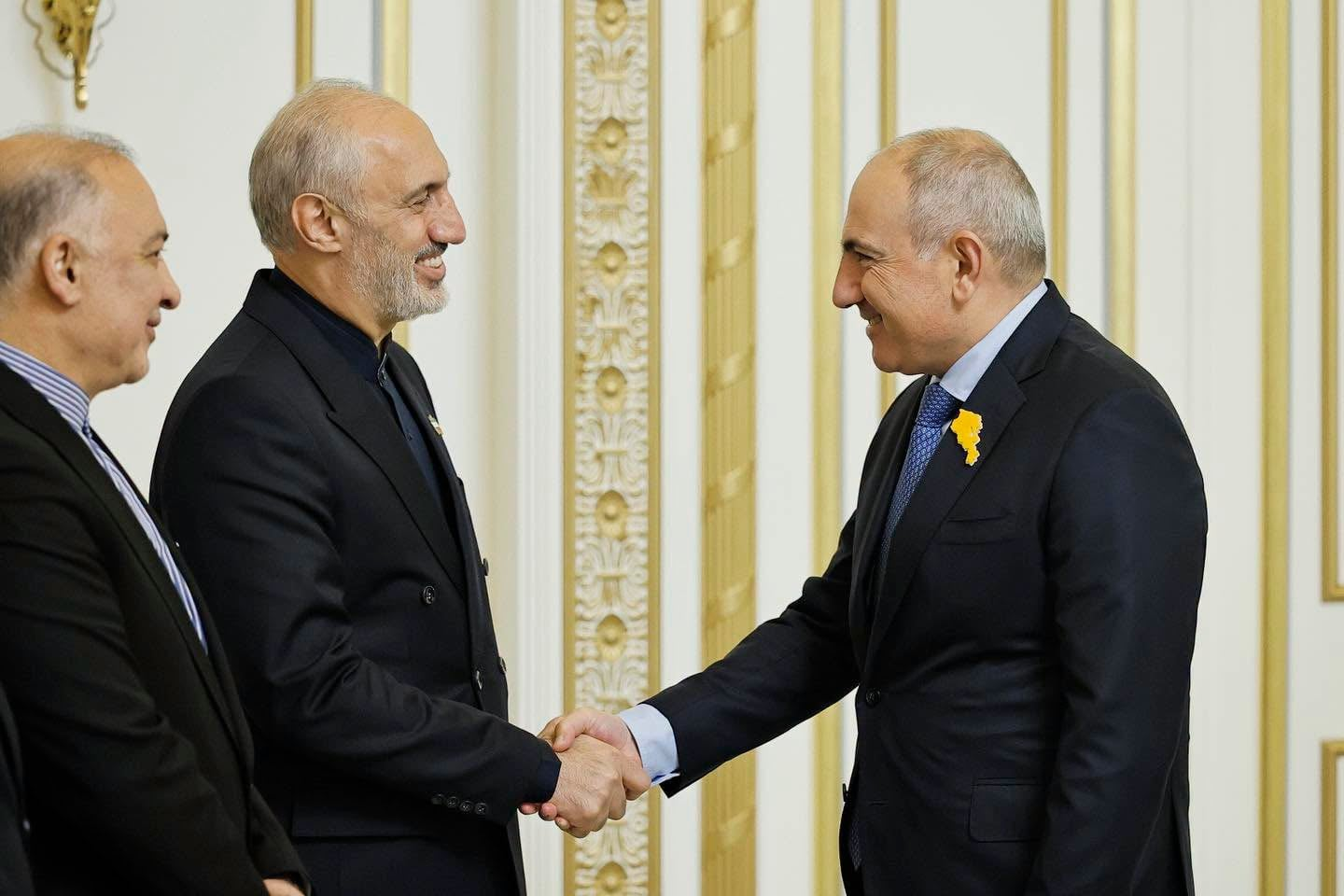
Iran has repeatedly outlined its ‘red lines’, opposing any expansion of Western military and political presence in the region. Given its strained relations with the West, Tehran views the EU as part of the collective West.
Armenia’s attempts to join the EU could jeopardise its friendly relations with Iran. And Iran is not just a neighbour for Armenia, but a vital ‘lifeline’.
Although Turkey is a NATO member, it pursues an independent regional policy. Together with Azerbaijan, Ankara seeks to resolve regional issues with the participation of countries in the region. The ‘3+3’ format is one example of this approach.
Yerevan’s attempts to expand the West’s presence in the region could create further tensions in its relations with Turkey and Azerbaijan.
Russia views Armenia’s EU membership agenda as a threat to its interests in the region and responds with strong opposition.”
Armenia risks losing the foundations of its economic stability
“In spaceflight, a rocket must reach the second cosmic velocity of 11.2 km per second to escape Earth’s gravitational field. If it fails to reach the required speed, it cannot remain in orbit and falls back under the force of gravity.
Armenia lacks the ‘speed’ it needs to escape the economic gravitational pull of the Russia-led Eurasian Economic Union (EAEU) and Russia itself.
If Armenia finds itself in an ‘intermediate’ position during a prolonged and drawn-out EU accession process, it risks losing the foundations of its current economic stability: cheap energy supplies and access to the Russian market. It could then fall back even more painfully into complete dependence on Russia.”
Will Yerevan consider imposing sanctions on Russia and Iran?
“On its path towards EU membership, Armenia will also face the question of whether to join sanctions against Russia and Iran. This could seriously damage relations with these two countries, which are vital to Armenia’s security and economy.
Amid discussions about possible increases in the price of Russian gas, and even supply cuts in some cases, Armenia is increasingly exploring ways to import more gas from Iran. However, this raises an important contradiction.
Under the sanctions imposed on Iran, the European Union prohibits the purchase, import and exchange of Iranian natural gas. At some point on its path towards EU membership, Armenia will have to align its legislation and foreign policy with EU requirements.
This means Armenia will have to stop importing gas from Iran. The future of the Armenian-Iranian ‘gas-for-electricity’ programme will also come into question.
This creates a contradiction. Armenia needs alternative suppliers to reduce its dependence on Russian gas. Yet, on its path towards EU membership, it may have to limit its access to Iranian gas as well.”
Cooperation should extend beyond the EU and US
“Armenia can develop political, economic and security cooperation with European partners without making EU membership a foreign policy goal.
Our task is not to replace dependence on Russia with dependence on another power centre, but to strengthen Armenia’s independence.
We can deepen cooperation not only with the EU and the US, but also with India, China, Central Asian states, the Gulf countries, Japan, South Korea and other partners, each through its own agenda.
Armenia’s foreign policy options are not limited to choosing between two geopolitical centres.
The more diverse our economic, political and security ties become, the more opportunities we will have to balance external dependencies.”
Article by Armenia’s former Security Council secretary