Armenia takes a step closer to EU with launch of biometric passport system


Introduction of biometric passports in Armenia
Armenia launched a new system for issuing biometric passports on 1 November. The system fully complies with international standards. The Armenian authorities say its introduction marks the most significant reform under the country’s visa liberalisation process with the European Union.
Marta Kos, the European Commissioner for Enlargement, wrote on Facebook that the new passports would make border crossings easier for travellers. She also stressed that Armenian citizens had moved one step closer to visa-free travel to EU countries.
“Armenia is choosing closer ties with Europe, and we are working to make this choice benefit its citizens,” Kos said.
The private company HayPass will provide the new services. The relevant government agencies assure citizens that this partnership will deliver high-quality services and secure, reliable documents.
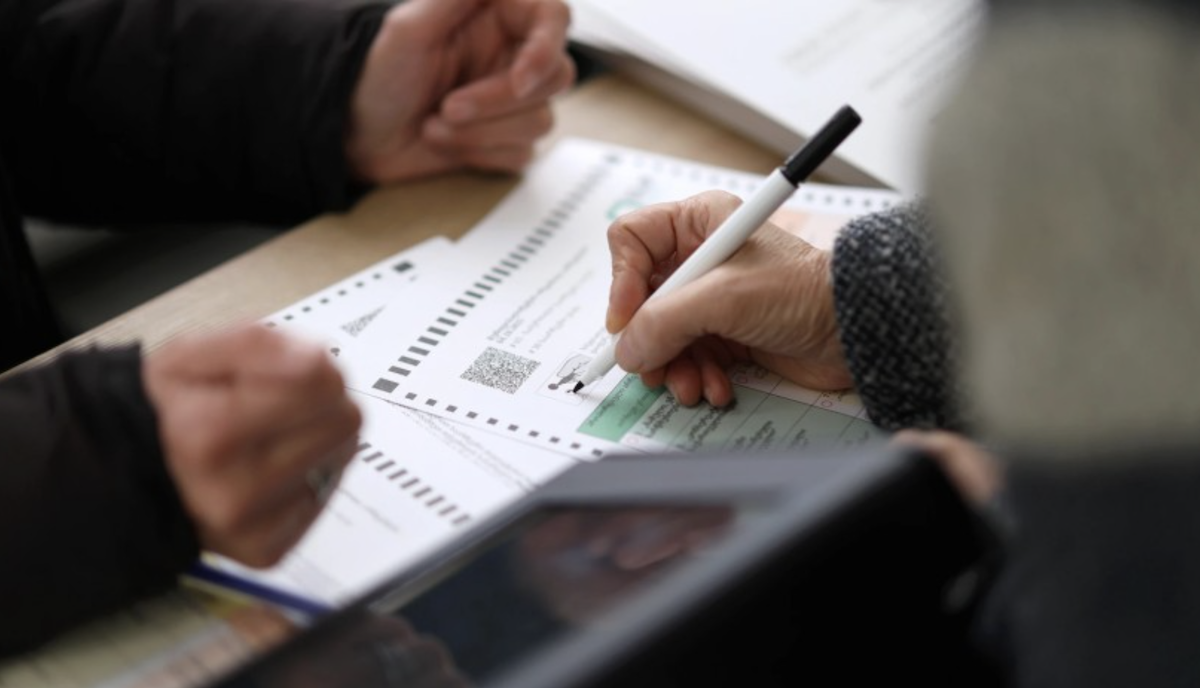
The new system has moved the entire document application process from paper to digital format. Applicants can submit their applications and complete preliminary registration online. They then receive a QR code by email and must visit a service centre at their appointed time to verify their documents and personal details.
At the centre, staff take photographs and fingerprints and record signature samples. Applicants can collect their biometric passports from the same centre 14 days later.
The biometric passport will remain valid for 10 years and cost 28,650 drams ($80). The government plans to introduce discounts for certain social groups, although it has yet to specify how much of the cost it will cover.
The authorities do not require citizens to replace their existing passports with biometric ones. People can continue using their current passports until they expire.
- Preferential regime for Armenian exports to EU in response to Russian restrictions
- Opinion: ‘Moscow’s main fear is that Armenia will choose European Union’
- Armenia begins shift from Russia towards EU – but finish line remains distant
Which other documents will become biometric?
The Interior Ministry has announced that several other types of documents will also become biometric, in addition to passports:
- Identity cards (IDs);
- Diplomatic passports;
- Residence permits;
- Identity cards and passports for stateless persons;
- Identity cards and travel documents issued to refugees under international conventions.
The risk of document forgery will be minimal
The Interior Ministry says the introduction of the biometric passport system will help address several issues at once. These include:
- Ensuring reliable identity verification;
- Reducing the risk of document forgery or the use of another person’s personal data.
Nelly Davtyan, head of the Migration and Citizenship Service, says the new system will minimise the risk of forgery at every stage, from data processing at service centres to the production of the actual document:
“The previous system depended entirely on human factors. As a result, during the preparatory stage, we identified numerous inaccuracies in the State Population Register.”
Davtyan believes a biometric passport is more than just an identity document. It also provides an important safeguard for a person’s legal rights:
“The particular value of the new system lies in the fact that international standards guarantee the establishment, identification and mutual recognition of a person’s legal status worldwide. This is not simply our assessment. We built the entire system in strict compliance with these standards.”
Gold-number passports to go on sale at auction
Armenia also plans to introduce a scheme offering “special” passport numbers, known as “gold numbers”. Some of these will go on sale at auction.
“We will launch the programme next year using two approaches. Passports with repeating digits will cost more, while numbers with ‘special’ combinations will go on sale at auction,” Nelly Davtyan said.
Faster service at HayPass offices: 3–5 minutes instead of 25
HayPass received 7,700 applications within just a few days. Some 2,700 people have already visited the company’s offices and completed the first stage of the process by submitting their biometric data.
According to Nelly Davtyan, head of the Migration and Citizenship Service, the previous document application process took 25 minutes. The new system allows applicants to complete registration in just 3–5 minutes:
“For all 2,700 citizens who have already used the service, data processing took no more than five minutes.”
Staff from the Migration and Citizenship Service have also visited regional branches. They say these offices are operating normally and have no queues either.
“This does not mean that we are providing fewer services. It means that we can now handle a much higher volume of applications,” Davtyan stressed.
Company has already invested €20 million
Interior Minister Arpine Sargsyan said the private partner, HayPass, had already invested €20 million in the project and continued to invest in it. She also stressed that citizens pay the private company 28,650 drams for a biometric passport and 5,950 drams for the accompanying identity card. These payments cover the company’s services. The state, she said, makes no profit from them.
The minister also rejected claims that the company receives payments for its services from both the state budget and citizens.
“We do not pay HayPass any money. Nothing has been paid from the state budget,” she assured.
HayPass operates 14 offices across the country
On 1 November, the first day of biometric data collection, HayPass opened service centres in two Yerevan shopping malls: Yerevan Mall and Mega Mall. Twelve regional branches began operating the following day.
Interior Minister Arpine Sargsyan said the government plans to increase the number of service centres to 23 by March 2027.
“Overall, we will have two branches in each region,” the minister said.
Introduction of biometric passports in Armenia