Five baobab trees destined for Georgia seized in South Africa


South Africa blocks shipment of baobabs to Georgia
Authorities in the South African city of Durban have blocked the shipment of at least five baobab trees. The trees were reportedly destined for a landscaping project in Georgia. A criminal investigation into the case is now under way.
According to Daily Maverick, officials discovered the baobabs at a warehouse in Durban owned by Africa Global Logistics (AGL), a subsidiary of Paris-based transport giant MSC Group.
Bidzina Ivanishvili, Georgia’s informal ruler, is known for his passion for collecting rare trees and plants. His name has featured in several cases involving the import of exotic trees into the country. In 2022, an attempt to bring eight baobabs from Kenya to Georgia attracted international attention. However, all eight trees eventually dried up and died.
What happened
According to South Africa’s Department of Forestry, Fisheries and the Environment (DFFE), those involved in exporting the trees failed to produce valid permits authorising their possession and removal from the country.
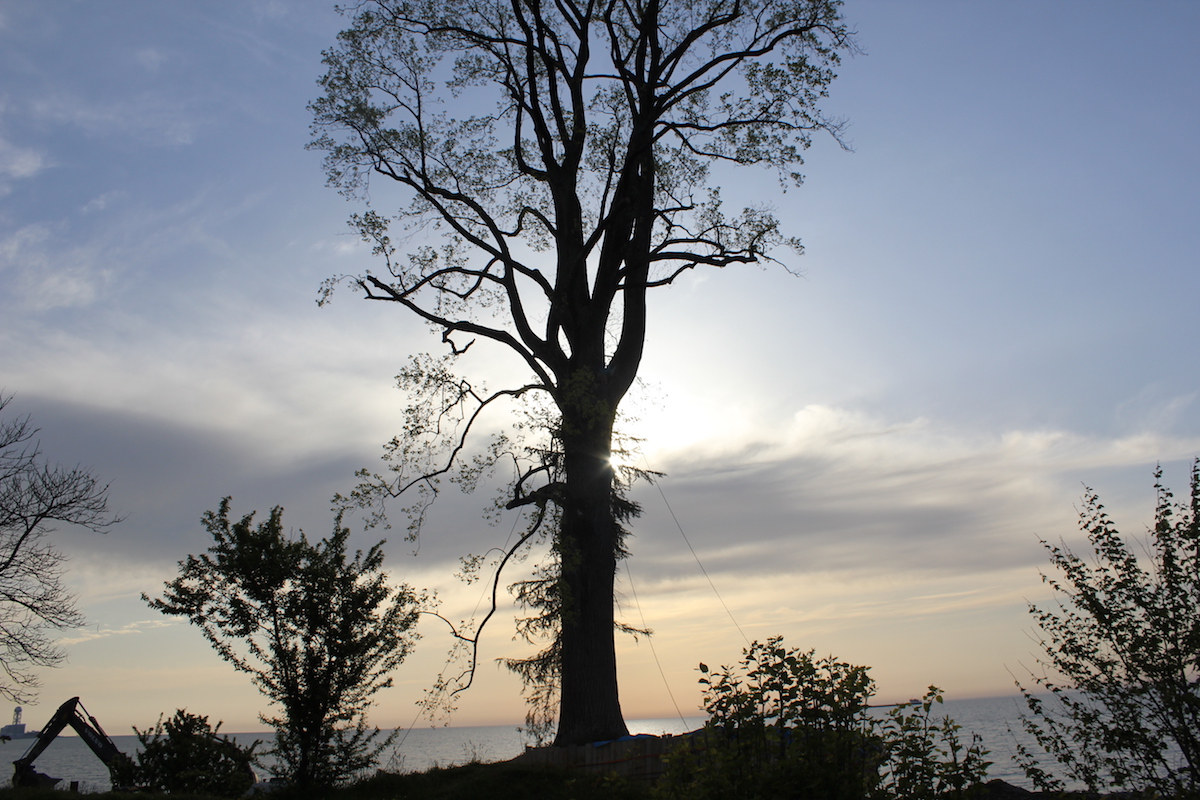
The baobab is one of Africa’s most recognisable tree species and can live for up to 2,000 years. In South Africa, it is among 50 endemic tree species that receive special protection. Without the appropriate official permits, it is illegal to cut down, damage, move, possess, sell, transport or export these trees.
The identities of the Georgian buyers and their representatives have not yet been disclosed.
Candy Botha, AGL’s regional marketing manager, told Daily Maverick that the company had provided logistics services only. It was neither the owner of the cargo nor the exporter, and it did not hold the required permits.
After learning that the trees were in Durban, Daily Maverick visited the AGL warehouse and photographed at least five baobabs. The trees lay on their sides on a paved surface. They appeared to have been left there in direct sunlight for two to three months.
Asked about the trees’ legal status, the company said such matters fell outside its responsibilities as a logistics provider. AGL also refused to disclose the client’s identity or contact details, citing confidentiality.
After Daily Maverick sent further questions to the DFFE, it emerged that no valid export licence had been issued for the trees. There was also no permit authorising their removal and relocation. According to available information, the baobabs came from the Waterberg District in Limpopo province.
Based on photographs, Jeff Nichols, a specialist in endemic plants, suggested that the trees could be more than 50 years old if they had been taken from the wild. If they had instead been grown under artificial conditions with irrigation, he estimated their age at 20 to 30 years.
The DFFE said the exporter applied for the required licence on 27 July 2026. The application covered the removal, possession, collection, transport, export and acquisition of five protected trees. However, the department rejected it on 31 July. “The application was rejected because a criminal investigation into the matter is under way. The department will not issue a licence retrospectively to legitimise actions that appear to have been unlawful,” the department said.
On 8 August, the exporter appealed against the decision. The department said the appeal was currently under review by the official responsible for such matters.
Asked whether the applicants had complied with the relevant regulations, the DFFE said they had failed to meet the requirements of the National Forests Act. According to the department, the trees came from the local municipality of Lephalale in Waterberg District, Limpopo province, and were intended for export to Georgia.
The department has launched criminal proceedings in the case. Under the law, the offence carries a fine or a prison sentence of up to three years.
The DFFE has not disclosed the names of those facing criminal proceedings, nor has it identified the owner of the trees or the exporter. The department explained that possessing, collecting, removing, transporting, exporting, buying or selling protected trees constitutes a Category 1 offence.
The plan to transport the baobabs to Georgia has also raised concerns among environmentalists. Dr Sarah Venter, founder of the Baobab Foundation, said that although it was technically possible to uproot baobabs and transplant them elsewhere, the record of their survival in Georgia was discouraging.
“Unfortunately, the survival rates of these trees in Georgia leave much to be desired,” Venter said.
The Kenyan case: eight baobabs transplanted to Georgia dried up and died
The investigation currently under way in South Africa echoes an earlier attempt to transport baobabs from Kenya to Georgia, an incident that attracted international attention in 2022.
On 24 October 2022, The Guardian reported that Kenyan farmers had sold baobabs growing on their land to a group led by Georgian national Giorgi Gvasalia. The plan involved uprooting eight trees and transporting them to Georgia.
In November that year, Kenya’s Ministry of Environment suspended a foreign company’s licence to uproot baobabs, citing several violations. The ministry also instructed the Kenya Forest Service to stop the trees from being moved.
The ministry said uprooting baobabs required the appropriate permit and a transparent process demonstrating how relocating the trees would benefit the public. It concluded that the established requirements had not been met in this case. In April 2023, the Environment Committee of Kenya’s National Assembly, the lower house of parliament, launched an investigation into the circumstances surrounding the export of baobabs from the Kilifi region to Georgia.
The eight uprooted trees remained in that condition for almost two years and eventually died.
According to Georgia’s Dendrological Park, workers had uprooted the trees in 2021, but various obstacles delayed their transport to Georgia until October 2023. They planted the baobabs in the ground on 8 November 2023.
“These African giants spent almost two years uprooted, in natural conditions entirely unsuitable for them and without proper care. Unfortunately, the stress took its toll: six to seven months after they were planted in Georgia, all eight baobabs had died,” the park said.
Investigators in South Africa must establish who owned the trees and who arranged their removal from the country, under what circumstances these protected plants were uprooted, and who bears responsibility for the attempt to transport them to Georgia.
South Africa blocks shipment of baobabs to Georgia