Azerbaijan's president sees no serious effects of climate change, but UN report says otherwise






Climate change in Azerbaijan
President of Azerbaijan Ilham Aliyev says the country has yet to feel the serious effects of climate change. He bases this assessment on the snow cover he observes in the mountains during winter. However, the latest climate documents that Azerbaijan itself has submitted to the UN show that the country is already facing serious consequences of the climate crisis.
According to official data, the average temperature has risen by 1.1°C over the past 23 years, water resources have declined by around 15%, droughts have become longer, the Caspian Sea has fallen by more than two metres, and the number of frost days and the area covered by glaciers in the mountains have decreased.
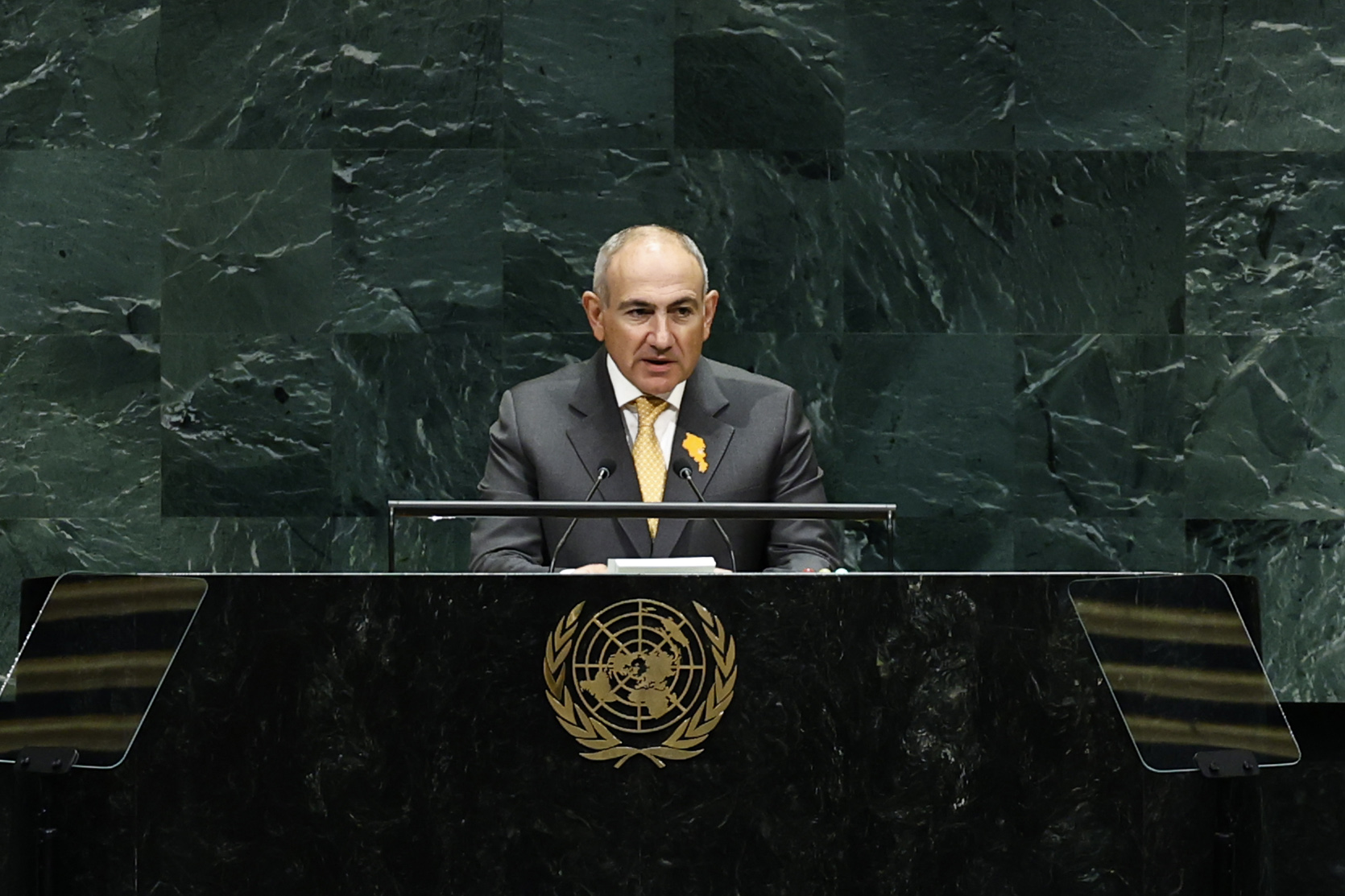
On 26 September, President Ilham Aliyev addressed climate change while discussing food security at the second Azerbaijan International Investment Forum in Baku. He commented on the issue:
“We have not yet felt the effects of climate change. I go skiing every winter and see that the snow levels in our mountains remain the same. Perhaps the snow is melting somewhere, but not in Azerbaijan.”
Aliyev then reiterated that Azerbaijan “has not yet been affected by climate change”. Yet in the very next sentence of the same speech, the president noted that water shortages required greater attention to food security.
However, the president’s broad assessment contradicts official climate documents prepared by Azerbaijan itself.
What does the government document in force in 2026 say?
One of the most recent sources is NDC 3.0, a document Azerbaijan submitted under the UN Framework Convention on Climate Change. Azerbaijan submitted it in November 2025, and an updated version appeared in August 2026.
The document paints a very different picture from the one Aliyev presented on 26 September:
“Azerbaijan is seriously affected by the climate crisis.”
The document lists rising temperatures, changing weather patterns, land degradation, shrinking water resources and the falling level of the Caspian Sea among the effects of the climate crisis. It notes that these processes threaten biodiversity, water resources, agriculture, economic development and people’s well-being.
This is therefore not merely a matter of future projections. Azerbaijan’s official climate document describes changes that are already taking place.
Azerbaijan has already warmed by 1.1°C
According to NDC 3.0, the average temperature in Azerbaijan has risen by 1.1°C over the past 23 years.
In 2023, the country’s average temperature reached 14.6°C, 1.9°C above the climatic norm. The Baku region has also recorded a significant increase in indicators measuring heatwaves with temperatures above 35°C.
These figures are consistent with data previously published by the Ministry of Ecology and Natural Resources. The ministry reported that temperatures across the country during the first 20 days of June 2024 were 4.8°C above the climatic norm.
These figures do not simply reflect weather conditions in a particular month or year. They show changes against a backdrop of long-term warming.
What about Aliyev’s example of snowfall?
It is unclear which mountain and elevation the president was referring to, or which years he was comparing. It is therefore impossible to independently verify whether the snow levels he observes while skiing have actually changed.
However, heavy snowfall over several winter seasons does not, in itself, reflect a long-term climate trend.
More importantly, data from Azerbaijan’s own government point to changes already taking place in the country’s mountainous regions.
The 2024 National Adaptation Plan states that temperatures have risen across the country in recent decades, while the number of frost days in winter has declined. This trend is particularly pronounced in mountainous areas. The plan also includes a separate section titled “Glacier melting”, which states that observations by the National Hydrometeorological Service indicate that glaciers are melting at an accelerating rate.
The same issue came up in 2020 at a meeting on water management chaired by Aliyev. At the time, Ecology Minister Mukhtar Babayev told the president that rising temperatures in Azerbaijan’s mountainous regions had led to “a decline in the number of frost and snowy days”.
An earlier report that Azerbaijan submitted to the UN states that the total area of glaciers in the Gusarçay river basin shrank from 4.9 sq km to 2.4 sq km over approximately 110 years.
Therefore, the amount of snow at a particular ski resort in a single season cannot serve as an indicator of long-term changes in the country’s mountain ecosystems.

Water resources have already declined
Another detail in Aliyev’s speech effectively points to an existing problem: the president identifies “water shortages” as a risk to food security.
According to Azerbaijan’s NDC 3.0 document, the country’s water resources have declined by approximately 15% over recent decades. Total precipitation over the past decade has fallen by around 3.4% compared with the 1971–2000 climatic norm.
In December 2025, Deputy Ecology Minister Umayra Taghiyeva cited another figure at a UN event: the volume of water flowing into the country had fallen by 30%. This figure reflects a decline in the amount of water entering Azerbaijan, rather than a reduction in the country’s total water resources.
Furthermore, around 67–70% of Azerbaijan’s river flow originates outside the country, making it vulnerable both to climate change and to changes in the use of transboundary water resources.
Droughts are becoming longer
NDC 3.0 states that over the past 30 years, the number of occurrences of hot, dry winds has increased 14-fold, while the duration of droughts has increased by more than 20%. The document also notes that the number of hailstorms has more than tripled over the past decade.
Azerbaijan’s 2024 National Adaptation Plan, which uses calculations covering a slightly different period, states that droughts have become 19% longer.
World Bank modelling suggests that even under a relatively optimistic climate scenario, a significant share of agricultural land in central Azerbaijan will face the risk of water shortages by 2050.
According to the projections, unless adaptation measures are introduced, yields of some rain-fed crops — those grown primarily using rainfall rather than irrigation — could fall by 30% in 2051–2060 compared with
The Caspian Sea has fallen by more than two metres
According to the Azerbaijani government’s NDC 3.0 document, the level of the Caspian Sea has fallen by more than two metres over the past 30 years.
The document attributes this to several factors: reduced river inflows, increased evaporation caused by rising temperatures, and other geological factors. It notes that these processes are already posing risks to coastal infrastructure and ecosystems.
It would therefore be inaccurate to attribute the Caspian Sea’s falling level solely to climate change. However, Azerbaijan’s official document identifies rising temperatures and increased evaporation as factors contributing to the process.
What conclusions can we draw from the official data?
Aliyev’s personal observation about snowfall in the mountains cannot be disproved using the available public data. He did not specify a particular location, measurements or a period for comparison.
However, the broader conclusion he draws from this observation — namely, his claim that “Azerbaijan has not yet been affected by climate change” — contradicts the data in documents that the Azerbaijani government itself has submitted to the UN.
These documents record changes that have already occurred: a 1.1°C rise in temperature, declining water resources, longer droughts, fewer frost days in the mountains, melting glaciers and a falling Caspian Sea level.
Moreover, Azerbaijan’s NDC 3.0 document, which remains in force in 2026, describes a situation very different from the one the president presented in his speech: Azerbaijan “is seriously affected by the climate crisis”.

Climate change in Azerbaijan