'The whole village knew': Harrowing story of Nata Vibliani, who survived childhood sexual abuse






Nata Vibliani’s story
Forty-three-year-old Nata Vibliani says she was just nine years old when she was repeatedly sexually abused by four men from her village of Sgurishi in the mountainous region of Svaneti.
Nearly 35 years have passed since then. Nata now lives in Germany, far from Georgia. She has cut all ties with her family, relatives and her home village, but says she has never been able to leave the past behind. Three months ago, she posted a video on social media in which she recounted her story, identified the alleged perpetrators by name and accused the entire village of turning a blind eye.
Nata Vibliani’s harrowing account shocked Georgian society.
But the reaction did not stop on social media. About a month ago, police contacted Vibliani and opened an investigation into allegations of rape. The authorities must now establish not only what happened to a child 35 years ago, but also why her family, fellow villagers and law enforcement authorities failed to protect her.
Videos that prompted investigation
The 1990s, Svaneti. At the time, Georgia was being torn apart by several armed conflicts. Chaos and lawlessness prevailed, with armed men controlling the streets. The state existed largely on paper and was unable to protect its citizens.

In a mountain village in Svaneṭi, Georgia, the story of a nine-year-old girl was unfolding.
The first video appeals by Nata Vibliani appeared on social media three months ago, but the broader public learned of her story after she appeared as a guest on a popular podcast hosted by journalist Tamuna Museridze.
Speaking from exile in a video recording, Vibliani recounted a childhood she says was destroyed by systematic sexual and physical abuse.
Vibliani publicly named four men, stating they were her relatives and fellow villagers. According to her, one of them—the brother of her godfather—raped her for several years. The other three, the woman says, are relatives of the first alleged abuser.
The videos have sparked mixed reactions. The majority of the public is demanding an investigation and the punishment of those responsible. However, some accuse her of damaging the reputation of Svaneti and the Svan people.
The case is being investigated by the Samegrelo-Zemo Svaneti Police Department under the Ministry of Internal Affairs. Police have already questioned several individuals who may possess vital information.
On 21 July, Nata Vibliani herself was also questioned via video link.
According to publicly available information, no charges have been brought against anyone at this stage. Consequently, the individuals named by Vibliani are legally presumed innocent until proven guilty in a court of law, which is why we are not disclosing their names in this article.
Nata Vibliani’s childhood after her father’s death
Nata Vibliani struggles to recall the exact years the events took place, but she vividly remembers individual episodes of violence.
In Svaneti, she lived with her father, mother, and three siblings. Nata was the eldest of the children.
She was seven years old when her father died under mysterious circumstances, leaving four children with their mother. According to Vibliani, the abuse began shortly thereafter.
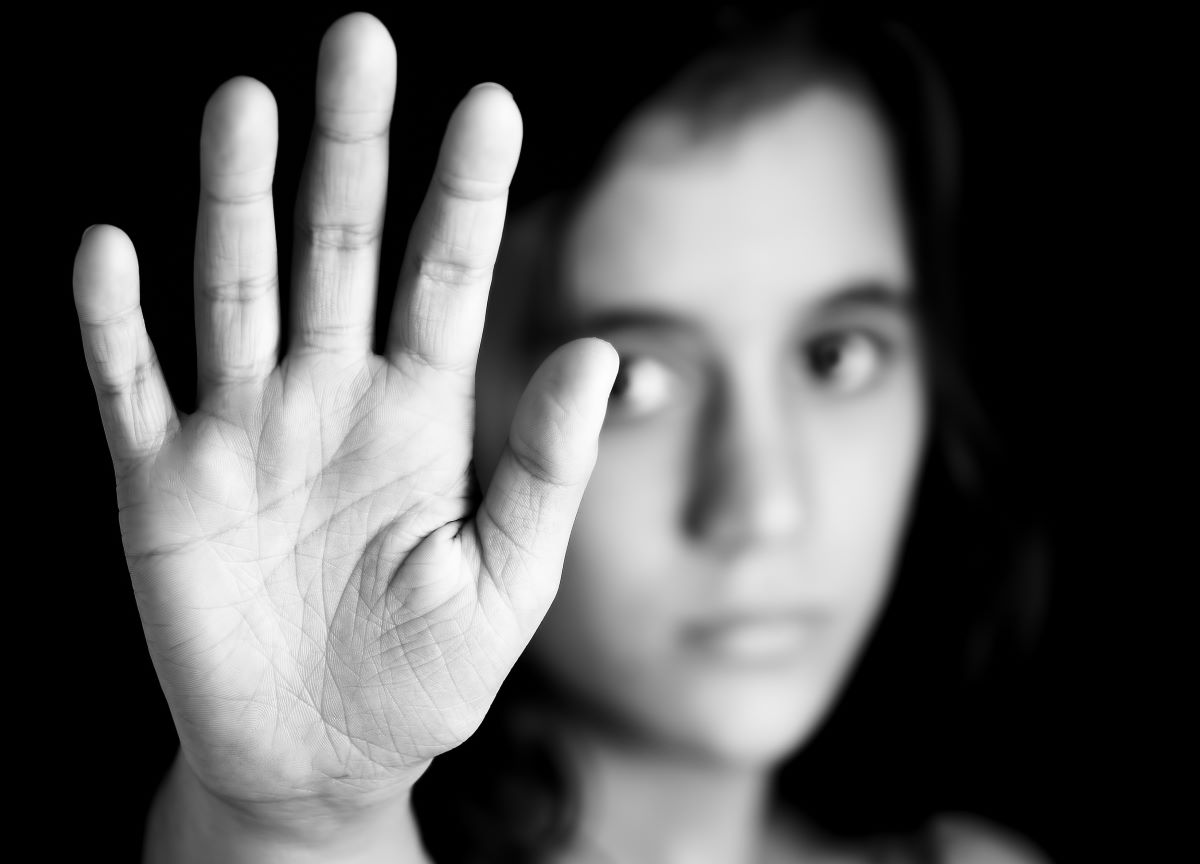
“I have a fourth-grade education. I remember the facts well, but I struggle to pinpoint the exact years. This nightmare began a year after my father’s death, just a few days after the anniversary of his passing. My father died in my arms when I was seven years old, leaving four of us children behind.”
According to Nata, a man close to the family—the brother of her godfather—raped her for the first time in a cowshed. The young girl was milking a cow when the man entered.
“He put his hand on my head and told me not to be afraid… I passed out from the pain, and I don’t know how long I lay in that cowshed in that state. When I regained consciousness, the man was no longer there. He had left me and run off.”
Vibliani says that after this incident, the abuse became systematic. While the location changed, the perpetrator’s control over her never wavered.
“He raped me in the bushes, at home, in the field,” Nata Vibliani told Radio Free Europe/Radio Liberty.
According to Vibliani, the man also threatened her at gunpoint. He directed the firearm at her younger siblings as well, using terror to keep her silent: if she spoke about the abuse, he would kill her brothers and sister.
“I fought back until he took out a gun and pressed the barrel to my mouth. He raped me like that. He also aimed the gun at my younger brothers and told me that if I made a single sound, he would kill them.”
Vibliani recalls another ordeal. According to her, the abuser tied her to a horse and dragged her to a pasture. The woman says this was done as punishment and a warning never to tell anyone about what had happened.
Pregnancy and unknown fate of her child
One of the most painful aspects of Vibliani’s story involves her pregnancy. She says she became pregnant by her abuser around the age of 14 and went into premature labor.
According to Vibliani, she was taken to give birth in the neighboring Samegrelo region. The child was born alive at a maternity hospital in Zugdidi. She says she saw the newborn’s dark hair and heard his voice, yet to this day she does not know what became of him.
“I know he was born alive—I saw him and I heard his voice. Based on my information, the doctor who delivered the baby is no longer alive. I remember a dialogue where a doctor or nurse asked what should be done with the child, and he [the man Vibliani accuses of sexual abuse] replied, ‘Kill him.’ I don’t know what happened after that.”
Nata Vibliani named fellow villagers who accompanied the abuser to Zugdidi and witnessed this conversation.
Corroborating this account will be one of the investigation’s most challenging tasks. It will require locating medical records, potential witnesses, and archival investigative files. It remains unknown whether these documents have survived after three decades.
“I Want to rid Svaneti of paedophiles”
Vibliani states that her pregnancy was no secret and that everyone was aware of it. For this reason, she directs her most painful questions not only at her alleged abusers, but at her fellow villagers as well:
“The whole village knew I was pregnant. Why didn’t they stand up for me when they heard what was happening in my grandfather’s house? Where were those Svan men who are now accusing me everywhere of wanting to tarnish Svaneti’s name? I want to rid Svaneti of paedophiles. They have no right to build a house on my land, mock my father’s memory, throw stones at me like a criminal, or drive me out of Svaneti in disgrace. They killed my child.”
According to Vibliani, the man who fathered the child spread rumors throughout the village claiming the baby was not his. She says he threatened a local boy and forced him to confess to having had sexual relations with Nata and claiming paternity of the child.
However, Vibliani believes everyone in the village knew the truth full well, but remained silent out of fear, as the man and his brothers were local criminal figures.
When entire village blames the victim
According to Vibliani, family members, relatives, and fellow villagers were aware of the abuse. Yet instead of support, she faced humiliation.
She recalls attending a fellow villager’s christening while pregnant. She was driven out of the event, called a “whore,” and children threw stones at her in the yard.
For Vibliani, this episode clearly demonstrates how the entire village shifted the blame for the abuse from the perpetrator to the child.
Vibliani also stresses that she was abused by multiple men. She alleges that subsequent assaults were carried out with the involvement of the first abuser in an effort to intimidate her and ultimately silence her forever.
“All three are relatives of this man. They raped me with his involvement to cover up his atrocity, so that I could never speak out as a woman, so that I could never say I had been raped by so many men.”
According to Vibliani, one of the three additional abusers was the primary perpetrator’s brother—a criminal figure who had just been released from prison.
First investigation closed in a week
Vibliani says that in the mid-1990s, her grandfather filed a police report regarding the sexual abuse. A case was opened by the regional police department in Zugdidi, and the child underwent a forensic medical examination.
“They even sent me the results of the examination. But this man [the abuser] had connections in the police and was able to cover up a lot. About a week later, my family withdrew the complaint, and that’s how the case ended.”
This detail could prove crucial for the ongoing investigation. If the original case files have survived, they may contain expert medical findings, witness statements, and other official records.
The Ministry of Internal Affairs has not yet publicly confirmed whether the 1990s case file has been located, nor has it commented on why the investigation was halted at the time.
Sale of family home and departure from Svaneti
According to Vibliani, as a result of the abuse and public condemnation, her family lost their ancestral home. In the late 1990s, under pressure from the community, they left the village.
In exchange for their house and land, the family was paid 22,000 GEL, a sum Vibliani considers symbolic. The children then moved with their mother to Zugdidi, where they were forced to live in hardship.
“I was still a minor at the time, and I even attempted suicide, but I survived. As soon as I recovered and regained my strength, I left home for Kutaisi. After that, I never spoke to my family members again—not to my brothers and sisters, not to my mother, not to anyone. When I needed help, nobody supported me, not even my mother.
It is true that I later re-established contact with my relatives, but they treated me like a criminal, so I no longer wanted to communicate with anyone,” Vibliani recalls.
In the interview, Nata Vibliani speaks of her mother with bitterness. In the victim’s view, her mother failed to protect her properly. At the same time, Vibliani notes that following her father’s death, her mother herself became a victim of sexual violence at the hands of fellow villagers.
Father factor
Nata remembers her father with tears in her eyes, saying that her life turned into a living hell after he died.
Vibliani says she began her fight for justice largely to honor her father’s memory.
Her father died in seven-year-old Nata’s arms from a gunshot wound to the heart; the origin of the shooting remains unknown, as no autopsy was ever performed.
Vibliani does not rule out suicide, as her father was in conflict with the community. The dispute stemmed from the fact that her father was adopted, rather than a biological descendant of the Vibliani lineage.
Her grandfather’s family did not want the extensive Vibliani lands to pass to an adopted son, and they persecuted the young girl’s father as a result. After his death, his wife and children were subjected to abuse, and the family was ultimately driven from the village.
What does Nata Vibliani demand?
Vibliani maintains that she began speaking out publicly about the abuse not out of revenge, but to seek justice.
She is represented by lawyer Mariam Barsonidze. On 15 July, Vibliani officially petitioned the Ministry of Internal Affairs for the assignment of legal counsel to the case.
The defence team’s primary demand was a timely and thorough interview of Vibliani. Her lawyer is now requesting that she be granted official victim status, which would allow Vibliani and her counsel full access to the case files.
“The horrific facts recounted by Nata Vibliani must be detailed comprehensively. Following this, she must be granted victim status, and as the victim and her legal counsel, we will have the full right to examine the investigative materials.”
According to the lawyer, this is not an isolated case. Its outcome is equally vital for other women who remain silent about the abuse they suffered during childhood.
Today, Nata lives in Germany and is a mother to an adult son and a grandmother. She has partially reconciled with her relatives; however, according to Vibliani, her family continues to treat her as though she herself were to blame for what happened.
Is justice possible 35 years later?
In interviews, Nata says that over these 35 years, not a single day has passed without her thinking about what happened to her.
Time poses the primary challenge for the investigation. Potential crime scenes have altered, some witnesses may have died, and memories face rigorous scrutiny in court.
At the same time, the statute of limitations does not automatically preclude prosecution.
In 2020, the law was amended so that the statute of limitations no longer applies to certain sexual offences committed against minors. However, in Vibliani’s case, investigators must first determine the exact timeframe of the last alleged act of abuse.
The legal classification of the offences must also be clarified in light of current legislation and recent amendments. The final assessment will depend on specific dates and circumstances.
Mari Varamashvili, a lawyer with the human rights organization Sapari, explains that the 2020 amendment will apply to the case provided the 30-year statute of limitations had not expired by that time.
“If it turns out that the 30-year statute of limitations had not lapsed by 2020, it means that no statute of limitations will apply to Nata Vibliani’s case.”
Under current law, rape is defined under Article 137 of the Criminal Code as sexual intercourse involving physical force, threats of violence, or taking advantage of a victim’s helpless state.
However, when evaluating actions allegedly committed in the 1990s, investigators will also need to examine the legislation in force at that time.
According to Varamashvili, investigators must also interview all potential witnesses and locate historical case records. Psychological evaluations could also prove highly significant.
Georgian courts have previously heard cases involving historical sexual abuse. In 2022, a court found a man guilty of raping a minor 25 years prior.
In 2024, another man was sentenced to 20 years in prison for raping his sister’s underage children.
While these precedents offer no guarantee of a favorable outcome in Vibliani’s case, they demonstrate that while passage of time complicates evidence gathering, it does not render an investigation impossible.
Danger even in exile
Vibliani fears persecution despite residing in Germany.
On 14 July, she told Radio Free Europe/Radio Liberty that she had not left her house for four days.
“I have exposed five families in Svaneti. Five families hate me and are coming after me, and I don’t know which of them might decide to take revenge. Even though I am not in Georgia, I do not feel safe.”
For this reason, the investigation must extend beyond uncovering historical evidence; authorities must also assess the risk of potential intimidation and retaliation.
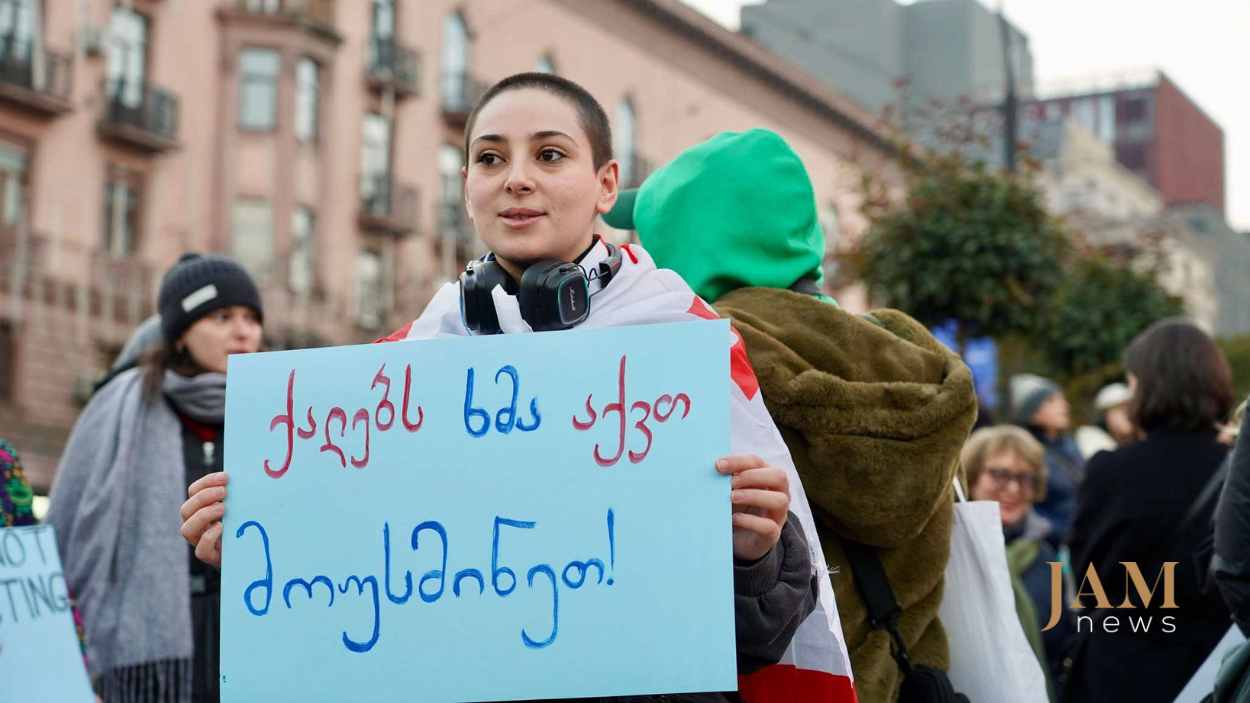
The Women’s Movement has called on law enforcement agencies to conduct an independent and effective investigation. The organization demands a trauma-informed approach, measures to guarantee Vibliani’s safety, and that she be kept fully informed of developments.
Vibliani’s public account highlights a critical issue: the true scale of child sexual abuse in Georgia remains unknown, as the country still lacks a comprehensive system for prevention, detection, and victim support.