Georgia missing from key Nato summit in Ankara: What does it mean?






Georgia absent from Nato summit
Nato leaders are gathered in Ankara on 7–8 July to discuss European security, strengthening defence and support for Ukraine.
However, Georgia, which has for more than two decades declared Nato membership as a strategic objective, is not officially represented in the summit discussions.
Its absence has reignited questions about how Georgia’s place in the West’s security agenda has changed.
Georgia’s absence
The 36th Nato summit in Ankara has brought together leaders of the alliance’s 32 member states. They are joined by several non-member partner countries, including Ukraine, Japan, South Korea, Australia, New Zealand, Qatar, Bahrain, Kuwait, the United Arab Emirates and Azerbaijan.
The summit agenda focuses on three main issues: increasing defence spending, strengthening defence production and supporting Ukraine.
Georgian officials are not taking part in the summit’s official sessions or in Nato’s political consultation formats with partner countries.
Georgia is represented in Ankara only by Foreign Minister Maka Botchorishvili, who is attending the Allies in Ankaraevent organised by the Munich Security Conference, Türkiye’s Directorate of Communications and the Foundation for Political, Economic and Social Research.
The forum is being held alongside the Nato summit but is not part of the alliance’s official programme.
Georgian government response
The Georgian government does not view the lack of an invitation to the Ankara summit as a sign of political isolation. According to the ruling party, the partner-country format that had been held alongside previous Nato summits is no longer taking place this year.
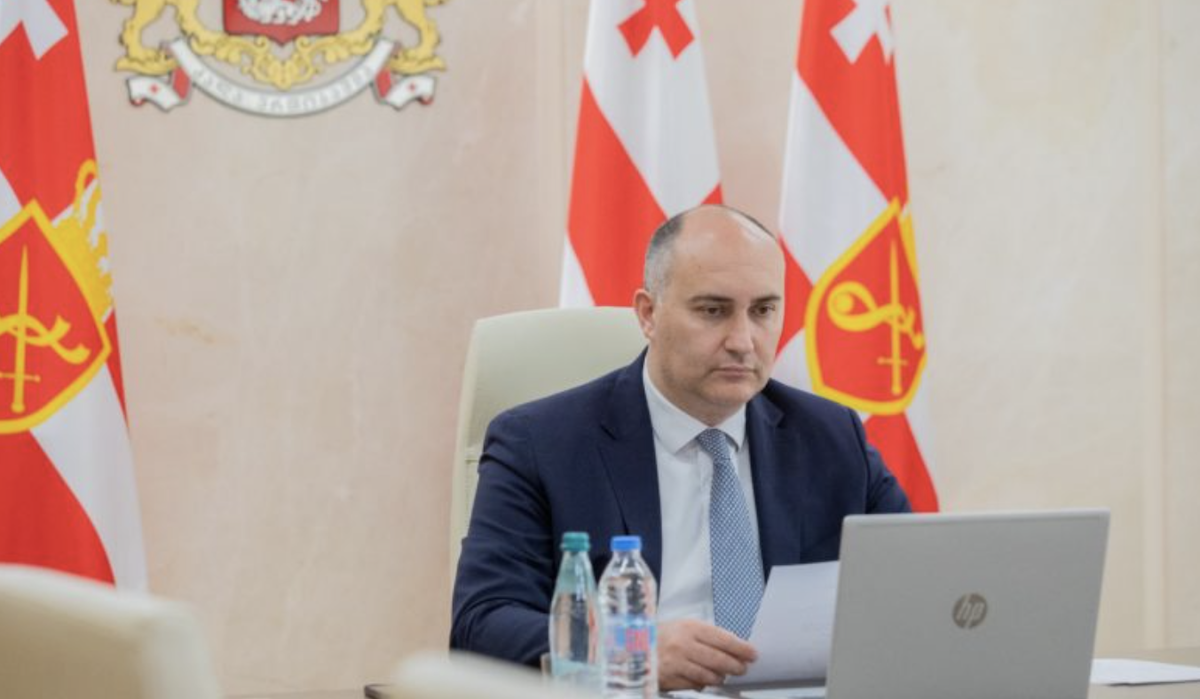
Parliamentary majority representative Gia Volski described the opposition’s criticism as “a propaganda campaign”.
He said only Nato member states had been invited to the summit itself, while partner countries were instead participating in events organised under the Munich Security Conference format.
“There used to be a format in which partner countries met alongside the Nato summit. That format no longer exists. Instead, a Munich Security Conference-format meeting is taking place at the same time, where Georgia’s foreign minister is already present and will deliver a speech tomorrow,” Volski said.
He also rejected suggestions that Georgia’s absence from the summit amounted to a political signal from its Western partners.
Parliamentary majority leader Irakli Kirtskhalia said Georgia had no issue with participation in the summit and that questions about why the country had not been invited should be directed to the organisers.
Foreign Minister Maka Botchorishvili said the Allies in Ankara forum, which Georgia is attending, is also an important platform.
She said it brings together representatives of both Nato member states and partner countries, providing Georgia with an additional opportunity to present its position.
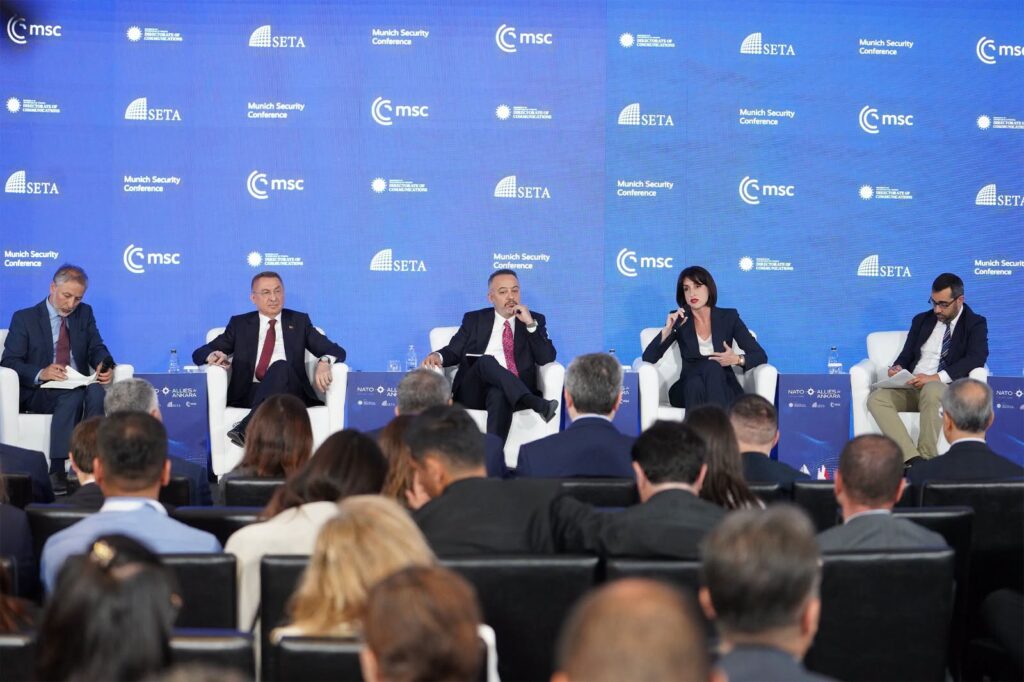
“Georgia’s invitation to and participation in an event held alongside the summit provides us with an additional opportunity to present Georgia’s positions… We are also using this platform to present our geopolitical role in the best possible way,” Maka Botchorishvili said.
Opposition: “Georgia is no longer at the table where the region’s future is decided”
Opposition parties and foreign policy experts say Georgia’s absence from the Ankara summit is not a coincidence.
In their view, it is a logical consequence of the deterioration in Georgia’s relations with the West in recent years and a sign that the country is gradually disappearing from international forums where it had previously been a regular participant.
Grigol Gegelia, one of the leaders of the Lelo – Strong Georgia coalition, said that, for the first time since Georgia regained independence, the country was no longer taking part in any forum where the future of the Black Sea region and Georgia’s own security are discussed.
“We have, for the first time in our history, not been invited to any forum where the future of our region, the Black Sea basin and our country is being discussed,” he said.
Gegelia argued that the issue goes beyond diplomatic prestige. In his view, Georgia’s absence from international forums has direct implications for both the country’s economic interests and its security.
“When you are no longer seen at the negotiating table, it means you are no longer considered relevant and are no longer part of the EU enlargement agenda,” he said.

“This has a direct impact on politics, the economy and everything that affects citizens, whether it is stability, development or prices,” Gegelia added.
Giorgi Shaishmelashvili, a member of the opposition movement Freedom Square, pointed to the summit’s agenda.
He said Nato’s current priorities are strengthening the defence industry, increasing defence spending and supporting Ukraine. In his view, Georgia is lagging behind its partners in all three areas.
“If we look at the agenda of the Nato summit in Ankara, it becomes clear that Georgia’s absence is entirely unsurprising, as the summit focuses on three key issues, all of which are areas where we have fallen significantly behind,” he said.
The opposition party Droa also linked Georgia’s absence from the forum to the country’s foreign policy.
The party said that while Georgian officials were attending official events in Iran, Georgia was not represented at a forum where the future of European security was being discussed.
In a statement, Droa said the government’s policies had “diverted Georgia from its Euro-Atlantic course and left it facing Russia, Iran and China alone“.
“Georgia should have been a key participant”
Political analyst Paata Zakareishvili said Georgia’s absence from the Ankara summit was symbolic, as the meeting is taking place in a region where, in his view, Tbilisi plays a strategic role.
He argued that Georgia is not merely a country aspiring to join Nato, but an integral part of the Black Sea and South Caucasus security architecture.
For that reason, he said, the absence of Georgian officials carries particular significance while the alliance is discussing security in the region and Russia’s war in Ukraine.
“This summit is of particular importance for Georgia. Turkey is part of the Black Sea and the South Caucasus, where its role has grown. Georgia is also part of the Black Sea and the Caucasus. Georgia should have been present at this summit as an honoured guest,” he said.
Zakareishvili said inviting partner countries to Nato summits is not a new practice, noting that Georgia had for many years been regarded as one of the alliance’s closest partners.
“Countries that are not Nato members will attend the summit in Turkey. Georgia is a country aspiring to join Nato. Georgia and Ukraine used to move towards Nato membership together… Georgia is no longer being considered anywhere. We are not meeting the required conditions, and that is one of the reasons why we were not invited to join the group of countries we should have been part of,” he said.
According to Zakareishvili, Western partners’ attitude towards Georgia has changed in recent years, helping to explain the country’s absence from the Ankara summit.
“Georgia is being ignored. There is a view that it is better not to maintain relations with it because no one knows what information Georgia might pass on to Russia. Georgia is seen as an unreliable, vulnerable and toxic state,” he said.
Difference between the two formats
International relations expert Giorgi Melashvili drew a distinction between the official Nato summit and the events taking place alongside it.
“It is regrettable that, instead of participating fully in the Nato summit, Georgia is only taking part in a parallel forum… This is not the Nato summit. It is a side event—an interesting and important one—but it is not full participation in the Nato summit,” he said.
Melashvili also described it as paradoxical that the Georgian government, which has been sharply critical of the country’s non-governmental sector, is taking part in an international platform organised by NGOs.
Political analyst Paata Zakareishvili likewise distinguished between the official Nato summit and the conference attended by Foreign Minister Maka Botchorishvili. He said the conference was an important international event but not part of Nato’s decision-making process.
“As for the format in which Maka Botchorishvili is participating, it is important, but it is not directly related to Nato…
It is a meeting organised by influential international non-governmental organisations. It is a separate event that simply happens to coincide with the Nato summit,” he said.
Why is Georgia no longer part of West’s security agenda?
Diplomat Gigi Gigiadze said the Ankara summit reflects a broader trend.
“Today, Georgia is as isolated as it has ever been. It has been left on its own. It is no longer regarded as a partner country by either the European Union or Nato. There are no new initiatives involving Georgia,” he said.
In his view, Georgia’s absence from the Ankara summit was therefore not unexpected.
“Georgia is no longer included in any of the formats where its participation was once taken for granted. So its absence from the Nato summit is not surprising either,” he told the Georgian broadcaster Formula.
What changed in recent years?
For two decades, relations between Georgia and Nato were regarded as one of the alliance’s most active enlargement partnerships.
At the 2008 Bucharest Summit, Nato confirmed that Georgia would become a member of the alliance in the future, although no timetable was set.
In the years that followed, Georgia featured regularly in Nato summit declarations. Tbilisi took part in partnership formats, and the country’s Euro-Atlantic integration was consistently reaffirmed in the alliance’s official documents.
That trend has changed in recent years. The 2024 Nato summit declaration no longer referred to Georgia’s future membership.
This year, Georgia did not participate in any of the alliance’s official partner formats.