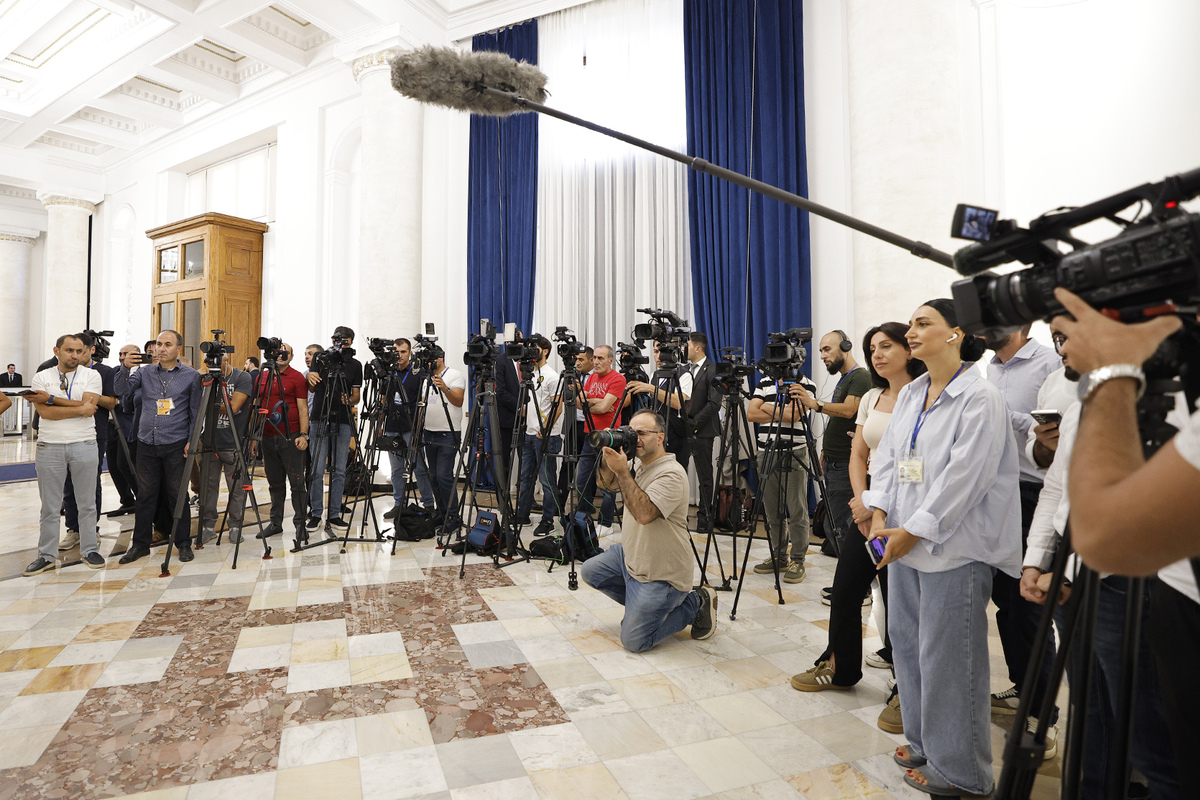
'Russia has lost in Armenia too' – Georgia reacts to Pashinyan's victory






Georgia reacts to Armenia’s election result
Georgian analysts are commenting on the victory of Armenian Prime Minister Nikol Pashinyan’s party in the parliamentary election, arguing that the outcome represents the loss of another important position for Moscow in the region.
In their view, Armenian voters have endorsed the country’s pro-Western course and its pursuit of European integration. Commentators describe the election result as “another geopolitical defeat for Russia”.

Prime Minister Nikol Pashinyan’s Civil Contract party has won Armenia’s parliamentary election with 49.81% of the vote, while the pro-Russian Strong Armenia alliance led by businessman Samvel Karapetyan finished second with 23.29%. Ballot counting has been completed at all polling stations. The Armenia Alliance, led by former president Robert Kocharyan, came third with 9.94%, while the Kremlin-friendly Prosperous Armenia party secured 4% of the vote. The result means that Civil Contract’s representation in parliament will fall from 71 to 61 seats. However, the ruling party will retain a parliamentary majority, holding 57% of seats, while opposition parties will collectively occupy 44 seats.
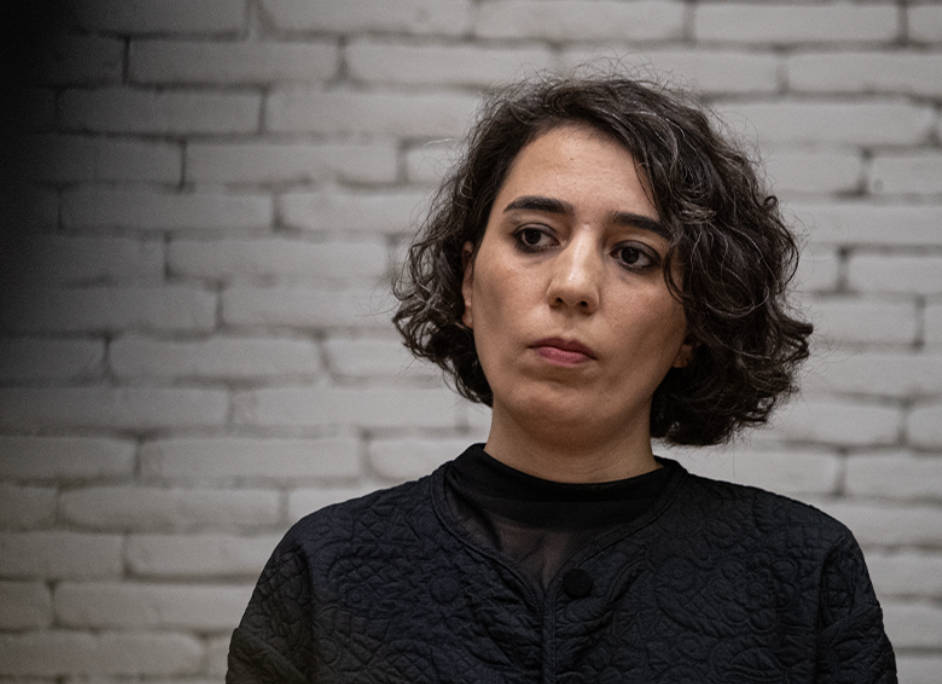
Tamta Mikheladze, director of the Centre for Social Justice:
“These elections took place in an especially difficult political and social context for Armenia.
The war, the trauma and heavy losses it caused, the new peace and development agenda proposed by Pashinyan, and attempts to reassess Armenian identity and nationalism have created significant polarisation and social anxiety within society.
It is clear that these traumas, as well as uncertainty surrounding long-term security and geopolitical guarantees, were effectively exploited by Russia and Russia-linked political forces against Pashinyan.
How did Pashinyan respond to these developments?
On the one hand, he took tough measures against pro-Russian political figures. On the other, he entered into conflict with representatives of the church and groups associated with them. His statements even after the election suggest that the government does not rule out continuing its hard-line approach towards opponents.
At the same time, he conducted an active election campaign and sought to provide honest answers to difficult questions. Under political and informational pressure from Russia, he tried to avoid direct confrontation while holding large-scale meetings in the regions and relying on a strategy based on direct communication with voters.
His tough stance towards opponents raised concerns within civil society that, amid security challenges and political conflicts, there is a risk of excessive concentration of power in Armenia and a decline in democratic standards. This is one reason why, according to current data, Pashinyan received relatively weak support in Yerevan. At the same time, a significant share of young people remains politically alienated and apathetic, creating additional challenges for political mobilisation.
In this complex political and geopolitical environment, the result achieved in yesterday’s election represents a significant political success for Pashinyan.
However, Armenian society still faces a difficult process of transformation.
It is particularly important that Pashinyan is now able, on the one hand, to protect Armenia from direct or indirect Russian political influence and the risks associated with it, and, on the other, to fulfil his promises of democratic reform and restore the trust of civil society and young people.
There is also another major challenge. Given that the government has failed to secure sufficient political resources to carry out large-scale constitutional changes without obstacles, it is difficult to predict how the peace process with Azerbaijan will develop and what prospects there are for constitutional reform.
In addition, one of the key tasks for Pashinyan’s government in the coming years will be engaging in dialogue with critical segments of society on both Armenia’s new foreign policy course and the formation of a new national identity and political project.
The loss of Nagorno-Karabakh (Artsakh), and Pashinyan’s political and rhetorical acceptance of that reality, have called into question one of the central elements of the Armenian national narrative. As a result, developing a new political and social discourse about who Armenians are and what the country’s new national project should be — one capable of securing broad public support — remains a serious challenge.
To a large extent, the success of this process will depend on Armenia’s political stability and on the long-term sustainability of the democratic political project that emerged after 2018.”
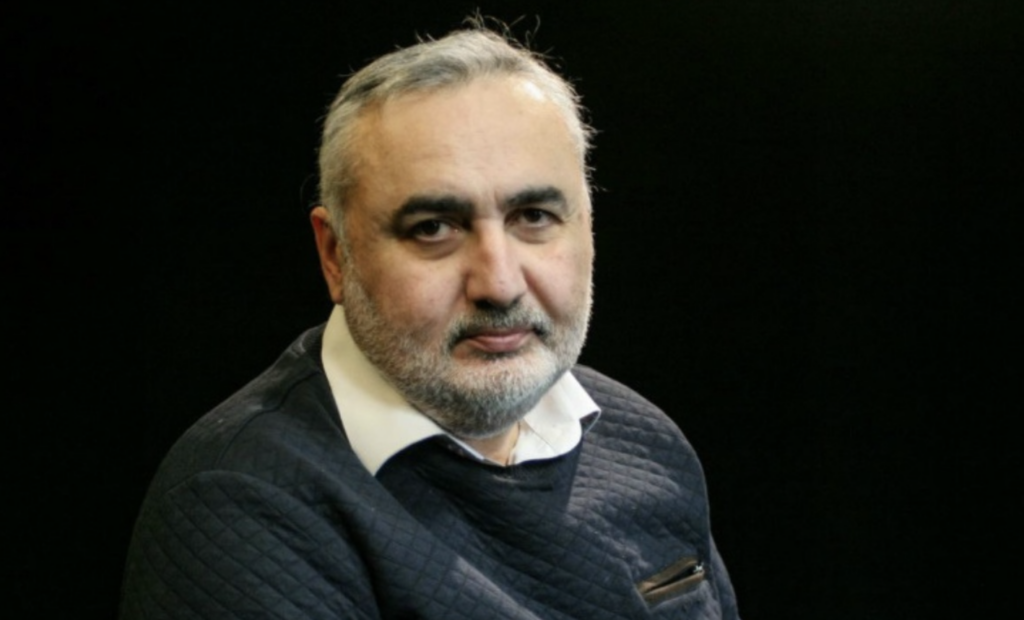
Irakli Melashvili, analyst:
“According to the parliamentary election results in Armenia, Pashinyan’s Civil Contract received 49.8% of the vote, Strong Armenia, led by Russian-Armenian businessman Samvel Karapetyan, won 23.3%, the Armenia Alliance of former Karabakh and Armenian president Robert Kocharyan secured 9.9%, and Prosperous Armenia, led by Armenian billionaire Gagik Tsarukyan, received exactly 4%.” <…>
“Now preparations begin for the next round of political struggle. It will take the form of a referendum on a new constitution. One of its main goals is to legally eliminate any basis for Armenian claims to the territories of neighbouring states. Through this process, Pashinyan and his party intend to continue and complete the normalisation of Armenian-Azerbaijani and Armenian-Turkish relations.
It is true that Armenia’s current constitution does not explicitly mention Karabakh or territorial claims against Turkey. However, its preamble refers to the 1990 Declaration of Independence, which was based on the 1989 decision on the ‘unification of the Armenian SSR and Nagorno-Karabakh’. The declaration also refers to support for the international recognition of the 1915 Armenian genocide and includes broader references to the ‘restoration of historical justice’.
Azerbaijan and Turkey interpret these references in the preamble as implying territorial claims against their countries. Pashinyan himself has recently taken a critical view of the 1990 Declaration of Independence, suggesting that some of its provisions have become problematic for the modern Armenian state.
Pashinyan intends to put the text of a new constitution to a referendum. He wants to settle once and for all an issue that has for decades hindered Armenia’s normalisation of relations with its neighbours. Armenia still has no diplomatic relations with Turkey or Azerbaijan, and the borders remain closed.
This will also become Russia’s decisive battle to keep Armenia within its sphere of influence. For decades, Russian policy in Armenia has been built around cultivating the idea of a Turkish-Azerbaijani threat, fears of a repeat of the genocide, and the notion that Russia is the only guarantor of Armenian security.
Naturally, if Armenia succeeds in normalising relations with Turkey and Azerbaijan, the image of Russia as the ‘protector of the Armenian people from physical destruction’ — a narrative cultivated by the empire for decades — will lose much of its relevance. Similar narratives existed in Georgia as well, although not as intensely. Haven’t we all heard the saying: ‘If it weren’t for the Russians, the Persians and Turks would have wiped us out or turned us into Tatars’?
In short, the next battle will be the referendum. There, it will be much easier for the opposition to mobilise opponents of Pashinyan by appealing to patriotic sentiment. They will try to frame the issue as the government’s capitulation to its enemies and the betrayal of Armenia’s national interests.”
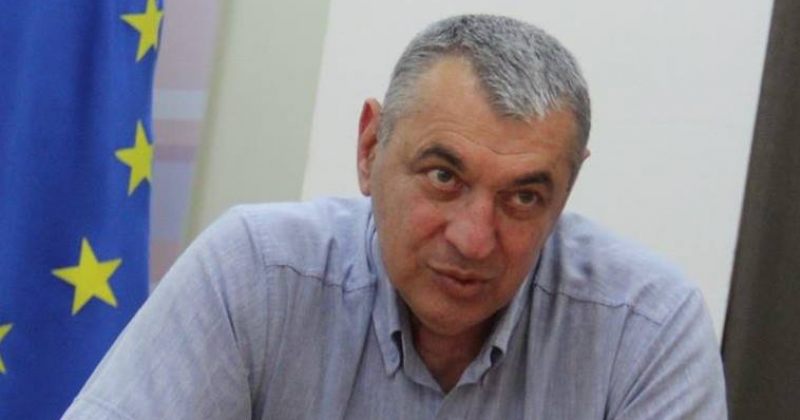
David Zurabishvili, political commentator:
“Russia’s defeat in Armenia is a truly historic event.
Against the backdrop of developments in the South Caucasus, the position of the Georgian government — which can be summed up by the phrase of one pro-government journalist, ‘If you do not come to terms with Russia, you are finished’ — is nothing more than an anachronism and an attempt to turn the wheel of history backwards.
I am not particularly impressed by the Georgian opposition, and I do not fully share many of its narratives. But I know one thing for certain: it is impossible to fight against the wheel of history. Today, the Georgian government finds itself on the opposite side of that wheel — on the wrong side — while the opposition is on the right one.
In the end, the wheel will prevail anyway.”
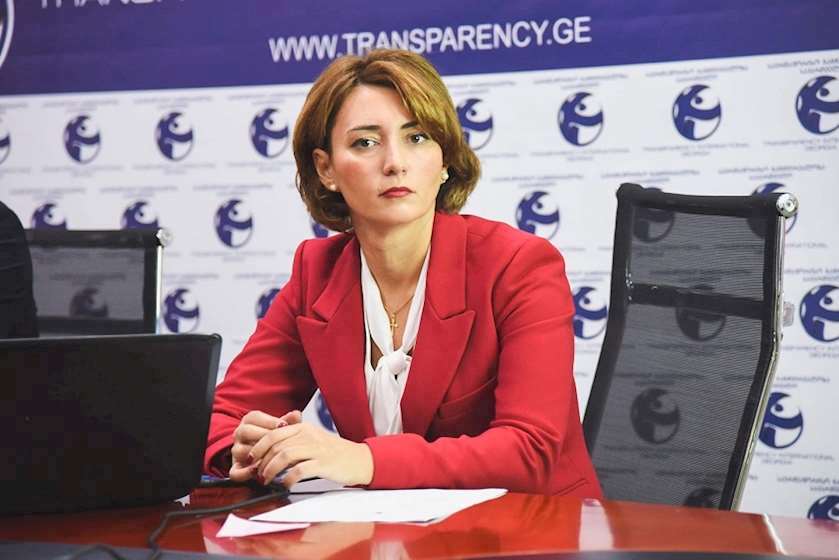
Eka Gigauri, director of Transparency International Georgia:
“I congratulate Armenia on this important victory. It is a major step towards closer integration with the West and the democratic developed world. Armenia will obtain visa-free travel with the European Union and begin accession negotiations.
Meanwhile, Bidzina Ivanishvili has effectively prevented Georgia from following this path and has removed us from a historic process supported by the overwhelming majority of our citizens.
After the election in Armenia, Georgia remains the only country in the South Caucasus whose government is no longer viewed as a partner by the West. Moreover, the ruling party frequently portrays the European Union and the United States as enemies.
This is the reality we find ourselves in today and the reality we must confront. The choice is simple: either we save our country and its Euro-Atlantic future, or we become a Russian colony dependent on Chinese debt, where the interests of China, Russia and Iran take precedence over Georgia’s national interests.
That is the future Bidzina Ivanishvili is offering Georgia. It is his and Putin’s vision of Georgia — the vision he calls the ‘Georgian Dream’.
Clearly, this is not Georgia’s real aspiration. It is the dream of Georgia’s enemies.
The dream and aspiration of the Georgian people is a free, European, democratic and independent Georgia, where the state serves its citizens; where elderly people do not struggle to buy medicine for high blood pressure; where children do not have to ask for help to protect their lives and health; where young people have hope for the future; where qualified professionals can find decent work; and where Georgia is a full member of the European Union.
That is the future worth fighting for. The people of Armenia have managed to achieve it, and so can we.”
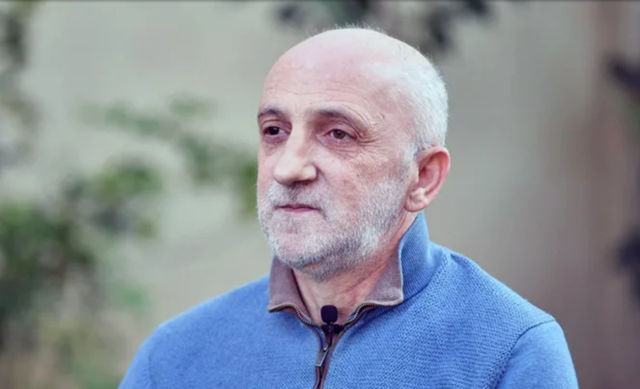
Gia Khukhashvili, political analyst:
“After Pashinyan’s victory and Armenia’s subsequent irreversible turn towards Europe, Russia has only one card left in the Caucasus — the Georgian government, and it will certainly try to use it.
There is no longer any room for manoeuvring, brainwashing through propaganda narratives about the ‘deep state’, ‘preventing war’, a ‘second front’, and the thousands of other political tricks that have been used.
Now everything depends on you: whether you choose to sink into the political grave ultimately dug in Kronstadt as part of the supposedly ‘wise’ security doctrine, or throw that harmful doctrine into the dustbin — if only to save your own skin.”
Georgia reacts to Armenia’s election result