Iran’s Growing Influence in Georgia: What a New Report Claims and Why Georgia’s Security Service Has Opened an Inquiry






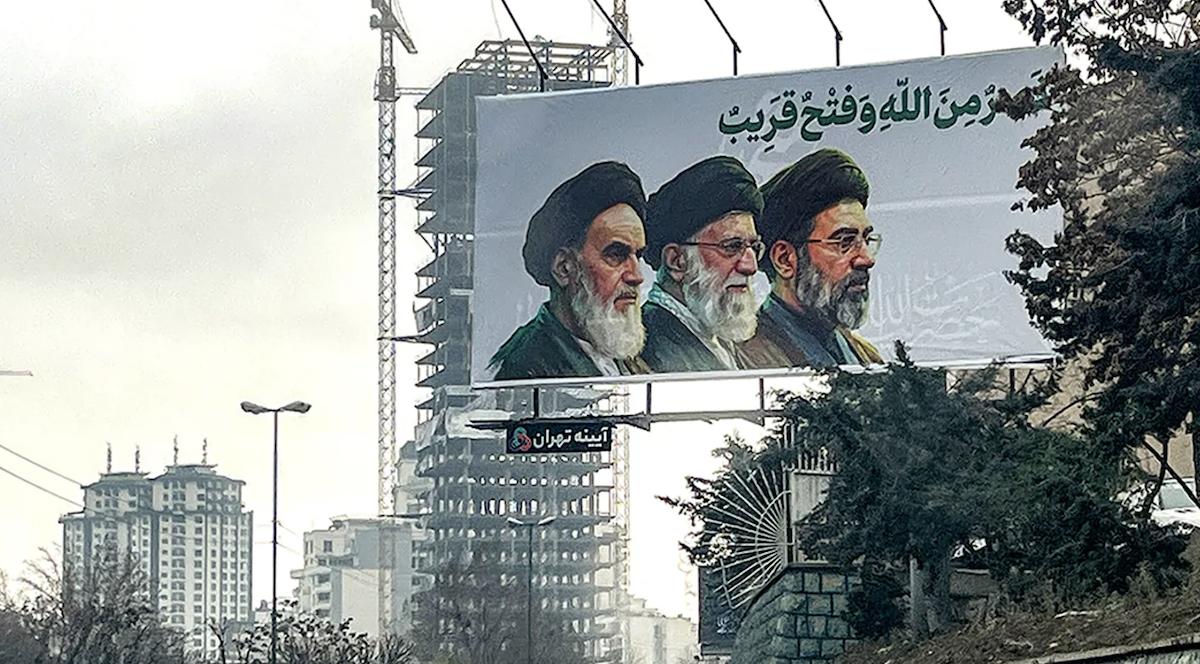
Debate over Iran’s influence in Georgia
A new report by the Hudson Institute argues that Iran is systematically expanding its influence in Georgia through religious, economic, cultural, and political networks. The findings have triggered a political dispute inside the country, with the Georgian government rejecting allegations of alignment with Tehran while the State Security Service (SSG) has launched an inquiry into the motives of researchers and public figures raising concerns about Iranian influence.
What the Hudson Institute Report Says
The report, titled “Georgia’s Iran Pivot: Tehran’s Rapidly Expanding Influence in a Once-Stalwart American Ally,” was published on March 3.
Its authors are Luke Coffey, a senior fellow at the Hudson Institute, and Giorgi Kandelaki, project manager at the Soviet Past Research Laboratory (SovLab).
According to the report, Georgia has gradually moved away from its traditional pro-Western orientation while simultaneously deepening ties with states viewed by Washington as strategic competitors or adversaries.
“Under the leadership of the Georgian Dream party, the government has become more authoritarian while simultaneously drawing closer to U.S. adversaries, particularly Russia and the Islamic Republic of Iran.”
The authors argue that Iran’s activities in Georgia extend beyond diplomatic relations and involve the construction of a broad infrastructure of influence targeting different segments of society.
“Tbilisi is facilitating Iranian infiltration while enabling Tehran to build an extensive network of influence infrastructure.”
How the Report Describes Iran’s Influence Networks
According to the report, Iran places particular emphasis on Georgia’s ethnic Azerbaijani Shiite population, concentrated largely in the Kvemo Kartli region.
The authors identify several channels through which Tehran allegedly expands its influence: religious and educational institutions, madrassas and youth networks, charitable organizations, media platforms, religious events, and international pilgrimages.
Particular attention is given to the Georgian branch of Al-Mustafa International University, which has been under U.S. sanctions since 2020 and Canadian sanctions since 2022.
“Religious and educational institutions, such as branches of the Ahl al-Bayt World Assembly and the U.S.-sanctioned Al-Mustafa International University, operate openly in Georgia and promote religious doctrines aligned with Tehran.”
The report argues that these institutions serve not only educational purposes but also contribute to the development of ideological and clerical networks linked to Iran.
Economic Ties and Sanctions Evasion Concerns
A major section of the report focuses on economic relations.
The authors claim that Iran is increasingly using Georgia as a platform to bypass international sanctions.
“Through networks of economic penetration and sanctions-evasion mechanisms, Iran seeks to transform Georgia into a hub for circumventing sanctions.”
The report points to the growing number of Iran-affiliated companies registered in Georgia and a sharp increase in trade links since 2022.
Previous investigations by Radio Free Europe/Radio Liberty found that nearly 13,000 Iranian-owned businesses have been registered in Georgia. Journalists also identified cases where hundreds of companies were registered at the same address despite little evidence of actual business activity.
The issue has also attracted international attention. In February 2026, British Conservative MP Mark Pritchard raised concerns in the House of Commons.
“There is potential for sanctions breaches and sanctions evasion, and this money feeds the Iranian regime.”
Why the Report Sparked Political Controversy
The publication quickly became a subject of political debate in Georgia.
Former Defense Minister Tina Khidasheli criticized the activities of Al-Mustafa University, stating:
“Everyone should understand that this is not a university at all. It is a school for terrorists, where people are educated in the spirit of ‘Death to America’ and ‘Death to Israel.’”
Government representatives, however, condemned such statements and accused their authors of acting against the country’s interests.
Tbilisi Mayor and Georgian Dream Secretary General Kakha Kaladze said:
“They have been engaged in hostile activities against the country. They are ordinary traitors.”
He added that state institutions should examine the issue.
The Security Service Steps In
The dispute escalated after Georgia’s State Security Service announced that it was examining both the content of public statements about Iranian influence and the motivations of those making them.
The agency stated:
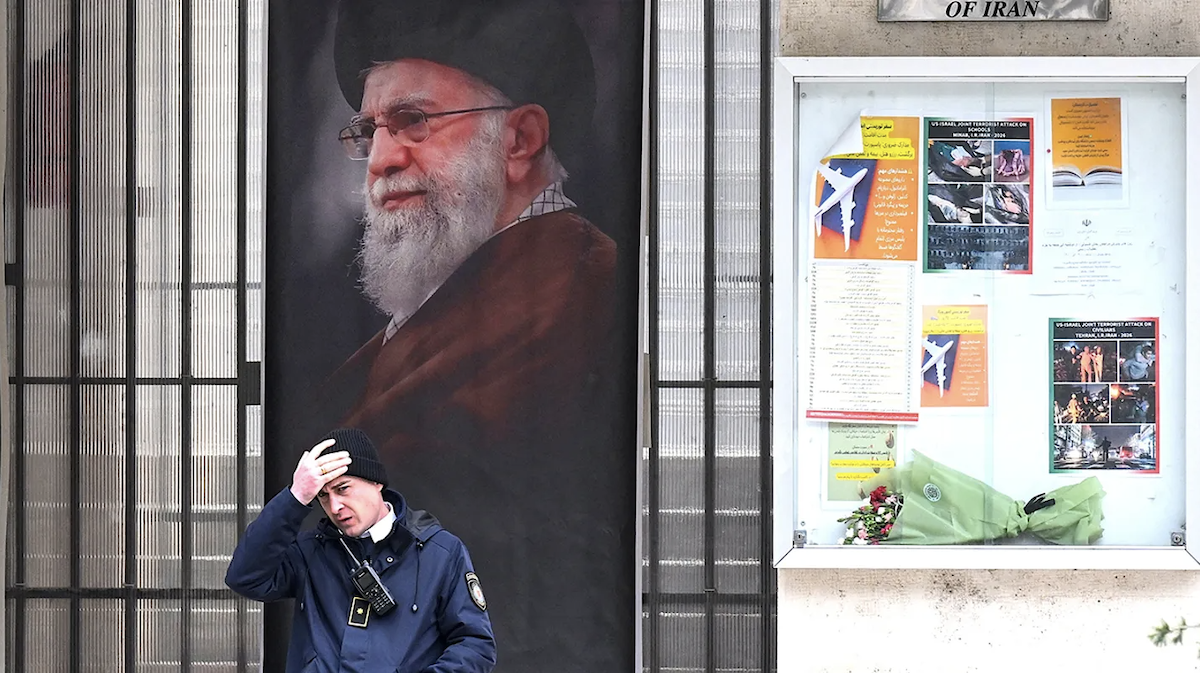
“An investigation has been launched, and the authors of these statements will be questioned in all relevant directions.”
At the same time, the Security Service urged media outlets to refrain from amplifying topics that, in its view, may not correspond with Georgia’s national security interests under current circumstances.
The agency also said that the state “fully controls the situation” and processes all available information through established procedures.
The Government’s Response
Georgian Dream leaders have consistently rejected claims that Georgia is moving closer to Iran, Russia, or China at the expense of its Western orientation.
Prime Minister Irakli Kobakhidze commented on similar accusations in May:
“When someone writes that Georgia has a pro-Iranian government, surely such a statement should be based on something.”
The government maintains that its foreign policy is guided exclusively by national interests rather than the influence of any foreign state.
Background
Iran’s role in Georgia has become an increasingly debated issue over the past two years.
Public discussions have focused on the activities of Iranian-linked religious organizations, the presence of Al-Mustafa University, the rapid growth of Iranian-registered businesses, concerns over sanctions evasion, and visits by senior Iranian religious and political figures.
The Hudson Institute report has added an international dimension to these debates. However, rather than directly addressing the report’s substantive findings, much of the political discussion in Georgia has shifted toward the credibility and motivations of the report’s authors and other critics raising concerns about Iranian influence.
Leaders of the ruling Georgian Dream party dismissed the claims as disinformation and part of a political campaign against Georgia. Prime Minister Irakli Kobakhidze described Kandelaki’s remarks as a “formula of treason”, while other government representatives argued that such allegations aim to damage Georgia’s international image and its relations with the United States.
Kobakhidze also suggested that “relevant authorities” might take an interest in Kandelaki.
“Giorgi Kandelaki’s statements represent a typical formula of treason. You know how many false claims he has made about Iran, including its trade and economic relations with Georgia. He also mentioned educational institutions and other issues. Everyone knows that he was referring to an institution that did not even receive a licence.
As for our trade relations, exports account for 0.5% and imports for 1.5%. Under such circumstances, there is no basis for talking about sanctions circumvention. When someone goes to the United States and makes such statements directly, that is plain treason. In political terms, it is called treason. The relevant authorities will decide what it should be called in legal terms,” Kobakhidze said.
Kandelaki, for his part, argues that Iran’s influence in Georgia has reached alarming levels and that Western countries need to pay much closer attention to the issue.
Debate over Iran’s influence in Georgia