Georgia hands down first prison sentence for blocking road during protest






First prison term for protest roadblock in Georgia
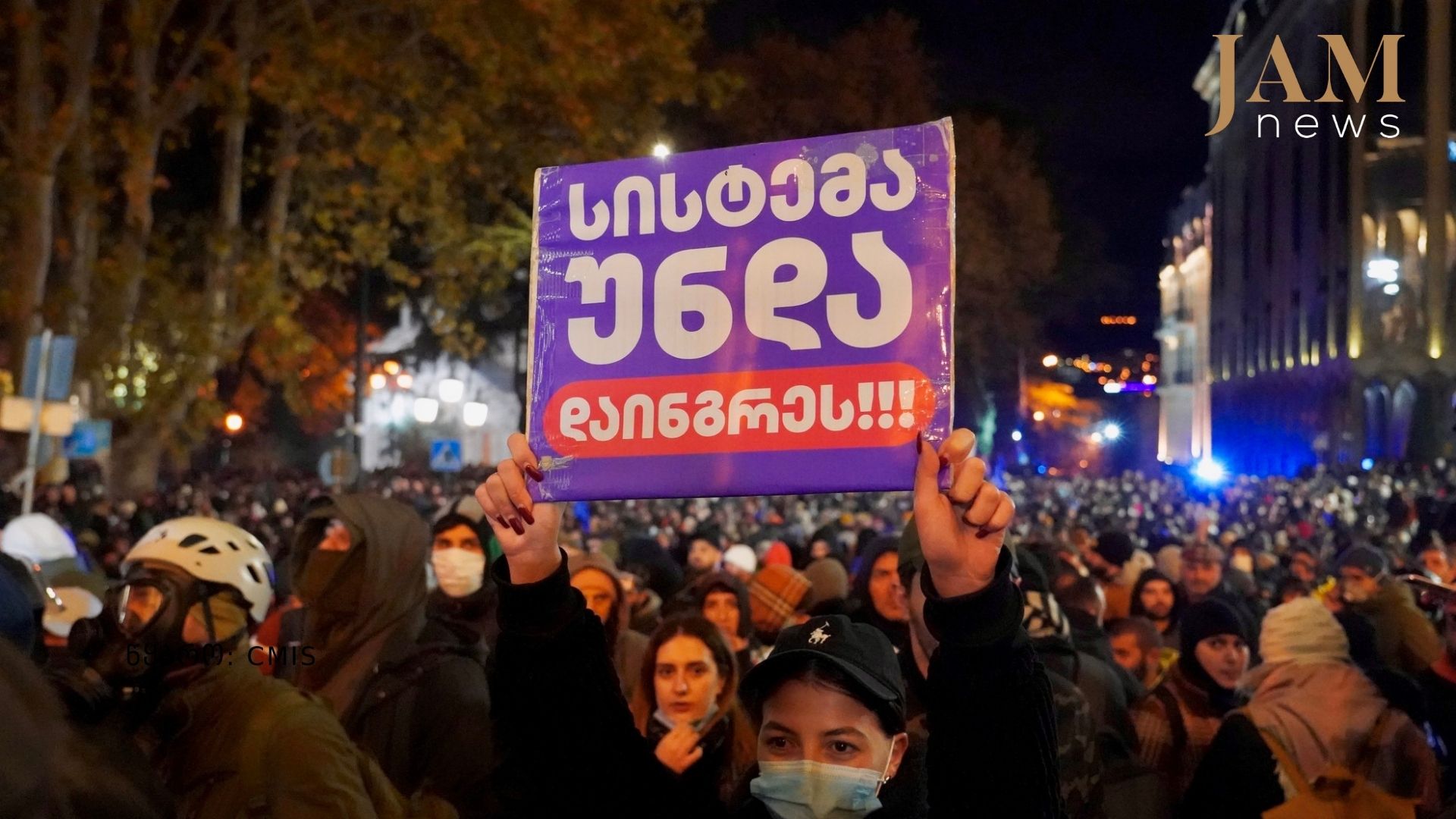
A court in Tbilisi has sentenced Zurab Menteshashvili to nine months in prison for repeatedly blocking a road during protests. Judge Nino Galustashvili delivered the verdict. Menteshashvili has already spent seven months in custody and, taking that time into account, is expected to be released in about two months.
The case marks the first time in Georgia that prosecutors have brought criminal charges against a protester for blocking a road and secured a conviction.
Prosecutors charged Menteshashvili under Part 1 of Article 347 of Georgia’s Criminal Code, which carries a maximum sentence of one year in prison.
Police arrested Menteshashvili on Rustaveli Avenue on the evening of 31 October 2025. According to the Interior Ministry, he was driving a car when officers stopped and detained him.
The following day, 1 November, the ministry announced criminal proceedings against Menteshashvili, accusing him of repeatedly blocking Rustaveli Avenue.

Reactions
Tamar Oniani, chair of the Georgian Young Lawyers’ Association, said the case of Zurab Menteshashvili represents an entirely new chapter, even in the history of a system that, in her view, has previously handed down unjust convictions.

Tamar Oniani said:
“This is the first prisoner held criminally liable for exercising the right to freedom of assembly under a legal framework specifically designed to undermine that very freedom. Lawmakers created this framework along the lines of what legal scholarship describes as personalised legislation — laws that ruling elites push through legislatures in order to strengthen their power or target political opponents.
The amendments were introduced on 13 October 2025. They established criminal liability for a person who has already faced administrative sanctions for actions covered by Parts 9 or 10 of Article 174. The relevant provisions of the Administrative Code are themselves merely referential. They point to Georgia’s Law on Assemblies and Demonstrations, which raises serious problems from the standpoint of legal drafting and legislative technique. The Venice Commission has criticised similar referential provisions in the past.
Parliament rushed these amendments through the legislative process. The court tried Zurab Menteshashvili under this article.
However, what options did the judge have, apart from acquitting him? The judge could have refrained from imposing pre-trial detention from the outset and could have referred the matter to the Constitutional Court through a constitutional complaint.
Since that did not happen, was there anything else that could have eased the defendant’s situation at this stage? The court could have imposed a sentence of seven months — the exact period he had already spent in pre-trial detention.
Instead, it sentenced him to nine months. Those additional two months amount to nothing less than the judiciary’s participation in creating further pressure on freedom of assembly.
Solidarity with Zurab Menteshashvili — the first person in Georgia who will spend nine months in prison for taking part in an entirely non-violent protest.”

Guro Imnadze, a lawyer, said:
By sending a person to prison for nine months under this law, Galustashvili is not merely complying with what we consider an unjust legal act. She is also endorsing and advancing its underlying principles.”
“Judge Nino Galustashvili sentenced Zura Menteshashvili to nine months in prison for standing on a road. Whatever legal label the government chooses to give it, and whatever amendments it makes to the Administrative Offences Code or the Criminal Code, the essence remains the same.
When all of this is over, Nino Galustashvili and others like her will probably argue that they were simply applying the law and could do nothing else. Yet even a second-year law student knows that a judge has the right — and, indirectly, the duty — not to apply a law if they have doubts about its constitutionality.
First prison term for protest roadblock in Georgia