'Threat of censorship': What we know about Georgia’s new Interior Ministry department overseeing public communication






Control over public expression in Georgia
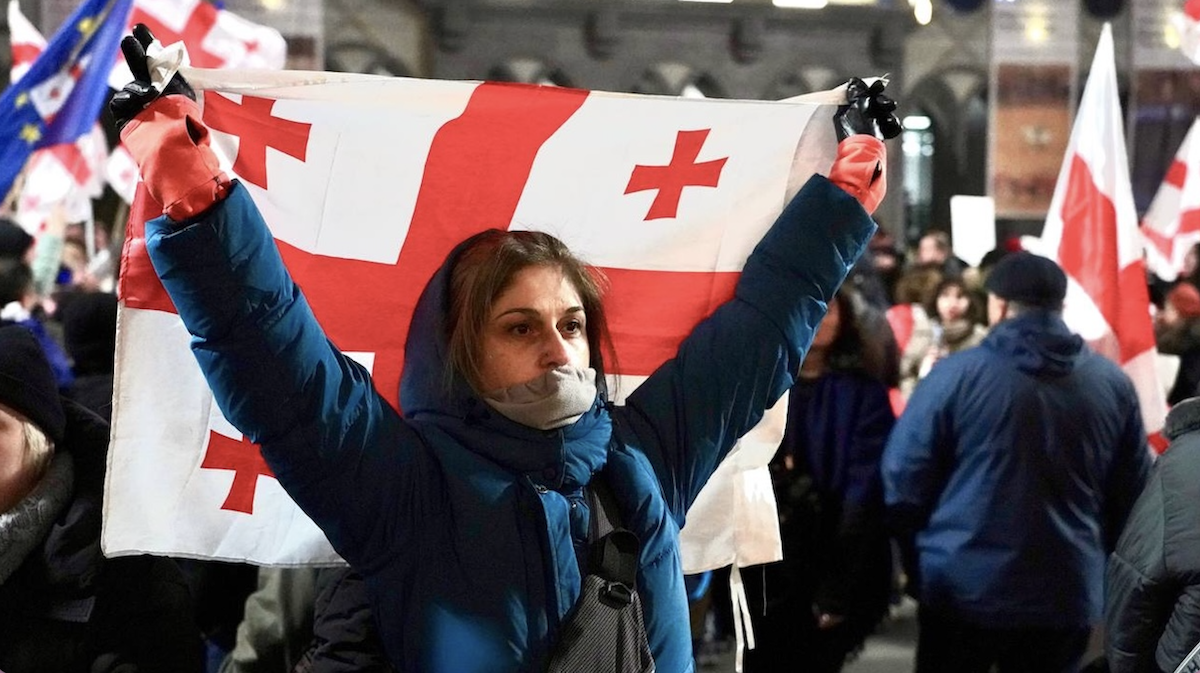
From 1 June, Georgia will establish a new body to monitor what people write and say in public spaces. The ruling Georgian Dream party says the aim is to reduce hate speech and offensive campaigns in public settings.
Lawyers have already criticised the initiative, describing it as an attempt to restrict freedom of expression and legitimise censorship. Social media users have nicknamed the new institution the “scrolling agency”.
- Georgia to create agency to monitor ‘aggressive communication in public spaces’
- Opinion: ‘Georgian government’s goal is to intimidate people’
The new initiative appears particularly paradoxical given that hate speech and offensive rhetoric often come from members of Georgian Dream themselves.
In this article, we examine what is known — and what remains unclear — about the new body.
“The scrolling agency”
The special unit will operate under Georgia’s Interior Ministry. Authorities will call the institution the “Department for the Systematic Monitoring of Communications”, and Major General Mamuka Mdinaradze will lead it.
Mdinaradze is a former head of the State Security Service. He held that position for nine months and received six promotions during that period. After leaving the security service, authorities appointed him State Minister for Coordination of Law Enforcement Activities — a post that had not previously existed.
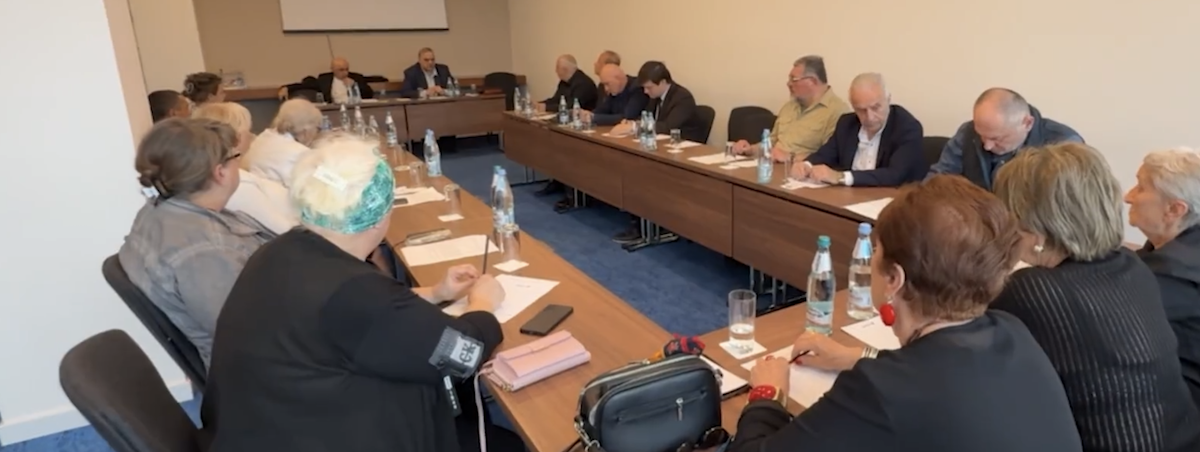
Mamuka Mdinaradze announced the creation of the department during a briefing on 18 May 2026.
So far, only the broad outlines of the new department’s powers and responsibilities are known.
The only confirmed detail is that monitoring will cover any form of public communication. This means authorities may track not only opinions expressed on social media, but also conversations and street interviews.
Human rights advocates believe social media will become the primary target. For that reason, part of the public has already labelled the initiative the “scrolling agency”.
How will the new department operate?
Authorities have not yet published official regulations governing the new body, so at this stage information remains limited to public statements.
During the briefing, Mamuka Mdinaradze said the department would work proactively — meaning action would not depend on someone filing a complaint.
Until now, someone typically needed to report offensive content on social media before the Interior Ministry could launch proceedings. Under the new model, complaints may no longer be necessary. Department staff will monitor activity independently and, if they consider it necessary, refer cases to court.
Who will monitor “public communication”?
At this stage, it remains unclear who these monitors will be, what qualifications they will hold, how they will distinguish hate speech from offensive language, or what technical tools they will use for monitoring.
According to Meta, around four million users in Georgia have registered on Facebook, the country’s most widely used social media platform. It is difficult to imagine how many people the new department would require to monitor such a volume of activity.

Deputy Interior Minister Alexandre Darakhvelidze told the pro-government broadcaster Rustavi 2 that officials would take experience into account when selecting staff. According to Darakhvelidze, the ministry plans to recruit personnel from within existing structures.
“The focus will be on current employees with experience. We will recruit such staff from various departments.”
Former FBI investigator Karen Greenaway said on the Formula programme that controlling Facebook, as happened in Russia years ago, requires control over the “news feed”. According to her, authorities would identify citizens subject to monitoring in advance.
She described the possible mechanism in the following way:
“Imagine a device that tracks the posts of specific citizens. Russians created an algorithm using artificial intelligence. That algorithm understands which controversial post to select as a target. I have no doubt that Russian security services would gladly share this practice with the Georgian government.”
“There will be legal regulation” — what does that mean?
During a special briefing, Mamuka Mdinaradze said authorities would introduce legal regulation if necessary.
This means that if a monitor considers a social media post or comment to be a violation and the case reaches court, authorities could initiate administrative proceedings against the author.
People responsible for such posts could face financial penalties or administrative detention.
Fines would range from 1,500 lari ($564) to 4,000 lari ($1,504), while administrative detention could last up to 45 days. For repeat offences, fines would increase to between 2,500 lari ($940) and 6,000 lari ($2,256), and detention periods could extend to 60 days.
What is the new department based on?
The initiative to punish people for opinions expressed in public spaces is not new. Authorities created the legal basis for the measure in February 2025, when the ruling Georgian Dream party once again tightened legislation.
On 6 February 2025, Georgia’s parliament approved amendments to the Code of Administrative Offences and related laws in a third reading.
The amendments introduced Article 173¹⁶ into Georgia’s Code of Administrative Offences. The provision classifies verbal insults or other offensive actions directed at political office holders, civil servants or individuals with equivalent public status as administrative offences.
Tamar Oniani, head of the Georgian Young Lawyers’ Association, says the Organization for Security and Co-operation in Europe viewed the amendments as open to arbitrary interpretation.
“It is too broad and subjective to refer to ‘verbal insults, swearing, humiliating comments and/or other offensive actions’ without describing, defining or specifying additional elements that constitute a violation,” Oniani wrote on Facebook.
Several people in Georgia have already faced prosecution over Facebook posts
Authorities in Georgia have already fined many people for statements made on social media, while courts have sentenced some to administrative detention.
Writer Beka Lokhishvili became the first person to receive an administrative detention sentence over a Facebook post.
Lokhishvili spent 15 days in detention for a post concerning police officers. Judge Zviad Tsekvava of Tbilisi City Court issued the ruling on 1 May 2026.
In the post, published on 23 April and later deleted, Lokhishvili criticised police behaviour and wrote that Georgian Dream was “not a political party, but a terrorist organisation”.
Previously, courts also fined journalists and activists over social media posts and comments. In those cases, the subjects of the posts filed complaints, arguing that the published content insulted them. Plaintiffs included members of Georgian Dream and individuals close to the party.
For example, on 4 February 2026, Tbilisi City Court judge Manuchar Tsatsua fined civic activist Nata Peradze 4,000 lari ($1,504) over a post concerning Georgian Dream MP Nino Tsilosani.
In June 2025, courts fined six journalists over critical social media comments directed at Georgian Dream lawmakers.
During the same period, authorities also summoned activists and opposition politicians to court.
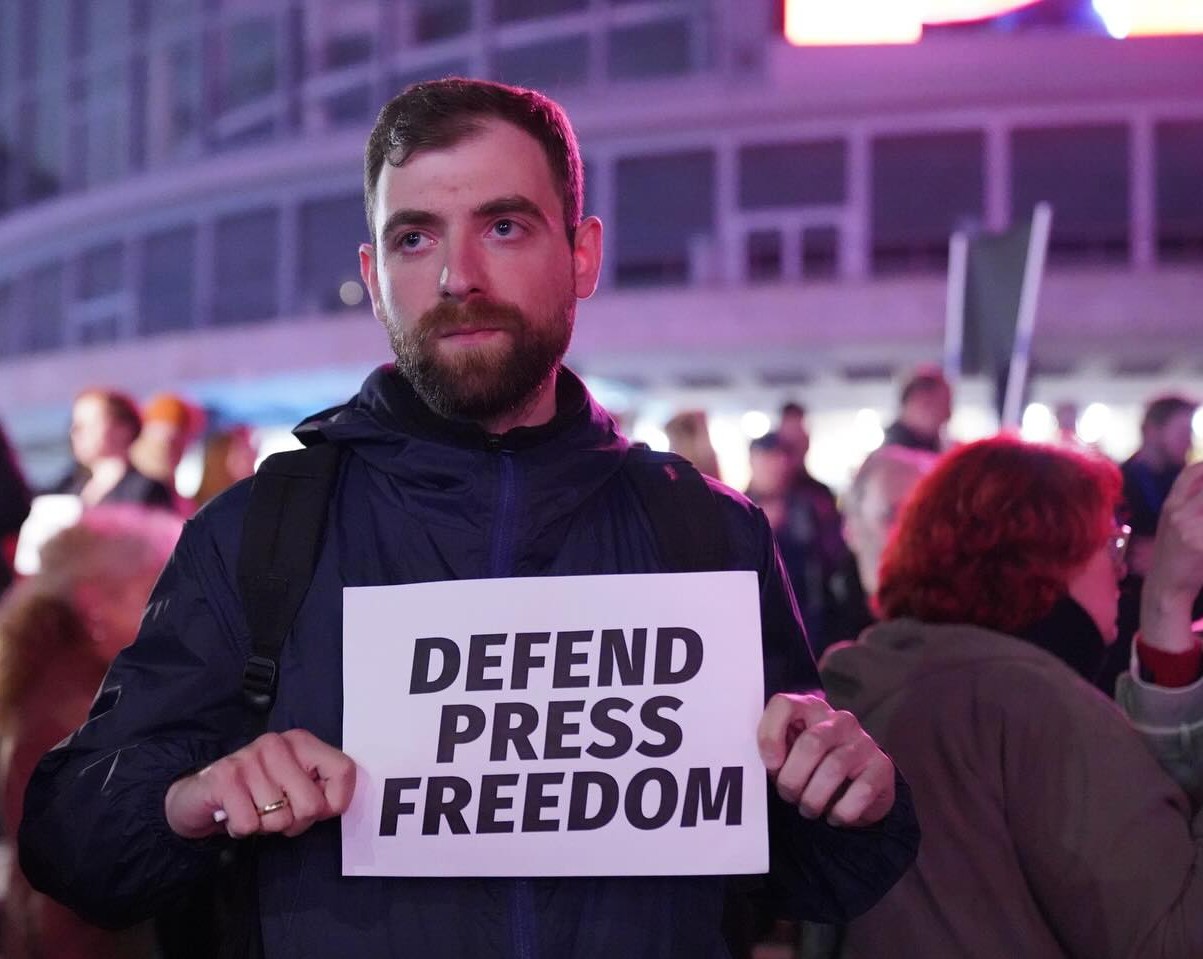
Restricting free speech and legitimising censorship
Mamuka Mdinaradze sought to address criticism in advance, saying the new department would not aim to restrict freedom of speech or expression.
He added that “diversity of opinion and critical discussion are essential for a democratic state”, but argued that “there are minimum standards that society should agree upon, including respect for one another”.
When Georgian Dream speaks about mutual respect and offensive language, critics argue the party overlooks the fact that such rhetoric often comes from its own members, including senior state officials.
Critics also say Georgian Dream ignores the issue of so-called “troll factories”, which the ruling party has frequently been accused of using on social media to discredit people it considers unacceptable. Such accounts often employ offensive or abusive language. Meta has repeatedly removed hundreds of similar Facebook accounts.
“If the government genuinely wants to reduce polarisation and eradicate hate speech, the first thing it should do is stop dividing people into friends and enemies,” political commentator Irakli Melashvili told representatives of Georgian Dream during a debate on the pro-government broadcaster Imedi.
He also reminded Alexandre Darakhvelidze of cases of inflammatory rhetoric coming from the prime minister, the parliamentary speaker and the mayor of Tbilisi.
“Start with yourselves. Stop creating ‘troll factories’, and the public space will become much cleaner,” Melashvili concluded.
Human rights advocates say they do not believe the initiative aims to regulate hate speech. Instead, they argue its purpose is to establish broader social control. They add that concerns intensify against the backdrop of years of surveillance and wiretapping by security services, practices authorities have publicly acknowledged.
“The announced initiative resembles a censorship mechanism and has nothing to do with balancing interests in a democratic society,” says Tamar Oniani.
Tamta Mikeladze, head of the Social Justice Centre, says monitoring hate speech is generally legitimate — but only when countries do not criminalise expression itself and when oversight falls under the Public Defender rather than the police.
“In democratic systems, human rights organisations usually monitor hate speech rather than police structures, because police involvement in regulating expression always carries risks of abuse of power and political control.”
She places particular emphasis on the wording “aggressive communication” and warns that authorities could interpret it very broadly.
“The concept of ‘aggressive communication’ is so vague that it could apply to almost any critical, provocative, ironic or emotional political statement. Trying to discipline citizens’ language, emotions and political tone is unimaginable. It would amount to creating a morality police.”
Control over public expression in Georgia