How Russia Removed More Than 1,200 Ukrainian Children






A U.N. Report on the Abduction of Children
Material from Novaya Gazeta Europe
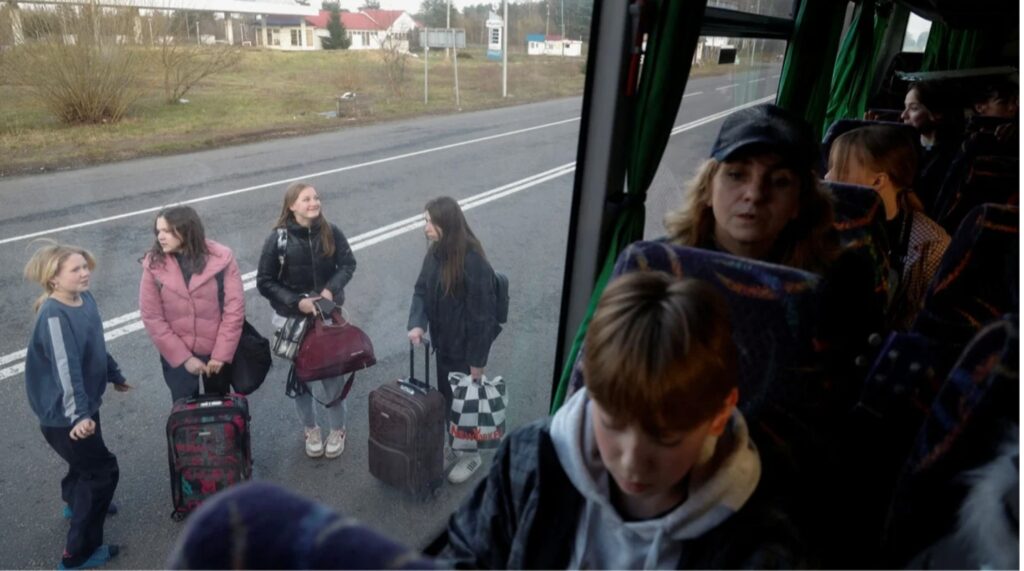
Russian authorities have, over the course of the war, removed at least 1,205 children from occupied regions of Ukraine, placing them in residential institutions and assigning some to foster families, according to a new report by the United Nations Independent International Commission of Inquiry on Ukraine.
The report also details court proceedings against Ukrainian civilians and prisoners of war, as well as documented cases of torture, the recruitment of foreign nationals and evidence of violence within the Russian military.
Novaya Europe reviewed the report in advance and summarizes its key findings.
A System of Deportation From Occupied Regions
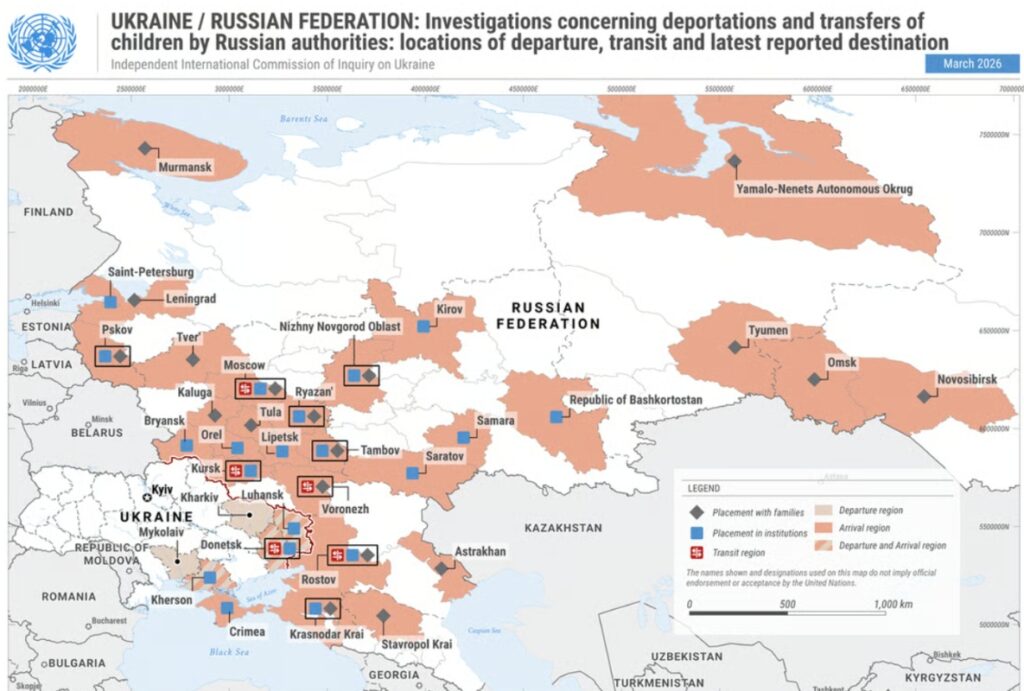
Beginning on February 18–19, 2022, Russian authorities removed at least 1,205 children from occupied areas of Ukraine, many of whom remain in Russia, according to a report by the United Nations Independent International Commission of Inquiry on Ukraine. The children were sent to state institutions or placed with foster families, granted Russian citizenship and dispersed across regions thousands of miles from their homes. In many cases, parents spent months — and in some instances years — without knowing their children’s whereabouts. Investigators say the actions may amount to war crimes and crimes against humanity.
The report emphasizes that the practice predates Russia’s full-scale invasion. Citing findings from the European Court of Human Rights, it notes that a consistent policy of transferring children from occupied Ukrainian territories and integrating them into Russian families or institutions can be traced back to at least 2014.
In mid-February 2022, leaders of the self-proclaimed separatist authorities in eastern Ukraine — Denis Pushilin and Leonid Pasechnik — announced what they described as a “mass evacuation” of civilians, claiming that Ukraine was preparing an offensive. Shortly afterward, local authorities ordered the removal of children from orphanages and social care institutions to Russia. According to the commission, at least 995 children from 11 facilities in the Donetsk and Luhansk regions were taken in those initial transfers.
Investigators found that the wartime transfer of children followed a consistent pattern: they were first taken to transit centers in Russia’s border regions, then distributed across other parts of the country.
The United Nations Independent International Commission of Inquiry on Ukraine determined that Ukrainian children ultimately ended up in at least 21 regions of Russia. They were transported by buses, trains and aircraft, and in some cases their movements were accompanied by visits from Russian officials and public events.
Upon arrival, the children were placed in residential institutions or assigned to foster families. At the same time, Russian authorities introduced measures intended to facilitate their integration into Russian society. Among them were:
- Fast-tracked acquisition of Russian citizenship
- Placement of children in adoption databases
- Alteration of identity documents
- Long-term placement with foster families
The report’s authors also documented cases in which children’s names and places of birth were altered in newly issued documents, a practice that significantly complicates efforts to locate them and secure their return.
According to the United Nations Independent International Commission of Inquiry on Ukraine, about 80 percent of the children in the cases it recorded of deportation and transfer have not been returned. Experts emphasize that the recoveries that have taken place required overcoming significant obstacles, prolonged delays and, at times, serious risks to those involved.
Children from state institutions — particularly younger children and those with disabilities — are described as having virtually no chance of return under current conditions, underscoring the scale and persistence of the problem.
The authors of the report also note that a decree easing the process of obtaining Russian citizenship for Ukrainian children without parental care was signed by President Vladimir Putin in May 2022. According to Russian authorities, 46,886 Ukrainian children received Russian citizenship between April 2022 and June 2023.
Russia has officially denied accusations of abducting Ukrainian children, framing the transfers as humanitarian evacuations from active combat zones. Maria Lvova-Belova has stated that, in formal terms, the children were placed under guardianship arrangements to preserve the possibility of their eventual return to relatives.
At the same time, Russian officials have acknowledged practices that effectively amount to a change in identity, including integration into Russian cultural and educational environments — a point that investigators say underscores the contested nature of the transfers described in the report.
Foster Families
The United Nations Independent International Commission of Inquiry on Ukraine, where possible, tracked the routes and last known locations of children transferred from occupied areas of Ukraine. The authors cite several individual cases.
In one example, a 13-year-old boy was taken in April 2022 from Boarding School No. 4 in Amvrosiivka, in the Donetsk region. He was placed with a foster family in the Moscow region and granted expedited Russian citizenship. The boy has an older sister who remains in the Donetsk region.
The report also references the story of 13-year-old Valentin, previously investigated by journalists at the Russian-language service of the BBC. Reporters located his foster mother, Yelena Kafanova, a resident of the Moscow region.
According to Kafanova, in March 2022 Russian child welfare authorities were seeking families willing to take in children from the self-proclaimed Donetsk region. Officials allegedly asked the Kafanov family to submit a video describing their household and living conditions.
In April, Valentin was brought from an institutional facility and placed with the family. Later, regional officials and representatives of Russian authorities visited the household, and the case was publicly highlighted in official media coverage.
Kafanova said the boy has remained in contact with his sister in Donetsk. She also stated that he initially viewed his stay with the family as temporary, but later chose not to return to the institution.
In June 2022, three 16-year-old boys were transferred to Russia as part of a group of 31 children from a social care center in Donetsk. They were first taken to a temporary transit facility in the Moscow region. Despite having relatives or legal guardians in Ukraine, each of them was subsequently placed with different foster families in Russia. One boy was placed in the household of Maria Lvova-Belova, and another in the care of Irina Rudnitskaya. All three boys were issued Russian passports, and two of them were later able to return to Ukraine despite reported attempts by foster families and authorities to prevent their departure. In 2025, Rudnitskaya was charged in Russia with child trafficking in a separate case.
In September 2022, an 11-month-old girl and a two-year-old boy from a children’s home in Kherson were taken to Russia and placed with a family in the Moscow region. The girl was adopted by Sergey Mironov. Her name and place of birth were changed in official documents from the Kherson region to the Moscow region. According to testimony cited in the report, the child has two older siblings, a legal guardian, and a biological mother in Ukraine. Despite efforts to secure her return, she remained in Russia at the time the report was prepared, while the whereabouts of the boy remain unknown.
The report also describes the case of five siblings, aged between 4 and 14, who were taken from the Donetsk region to Russia and placed with a foster family in the Moscow region.
Three of the children were part of the June 2022 group of 31 minors transferred from a social care center in Donetsk to a temporary facility in the Moscow region. Another child was first moved to the Rostov region and later, on September 16, 2022, flown to the Moscow region. The fifth child was taken directly from the Donetsk region by a foster father in April 2023.
According to data reviewed by investigators, the family received official commendations from authorities in the Moscow region. By the end of 2024, all five children remained with the same foster household.
Torture, Recruitment and Collaboration: Other Findings in the Report
Beyond the deportation of children, the commission examined in detail the system of criminal prosecutions of Ukrainian civilians and prisoners of war carried out by Russian authorities during the conflict.
Investigators analyzed 72 trials conducted in Russian courts and in so-called courts operating in occupied Ukrainian territories. The cases involved 68 civilians and 60 Ukrainian prisoners of war. Most of the charges were related to terrorism, espionage and violent seizure of power, with sentences ranging from eight to 25 years in prison, as well as life imprisonment in some cases.
The commission concluded that these proceedings systematically violated fundamental guarantees of a fair trial. Judges, it found, routinely disregarded the presumption of innocence, the right of defendants not to testify against themselves, and the right to an effective legal defense.
In several cases, confessions were obtained through torture or other forms of ill-treatment and later used as evidence in court. Investigators also documented staged arrest videos and instances in which witnesses were coerced into signing pre-prepared statements.
A separate concern highlighted in the report is the practice of transferring Ukrainian civilians to Russia for prosecution, a step the commission says is inconsistent with international humanitarian law.
The report further notes that Russian courts frequently refused to recognize members of the Ukrainian armed forces as prisoners of war, instead trying them on terrorism charges. According to the commission, this practice deprived them of protections guaranteed under the Geneva Conventions.
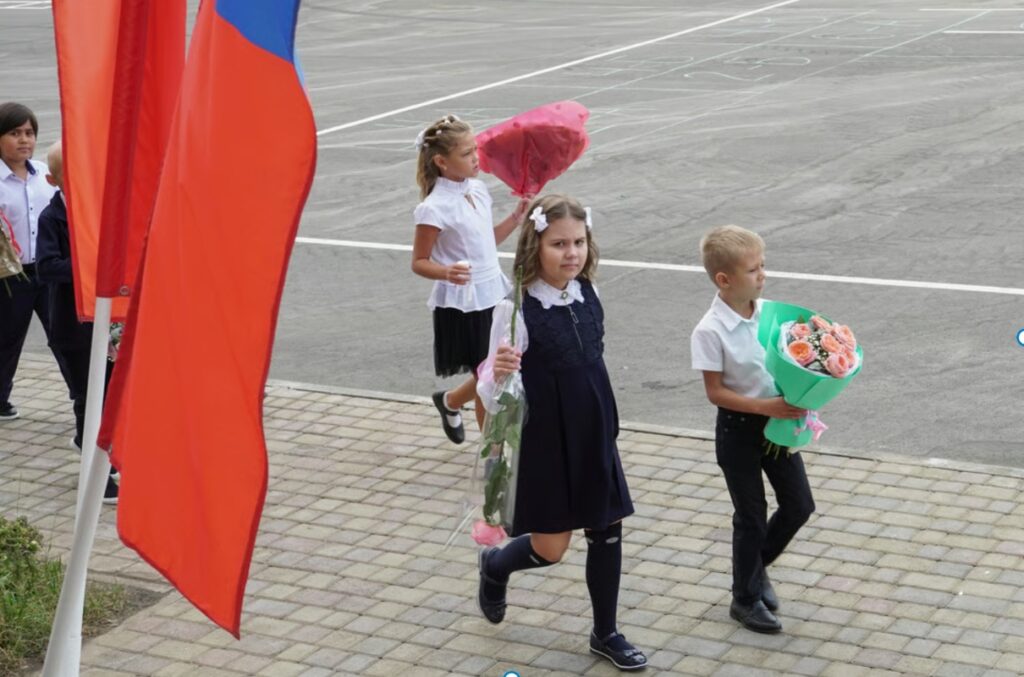
The investigation also documents the recruitment of individuals from at least 17 countries who were drawn into service in the Russian armed forces. Many, according to the report, said they were misled by promises of civilian employment or favorable working conditions, only to be coerced into signing contracts in Russian and subsequently deployed to high-risk combat roles at the front line.
A separate section of the report is based on testimony from Russian soldiers who deserted after taking part in the war. The commission interviewed 85 such individuals, many of whom described severe punishments within military units. Commanders, they said, used violence against soldiers who refused to advance, attempted to retreat from the front line or complained about shortages of supplies.
The reported punishments included beatings, confinement in improvised pits, being tied to trees and threats of execution.
Some deserters said they witnessed instances in which soldiers were shot on the spot for refusing to take part in assaults that were widely regarded as near-certain death missions.
The commission also emphasizes that certain violations of international law were recorded on the Ukrainian side, although on a significantly smaller scale. In particular, experts examined provisions in Ukrainian legislation on “collaboration activities,” which they say may be interpreted too broadly.
In some cases, the law could potentially apply to individuals who continued performing civilian functions in occupied territories — for example, maintaining utilities or other essential public services. The commission also documented isolated cases of irregularities in mobilization procedures, including administrative detention, lack of access to legal counsel, and pressure on individuals refusing military service on grounds of conscience.
The experts note that these issues require further legal clarification and closer alignment with international standards.
exchange