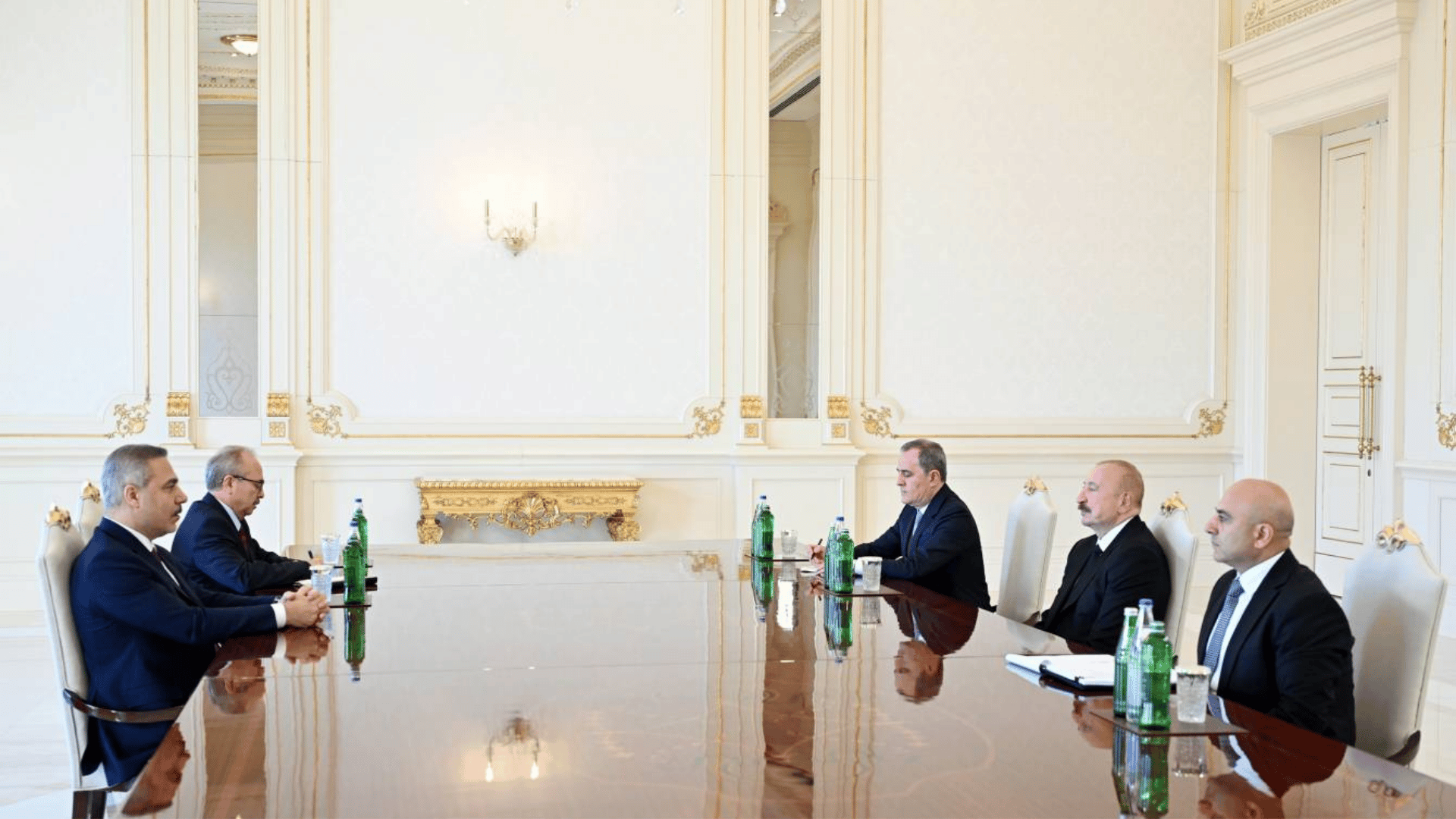
Epstein files: did convicted sex offender and trafficker visit Baku?






Azerbaijan in the Epstein files
Millions of pages of documents linked to the case of the US financier Jeffrey Epstein, who was convicted of the sexual exploitation of minors, were recently published in the United States. Claims that Azerbaijan is mentioned in the material have become a major topic of public debate in the country.
There have also been rumours that Epstein may have visited Baku.
But do these extensive records — widely referred to as the “Epstein files” — actually confirm any link between Epstein and Azerbaijan? Or do the circulating claims lack documentary evidence?
It is also important to note that in all correspondence where Azerbaijan is mentioned, the references relate exclusively to politics.
Who was Epstein and what are the “Epstein files”?
Jeffrey Epstein was an American financier who was arrested several years ago on charges of the sexual exploitation of minors and human trafficking. He died by suicide in prison in 2019. But Epstein was not just a criminal. For decades, he built an extensive network of contacts that included politicians, members of royal families, billionaires and celebrities. This is why his case triggered widespread public outrage and sent shockwaves through political and social elites.
The term “Epstein files” refers to the disclosure by the US Department of Justice of investigative materials linked to Epstein and his criminal case. In November 2025, the United States Congress passed a special law requiring the Justice Department to publish all documents related to Epstein. As a result, on 30 January 2026, the department released a vast archive under the Epstein Files Transparency Act.
The archive includes 3.5 million pages of documents, 2,000 videos and 180,000 photographs.
The files are wide-ranging in scope. They draw on court proceedings in Florida and New York, reports related to the investigation into Epstein’s death, as well as the case of his former associate Ghislaine Maxwell. The material contains information about Epstein’s international network, his personal correspondence, travel plans, witness testimony and investigative records.
Authorities stress that the documents do not constitute indictments and do not imply that everyone mentioned in them committed crimes. Rather, they provide information about individuals and issues connected to Epstein.
Azerbaijan and Baku in the documents: what is known?
Among the millions of pages released recently, several notable references linked to Azerbaijan have been identified.
In a number of emails written by Jeffrey Epstein over different years, Azerbaijan and Baku are mentioned. This has fuelled claims that Epstein may have visited Baku and met with officials.
August 2011: a plan to travel to Baku?
The documents include an email dated 30 August 2011, in which Epstein writes to a businessman from the United Arab Emirates, Sultan bin Sulayem:
“Is your Azerbaijani friend flying to Paris, or shall we go to Baku this weekend?”
The exchange suggests that Epstein discussed the possibility of travelling to Baku with his associate and even asked about flights. However, no subsequent documents contain flight records or official data confirming that Epstein actually visited Baku that weekend.
It therefore appears likely that Epstein did not travel to Baku at that time.
September 2011: the wedding of an “Azerbaijani friend”
The identity of the “Azerbaijani friend” mentioned in the email has also attracted attention. An examination of the materials indicates that the correspondence referred to a wedding ceremony scheduled for 9 September 2011 in Baku. On that day, the city hosted the wedding of Taleh Heydarov, the son of Azerbaijan’s minister for emergency situations, Kamaladdin Heydarov. The event was attended by figures from the country’s political and business elite.
In his reply, Sultan bin Sulayem tells Epstein: “He is now preparing for his son’s wedding. I will go on 9 September and then visit him again for a few more days on the 12th.” This confirms that bin Sulayem did travel to Baku to attend the wedding.
Epstein, however, appears not to have joined the trip. Had he done so, the materials would likely contain corresponding records. No such evidence has been found.
September 2015: “The president is a very good friend of mine”
Another notable exchange between Jeffrey Epstein and Sultan bin Sulayem is dated 19 September 2015.
The Dubai-based businessman tells Epstein that he is visiting Baku, sends photographs of the city and shares his impressions.
“Baku is a very beautiful city — more beautiful than Paris, believe me. If you ever want to go there, I will join you. The president is a very good friend of mine. He is very smart. He reminds me of Sheikh Mohammed,” he writes.
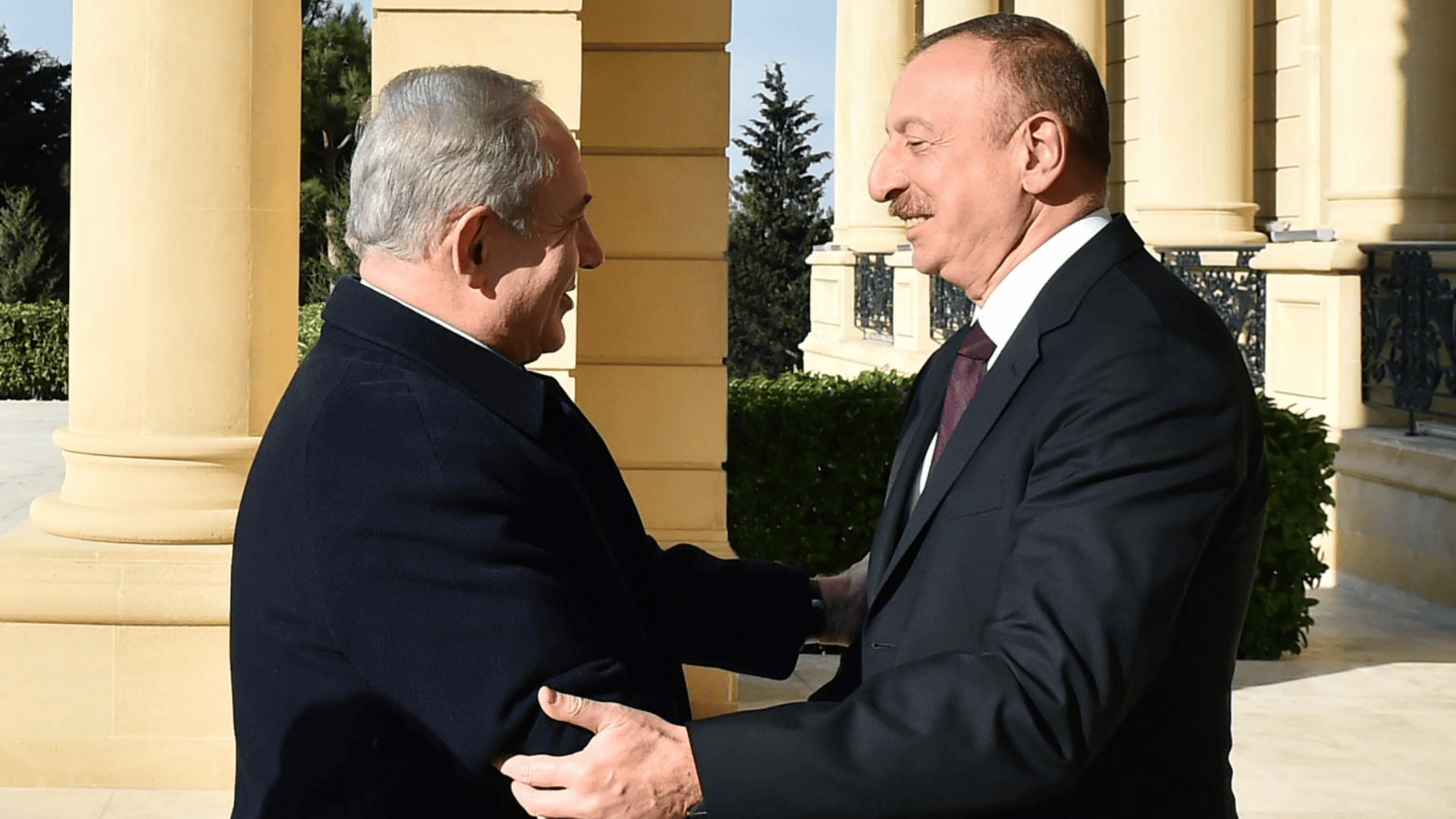
With this message, bin Sulayem signals that Azerbaijan’s president, Ilham Aliyev, is a close acquaintance and suggests that a joint trip to Baku could be arranged at any time.
Epstein replies: “I can fly to Dubai on 29 October, and then go from there?”
However, it is important to stress that there is no evidence confirming any subsequent visit by Epstein to Azerbaijan. In the available materials, Baku appears only as a potential destination discussed in correspondence, rather than a confirmed stop in Epstein’s travels.
The link between Sultan bin Sulayem and Aliyev
Sultan Ahmed bin Sulayem is a prominent figure. He is the head of DP World, one of the world’s largest logistics operators, and is closely connected to the ruling families of the United Arab Emirates.
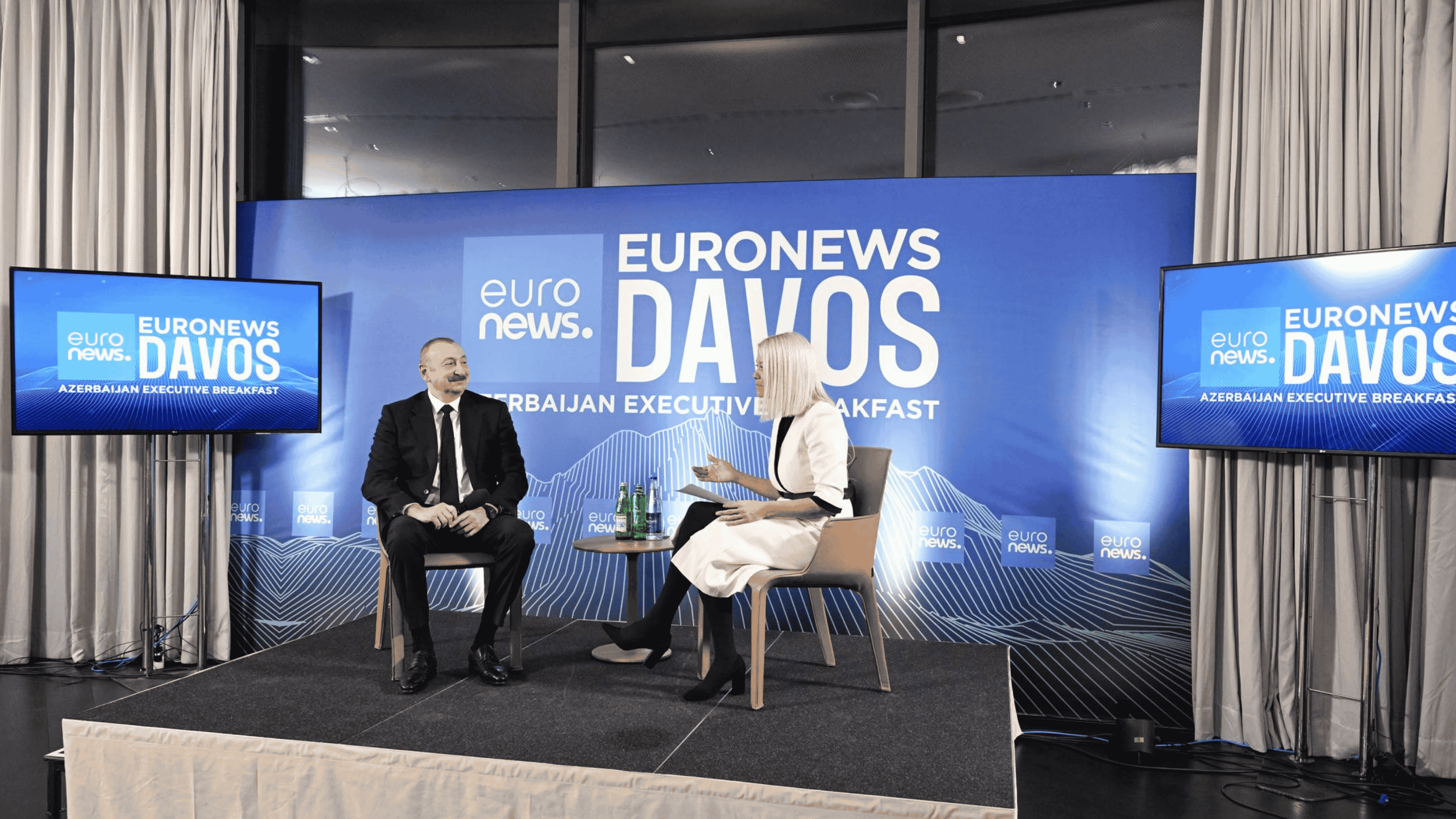
Bin Sulayem does maintain friendly relations with President Ilham Aliyev, and the two have met repeatedly in recent years. Most recently, on 19 January this year, Aliyev held talks with bin Sulayem on the sidelines of the World Economic Forum in Davos, where they discussed joint projects.
In this sense, the “very good friend” referred to in the email to Epstein does indeed appear to be the president of Azerbaijan.
2014: the Merante-Baku email and a planned visit by members of Congress
Another notable reference to Azerbaijan in the Epstein files concerns a planned visit by members of the US Congress to Baku.
According to the documents, a trip by a group of American lawmakers to Azerbaijan was scheduled for 21 May to 4 June 2014. In the end, however, only one congressman agreed to take part, while the others declined. The materials show that Mark Epstein received an email marked Merante-Baku-Important and forwarded it to his brother, Jeffrey Epstein.
The email says Azerbaijani sponsors were unhappy with the lawmakers’ refusal to travel and suggested inviting prominent figures from the media, finance, banking and education sectors instead. It also stresses that all travel expenses would be covered at first-class level.
These records shed light on the resources Azerbaijan devoted to lobbying efforts and so-called “image-building trips”. It later emerged that the visit was organised with the involvement of SOCAR through the firm AzPod. While in Baku, the delegation met members of the Milli Majlis, including the then foreign minister, Elmar Mammadyarov.
At the same time, the documents do not indicate that Jeffrey Epstein played a direct role in organising the trip. It appears that Mark Epstein merely informed his brother, possibly in an effort to involve people from Epstein’s circle.
The “Epstein files” in Azerbaijani media
After references linked to Azerbaijan were identified in the Epstein case documents, local media outlets covered the story in markedly different ways.
Media close to the authorities either downplayed the Azerbaijani angle of the Epstein scandal or ignored it altogether. Instead, they focused on sensational details from the Epstein files that had no bearing on the country’s domestic politics.
Many news websites and television channels, for example, circulated reports claiming that Jeffrey Epstein had obtained fragments of the Kaaba’s covering and sent them to his villa. The documents do show that in 2017 Epstein acquired three fragments of the kiswah — the sacred cloth covering the Kaaba in Mecca — through contacts in Saudi Arabia and the United Arab Emirates, registered them as works of art and shipped them to his residence in the US Virgin Islands.
Pro-government media also highlighted sections of the Epstein files related to Russia. Some outlets reported that Vladimir Putin was mentioned 1,056 times in the documents and that Russia appeared 9,629 times, as well as claims that Russia was “one of the channels through which women were supplied to Epstein”. Such assertions do appear in the materials as one of the investigative hypotheses.
At the same time, state media framed the story largely as a domestic political scandal in the United States, publishing articles along the lines of “the Epstein files fuel tensions between Donald Trump and Republicans”. This shifted attention away from Azerbaijan and presented the affair as a clash among major powers.
Overall, media in this camp paid little attention to the emails from Sultan bin Sulayem, which indirectly reference President Ilham Aliyev, or to the episode involving Elmar Mammadyarov. Instead, they published commentary portraying the Epstein case as part of a broader narrative about the “moral decay of Western elites”.
Azerbaijan in the Epstein files